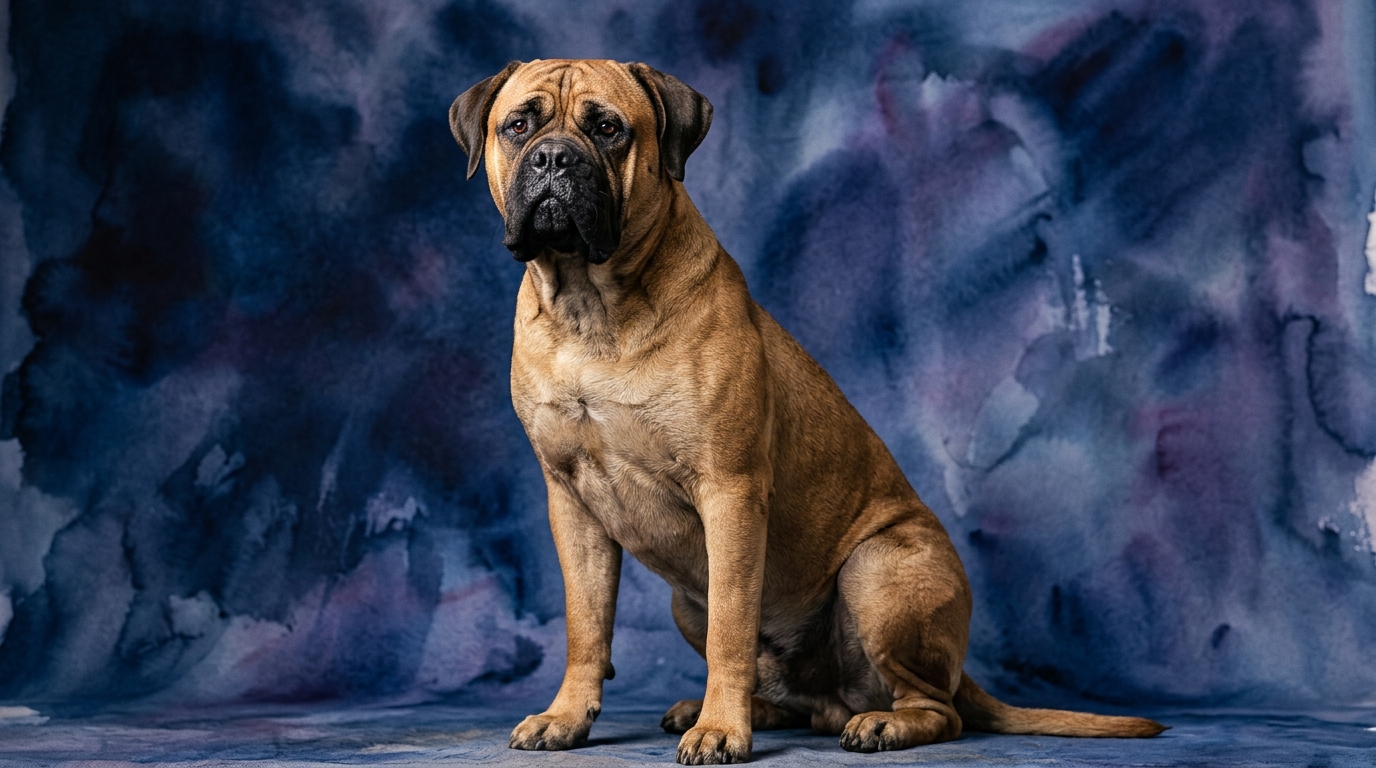
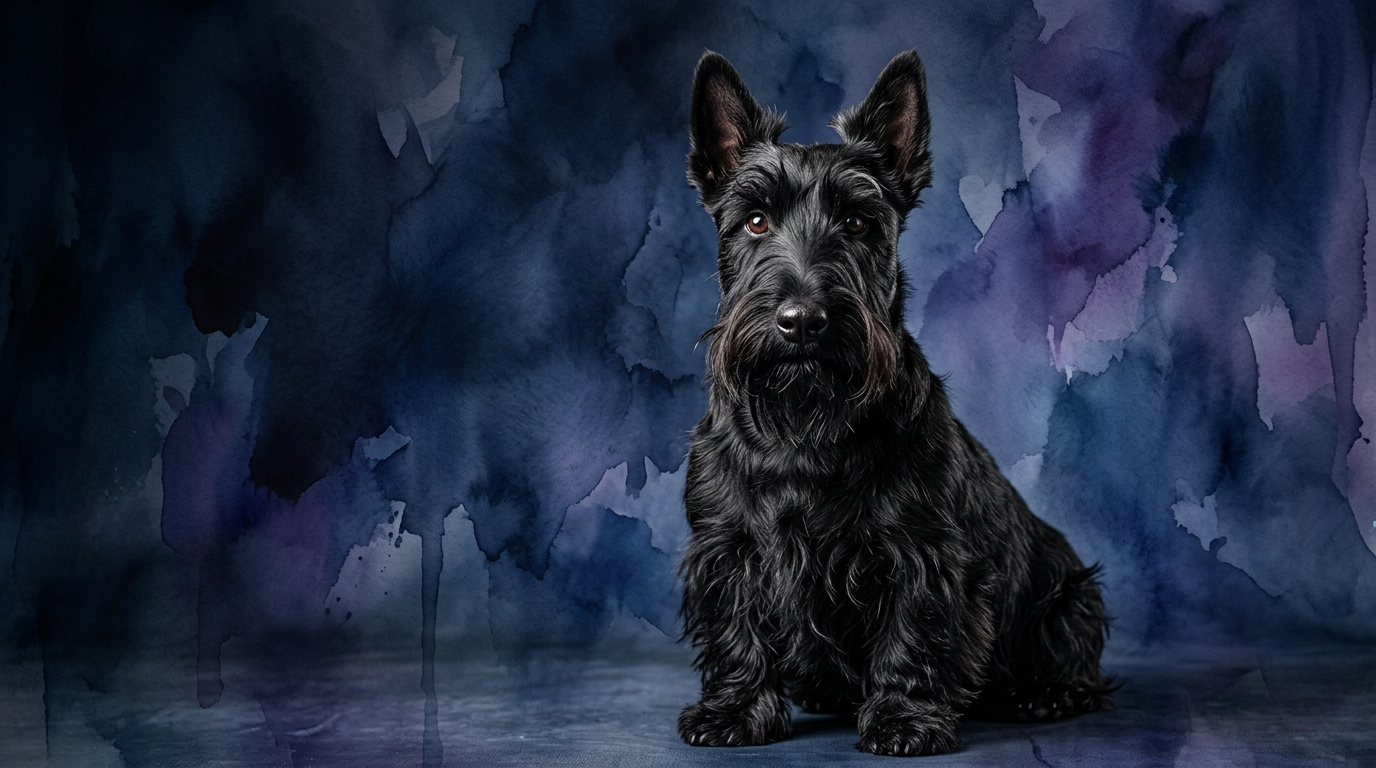
Side-by-Side IQ Profile: Bullmastiff vs. Scottish Terrier
At first glance, the Bullmastiff and Scottish Terrier present a remarkably similar cognitive profile according to The Cosmic Pet Pet IQ Lab, with both breeds scoring 3 out of 5 across all five measured dimensions. This parity in scores, however, belies the distinct ways their intellects are expressed, deeply rooted in their breed origins and intended purposes. Understanding these nuances requires looking beyond the numbers to the behavioral context.
The Bullmastiff, a member of the Working group, holds a Coren rank of #69. Its Problem Solving score of 3/5 reflects a capacity for situational assessment, particularly in guardian roles. This isn't about solving complex puzzles, but rather demonstrating practical judgment in discerning threats and making decisions to protect its family and territory. Its Training Speed, also 3/5, indicates a moderate pace of learning, often motivated by a desire to please its handler and a strong bond. Social Intelligence at 3/5 means the Bullmastiff is adept at reading human cues and understanding social hierarchies within its family unit, exhibiting a discerning nature towards strangers. An Instinctive Drive of 3/5 highlights its inherent protective instincts and territorial vigilance, a core aspect of its being. Finally, its Memory at 3/5 suggests a reliable recall for routines, people, and past experiences, contributing to its consistent guardianship.
The Scottish Terrier, from the Terrier group, boasts a slightly higher Coren rank at #65. Its Problem Solving score of 3/5 manifests as tenacious ingenuity, particularly in independent tasks like hunting vermin or navigating complex environments. This breed excels at figuring things out on its own terms, often with a determined persistence. A Training Speed of 3/5 means the Scottie also learns at a moderate pace, but its independent spirit often requires more patience and creative motivation from its trainer; compliance is often a choice. Its Social Intelligence, also 3/5, allows it to read human emotions and intentions, yet it often chooses to interact on its own terms, forming deep but selective bonds. The Instinctive Drive of 3/5 is strongly tied to its prey drive, digging instincts, and adventurous spirit, compelling it to explore and pursue. Lastly, its Memory at 3/5 is strong for locations, favored activities, and individuals, especially those linked to successful independent endeavors or cherished companionship.
Where the Bullmastiff's Cognition Shines
The Bullmastiff's cognitive strengths are particularly evident in its capacity for protective discernment and loyalty. While both breeds score 3/5 in Social Intelligence, the Bullmastiff's manifestation of this trait is deeply integrated with its guardian role. It possesses an innate ability to distinguish between accepted visitors and potential threats, making nuanced judgments based on body language, tone, and context. This isn't about simple recognition, but a complex assessment of intent, allowing it to be a formidable yet measured protector. Its Problem Solving at 3/5, when combined with its Instinctive Drive, means it can independently assess and respond to situations requiring vigilance, making decisions to secure its perceived territory or family without constant human direction, demonstrating a practical and grounded application of its intellect in real-world scenarios.
Where the Scottish Terrier's Cognition Excels
The Scottish Terrier truly excels in the realm of independent problem-solving and tenacious pursuit, a direct reflection of its terrier heritage. Its 3/5 Problem Solving score shines when faced with a challenge that requires ingenuity and persistence, such as figuring out how to retrieve a toy from a tight space or outsmarting a small critter. This isn't a breed that waits for instructions; it actively seeks solutions, often through trial and error, driven by a powerful internal motivation. Coupled with its 3/5 Instinctive Drive, the Scottie demonstrates an unwavering focus on tasks it deems important, whether it's tracking an interesting scent or investigating a new sound. Its memory, also 3/5, supports this by retaining knowledge of successful strategies and rewarding locations, making it an efficient and determined explorer of its environment.
Training Dynamics: Bullmastiff vs. Scottish Terrier
While both breeds share a 3/5 Training Speed, the approach and experience of training them can differ significantly due to their underlying temperaments and drives. A Bullmastiff typically responds well to consistent, positive reinforcement, often motivated by a desire to maintain harmony within its family unit and earn its owner's approval. Their strong social intelligence means they are attuned to their handler's expectations, and once they understand a command, they are generally willing to comply. Training a Bullmastiff often benefits from establishing clear leadership and routine, fostering their innate desire for structure and belonging. They are generally eager to learn and will perform reliably once a behavior is ingrained, valuing the bond with their handler.
Conversely, training a Scottish Terrier, despite the identical 3/5 Training Speed, requires a different strategy to navigate its inherent independence and strong will. A Scottie learns at a moderate pace, but their compliance is often contingent on whether they perceive the command as worthwhile or if it aligns with their current interests. Their terrier drive means they can be easily distracted by scents or potential 'prey,' and they may choose to follow their nose rather than a command. Training must be engaging, varied, and extremely consistent, utilizing high-value rewards and making it feel like a game rather than a chore. Patience is paramount, as a Scottie's 3/5 Problem Solving often means they'll try to figure out how to get their own way before they simply obey. Their memory allows them to retain commands, but their independent spirit dictates their willingness to execute them.
Lifestyle Match: Active vs. Relaxed Owners
The cognitive profiles of the Bullmastiff and Scottish Terrier, while numerically similar, lend themselves to different owner lifestyles. A Bullmastiff, with its protective instincts and need for stability, generally suits a more relaxed, yet structured, home environment. While they require regular exercise to maintain physical health, their mental stimulation often revolves around guarding duties, being a watchful companion, and participating in family life. They thrive with owners who appreciate a calm, steadfast presence and are prepared to provide consistent, gentle guidance. Their social intelligence and memory make them excellent family dogs who enjoy routine and the comfort of their established territory. They are not typically suited for highly active, on-the-go lifestyles that lack predictability, preferring instead a consistent rhythm and the opportunity to be a devoted, protective presence.
The Scottish Terrier, on the other hand, despite its smaller stature, often requires a more engaged and active owner, not necessarily in terms of strenuous physical exercise, but certainly in terms of mental stimulation and interactive play. Their tenacious problem-solving and strong instinctive drive mean they need outlets for their energy and curiosity, such as consistent walks with opportunities to explore scents, interactive puzzle toys, and engaging training sessions. Owners who enjoy outdoor adventures, even if just in the backyard, and are prepared to manage a strong prey drive will find a rewarding companion. A Scottie thrives with owners who can provide consistent mental challenges and understand their independent nature, offering a balance of affection and boundaries. They are less suited for owners seeking a purely docile lapdog, as their inquisitive and determined minds require regular engagement.
The Verdict
Choose a Bullmastiff if you seek a calm, steadfast guardian who thrives on routine and family protection, appreciating their discerning social intelligence and reliable memory for household harmony.
Opt for a Scottish Terrier if you are an engaging owner who values independent problem-solving, a tenacious spirit, and can provide consistent mental stimulation to satisfy their inquisitive, driven nature.
🧠 Find Your Pet's IQ Score
Our Pet IQ Lab assessment covers 25+ tests across 5 cognitive dimensions — personalized to your breed.
Take the Full IQ Test →Frequently Asked Questions
Do Bullmastiffs need a lot of mental stimulation?
Bullmastiffs benefit from mental stimulation that aligns with their guardian instincts, such as training for obedience and discernment in social situations. While they don't require constant complex puzzles, consistent routine and engagement in family life provide ample cognitive enrichment.
Are Scottish Terriers difficult to train because of their independence?
Scottish Terriers, with their 3/5 training speed and independent problem-solving, can be challenging but not impossible to train. Success comes from making training fun, consistent, and using high-value rewards to capture their attention and motivate their strong-willed nature.
Which breed is better for first-time dog owners?
Neither breed is typically recommended as an 'easy' first-time dog due to their strong personalities and specific needs. However, a well-socialized Bullmastiff might be more manageable for a first-timer willing to commit to consistent training and structure, while a Scottie's independence often requires a more experienced hand.