Side-by-Side Pet IQ Profile: Bullmastiff vs Toy Poodle
The Cosmic Pet IQ Lab's assessment provides a detailed look into five key cognitive dimensions for each breed, offering a nuanced understanding of their mental aptitudes.
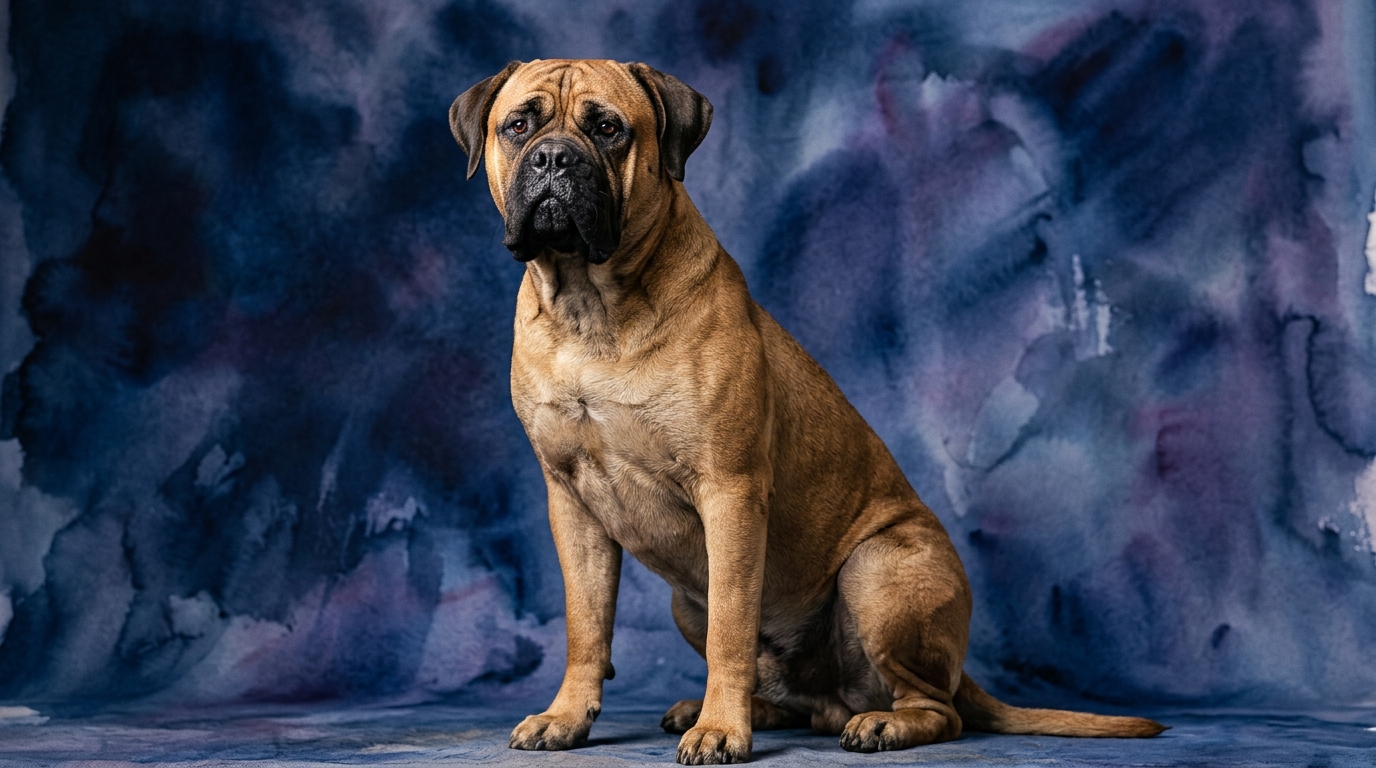
For the **Bullmastiff (Coren rank #69)**, their scores reflect a thoughtful, protective intellect:
**Problem Solving (3/5):** Bullmastiffs approach novel situations with a considered, sometimes independent, mindset. Their solutions often stem from protective instincts and a desire for stability, relying on practical application rather than quick, adaptable strategies. They tend to observe and assess before acting.
**Training Speed (3/5):** These dogs absorb new commands at a moderate pace. Their willingness to comply is often tied to handler consistency and perceived task value, rather than inherent eagerness to perform. Repetition and patience are key, as they can display thoughtful deliberation before executing a learned behavior.
**Social Intelligence (3/5):** Bullmastiffs exhibit a measured social understanding. They are adept at discerning intentions within their immediate family and can be discerning with strangers, quickly identifying threats or non-threats. Their social cues are often subtle, reflecting a quiet confidence and a strong bond with their chosen people.
**Instinctive Drive (3/5):** Their primary instinctive drive revolves around guarding and protection. This manifests as an innate sense of responsibility for their territory and family, rather than a strong prey drive or an intense urge for intricate scent work. This drive is purposeful and focused on security.
**Memory (3/5):** Bullmastiffs possess a solid, reliable memory for routines, people, and places. Once a lesson or a boundary is established, it tends to stick. However, their recall might not be as instantaneous or detailed compared to breeds with higher scores, particularly for less relevant information.
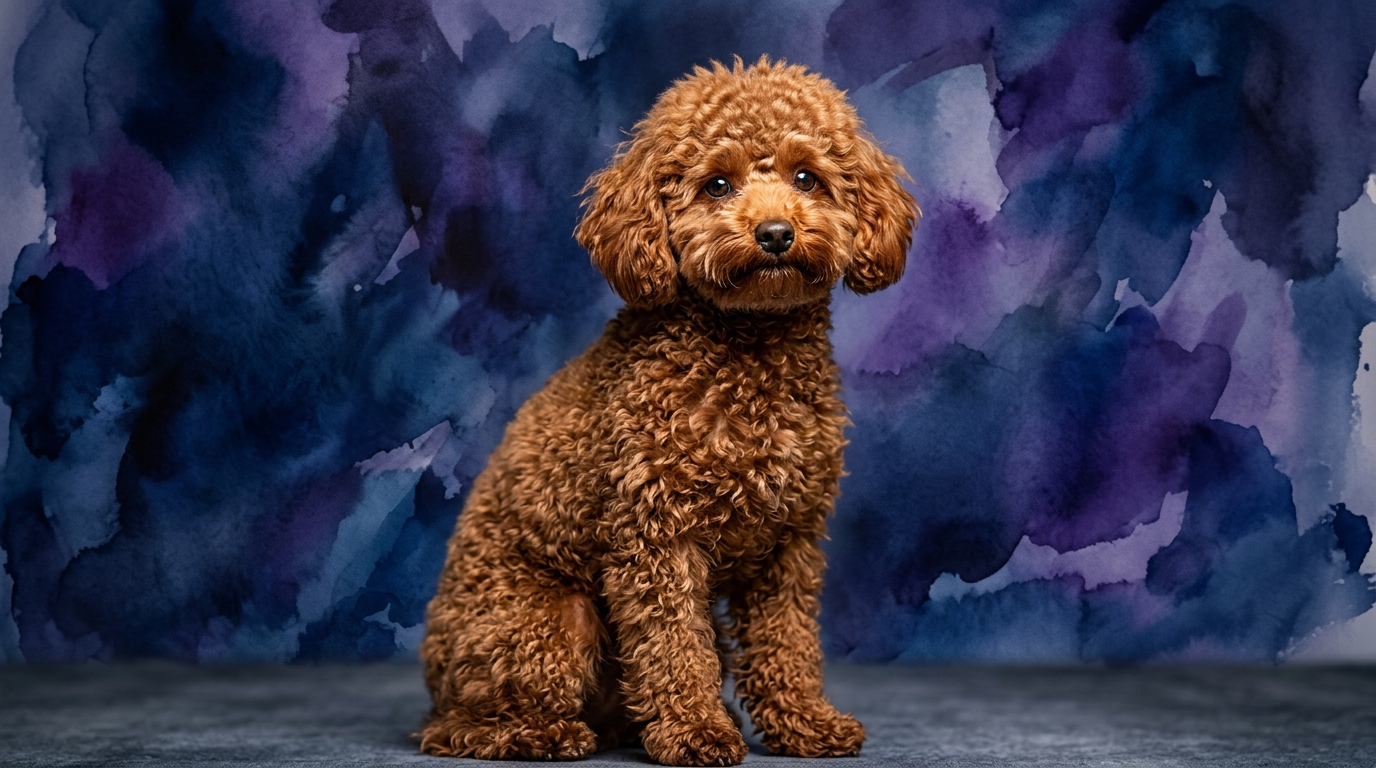
In contrast, the **Toy Poodle (Coren rank #2)** showcases a different set of cognitive strengths:
**Problem Solving (5/5):** Toy Poodles demonstrate exceptional aptitude for problem-solving, quickly analyzing new situations and devising creative solutions. They are adept at understanding cause-and-effect relationships, figuring out how to open gates, manipulate puzzle toys, or navigate complex environments to achieve a goal. Their cognitive flexibility allows for rapid adaptation and insight.
**Training Speed (5/5):** These dogs learn new commands and complex sequences with remarkable speed and enthusiasm. Their eagerness to please, combined with sharp cognitive processing, means they grasp concepts in very few repetitions. They thrive on mental engagement and are highly responsive to positive reinforcement, making them exceptionally trainable.
**Social Intelligence (3/5):** Toy Poodles possess a good level of social understanding, capable of reading human emotions and subtle cues. They form strong attachments and can be quite empathetic, often mirroring the moods of their owners. While discerning, they are generally outgoing and enjoy interacting within their social circle.
**Instinctive Drive (3/5):** The Toy Poodle's instinctive drive is often channeled into companionship and active engagement. While not primarily a hunting or guarding breed, they possess an inherent curiosity and a desire for interaction, which can manifest as an eagerness to participate in family activities or learn new tricks.
**Memory (5/5):** Toy Poodles exhibit outstanding memory retention. They remember commands, routines, and experiences with remarkable clarity and for extended periods. This contributes significantly to their ease of training, as they rarely forget a learned behavior, even after a long break.
Where the Bullmastiff Wins Cognitively
While the Bullmastiff does not outscore the Toy Poodle in any of the five measured cognitive dimensions, their unique blend of intelligence shines in specific, real-world applications. Their Problem Solving (3/5) and Social Intelligence (3/5) scores, combined with their Instinctive Drive (3/5) for protection, translate into a profound, deliberate guardianship. A Bullmastiff excels at assessing potential threats with a calm, discerning nature, often choosing to deter rather than escalate, a complex decision-making process rooted in their breed history. This isn't about quick tricks but about a steadfast, intuitive understanding of safety and boundaries, making them unparalleled in their role as a devoted, watchful companion. Their memory, though a 3/5, is particularly strong for territorial markers and established family routines, contributing to their unwavering reliability in their home environment.
Where the Toy Poodle Wins Cognitively
The Toy Poodle’s cognitive strengths are pronounced, particularly in areas demanding rapid mental agility and retention. Scoring a perfect 5/5 in Problem Solving, Training Speed, and Memory, they demonstrate an exceptional capacity for learning and adaptation. A Toy Poodle frequently devises ingenious ways to navigate challenges, whether it’s figuring out a complex puzzle feeder or understanding multi-step commands. Their superior memory means once a task is learned, it is deeply ingrained, requiring minimal review. This combination makes them masters of obedience, agility, and trick training, showcasing a profound ability to process information, make connections, and execute intricate sequences with precision and enthusiasm.
Which is Easier to Train and Why
Without question, the Toy Poodle presents a significantly easier training experience compared to the Bullmastiff, largely due to their disparate scores in Training Speed, Problem Solving, and Memory. The Toy Poodle's 5/5 Training Speed indicates an immediate grasp of new commands and an eagerness to engage in structured learning. Their exceptional Problem Solving (5/5) means they quickly understand what is being asked of them and how to achieve the desired outcome, often anticipating the next step. Coupled with their outstanding Memory (5/5), they retain lessons with remarkable permanence, making advanced training and consistent behavior a natural progression. For instance, a Toy Poodle might learn a multi-stage agility course in a few sessions, remembering each sequence with precision.
In contrast, the Bullmastiff's 3/5 in Training Speed, Problem Solving, and Memory suggests a more deliberate and independent approach to learning. While capable of mastering commands, they often require more repetitions and a highly consistent, patient handler. Their problem-solving style is less about rapid adaptation and more about thoughtful consideration, which can sometimes be perceived as stubbornness in a training context. For example, a Bullmastiff might learn 'sit' reliably, but integrating it into a complex routine with distractions demands greater effort and patience. They are motivated by strong, positive relationships and clear direction rather than an inherent desire for constant mental challenges. Their behavioral differences stem from their protective heritage, bred to think for themselves when guarding, which translates to a discerning approach to training.
Which Suits Active Owners vs. Relaxed Owners
The cognitive and temperamental profiles of these two breeds lend themselves to very different owner lifestyles. The Toy Poodle, despite its diminutive size, thrives with active owners who can provide ample mental stimulation and consistent physical exercise. Their high Problem Solving and Memory scores mean they require daily engagement through training sessions, puzzle toys, and interactive play to prevent boredom and channel their considerable mental energy constructively. Owners who enjoy dog sports like agility or obedience will find a highly cooperative and enthusiastic partner. They are not content to simply lounge; their keen minds demand regular challenges and opportunities to learn and perform.
Conversely, the Bullmastiff is generally a better fit for relaxed owners who appreciate a calm, steadfast companion and understand the nuances of a guardian breed. While they require regular, moderate exercise to maintain physical health, their mental stimulation needs are often met through consistent routines, clear boundaries, and the quiet companionship of their family. Their lower scores don't mean they are unresponsive, but rather that their intellectual engagement is more about understanding their role and household dynamics than mastering complex tasks. They are content with predictable environments and thrive on security, making them ideal for owners who prefer a tranquil pace and a dog whose presence offers quiet reassurance.
The Verdict
Choose a Bullmastiff if you seek a calm, deeply loyal guardian who offers quiet companionship and thrives on stable routines and clear, consistent leadership.
Opt for a Toy Poodle if you desire an agile, highly trainable companion eager for mental challenges, constant interaction, and thrives on learning complex tasks and activities.
🧠 Find Your Pet's IQ Score
Our Pet IQ Lab assessment covers 25+ tests across 5 cognitive dimensions — personalized to your breed.
Take the Full IQ Test →Frequently Asked Questions
Is a Bullmastiff difficult to train because of its lower IQ scores?
No, a Bullmastiff isn't 'difficult' but requires a different approach. Their 3/5 training speed means they need more consistency and patience, and their independent nature from their guardian role means they respond best to calm, firm, and positive reinforcement, rather than repetitive drills.
Do Toy Poodles need a lot of exercise despite their small size?
Toy Poodles have moderate physical exercise needs, but their 5/5 problem-solving and memory scores mean they require significant mental stimulation. Daily walks should be supplemented with puzzle toys, training sessions, and interactive games to keep their sharp minds engaged and prevent boredom.
Can Bullmastiffs participate in dog sports?
While not typically excelling in high-speed or complex agility due to their build and moderate training speed, Bullmastiffs can enjoy activities like obedience, scent work, or even therapy work. Their stable temperament and loyalty make them good candidates for tasks that value patience and a calm demeanor.