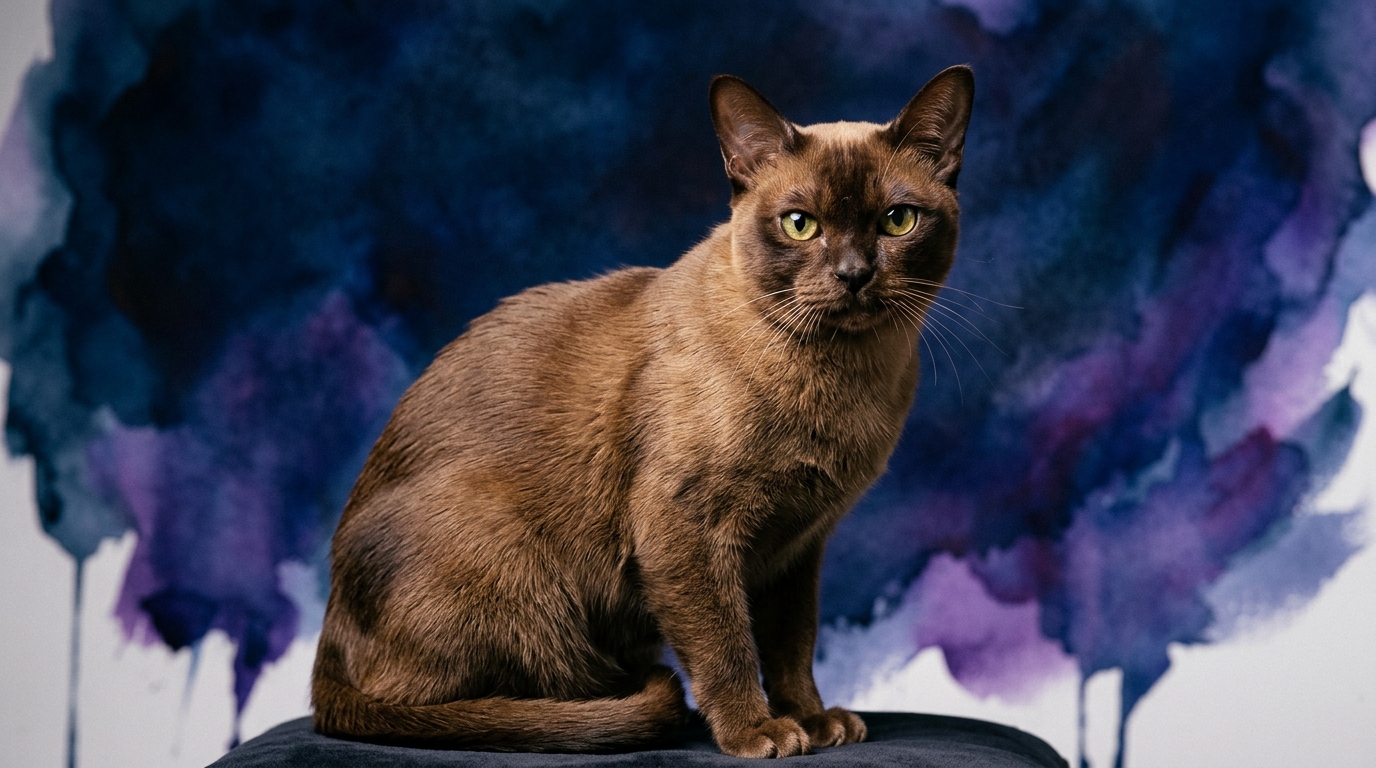
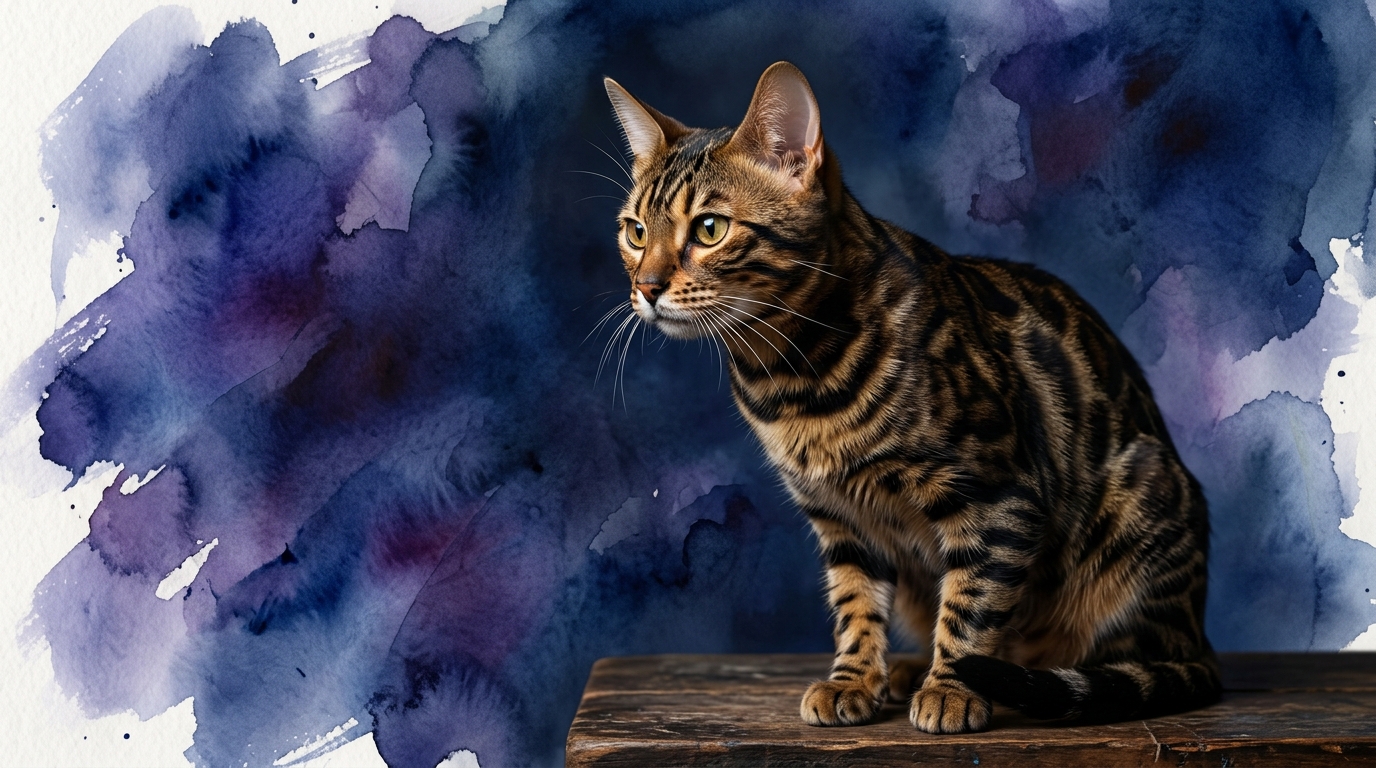
Side-by-Side IQ Profile: Burmese vs. Bengal
The Cosmic Pet Pet IQ Lab assesses feline intelligence across five key dimensions, providing a granular view of each breed's cognitive strengths. Understanding these profiles is crucial for appreciating their unique ways of processing information and interacting with their world.
**Burmese**
**Problem Solving (4/5):** Adept at navigating complex environments, the Burmese employs methodical trial-and-error for tasks like opening cabinets, demonstrating a good grasp of cause-and-effect within their surroundings.
**Training Speed (5/5):** Exhibiting remarkable swiftness, they pick up new commands and routines with exceptional ease, forming associations quickly and proving highly receptive to positive reinforcement, making them profoundly rewarding to teach.
**Social Intelligence (5/5):** Possessing unparalleled understanding of social cues, they excel at forming deep, reciprocal bonds, anticipating owner moods and seamlessly integrating into a household's emotional fabric.
**Instinctive Drive (3/5):** Their innate predatory drive is moderate, focusing more on interactive play with humans rather than intense, independent pursuit of prey simulations, often directing energy towards social engagement.
**Memory (4/5):** Demonstrating strong recall for routines, people, and spatial layouts, they remember treat locations and human schedules, contributing to consistent behavior and adaptability in familiar environments.
**Bengal**
**Problem Solving (5/5):** Displaying exceptional analytical aptitude, Bengals approach challenges with inventive strategies, notorious for figuring out complex puzzles and opening latches, showcasing high cognitive flexibility.
**Training Speed (4/5):** Learning at a rapid pace, they absorb new information quickly and respond well to structured training, mastering various commands, often fueled by innate curiosity and desire for engagement.
**Social Intelligence (4/5):** Forming strong attachments, they are highly communicative, using diverse vocalizations, integrating well into family dynamics, though their interactions might be more on their own terms, driven by playful engagement.
**Instinctive Drive (5/5):** Possessing a robust and active predatory instinct from wild ancestry, this manifests in intense chasing, climbing, and "hunting" behaviors, requiring ample physical and mental stimulation.
**Memory (5/5):** Demonstrating outstanding recall, they remember intricate details about their environment, past experiences, and learned behaviors over long periods, aiding problem-solving and navigation based on previous success.
Where the Burmese Wins Cognitively
The Burmese truly shines in its perfect **Training Speed (5/5)** and exceptional **Social Intelligence (5/5)**. Their lightning-fast ability to grasp new concepts means they master commands and routines with remarkable ease, often requiring fewer repetitions. This isn't just rote learning; it's a deep understanding of desired behaviors, allowing rapid adaptation to household rules or specific tasks like leash walking. Their superior social intelligence fosters an uncanny ability to attune themselves to human companions, actively participating in the emotional landscape of the home. This manifests as a profound understanding of body language and mood, enabling them to offer comfort or initiate play at opportune moments, creating exceptionally strong, reciprocal bonds.
Where the Bengal Wins Cognitively
The Bengal's cognitive strengths are most evident in its exceptional **Problem Solving (5/5)**, robust **Instinctive Drive (5/5)**, and superior **Memory (5/5)**. Their problem-solving prowess involves sophisticated observation, analysis, and inventive execution, enabling them to deconstruct complex mechanisms like child-proof latches or puzzle feeders. This focus suggests a genuine understanding of how things work, making them adept at navigating challenging environments and finding creative solutions to perceived obstacles. Their powerful instinctive drive, linked to their wild heritage, fuels relentless curiosity and a need for exploration, manifesting as an intrinsic urge to stalk, hunt, and climb. This drive, combined with their sharp memory, allows them to recall intricate environmental details and past successful "hunts," aiding in their continuous quest for stimulation and discovery.
Which Is Easier to Train and Why
The Burmese holds a distinct advantage in ease of training, primarily due to its perfect **Training Speed (5/5)** and exceptional **Social Intelligence (5/5)**. Their rapid assimilation means they pick up commands with impressive swiftness, requiring less consistent reinforcement. Their high social intelligence further amplifies this, as they are inherently eager to please and deeply attuned to owner intentions, making them willing participants in training sessions. This cooperative nature, viewing training as a shared activity, makes them remarkably compliant and adaptable, responding particularly well to positive reinforcement.
The Bengal, despite a commendable **Training Speed (4/5)**, presents a different training dynamic. While capable of mastering complex tricks, their powerful **Instinctive Drive (5/5)** and intense curiosity often challenge focus during training. Their inherent drive to explore and "hunt" can override attention, requiring more creative, persistent methods and channeling instincts into constructive activities like advanced puzzle toys or agility. Their problem-solving can also lead them to learn how to circumvent rules. Thus, while both are trainable, the Burmese typically offers a smoother, more intuitive experience due to its intrinsic desire for cooperative interaction.
Which Suits Active Owners vs. Relaxed Owners
The Bengal, with its perfect **Problem Solving (5/5)**, dominant **Instinctive Drive (5/5)**, and superior **Memory (5/5)**, is an ideal companion for active owners providing consistent, varied mental and physical stimulation. These cats thrive with ample opportunities to climb, explore, and engage in "hunting" play, mimicking their wild heritage. Owners who enjoy teaching complex tricks, setting up agility, or regular interactive play will find the Bengal incredibly rewarding. Their high energy and analytical minds mean under-stimulation can lead to destructive or excessive vocalization, making them less suitable for sedentary lifestyles.
Conversely, the Burmese, with its exceptional **Training Speed (5/5)** and unparalleled **Social Intelligence (5/5)**, fits owners prioritizing deep companionship and interactive social engagement, with less emphasis on intense physical demands. While playful, their energy directs towards human interaction, rather than relentless independent exploration. They are content with engaging play, cuddles, and being an integral part of daily life. Owners valuing a communicative, affectionate, and responsive cat eager for shared activities will find the Burmese a devoted and delightful companion, adapting well to more relaxed home environments with consistent human attention.
The Verdict
Opt for a Burmese if you seek a highly trainable, deeply affectionate companion eager to engage in social interaction and form a profound emotional bond, thriving on cooperative play and consistent human presence.
Select a Bengal if you are an active owner prepared to channel a powerful instinctive drive and brilliant problem-solving into stimulating activities, offering extensive opportunities for exploration, climbing, and complex play.
🧠 Find Your Pet's IQ Score
Our Pet IQ Lab assessment covers 25+ tests across 5 cognitive dimensions — personalized to your breed.
Take the Full IQ Test →Frequently Asked Questions
Are Burmese cats truly easier to train than Bengals?
Yes, generally. The Burmese's perfect Training Speed and Social Intelligence mean they pick up commands with remarkable ease, highly motivated by human interaction, making training smoother. Bengals are capable learners, but their intense instinctive drive means their attention can be harder to maintain, often requiring more creative methods.
Which breed is more likely to get along with other pets?
The Burmese, with its perfect Social Intelligence, often adapts more readily to multi-pet households, integrating seamlessly due to its empathetic nature. Bengals can coexist, but their strong predatory drive might require careful introductions, especially with smaller animals, and their interactions are often more play-focused.
What kind of enrichment is best for each breed's cognitive needs?
For the Burmese, enrichment should focus on interactive play that strengthens bonds, like fetch or puzzle toys, leveraging their social intelligence. Bengals thrive on vertical climbing spaces, complex puzzle feeders, and structured "hunt" play that satisfies their high problem-solving and strong instinctive drive.