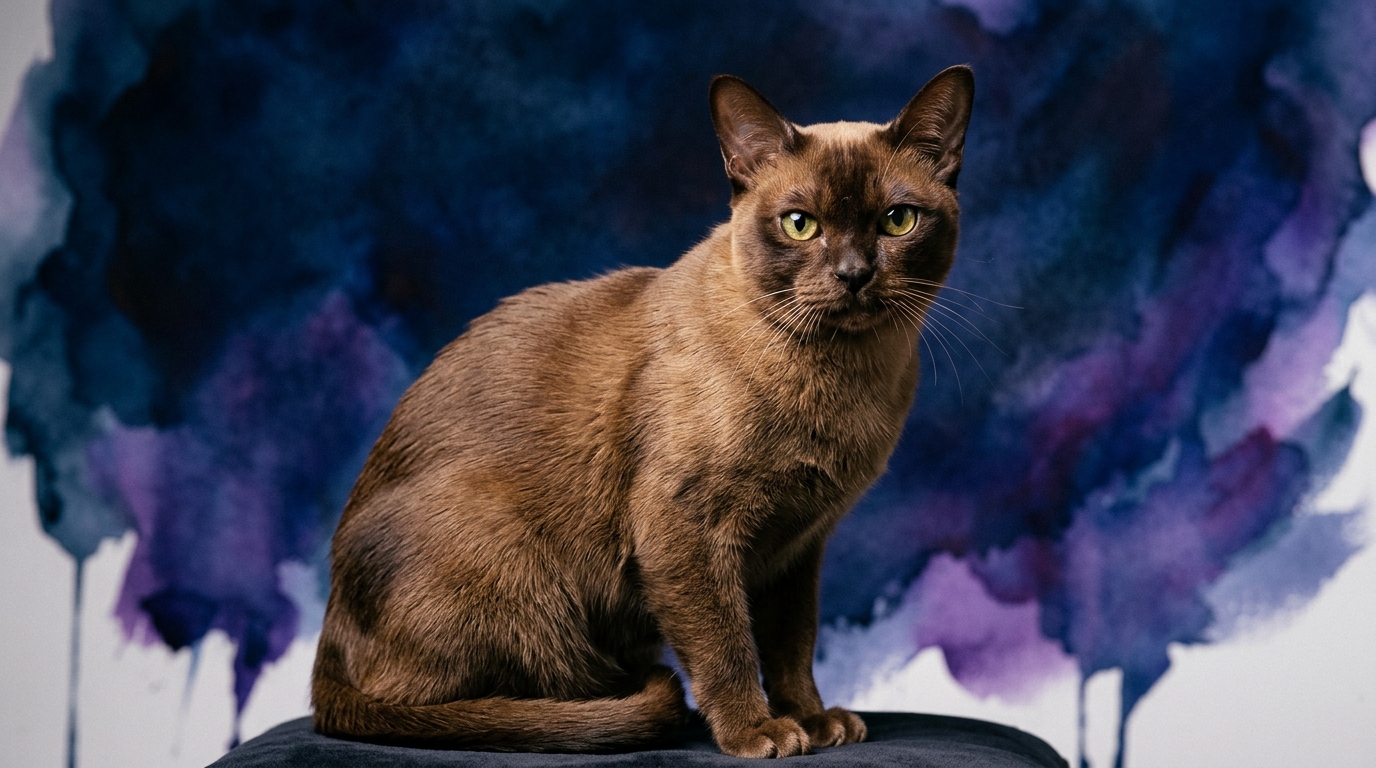
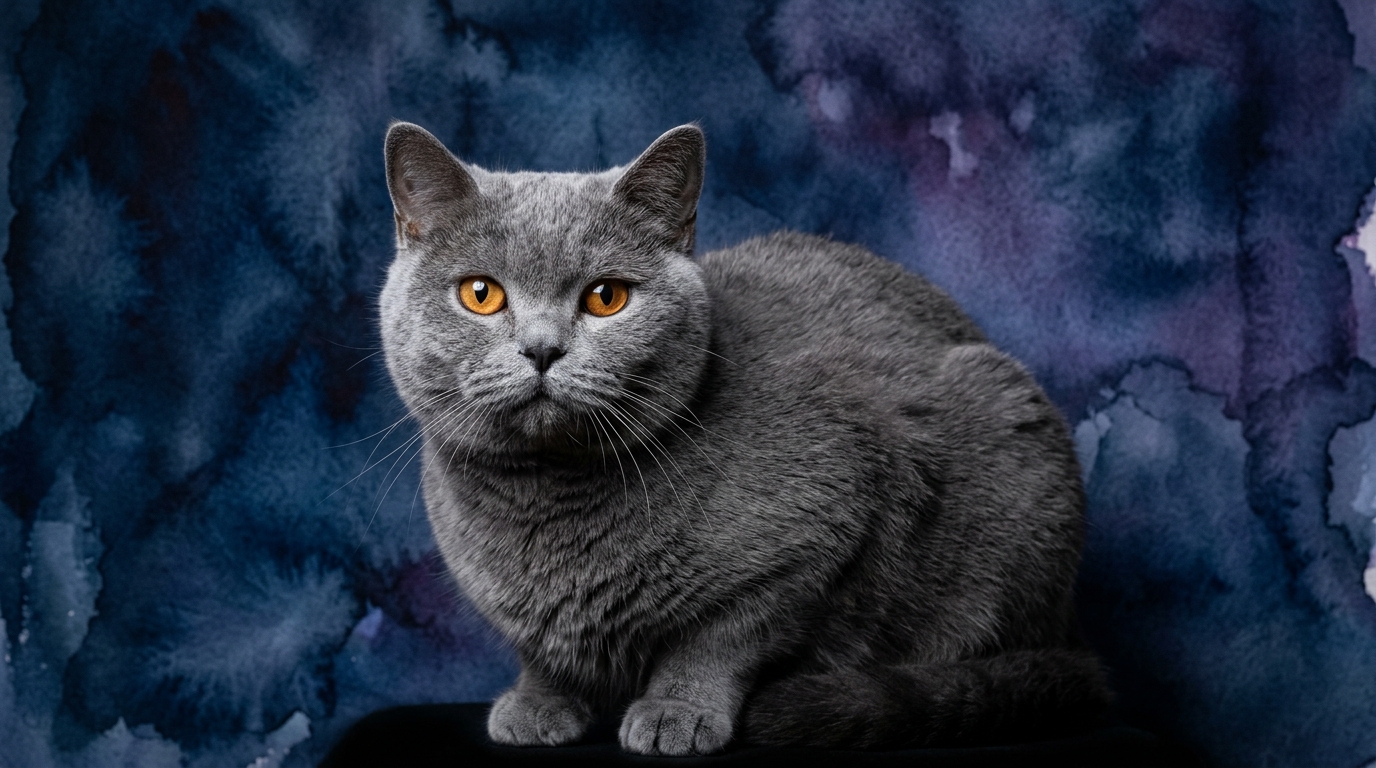
Side-by-Side IQ Profile: Burmese vs. British Shorthair
At The Cosmic Pet Pet IQ Lab, we delve into five key dimensions of feline intelligence to provide a clear picture of each breed's cognitive capabilities. For the Burmese, a breed known for its engaging personality, its IQ profile reveals a dynamic and interactive mind. Its Problem Solving is rated at 4/5, indicating a strong capacity for figuring out novel situations and manipulating objects to achieve goals, often driven by intense curiosity. Training Speed for the Burmese is an exceptional 5/5, showcasing its rapid learning curve and eagerness to engage in structured interactions. Social Intelligence also scores a perfect 5/5, highlighting its profound understanding of human cues and its deep desire for companionship and participation in family life. Its Instinctive Drive is a moderate 3/5, meaning it enjoys play that mimics hunting but isn't overwhelmingly driven by predatory urges. Finally, Memory stands at 4/5, enabling it to recall complex routines and past interactions with remarkable clarity.
In contrast, the British Shorthair, revered for its calm and composed demeanor, presents a more uniformly balanced cognitive profile. Its Problem Solving is rated at 3/5, suggesting a steady, rather than intensely driven, approach to challenges; it can navigate familiar puzzles but may not consistently seek out complex intellectual tasks. The British Shorthair's Training Speed is also 3/5, indicating it is trainable with consistency and patience, learning at a measured pace rather than with the rapid uptake of its Burmese counterpart. Social Intelligence is rated 3/5, reflecting its affectionate nature and appreciation for companionship, albeit with a preference for quiet presence over constant, intense engagement. Its Instinctive Drive matches the Burmese at 3/5, signifying a healthy but not overwhelming interest in play that simulates hunting. Memory for the British Shorthair is 3/5, providing reliable recall for daily routines and familiar people, though perhaps less acutely detailed than breeds with higher scores.
Where the Burmese Wins Cognitively
The Burmese cat consistently demonstrates cognitive advantages in areas requiring active engagement and rapid adaptation. Its superior Problem Solving (4/5) means a Burmese is more likely to investigate and overcome environmental challenges, whether it's figuring out how to open a cabinet or creatively accessing a favorite high perch. This breed's intellectual curiosity often translates into playful exploration of its surroundings, turning everyday objects into stimulating puzzles.
Perhaps the most striking cognitive win for the Burmese is its exceptional Training Speed (5/5) and Social Intelligence (5/5). These scores combine to create a cat that is not only eager to learn but also deeply attuned to its human companions. A Burmese will pick up commands, fetch toys, or even walk on a leash with remarkable efficiency, driven by its desire to interact and please. This strong social drive fuels its quick learning, making it a highly responsive and participatory member of the household, often initiating interaction and demonstrating a clear understanding of its role within the family dynamic. Its strong memory (4/5) further solidifies these traits, allowing it to retain a vast repertoire of learned behaviors and social cues over time.
Where the British Shorthair Wins Cognitively
While the Burmese shines in areas of active cognitive engagement, the British Shorthair's cognitive profile offers distinct advantages for owners seeking a different kind of feline companion. Their consistent 3/5 across several dimensions, particularly in Problem Solving and Social Intelligence, means they are less prone to creating mischief born from excessive curiosity or demanding constant mental stimulation. This translates to a cat that is less likely to 'puzzle out' how to open cabinets or doors, or to orchestrate complex schemes to obtain forbidden items, leading to a generally more predictable and tranquil home environment.
The British Shorthair's moderate cognitive scores reflect a cat that is intellectually present but not overwhelming. Its 3/5 in Social Intelligence means it appreciates companionship and gentle interaction without requiring intense, interactive play sessions, making it cognitively self-sufficient in a peaceful way. For owners who appreciate a cat with a steady, predictable cognitive rhythm that doesn't constantly seek to challenge its environment or its humans, the British Shorthair's balanced intellectual approach is a clear advantage. Their moderate instinctive drive (3/5) also means they are less likely to be driven by overwhelming predatory urges, leading to a calm household presence without constant demands for hunting-style play.
Which Is Easier to Train and Why?
Without question, the Burmese cat is significantly easier to train, primarily due to its outstanding Training Speed (5/5) and high Social Intelligence (5/5). These cats exhibit a remarkable eagerness to engage with their human companions and quickly form associations between actions and rewards. For instance, a Burmese can often learn to respond to its name, come when called, or even perform simple tricks like 'sit' or 'stay' after just a few repetitions, motivated by positive reinforcement and the sheer joy of interaction.
Their strong social drive means they actively seek to understand and participate in human activities, making them highly receptive students. If you're looking to teach your cat complex routines, leash training, or even stop specific undesirable behaviors, the Burmese's cognitive makeup provides a fertile ground for success. The British Shorthair, with its 3/5 Training Speed, is certainly trainable, but it requires more patience and consistency, often needing more repetitions to solidify new behaviors and less likely to actively seek out training sessions.
Which Suits Active Owners vs. Relaxed Owners?
For active owners seeking a feline companion who thrives on interaction, mental challenges, and consistent engagement, the Burmese is an ideal match. Its high Problem Solving, Training Speed, and Social Intelligence mean it will actively seek out games, puzzle toys, and opportunities to participate in family activities. A Burmese will appreciate an owner who provides plenty of interactive play, enrichment, and even takes the time to teach new tricks or commands, flourishing in an environment where its quick mind is regularly stimulated. They often follow their owners from room to room, eager to be involved in whatever is happening.
Conversely, the British Shorthair is perfectly suited for more relaxed owners who appreciate a calm, self-sufficient, and affectionate presence. Its moderate cognitive scores mean it enjoys companionship and gentle interaction but doesn't demand constant mental stimulation or intense play sessions. A British Shorthair is content to observe family life from a comfortable spot, enjoy quiet petting, and engage in short bursts of play on its own terms. They offer a soothing presence without the persistent demands for intellectual engagement that a Burmese might exhibit, making them excellent companions for those who prefer a more independent yet loving cat.
The Verdict
Choose the Burmese if you desire an interactive, highly trainable cat eager to participate in family life and thrive on mental and social engagement.
Opt for the British Shorthair if you prefer a calm, independent, and affectionate companion whose moderate cognitive demands align with a relaxed household.
🧠 Find Your Pet's IQ Score
Our Pet IQ Lab assessment covers 25+ tests across 5 cognitive dimensions — personalized to your breed.
Take the Full IQ Test →Frequently Asked Questions
Are Burmese cats prone to mischief due to their intelligence?
With a Problem Solving score of 4/5, Burmese cats are quite adept at figuring things out, which can sometimes lead to 'mischief' if they get bored. Providing plenty of puzzle toys and interactive play can channel their cognitive energy positively.
Do British Shorthairs enjoy interactive games like feather wands or laser pointers?
Yes, British Shorthairs do enjoy interactive games. Their Instinctive Drive is 3/5, meaning they appreciate play that mimics hunting, though they may not sustain intense, prolonged play sessions like more driven breeds. Short, consistent playtimes are often preferred.
How do their memory differences impact daily routines?
A Burmese (Memory 4/5) will typically pick up and adhere to routines, commands, and household rules more quickly and consistently, remembering them over longer periods. A British Shorthair (Memory 3/5) will also remember routines, but may require more consistent reinforcement and might be slightly less adaptable to sudden changes without some adjustment time.