Side-by-Side IQ Profile
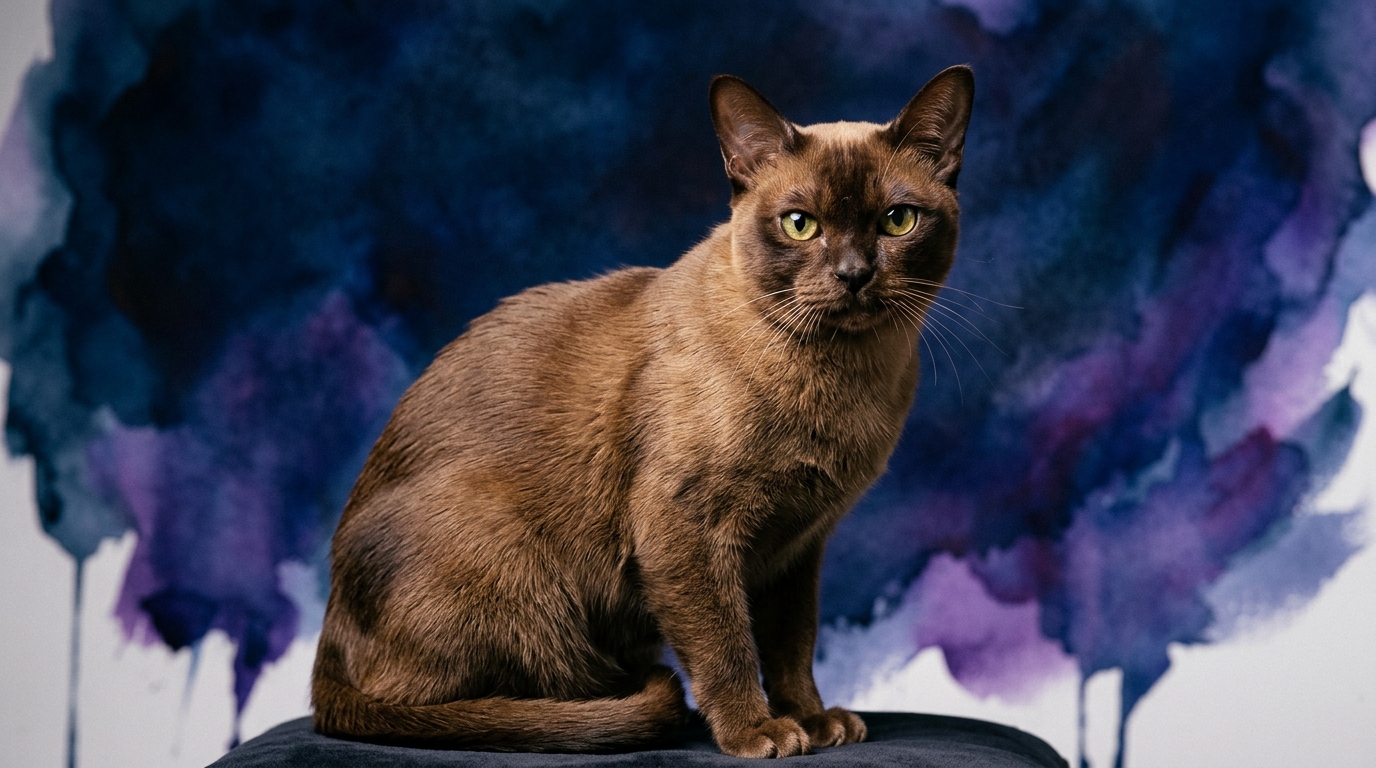
**Burmese:** This breed presents a vibrant cognitive profile, consistently excelling in areas that highlight adaptability and social engagement. Their **Problem Solving (4/5)** indicates a commendable capacity for tackling novel challenges, often demonstrating ingenuity in navigating complex environments or figuring out how to access desired objects without easily being deterred by obstacles. With an exceptional **Training Speed (5/5)**, Burmese cats stand out for their remarkable aptitude for learning new commands and routines with exceptional swiftness, their eagerness to engage making them highly receptive to structured training. Their **Social Intelligence (5/5)** is profound, showing a deep understanding of social cues and interpersonal dynamics, forming strong bonds, and often seeking out interaction. While possessing natural feline instincts for hunting and play, their **Instinctive Drive (3/5)** is moderate, balancing active play with affectionate interaction. Finally, their **Memory (4/5)** capabilities are robust, allowing recall of learned behaviors, routines, and specific individuals over extended periods, contributing significantly to their trainability and environmental navigation.
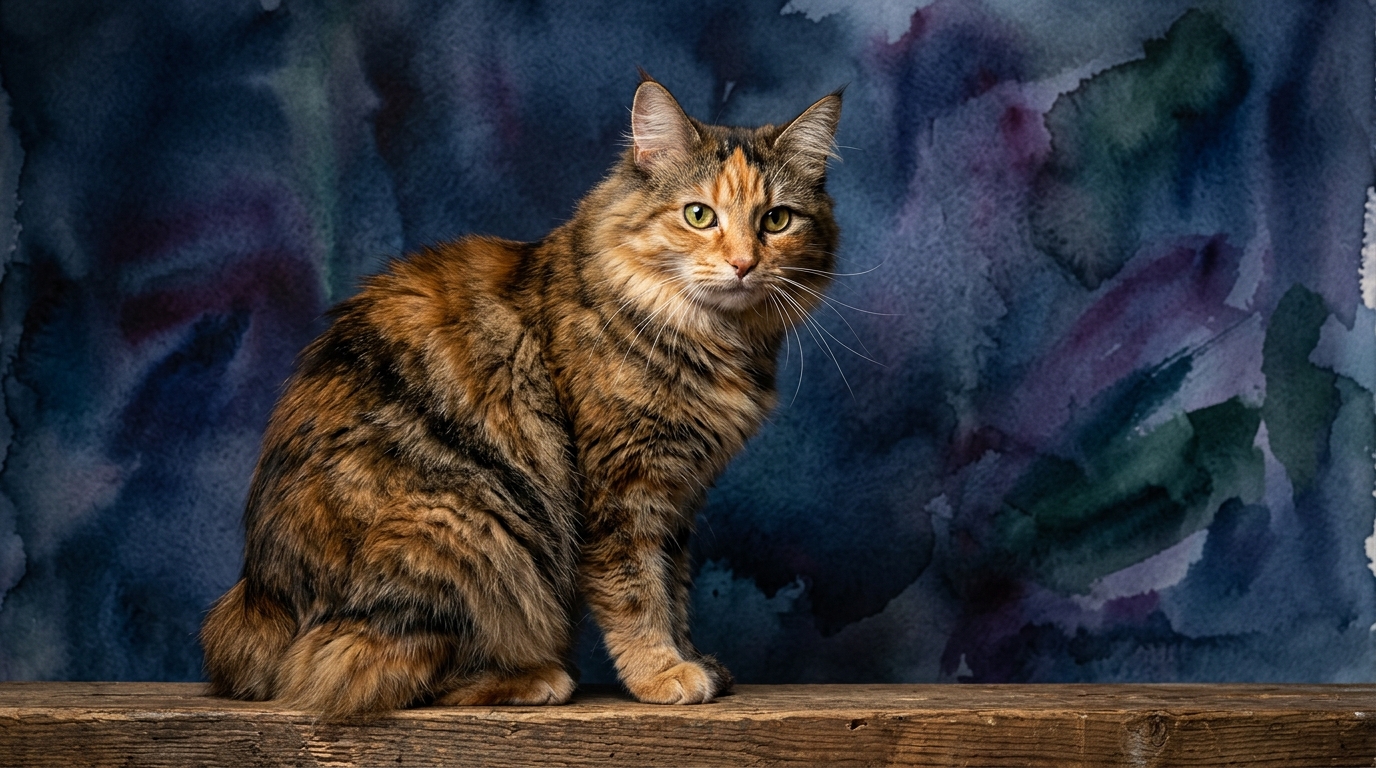
**Cymric:** The Cymric cat offers a balanced and steady cognitive makeup, providing a reliable and adaptable companion. Their **Problem Solving (3/5)** displays a solid, though not exceptional, ability to solve problems, typically managing straightforward puzzles or familiar challenges but potentially requiring more guidance for complex tasks. In terms of **Training Speed (3/5)**, their learning pace is steady and average; they are capable of acquiring new skills but generally require more time and consistent reinforcement to master commands or routines. Cymrics are companionable and form bonds with their families, showing a moderate level of **Social Intelligence (3/5)**; they appreciate interaction but tend to be less overtly demanding or deeply attuned to subtle human emotional shifts than highly social breeds. Similar to the Burmese, their **Instinctive Drive (3/5)** is moderate, enjoying play that mimics hunting behaviors without being consumed by these urges, making them well-suited for indoor living. Their **Memory (3/5)** functions at a reliable, average level, enabling them to remember routines, boundaries, and familiar faces, though their recall might not be as sharp for intricate details or less frequently encountered situations.
Where Burmese Wins Cognitively
The Burmese cat consistently demonstrates a cognitive edge across multiple domains, making them a standout for owners seeking a highly interactive and engaging feline companion. Their superior problem-solving skills (4/5) mean they are often adept at figuring out how to open cabinets, retrieve hidden toys, or navigate complex multi-level cat trees with minimal instruction. This translates into a cat that isn't easily bored and actively seeks mental stimulation, often devising their own games. Coupled with an exceptional training speed (5/5), Burmese learn new tricks, leash training, or even complex agility courses with remarkable efficiency. They quickly grasp cause-and-effect, making positive reinforcement highly effective. Furthermore, their outstanding social intelligence (5/5) means they are profoundly connected to their human families, often anticipating needs, offering comfort, and engaging in reciprocal communication. They don't just coexist; they actively participate in the household's social fabric, reading subtle human cues and responding in kind. This deep social understanding, combined with a robust memory (4/5), allows them to remember specific interactions, routines, and even the emotional states of their favorite people, fostering incredibly strong and nuanced relationships.
Where Cymric Wins Cognitively
While the Cymric may not outscore the Burmese in raw cognitive metrics, its particular blend of traits presents a unique set of 'wins' for specific living situations and owner preferences. Their moderate instinctive drive (3/5), matching that of the Burmese, means they are typically content with indoor life and regular, but not constant, play sessions. This balanced drive can be a significant advantage for owners seeking a companion that isn't overly demanding of constant stimulation to satisfy deep-seated hunting urges. Furthermore, the Cymric's moderate social intelligence (3/5) can be seen as a 'win' for those who appreciate a cat with a steady, affectionate presence without the intense, often conversation-seeking, social demands of a Burmese. They form loving bonds but also value their independent moments, offering a comfortable equilibrium between companionship and self-sufficiency. This balanced cognitive profile results in a predictable and generally calm demeanor, making them excellent choices for quieter homes where a less overtly 'busy' intellectual presence is preferred, allowing for a relaxed, harmonious coexistence without constant mental challenges or intensive interactive play.
Which is Easier to Train and Why
Without question, the Burmese is significantly easier to train than the Cymric, a distinction rooted deeply in their respective cognitive profiles. The Burmese's exceptional Training Speed (5/5) is a direct indicator of their rapid learning ability; they quickly form associations between commands, actions, and rewards. This is further amplified by their high Problem Solving (4/5) and Social Intelligence (5/5). A Burmese will actively try to understand what you want, is motivated by interaction, and possesses the cognitive flexibility to grasp complex sequences. For example, a Burmese might learn to fetch a specific toy after only a few repetitions, motivated by the social reward of engaging with their human. In contrast, the Cymric's moderate Training Speed (3/5) means they require more patience and consistent repetition. While they are certainly trainable, their learning curve is generally slower, and they might not show the same intrinsic drive to 'figure out' the training task. Their more moderate Social Intelligence (3/5) also means they might be less intensely motivated by social praise alone, often responding better to tangible rewards and a more straightforward, less nuanced approach to instruction. Real behavioral differences include the Burmese often initiating interactive play that mimics training scenarios, whereas the Cymric might wait for cues and prefer simpler, more predictable games.
Which Suits Active Owners vs Relaxed Owners
The cognitive profiles of the Burmese and Cymric clearly delineate which breed aligns better with different owner lifestyles. The Burmese, with its high Problem Solving (4/5), outstanding Training Speed (5/5), and profound Social Intelligence (5/5), is an ideal match for active owners. These are individuals who thrive on engaging deeply with their pets, enjoy teaching tricks, providing puzzle toys, and participating in interactive play sessions that challenge a cat's intellect. A Burmese will actively seek out engagement, 'talk' to its owners, and flourish when given opportunities for mental stimulation and consistent social interaction. They thrive in environments where their curious minds and affectionate nature are regularly exercised and appreciated. Conversely, the Cymric, characterized by moderate scores across the board (Problem Solving 3/5, Training Speed 3/5, Social Intelligence 3/5, Memory 3/5), is better suited for more relaxed owners. These owners appreciate a companion that is affectionate but also content with independent periods. A Cymric enjoys attention and play, but its demands for intense mental engagement or constant social interaction are lower. They are happy to observe, cuddle on the couch, and engage in gentle play without needing to constantly 'work out' new challenges or maintain a high level of interactive communication. They provide a comforting, stable presence without requiring the same level of intellectual stimulation as their Burmese counterparts.
The Verdict
Opt for the Burmese if you are an active, engaging owner who desires a highly interactive, communicative, and intellectually stimulating companion eager to learn and participate fully in your daily life.
Select the Cymric if you prefer a loving, steady companion that offers a balanced blend of affection and independence, thriving in a more relaxed household without constant demands for intense mental or social engagement.
🧠 Find Your Pet's IQ Score
Our Pet IQ Lab assessment covers 25+ tests across 5 cognitive dimensions — personalized to your breed.
Take the Full IQ Test →Frequently Asked Questions
Are Burmese cats prone to destructive behavior if not mentally stimulated?
Burmese cats, with their high problem-solving abilities and social intelligence, do require mental engagement. If bored or lacking interaction, they might invent their own 'games,' which could involve exploring forbidden areas or manipulating objects in ways owners might consider disruptive.
Do Cymric cats bond closely with their families despite their moderate social intelligence?
Yes, Cymric cats form strong, affectionate bonds with their families, often being quite devoted. Their moderate social intelligence means they appreciate companionship but tend to be less overtly demanding of constant interaction, valuing both closeness and independent time.
Can Cymric cats be taught tricks, or are they too difficult to train?
Cymric cats can certainly be taught tricks and commands, though their training speed is more moderate than some other breeds. Patience, consistent positive reinforcement, and shorter training sessions will yield good results, allowing them to learn a variety of behaviors.