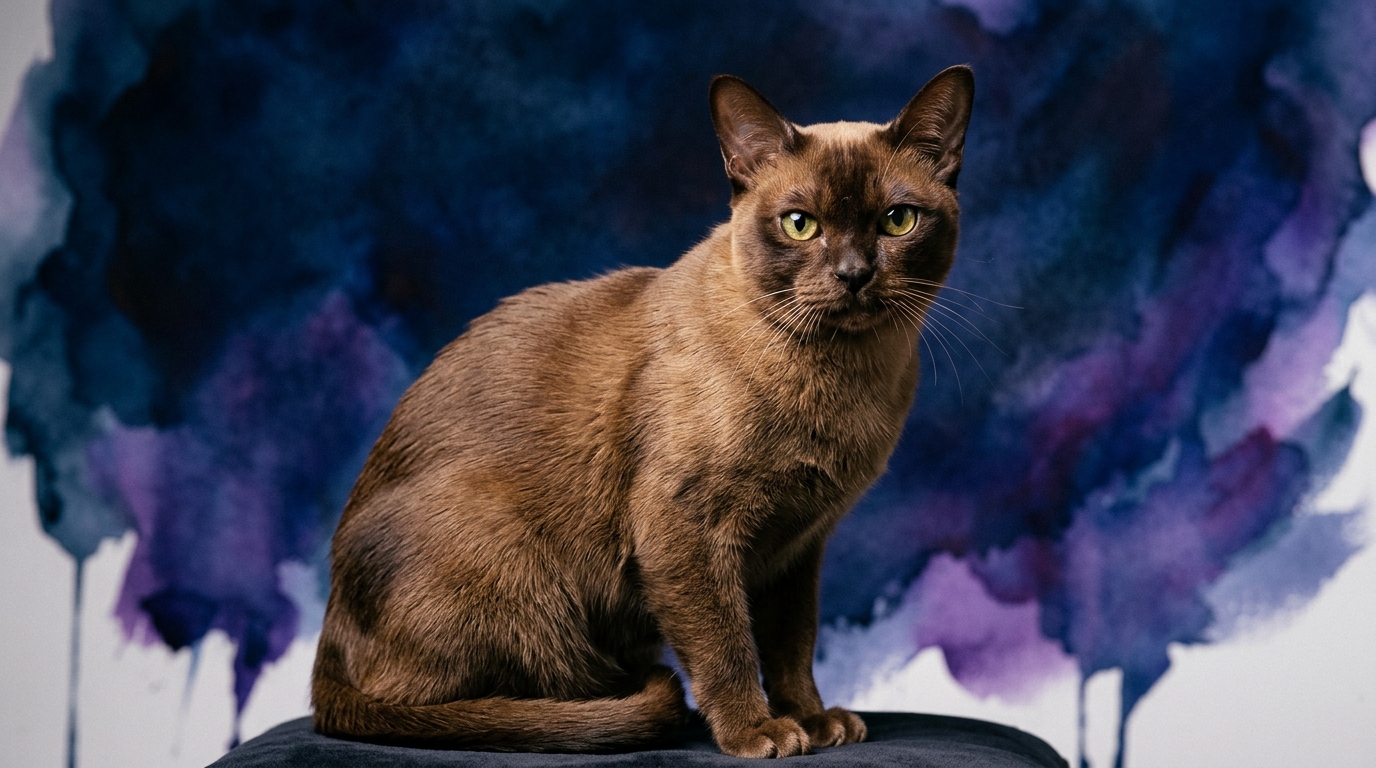
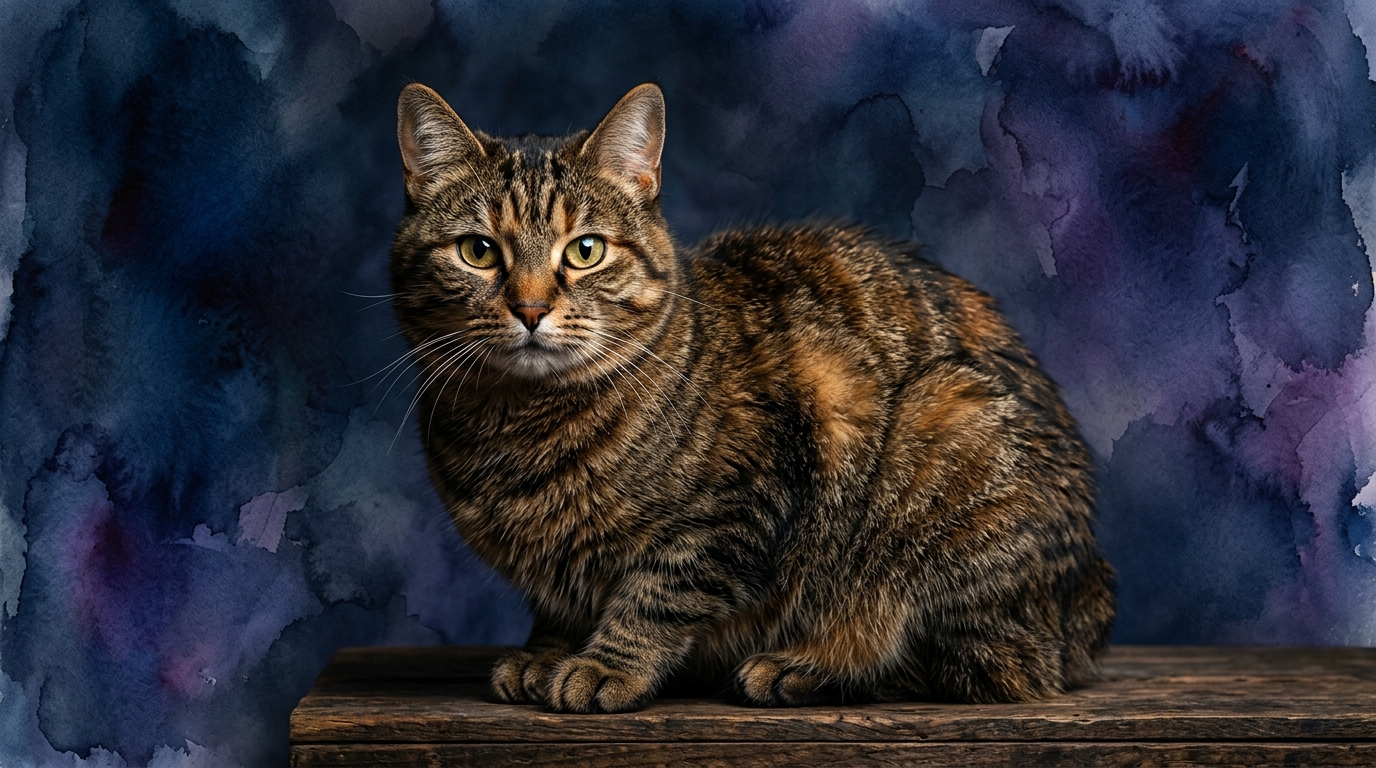
Side-by-Side IQ Profile: Burmese vs. Manx
The Cosmic Pet Pet IQ Lab meticulously evaluates feline intelligence across five crucial dimensions, offering a detailed look into the mental makeup of each breed.
**Burmese:**
**Problem Solving (4/5):** These cats exhibit a notable capacity for figuring out their environment. They are often observed manipulating objects to achieve goals, like opening cabinets or finding clever ways to access desired spaces.
**Training Speed (5/5):** The Burmese stands out for its exceptional ability to rapidly grasp new commands and routines. They learn quickly from positive reinforcement, adept at mastering tricks or adapting to complex household rules with minimal repetition.
**Social Intelligence (5/5):** Their strong social acumen allows them to form deep, nuanced bonds. Burmese cats are highly attuned to human emotions and body language, often responding with comforting gestures or initiating interactive play.
**Instinctive Drive (3/5):** While possessing a balanced predatory instinct, it's not overwhelmingly dominant. They enjoy playful hunting simulations but are generally content with interactive toys rather than exhibiting intense, persistent hunting behaviors.
**Memory (4/5):** Burmese cats possess a robust memory, enabling them to recall specific locations of toys, the routines of their human companions, and learned commands over extended periods.
**Manx:**
**Problem Solving (3/5):** Manx cats demonstrate a moderate aptitude for problem-solving. They can navigate common household challenges but might require more trial-and-error or human assistance, often preferring straightforward solutions.
**Training Speed (3/5):** These felines learn at a steady pace, requiring consistent and patient reinforcement to integrate new behaviors. While capable of learning commands, their acquisition might be slower, necessitating more repetition.
**Social Intelligence (3/5):** Manx cats are generally sociable and enjoy companionship, but their social interactions tend to be more straightforward. They appreciate affection but might not display the same level of emotional mirroring or complex social engagement.
**Instinctive Drive (3/5):** Similar to the Burmese, the Manx possesses a balanced instinctive drive. They engage in play that mimics hunting behaviors and enjoy exploring, but their focus on prey drive is moderate.
**Memory (3/5):** Manx cats have a functional memory, capable of remembering routines, familiar faces, and the general layout of their environment. Their recall of specific, less frequently reinforced details might be less sharp.
Where the Burmese Wins Cognitively
The Burmese cat's cognitive profile distinctly outshines the Manx in several key areas. Their superior Problem Solving score of 4/5 means they are inherently more adept at navigating complex environments, often devising ingenious methods to reach high shelves or open doors. This speaks to a flexible mind that can analyze situations and formulate effective solutions. Furthermore, their Social Intelligence, rated at a remarkable 5/5, indicates an unparalleled ability to understand and respond to human emotions and social cues. A Burmese might not only recognize your mood but actively seek to comfort or engage you, demonstrating a deep empathetic connection. Lastly, their 4/5 Memory score ensures that once a lesson is learned or a routine established, it sticks, contributing to consistent behavior.
Where the Manx Wins Cognitively
While the Burmese generally exhibits higher scores, the Manx cat's cognitive profile offers an advantage in terms of consistency and a less demanding intellectual presence. Their uniform score of 3/5 across Problem Solving, Training Speed, Social Intelligence, and Memory, coupled with an Instinctive Drive of 3/5, speaks to a balanced and predictable cognitive temperament. This means a Manx cat is less likely to constantly seek out complex mental challenges or require intricate engagement. Their moderate social intelligence, for instance, translates into a companion who is affectionate and present but might not demand the same level of emotional mirroring. For owners seeking a companion with a steady, uncomplicated mental disposition, where cognitive demands are consistent rather than intensely variable, the Manx's balanced profile can be a significant advantage, fostering a calm household dynamic.
Training Ease: Burmese vs. Manx
Without question, the Burmese cat presents a significantly easier training experience due to its outstanding Training Speed (5/5) and strong Problem Solving abilities (4/5). Their rapid acquisition of new information means they pick up commands, tricks, and desired behaviors with remarkable swiftness, often after just a few repetitions. This quick learning curve is amplified by their problem-solving skills, allowing them to understand the 'why' behind a command and adapt their responses effectively. A Burmese might quickly associate a clicker with a treat and understand the sequence required for an action. In contrast, the Manx, with its 3/5 scores in both Training Speed and Problem Solving, requires more patience and consistency. While trainable, they will need more reinforcement and repetition to solidify new behaviors, making the training journey a more gradual process.
Matching Cognitive Profiles to Lifestyles
For active owners who thrive on interaction and mental engagement, the Burmese cat is an ideal match. Their high scores in Social Intelligence (5/5), Problem Solving (4/5), and Training Speed (5/5) mean they not only enjoy but often crave interactive play, puzzle toys, and learning new things. They can be taught complex tricks, enjoy leash walks, and actively participate in household activities, making them stimulating companions for a dynamic lifestyle. They will thrive where their cognitive abilities are regularly challenged and their social needs are met.
Conversely, for relaxed owners seeking a more laid-back yet affectionate companion, the Manx cat fits the bill. Their consistent 3/5 scores across most cognitive dimensions suggest a cat that is content with a more moderate level of mental stimulation and social engagement. While they appreciate attention and play, they are less likely to demand constant intellectual challenges or complex social interactions. They are happy to curl up for a quiet evening, enjoy routine play sessions, and offer steady companionship without requiring extensive daily mental gymnastics.
The Verdict
If you desire a highly interactive, quick-learning cat eager for complex engagement, training, and deep social connection, the Burmese's exceptional cognitive agility is your ideal match.
If you prefer a steadfast, affectionate companion with a balanced and predictable cognitive profile, content with moderate stimulation and a calmer presence, the Manx will beautifully complement your home.
🧠 Find Your Pet's IQ Score
Our Pet IQ Lab assessment covers 25+ tests across 5 cognitive dimensions — personalized to your breed.
Take the Full IQ Test →Frequently Asked Questions
Are Burmese cats prone to behavioral issues due to their high intelligence?
Burmese cats are not inherently prone to behavioral issues, but their high cognitive abilities mean they require consistent mental stimulation and social interaction. Lack of engagement can lead to boredom, which might manifest as seeking attention through playful mischief or exploring forbidden areas.
Can a Manx cat learn tricks or walk on a leash?
Yes, a Manx cat can certainly learn tricks and walk on a leash, though it may take more time and consistent effort compared to a Burmese. Their moderate training speed means patience and positive reinforcement are key to success, building on their steady learning pace.
How do their instinctive drives compare for indoor living?
Both Burmese and Manx cats have a moderate instinctive drive (3/5), making them well-suited for indoor living. They enjoy play that mimics hunting but are generally satisfied with interactive toys and do not typically exhibit an overwhelming urge for outdoor hunting.