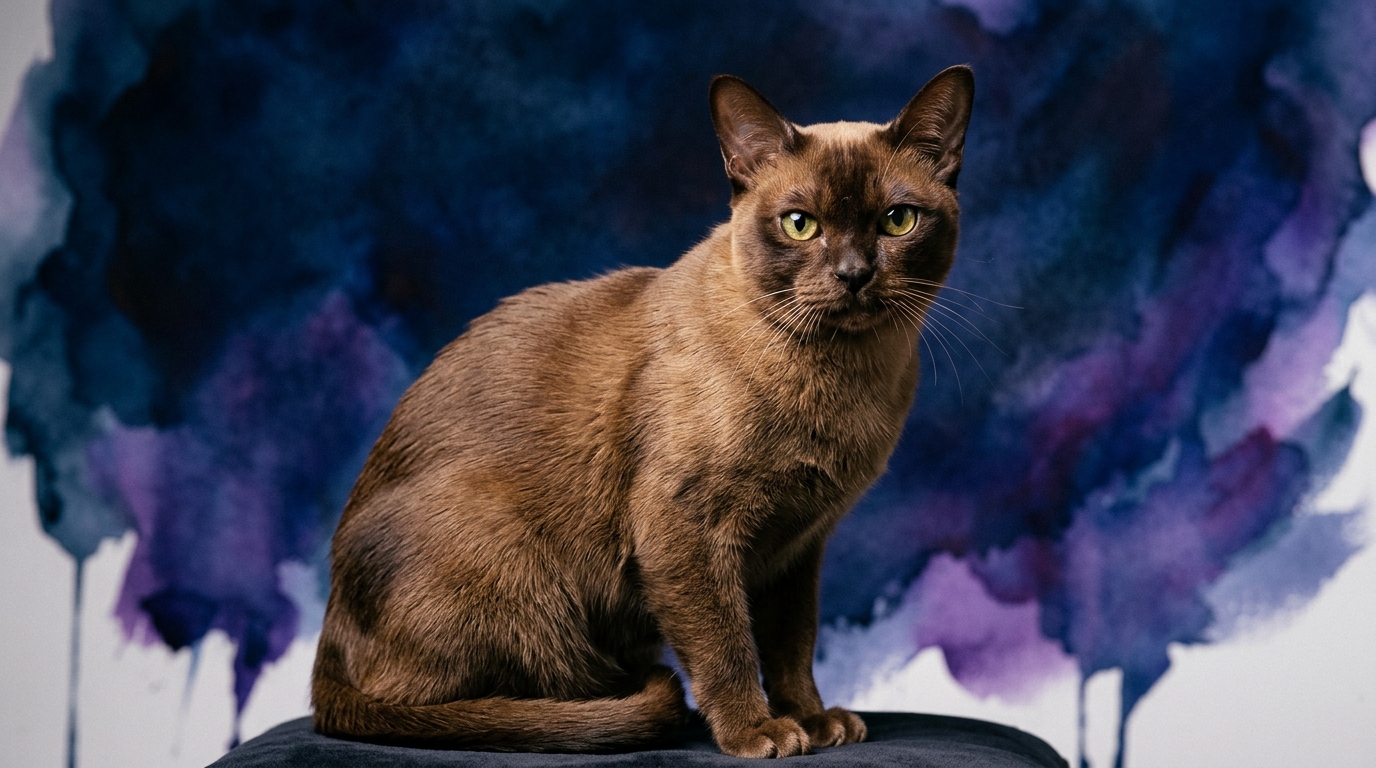
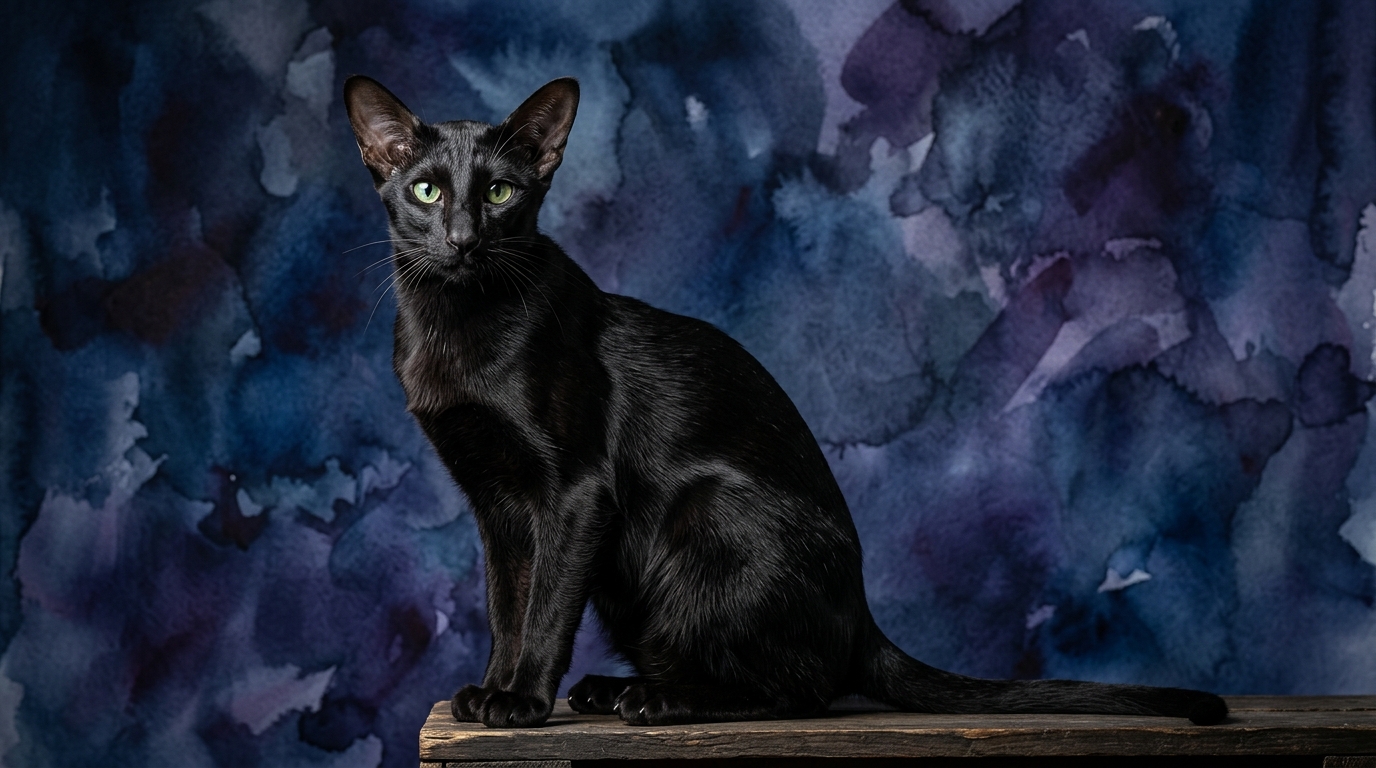
Side-by-Side Cognitive Profiles: Burmese vs. Oriental Shorthair
The Cosmic Pet Pet IQ Lab provides a detailed breakdown of feline cognitive abilities across five key dimensions. For the Burmese, their profile highlights exceptional capacities: a Problem Solving score of 4/5 indicates a strong aptitude for navigating complex situations and figuring out puzzles, while their Training Speed of 5/5 suggests a remarkable ability to learn new commands and routines with minimal repetition. Their Social Intelligence, also rated 5/5, points to a profound understanding of human emotions and social cues, fostering deep interactive bonds. An Instinctive Drive of 3/5 signifies a balanced level of natural hunting and exploratory behaviors, and a Memory score of 4/5 means they retain information about people, places, and learned behaviors over extended periods.
In contrast, the Oriental Shorthair presents a more uniformly balanced cognitive profile. Their Problem Solving is rated 3/5, indicating a competent but perhaps less inventive approach to new challenges, often relying on learned patterns rather than novel solutions. A Training Speed of 3/5 suggests they are receptive to learning, though they may require more consistent practice and patience than their Burmese counterparts. Their Social Intelligence, also at 3/5, points to a generally affectionate and interactive nature, but perhaps with less intensity or nuanced emotional reciprocity compared to the Burmese. An Instinctive Drive of 3/5 aligns with the Burmese, showing a moderate interest in play and exploration, while their Memory score of 3/5 suggests a standard capacity for recalling daily routines and familiar faces.
Where the Burmese Excels Cognitively
The Burmese cat clearly shines in areas demanding rapid learning and intricate social engagement. Their 5/5 Training Speed means they are exceptionally quick studies, often picking up leash training, fetch, or complex trick sequences with surprising alacrity. This isn't just about obedience; it reflects a keen observational capacity and a strong desire to engage with their human companions on an intellectual level, making them highly responsive to positive reinforcement. Owners often report Burmese cats seemingly anticipating their next move or understanding complex verbal cues long before formal training begins.
Furthermore, their 5/5 Social Intelligence grants them a remarkable ability to interpret human moods and intentions. A Burmese may offer comfort when their owner is distressed or initiate play when sensing a receptive audience, demonstrating a nuanced understanding of social dynamics. This high social acumen, combined with their 4/5 Problem Solving, means they might devise clever strategies to gain attention, such as opening specific doors or vocalizing in distinct ways until their needs are met, showcasing a proactive and adaptive mind in social contexts.
Cognitive Strengths of the Oriental Shorthair
While the Oriental Shorthair’s cognitive scores are generally more moderate, their strengths lie in a balanced and consistent intellectual approach that fosters a distinct type of companionship. Their 3/5 in Problem Solving, Training Speed, Social Intelligence, Instinctive Drive, and Memory suggests a feline companion who is adaptable without being overly demanding of constant cognitive stimulation. This means they are often content with a predictable routine, finding comfort in consistency rather than constantly seeking new challenges or complex interactions.
The Oriental Shorthair’s balanced cognitive profile can lead to a more independent yet still affectionate pet. Their 3/5 Social Intelligence allows them to form strong bonds without the intense, almost human-like emotional demands seen in some Burmese. This can be a benefit for owners who appreciate a cat that is present and loving but also self-sufficient in their play and exploration. Their moderate scores across the board indicate a cat that is generally well-adjusted to various home environments, capable of learning and interacting without requiring the same level of intellectual 'work' from their humans.
Training Aptitude: Which Cat Learns Faster?
When it comes to ease of training, the Burmese holds a distinct advantage due to its remarkable 5/5 Training Speed and 5/5 Social Intelligence. These cats are not only quick to grasp new concepts but are also highly motivated by human interaction and praise, making training sessions productive and enjoyable. Their capacity to form strong social bonds means they are eager to please and respond well to positive reinforcement, often learning intricate tricks, responding to their name consistently, or even walking on a leash with relative ease. Their cognitive makeup makes them highly attuned to human expectations, translating into rapid skill acquisition.
The Oriental Shorthair, with its 3/5 Training Speed, will certainly learn, but the process may require more patience and consistency. They are responsive to training, but perhaps less driven by the intense social reciprocation that fuels the Burmese. Owners should be prepared for a more gradual learning curve, focusing on repetition and clear, consistent commands. While they can master many of the same skills, their journey to proficiency might be less overtly enthusiastic and more methodical, making positive reinforcement and short, engaging sessions crucial for success.
Matching Feline Intellect to Owner Lifestyle
For active owners who thrive on engaging with their pets through interactive play, training, and constant social connection, the Burmese is an ideal match. Their high problem-solving abilities and exceptional social intelligence mean they flourish in environments where their minds are regularly stimulated with puzzle toys, training challenges, and ample interactive playtime. They crave mental engagement and deep social bonds, often becoming highly involved members of the household, following their owners from room to room and initiating interactions. An owner who can dedicate time to harness this intellectual energy will find a profoundly rewarding companion.
The Oriental Shorthair, with its balanced cognitive profile, is well-suited for owners who appreciate a cat with a blend of affection and independence. While they are certainly social and enjoy interaction, their cognitive demands are less intense than those of the Burmese. This makes them a wonderful choice for moderately active or relaxed owners who desire a companion that is present and loving but also content to entertain themselves or observe from a comfortable perch. They provide companionship without necessarily requiring constant, complex intellectual games, fitting seamlessly into a household that appreciates elegance and a somewhat more self-sufficient feline presence.
The Verdict
Choose a Burmese if you seek a highly trainable, socially astute cat eager for deep intellectual engagement and interactive play, thriving on constant human connection.
Opt for an Oriental Shorthair if you prefer an elegant, affectionate companion with a balanced cognitive profile, offering a good mix of independence and social interaction without constant high-intensity demands.
🧠 Find Your Pet's IQ Score
Our Pet IQ Lab assessment covers 25+ tests across 5 cognitive dimensions — personalized to your breed.
Take the Full IQ Test →Frequently Asked Questions
Are Burmese cats good with children and other pets?
Yes, their high social intelligence (5/5) typically makes Burmese cats very adaptable and tolerant with children and other pets, often forming strong bonds. They enjoy being part of family activities and can thrive in multi-pet households if introduced properly.
Do Oriental Shorthairs require a lot of grooming?
Oriental Shorthairs have a short, fine coat that requires minimal grooming, typically just a weekly brush to remove loose hairs and keep their coat sleek. Their moderate instinctive drive (3/5) also means they are usually not excessively prone to messy outdoor adventures, simplifying their care routine.
Which breed is more vocal?
Both breeds are known for being vocal, but often in different ways. Burmese cats use their social intelligence to communicate effectively with a range of purrs and chirps, while Oriental Shorthairs are famous for their varied and sometimes persistent 'conversations,' employing a wide range of meows and vocalizations to express themselves.