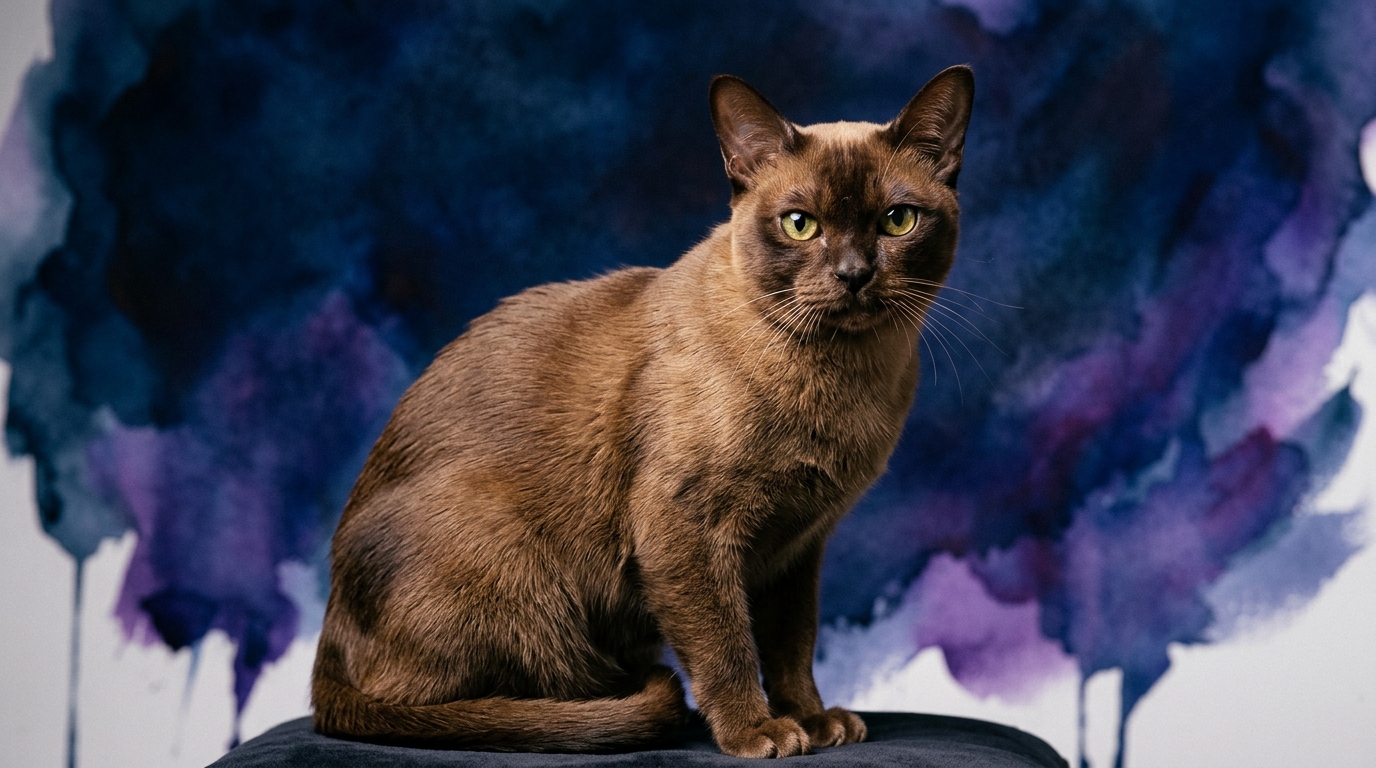
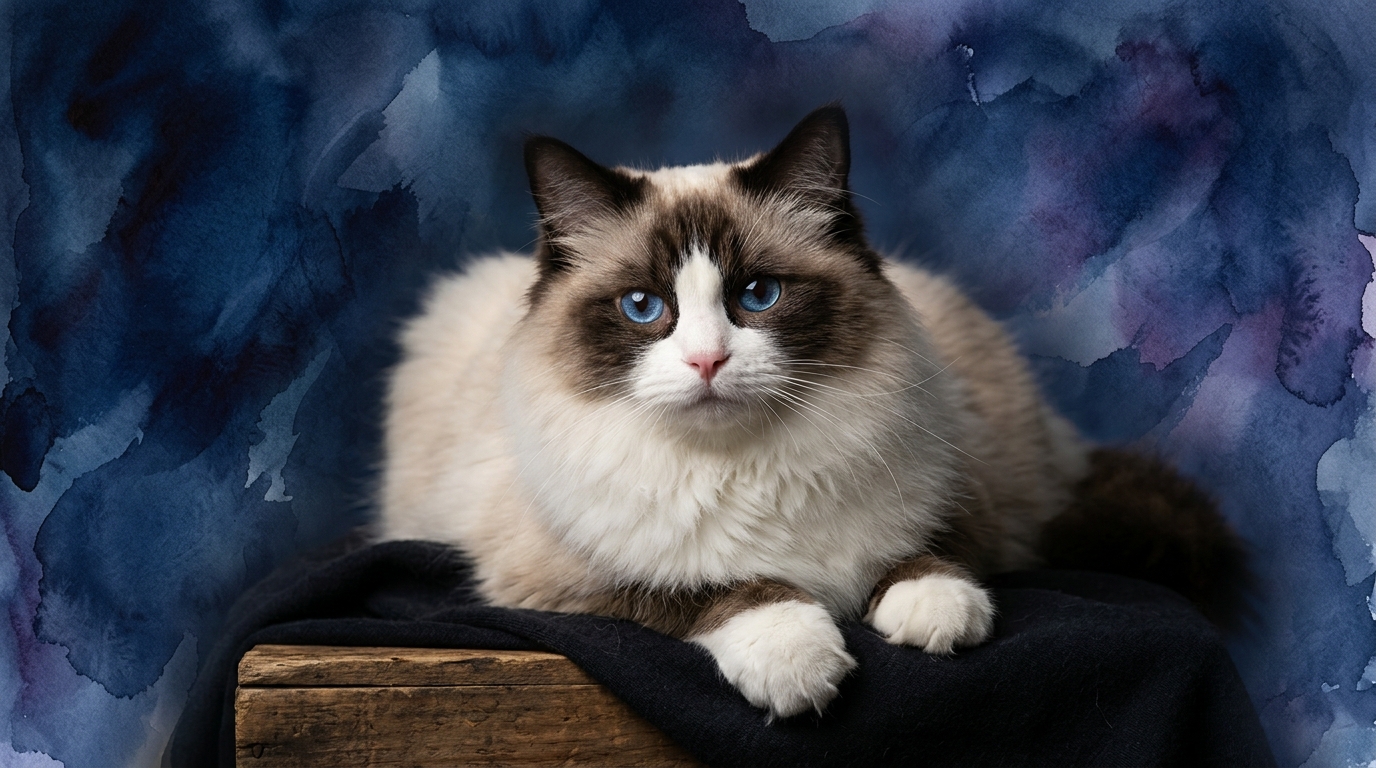
Side-by-Side Cognitive Profiles: Burmese vs. Ragdoll
The Pet IQ Lab provides a nuanced framework for understanding feline cognition, evaluating breeds across five key dimensions. Examining the Burmese and Ragdoll through this lens highlights their distinct mental strengths and preferences. For the Burmese, their cognitive makeup points to a highly engaged and adaptable feline, while the Ragdoll's profile suggests a more serene and companion-focused intellect.
The Burmese cat exhibits a Problem Solving score of 4/5, indicating a strong capacity for figuring out novel situations and manipulating their environment to achieve goals. Their Training Speed is an exceptional 5/5, meaning they grasp new commands and routines with remarkable swiftness. Social Intelligence for the Burmese is rated 5/5, reflecting a profound understanding of human emotions and social cues, fostering deep, reciprocal bonds. Their Instinctive Drive sits at 3/5, suggesting a moderate interest in hunting-like play but without an overwhelming predatory focus. Finally, their Memory is strong at 4/5, allowing them to retain learned information and experiences over extended periods.
In contrast, the Ragdoll cat shows a Problem Solving score of 3/5, capable of tackling basic challenges but less inclined towards persistent, complex mental tasks. Their Training Speed is 3/5, indicating a steady learning pace that benefits from patience and repetition. Like the Burmese, the Ragdoll also scores 5/5 in Social Intelligence, demonstrating an equally deep capacity for understanding and responding to human companionship. Their Instinctive Drive is lower at 2/5, meaning they are less driven by intense predatory urges and are content with more relaxed play. Their Memory is rated 3/5, good for routines and familiar interactions but perhaps less precise in recalling intricate sequences.
Where the Burmese Excels Cognitively
The Burmese's cognitive profile shines brightly in areas requiring active engagement and rapid adaptation. Their Problem Solving score of 4/5 means they are more likely to independently figure out how to open a door, access a treat cabinet, or navigate complex puzzle toys. This isn't just random experimentation; it often involves a degree of strategic thinking, demonstrating a sophisticated understanding of cause and effect within their environment.
Furthermore, their unparalleled Training Speed of 5/5 makes them exceptionally quick learners. This allows them to master a wide array of commands, tricks, and routines with minimal repetition, often appearing to enjoy the intellectual challenge of structured learning. This rapid acquisition of skills is bolstered by their robust Memory (4/5), enabling them to retain a broad repertoire of learned behaviors and recall past interactions, favorite hiding spots, or specific game sequences with clarity and consistency. The Burmese's cognitive strengths make them highly interactive companions who actively seek mental stimulation and enjoy participating in their human's world through learned actions.
Where the Ragdoll's Cognitive Profile Finds its Niche
While the Ragdoll's individual cognitive scores might appear lower in some areas compared to the Burmese, their unique combination creates a distinct advantage for certain lifestyles. Their lower Instinctive Drive (2/5) means they are less prone to destructive behaviors fueled by a strong predatory urge, making them exceptionally calm and adaptable to indoor living without requiring constant, intense hunting simulations. This cognitive trait fosters a remarkably peaceful presence, reducing the need for elaborate environmental enrichment focused on prey drive satisfaction.
The Ragdoll's moderate Problem Solving (3/5) and Training Speed (3/5), coupled with their unwavering Social Intelligence (5/5), mean they are agreeable learners who prioritize interaction and affection over complex mental challenges. Their cognitive makeup leans towards companionship and serenity; their 'wins' are not in outsmarting their environment, but in their capacity for peaceful coexistence and unwavering devotion. This makes them ideal for owners who seek a gentle, predictable companion whose cognitive focus is primarily on bonding and comfort, rather than constant mental gymnastics.
Trainability: A Tale of Two Felines
When it comes to training, the differences between these two breeds become particularly apparent. The Burmese, with its exceptional 5/5 Training Speed, is a dream for those who enjoy teaching their pets. They grasp new commands and routines with remarkable swiftness, often requiring only a few repetitions to solidify a behavior. This quick uptake is fueled by an apparent eagerness to engage in structured learning sessions, responding enthusiastically to positive reinforcement and seeming to relish the intellectual challenge. Owners often report Burmese cats quickly learning fetch, leash walking, or even more complex sequences of tricks.
Ragdolls, scoring 3/5 in Training Speed, require a more patient and consistent approach. While certainly capable of learning, their pace is gentler, and they may need more time and repetition to internalize new behaviors. Their motivation often stems from the desire for social interaction and affection rather than the inherent challenge of the task itself. They respond best to calm, encouraging training methods that reinforce their gentle nature, making them receptive to basic commands and house rules but perhaps less inclined towards elaborate trick training or agility courses. Their trainability is more about forming a cooperative bond than demonstrating rapid intellectual prowess.
Matching Cognitive Profiles to Owner Lifestyles
Understanding these cognitive distinctions is key to finding the perfect feline companion for your lifestyle. For active owners who thrive on interaction and enjoy providing consistent mental stimulation, the Burmese is an exceptional match. Their high problem-solving abilities and rapid training speed mean they flourish when engaged with puzzle toys, learning new tricks, and participating in structured playtime. An owner who can dedicate time to interactive games and intellectual challenges will find the Burmese a profoundly rewarding and engaging companion, as their cognitive makeup actively seeks out and enjoys such engagement.
Conversely, for relaxed owners seeking a tranquil, affectionate presence, the Ragdoll's cognitive profile aligns perfectly. Their lower instinctive drive and moderate problem-solving indicate they are content with a calmer environment and do not demand constant mental challenges or vigorous play. While they appreciate interaction, their primary cognitive focus is on social bonding and comfort rather than intense intellectual pursuits. They are ideal for owners who desire a gentle, predictable companion happy to lounge, observe, and occasionally engage in soft play, prioritizing affection and a serene presence over high-energy mental activities.
The Verdict
Choose a Burmese if you desire a highly interactive companion who thrives on mental challenges, learns rapidly, and enjoys participating in training sessions and puzzle play.
Choose a Ragdoll if you seek a serene, affectionate companion content with a calmer pace, prioritizing social bonding and gentle interaction over constant mental stimulation.
🧠 Find Your Pet's IQ Score
Our Pet IQ Lab assessment covers 25+ tests across 5 cognitive dimensions — personalized to your breed.
Take the Full IQ Test →Frequently Asked Questions
Are Burmese cats good with children?
Yes, their high social intelligence (5/5) makes Burmese cats generally tolerant and affectionate with children, often enjoying interactive play and being part of family activities. They adapt well to a busy household environment and form strong bonds with all family members.
Do Ragdolls shed a lot?
Ragdolls have a semi-long coat, which means they do shed, especially seasonally, but often less profusely than some other long-haired breeds due to their lack of an undercoat. Regular grooming, typically a few times a week, helps manage their shedding and prevents mats effectively.
Which breed is more independent?
While both breeds are social, the Burmese's higher problem-solving and instinctive drive mean they are more prone to independent exploration and activity, though they consistently seek their human companions. Ragdolls, with their lower drive and gentle nature, tend to be more consistently seeking human presence and less inclined to solitary adventures, preferring to be near their family.