
Side-by-Side IQ Profile: Unpacking Cognitive Dimensions
The Cosmic Pet Pet IQ Lab evaluates canine cognition across five crucial dimensions: Problem Solving, Training Speed, Social Intelligence, Instinctive Drive, and Memory. For the Cane Corso, a robust working breed, all five dimensions register a balanced 3 out of 5. This indicates a consistent, practical level of cognitive function across the board, reflecting their heritage as capable guardians and companions.
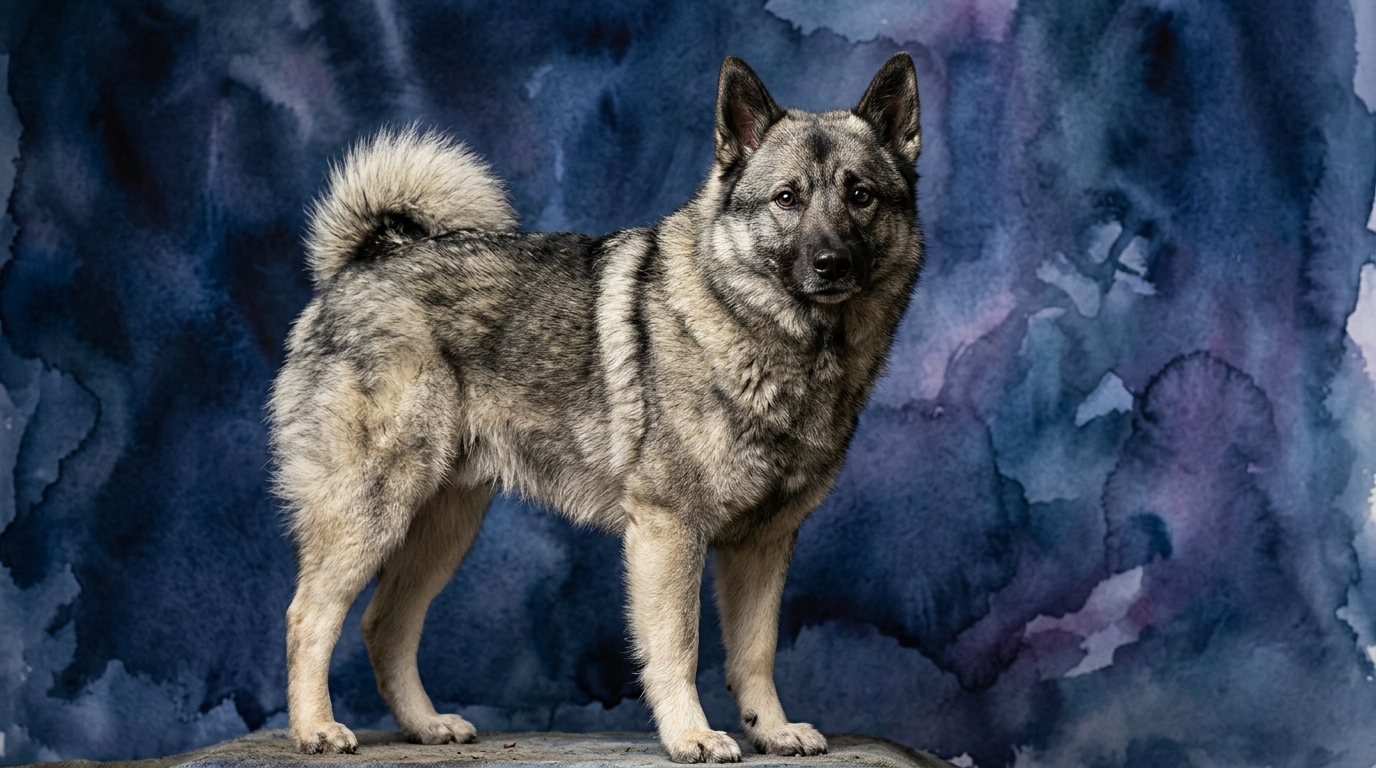
In contrast, the Norwegian Elkhound, an ancient hound breed recognized for its tracking prowess, presents a slightly different cognitive architecture. This breed achieves a 4 out of 5 in Problem Solving, Training Speed, and Memory, suggesting a quicker grasp of new concepts, more efficient learning, and superior recall. Their Social Intelligence and Instinctive Drive, however, mirror the Cane Corso at 3 out of 5, indicating a similar baseline for social cues and foundational instincts, albeit applied to a different breed purpose. Notably, the Norwegian Elkhound holds a respectable Coren rank of #36, positioning it among breeds recognized for a higher degree of adaptive intelligence in traditional obedience settings.
Where the Cane Corso's Cognitive Profile Shines
While the Cane Corso’s scores of 3 out of 5 across all metrics might seem modest compared to the Elkhound’s higher marks in some areas, their strength lies in the *application* and *balance* of these abilities within their specific working context. Their Problem Solving at 3/5 is not about abstract puzzles, but about practical, real-world assessment of their environment for potential threats or changes. This manifests as a discerning intelligence, allowing them to effectively evaluate situations and respond with appropriate protective behaviors, rather than impulsively reacting.
The Cane Corso’s 3/5 in Instinctive Drive is particularly noteworthy for its focused nature. This drive is deeply rooted in their historical role as guardians, translating into a profound motivation to protect their family and territory. It’s a drive that is often less about independent pursuit, like a hunter, and more about vigilant watchfulness and territorial defense. This focused, protective instinct, when properly channeled, makes them exceptionally reliable in their intended role. Their Social Intelligence at 3/5 contributes to their strong, often singular bond with their primary family, making them highly attuned to their human companions' needs and intentions, which is critical for a breed meant to work closely with people.
Where the Norwegian Elkhound Excels Cognitively
The Norwegian Elkhound truly stands out in areas requiring quick processing and retention, evidenced by their 4 out of 5 scores in Problem Solving, Training Speed, and Memory. This indicates a breed that can rapidly assess novel situations, devise solutions, and learn new commands with fewer repetitions. Their higher Problem Solving score suggests an aptitude for navigating complex environments or figuring out how to access desired objects, a trait invaluable for a breed historically tasked with tracking game across varied terrains.
Their superior Training Speed and Memory mean that once a concept is taught, it is likely to be ingrained more quickly and recalled more reliably than with a Cane Corso. This cognitive agility makes them adept at learning intricate sequences or adapting to changing commands during activities. While their Instinctive Drive is also 3/5, it manifests as a strong prey drive and an independent nature, characteristic of a hound bred to work at a distance from its handler. This drive, combined with their problem-solving ability, makes them formidable trackers and independent thinkers, often requiring mental stimulation to prevent boredom.
Training Ease: A Tale of Two Approaches
When it comes to training, the cognitive differences between these two breeds lead to distinct experiences. The Norwegian Elkhound, with its 4/5 in Training Speed and Memory, generally proves to be a quicker study. They pick up new commands with greater alacrity and retain them more effectively, making initial training sessions often feel more immediately rewarding. However, their 3/5 Instinctive Drive, particularly their strong independent hound nature and scent drive, means that while they learn fast, they can also be prone to distraction or following their nose rather than a command, requiring consistent engagement and proofing in varied environments.
The Cane Corso, with its 3/5 across Training Speed and Memory, requires a more patient and consistent approach. They might need more repetitions to fully grasp and internalize commands, but once learned, their behavior tends to be deeply ingrained and highly reliable, especially within the context of their family unit. Their 3/5 Social Intelligence makes them deeply attuned to their owner's leadership, which, when coupled with a firm yet fair training style, can result in a highly obedient and dedicated companion. The key with a Cane Corso is establishing clear rules and expectations from an early age, leveraging their desire to please their family and their protective instincts through positive reinforcement and structured guidance.
Which Suits Active Owners vs. Relaxed Owners
For owners seeking a companion that thrives on mental engagement and enjoys active, exploratory pursuits, the Norwegian Elkhound is often an excellent match. Their higher Problem Solving and Memory scores make them well-suited for activities like scent work, agility, or competitive obedience, where their quick learning and independent thinking can be fully utilized. These are dogs that benefit immensely from owners who enjoy providing varied mental challenges and can channel their strong instinctive drive into productive outlets, requiring consistent, engaging interaction to keep their clever minds stimulated.
The Cane Corso, while also benefiting from physical activity, is perhaps better suited for owners who prioritize structure, consistency, and a clear leadership role. Their cognitive strengths are geared towards partnership in a working capacity, making them ideal for owners who enjoy precision-based training, perhaps even protection sports, or simply want a deeply bonded and reliable family guardian. While not 'relaxed' in the sense of being sedentary, these dogs thrive with owners who can provide a predictable routine, strong boundaries, and consistent mental engagement that reinforces their role within the family, rather than independent exploration.
The Verdict
Choose the Cane Corso if you prioritize a deeply bonded, protective companion willing to learn with consistent, structured guidance, valuing reliability in their working role.
Opt for the Norwegian Elkhound if you seek a quick-witted, independent problem-solver eager for varied mental challenges and active pursuits, capable of learning rapidly.
🧠 Find Your Pet's IQ Score
Our Pet IQ Lab assessment covers 25+ tests across 5 cognitive dimensions — personalized to your breed.
Take the Full IQ Test →Frequently Asked Questions
Is the Cane Corso difficult to train due to its 3/5 training speed?
The Cane Corso isn't necessarily difficult, but they require more patience and consistency than some breeds. Their 3/5 training speed means they need more repetitions to internalize commands, but once learned, their behaviors are generally very reliable, especially with a strong owner-dog bond.
Does the Norwegian Elkhound's independence make them hard to live with?
The Elkhound's independent nature, stemming from its hound instincts, means they can be strong-willed and follow their nose. While they are quick learners (4/5 training speed), owners must provide consistent mental stimulation and clear boundaries to channel their independence productively and prevent boredom.
How does social intelligence differ between these two breeds?
Both breeds score 3/5 in social intelligence, indicating a solid understanding of social cues. For the Cane Corso, this often translates to a deep, protective bond with their family. For the Elkhound, it manifests as general sociability, though their independence means they might not seek constant human validation in the same way.