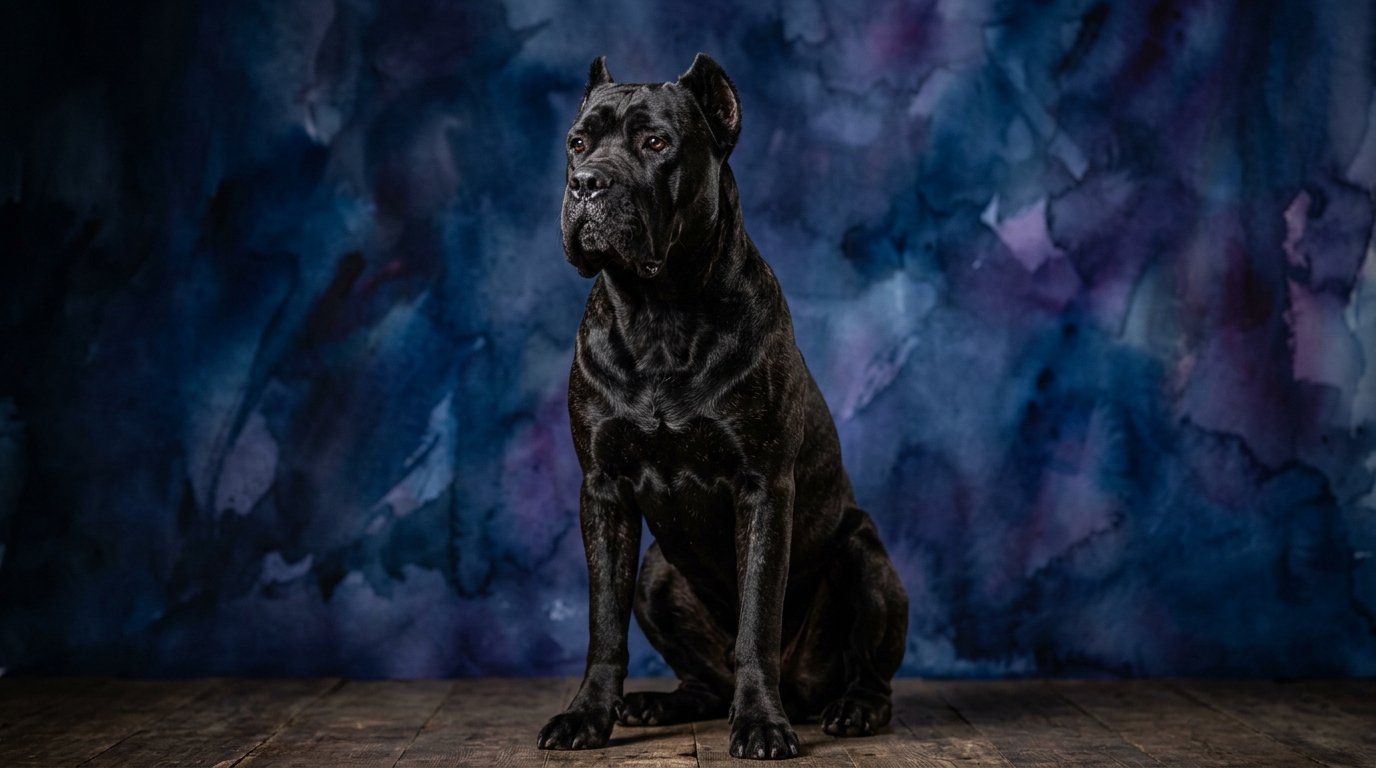
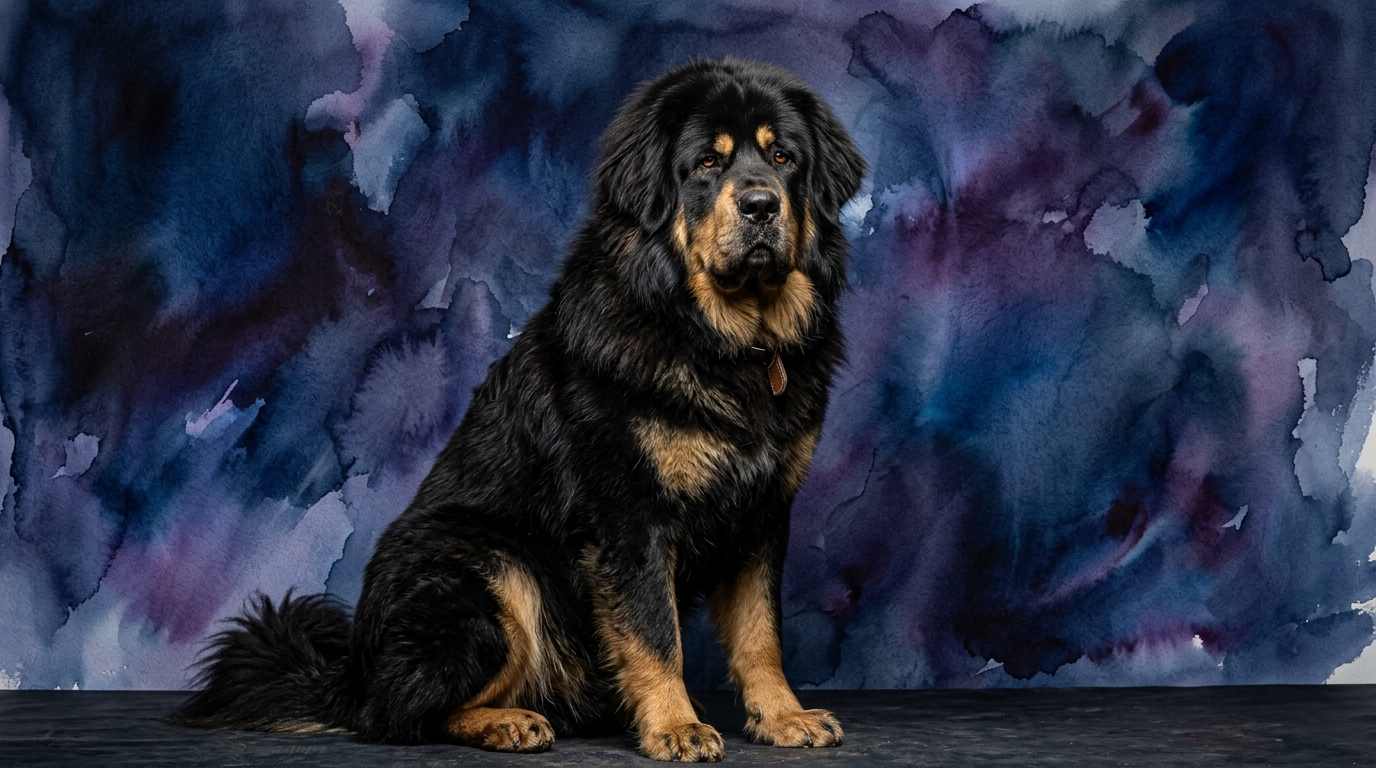
Side-by-Side IQ Profile: Understanding Nuances at 3/5
Despite both the Cane Corso and Tibetan Mastiff scoring identically across five key cognitive dimensions, their historical roles and inherent temperaments mean these scores play out differently in practice. For instance, a 3/5 in Problem Solving for the Cane Corso often involves assessing threats within a defined territory or responding to handler cues in complex situations, demonstrating a strategic, active approach to overcoming obstacles. The Tibetan Mastiff, conversely, applies its 3/5 problem-solving to independent environmental assessment, discerning true threats from benign stimuli in vast, often solitary settings, exhibiting a more deliberate, observational intellect.
In Training Speed, both breeds achieve a 3/5, indicating they grasp commands with moderate repetition and consistent motivation. The Cane Corso's training speed benefits from an eagerness to please a respected leader, making them receptive to structured lessons. The Tibetan Mastiff's 3/5 reflects a capacity to learn but often with a strong independent streak; they understand tasks but may choose to comply based on their own assessment of utility or importance, making patience and clarity paramount for effective teaching.
Social Intelligence at 3/5 manifests distinctly for each. A Cane Corso's social intelligence shows as a strong bond with their immediate family, coupled with a discerning watchfulness towards outsiders, requiring careful socialization to navigate diverse social situations gracefully. The Tibetan Mastiff's 3/5 in this area speaks to a profound loyalty to their inner circle, often exhibiting a reserved, almost aloof demeanor with strangers, relying on instinct to judge intentions rather than seeking broad social engagement.
Regarding Instinctive Drive, both score 3/5. The Cane Corso's drive is largely channeled into protection, guarding, and a desire to work alongside their human, often expressing itself as a powerful, focused intensity in defense. The Tibetan Mastiff's instinctive drive, also at 3/5, is deeply rooted in ancient guardian roles, driving them to patrol, observe, and protect their territory and family with unwavering vigilance and a natural wariness of the unfamiliar.
Finally, for Memory, a 3/5 score indicates both breeds effectively retain learned commands, routines, and experiences. A Cane Corso will remember past training, positive and negative interactions, and the layout of their environment, using this recall to inform future actions and adapt. A Tibetan Mastiff's memory is particularly robust for recognizing family members, remembering perceived threats, and recalling territorial boundaries, contributing to their consistent, reliable guarding behaviors over time.
Where the Cane Corso Excels Cognitively
While both breeds possess a problem-solving score of 3/5, the Cane Corso often displays a more direct and handler-oriented application of this cognitive skill. Their historical role as a multi-purpose working dog, assisting in tasks from hunting to personal protection, has fostered an intellect that thrives on collaboration and directive. A Cane Corso is often quicker to engage with complex obedience routines or learn task-specific commands that require active participation and interaction with their human, demonstrating a cognitive lean towards partnership.
Their social intelligence, while equal in score, leans towards a greater willingness to integrate into varied human environments, provided they are properly socialized from a young age. This means a Cane Corso can often adapt more readily to new situations, people, and even other animals under a handler's guidance, using their memory to recall appropriate social cues and expectations. This adaptability, rooted in a desire to be an effective partner, gives them a subtle edge in navigating a more diverse modern world and integrating into varied family dynamics.
Furthermore, the Cane Corso's training speed, despite being 3/5, often benefits from their inherent desire to please and their focus on their handler. This isn't to say they are always effortless to train, but their cognitive framework often aligns more closely with human-driven training methodologies, where clear communication and consistent expectations lead to quicker assimilation of new behaviors and commands for a specific task. Their problem-solving is often applied to figuring out how to achieve a desired outcome that satisfies their human.
Where the Tibetan Mastiff Excels Cognitively
The Tibetan Mastiff's 3/5 problem-solving score manifests as a profound, independent assessment of their environment, a trait honed over centuries as solitary guardians in challenging landscapes. Their cognitive strength lies in discerning subtle changes in their territory, evaluating potential threats without constant human intervention. This makes them exceptional at autonomous decision-making in a guardian capacity, relying on their own judgment rather than waiting for a command, showcasing a deep, self-reliant intellect.
Their instinctive drive, also at 3/5, is perhaps where the Tibetan Mastiff truly distinguishes itself. This drive is a deep, almost primal imperative to protect, rooted in an ancient lineage. Their memory vividly recalls perceived threats or individuals, allowing them to maintain consistent vigilance over their territory and family. This unwavering, self-directed protective instinct is a cognitive strength that requires minimal external reinforcement, making them formidable natural guardians whose actions are guided by centuries of genetic programming.
The Tibetan Mastiff's social intelligence, while scoring 3/5, is characterized by an unparalleled depth of loyalty to their chosen family. They form incredibly strong, discerning bonds, and their ability to 'read' the intentions of their trusted humans is finely tuned, often anticipating needs. This translates into a nuanced understanding of their family's needs and moods, often acting as a silent, watchful protector who anticipates rather than merely reacts, demonstrating a unique form of empathetic intelligence within their social sphere, reserved for their inner circle.
Training Dynamics: Independence vs. Partnership
When considering which breed is 'easier' to train, despite both having a 3/5 training speed, the Cane Corso generally presents a more straightforward path for the average dedicated owner. The Cane Corso's problem-solving often involves figuring out how to achieve a desired outcome that pleases their handler, making them more amenable to structured obedience and task-oriented learning. They often possess a strong 'work ethic' and a desire to engage actively with their human partners, which translates into a more responsive training experience when a clear leadership structure is established.
Conversely, the Tibetan Mastiff, while certainly capable of learning, often requires a different approach due to their independent nature. Their problem-solving is geared towards autonomous decision-making for guarding, not necessarily for performing tricks or elaborate obedience routines on command. Their social intelligence, while deeply loyal, does not typically include a strong desire to 'please' in the conventional sense, but rather to operate as an independent, trusted protector. This means training a Tibetan Mastiff often involves more patience, understanding of their inherent motivations, and a focus on building a respectful partnership rather than strict command-and-control.
Real behavioral differences highlight this distinction: a Cane Corso might try multiple methods to open a gate if it means rejoining their handler, demonstrating a direct, goal-oriented problem-solving approach. A Tibetan Mastiff, faced with the same gate, might instead assess the perimeter for a weakness or simply choose to guard the gate, reflecting their independent, territorial problem-solving. While both learn, the Cane Corso's learning is often more outwardly expressed and handler-directed, making them feel 'easier' to guide through traditional training protocols, whereas the Mastiff requires a trainer to work with its innate self-sufficiency.
Matching Canine Cognition to Owner Lifestyles
For owners seeking a more active, engaged canine companion, the Cane Corso often proves to be a better fit. Their instinctive drive, while protective, is also channeled into a desire for purpose and activity alongside their human. They thrive on mental and physical challenges that involve their owner, such as advanced obedience, protection sports, or even just long, structured walks and interactive play. Their social intelligence allows them to integrate more readily into a family's active lifestyle, participating in outings and engaging with various stimuli under guidance, making them a versatile companion for dynamic households.
The Tibetan Mastiff, with its profound independent streak and deeply ingrained guarding instincts, is better suited for owners who understand and respect a more 'relaxed' yet vigilant companionship. Their activity often involves patrolling their territory, observing, and assessing their surroundings, rather than high-energy, human-directed activities. A 'relaxed' owner for a Tibetan Mastiff isn't one who is inactive, but rather one who provides a secure environment, understands the breed's need for autonomy, and appreciates a watchful, rather than constantly interactive, presence. Their problem-solving is often applied to their environment, making them content to observe from a vantage point.
While both breeds require significant mental stimulation and exercise, the *type* of engagement differs. The Cane Corso benefits from structured, interactive tasks that leverage their desire for partnership and their handler focus. The Tibetan Mastiff, conversely, finds fulfillment in having a clear territory to oversee and the freedom to exercise their independent judgment, making them less suited for owners who desire a dog constantly at their side for every adventure, favoring instead a steadfast, self-reliant guardian who operates on their own terms within their perceived domain.
The Verdict
Choose the Cane Corso if you seek a powerful, engaged working partner who thrives on collaborative tasks and integrates readily into a family's active, structured life, willing to please a strong leader.
Opt for the Tibetan Mastiff if you are an experienced owner who appreciates a majestic, independent guardian, valuing their profound loyalty and autonomous decision-making in protecting a secure home environment.
🧠 Find Your Pet's IQ Score
Our Pet IQ Lab assessment covers 25+ tests across 5 cognitive dimensions — personalized to your breed.
Take the Full IQ Test →Frequently Asked Questions
Do Cane Corsos and Tibetan Mastiffs require similar amounts of mental stimulation?
Yes, both breeds require substantial mental stimulation, but the nature of that stimulation differs significantly. Cane Corsos often thrive on interactive training, problem-solving games with their owner, and structured tasks that build partnership. Tibetan Mastiffs benefit from having a territory to oversee, opportunities for independent observation, and puzzles that engage their autonomous problem-solving skills, aligning with their self-sufficient nature.
How do their social intelligence scores of 3/5 impact their interactions with strangers?
A 3/5 social intelligence for both means they are discerning. The Cane Corso, with proper socialization, can learn to tolerate or be politely reserved with strangers under their owner's guidance, often relying on their memory of past positive interactions. The Tibetan Mastiff, however, tends to be inherently more aloof and wary of strangers, relying heavily on their instinctive drive to assess new individuals as potential threats to their family or territory, requiring careful management and a deep understanding of their guardian mindset.
Given their identical memory scores, do they remember training equally well?
While both breeds have a 3/5 memory, how they apply it to training differs in practice. A Cane Corso will generally remember commands and routines well, especially if they are consistently reinforced by their handler, linking recall to desired outcomes and partnership. A Tibetan Mastiff remembers training but might choose to act on it based on their independent assessment of the situation's importance or their own motivation, demonstrating their strong self-determination rather than automatic compliance.