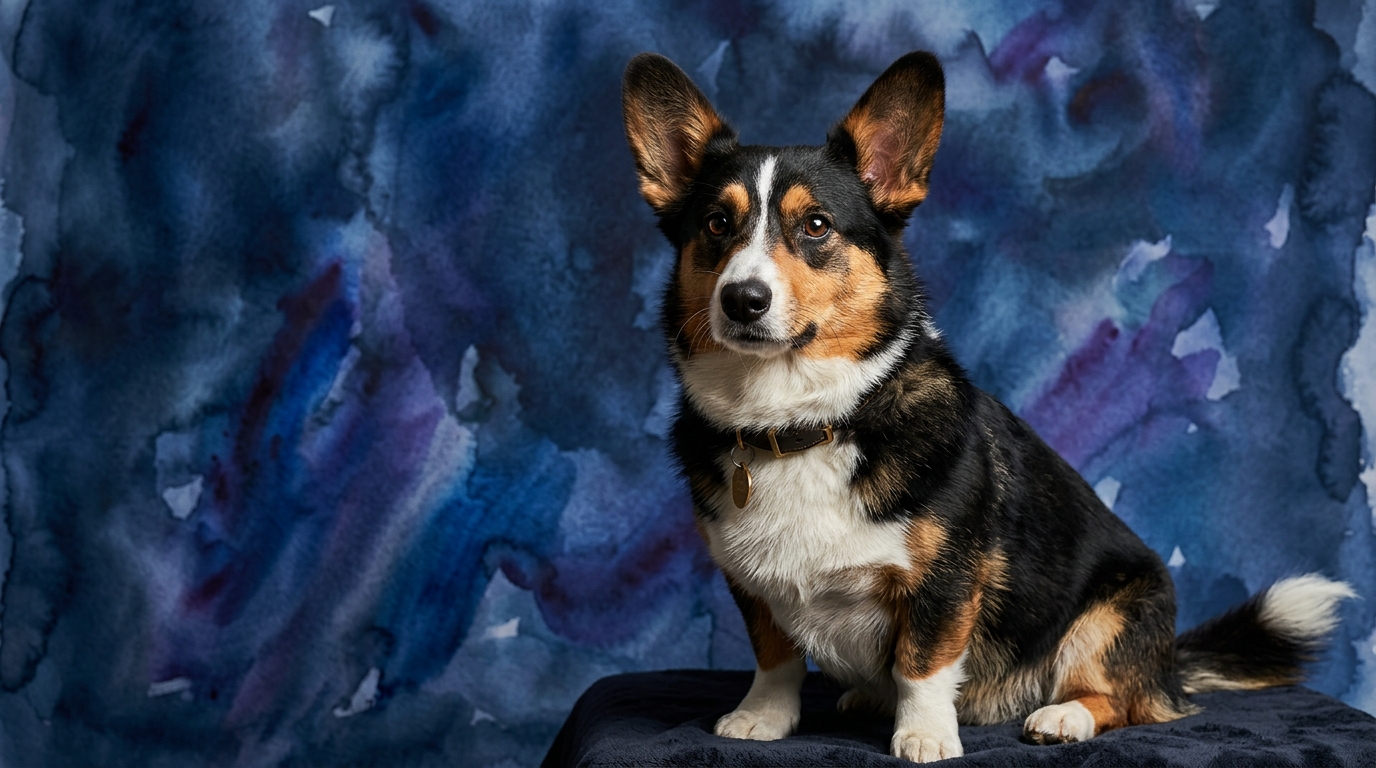
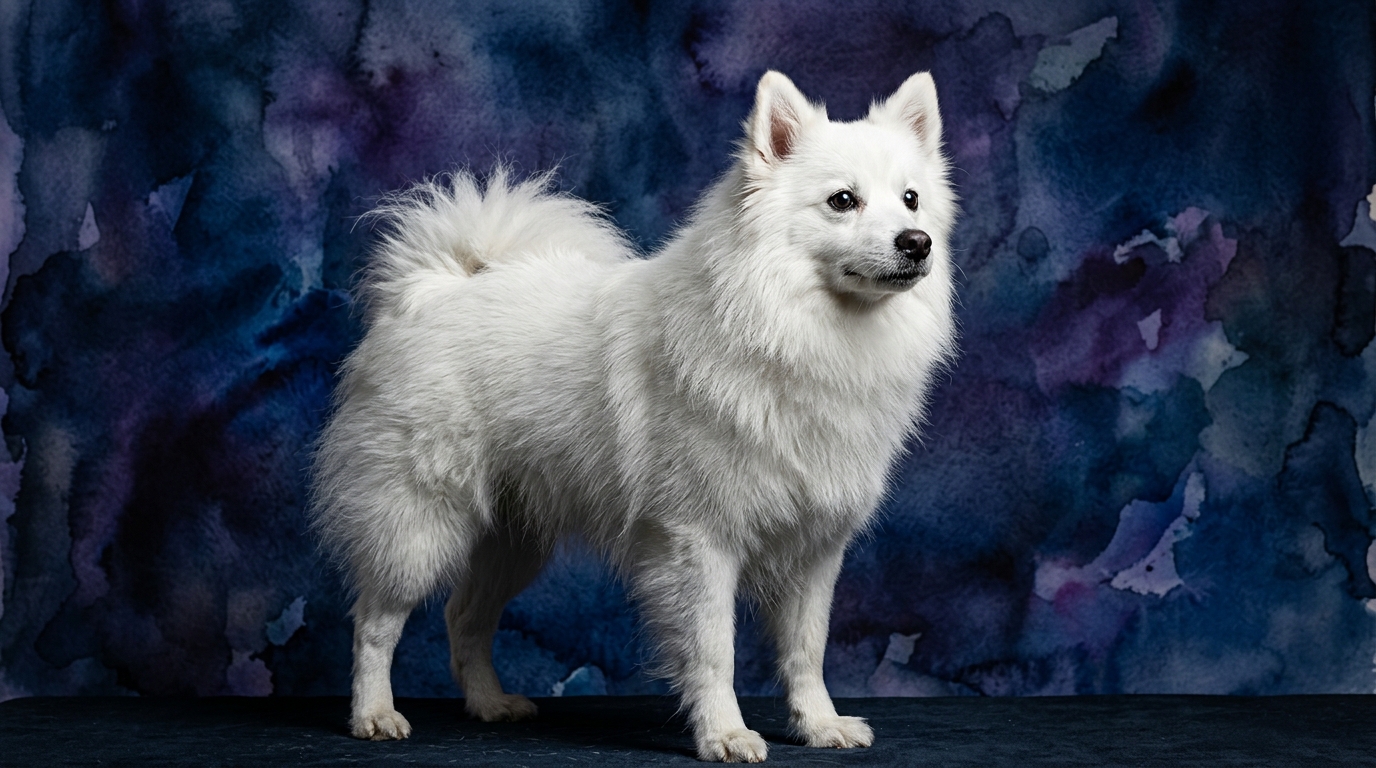
Side-by-Side Cognitive Profiles: Cardigan Welsh Corgi vs. American Eskimo Dog
The Cardigan Welsh Corgi, a member of the Herding group, registers an impressive Coren rank of #26, placing it among breeds that demonstrate a keen aptitude for learning and obedience. Our Pet IQ Lab assessment further refines this understanding, rating the Cardigan's Problem Solving at 4/5, indicating a strong capacity for independent thought and strategic action. Its Training Speed also scores 4/5, suggesting a quick uptake of commands and a willingness to engage in structured learning.
Social Intelligence for the Cardigan stands at 3/5, reflecting an ability to interpret human cues and navigate social dynamics, though perhaps with a focused loyalty. Its Instinctive Drive is a balanced 3/5, hinting at a manageable but present herding impulse. Finally, the Cardigan's Memory earns a 4/5, underscoring its ability to retain complex sequences and learned behaviors over time, crucial for its historical role in managing livestock.
Turning to the American Eskimo Dog, a Non-Sporting breed, we find a different cognitive blueprint. While not included in Coren's ranking, our IQ Lab places its Problem Solving at 3/5. This indicates a solid ability to tackle straightforward challenges, though perhaps with less spontaneous innovation than the Corgi. Its Training Speed also sits at 3/5, suggesting a steady learning pace that benefits from consistent, positive reinforcement.
The Eskie's Social Intelligence mirrors the Corgi's at 3/5, implying a similar capacity for bonding and understanding family dynamics, often expressed through deep devotion. Its Instinctive Drive is also 3/5, manifesting as a moderate prey drive or a tendency towards alertness and vocalization, rather than strong herding urges. The American Eskimo Dog's Memory is rated 3/5, signifying an adequate retention of commands and routines, though it might require more periodic refreshers compared to breeds with higher scores.
Where the Cardigan Welsh Corgi Shows Cognitive Superiority
In several key cognitive dimensions, the Cardigan Welsh Corgi demonstrates a distinct edge, particularly in areas demanding rapid assimilation of information and adaptive problem-solving. Its superior Problem Solving (4/5) is a direct legacy of its herding lineage, where dogs needed to quickly assess dynamic situations, anticipate livestock movements, and devise strategies to control the flock. This translates into a dog that often excels at figuring out complex puzzle toys, opening latches, or navigating intricate agility courses with minimal human intervention.
The Cardigan's Training Speed (4/5) further underscores its cognitive advantage. These dogs exhibit a remarkable eagerness to engage with human instruction and possess an innate ability to connect actions with consequences swiftly. Owners often report that Corgis can master new commands or tricks in fewer repetitions than many other breeds, making them highly responsive candidates for advanced obedience, rally, or canine freestyle disciplines. Their strong Memory (4/5) complements this, ensuring that learned behaviors are deeply ingrained and reliably recalled, even after periods of inactivity, a testament to their capacity for sustained cognitive retention.
This combination of quick learning, effective problem-solving, and robust memory makes the Cardigan adept at tasks requiring sequential understanding and foresight. They are not merely rote learners; they often appear to understand the 'why' behind a command, allowing them to generalize learned behaviors to new contexts more readily. This cognitive flexibility is a hallmark of a breed that required independent thinking alongside handler cooperation in its original working role.
Distinct Cognitive Strengths of the American Eskimo Dog
While the American Eskimo Dog's individual scores might not reach the peaks of the Cardigan in specific areas, its consistent 3/5 across all five dimensions paints a picture of a remarkably balanced and adaptable intellect. This equilibrium is a significant strength, suggesting a dog that is neither overly driven by intense instincts nor prone to the independent-mindedness sometimes associated with extremely high problem-solving scores. Their moderate Instinctive Drive (3/5), for instance, means they possess a natural alertness and protective awareness without the demanding intensity of a high-drive working breed, making them excellent watchdogs without being overly reactive.
The Eskie’s Social Intelligence, rated 3/5, is particularly noteworthy for its depth of connection within its family unit. While they might be reserved with strangers, Eskies often form profound, intuitive bonds with their primary caregivers, demonstrating a nuanced understanding of human emotions and routines. This focused social acumen allows them to excel as attentive companions, often anticipating their owner's needs or moods, fostering a unique and comforting presence in the home. Their memory, also 3/5, ensures they retain these social lessons and routines, contributing to a stable and predictable household environment.
The American Eskimo Dog's 3/5 in Problem Solving signifies a practical intelligence, capable of learning and applying solutions to everyday challenges, such as navigating a familiar environment or understanding household rules. They might not invent complex solutions on the fly, but they reliably execute learned strategies. This balanced profile contributes to a dog that is generally biddable, eager to please its family, and possesses a solid foundation for learning, making them a consistently reliable and engaging companion for those who appreciate their steady, devoted nature.
Training Dynamics: Which Breed is Easier to Shape?
When it comes to ease of training, the Cardigan Welsh Corgi generally holds an advantage due to its higher scores in Training Speed (4/5) and Problem Solving (4/5). Cardigans often approach training sessions with an enthusiastic focus, quickly grasping new commands and enjoying the mental challenge. Their innate desire to work and please, combined with their robust memory, means they typically require fewer repetitions to solidify a behavior and are more likely to perform consistently in various environments. Their herding background also imbues them with a natural responsiveness to direction, making them excellent candidates for advanced obedience and competitive dog sports where precision and speed are valued.
The American Eskimo Dog, with a Training Speed of 3/5, requires a more patient and consistently engaging approach. While intelligent and capable learners, Eskies can sometimes exhibit an independent streak or a tendency to get distracted if training isn't kept fresh and rewarding. They thrive on positive reinforcement, praise, and highly motivating treats, and sessions should be structured to be fun and stimulating to maintain their interest. Owners might find that while Eskies learn at a steady pace, they may take slightly longer to generalize commands to new situations or require more frequent refreshers to maintain fluency.
Behaviorally, a Corgi's herding drive can be channeled into constructive training, such as 'fetch' games or agility, providing an outlet for their energy and cognitive abilities. An Eskie's moderate instinctive drive, often expressed as vocalization or playful chasing, might require different management strategies and training focus, such as teaching a solid 'leave it' command or redirecting barking. Ultimately, both breeds benefit immensely from early socialization and consistent, positive training, but the Cardigan often offers a quicker and more eager response to formal instruction.
Matching Canine Cognition to Owner Lifestyles
For active owners seeking a dynamic canine partner, the Cardigan Welsh Corgi frequently emerges as an ideal match. Their combination of high problem-solving, training speed, and memory means they thrive on structured activities that challenge both their bodies and minds. Owners who enjoy dog sports like agility, competitive obedience, herding trials, or even advanced trick training will find the Cardigan a willing and capable participant. Their moderate instinctive drive (3/5) ensures they have the energy and focus for these pursuits without being overwhelmingly intense, making them excellent companions for owners dedicated to regular, engaging mental and physical exercise.
Conversely, the American Eskimo Dog is well-suited for owners who appreciate a more balanced energy level and a profound companion bond, while still committing to consistent mental enrichment. While not requiring the same intensity of structured 'work' as a Corgi, Eskies still need daily walks, interactive play, and puzzle toys to satisfy their 3/5 cognitive needs across the board. They can adapt beautifully to moderately active lifestyles, enjoying outdoor adventures and then settling contentedly at home. Their social intelligence (3/5) shines in a household where they are deeply integrated into family life, making them superb companions for those seeking a devoted, attentive, and adaptable presence.
In essence, if your lifestyle involves ambitious training goals and a desire for a dog to actively 'think' alongside you in complex tasks, the Cardigan's cognitive profile aligns well. If your preference leans towards a loyal, adaptable companion whose intelligence manifests more in attentive companionship and consistent, reliable behavior within a family setting, the Eskie's balanced intellect offers a compelling choice. Both breeds require engagement, but the nature and intensity of that engagement differ to reflect their unique cognitive strengths.
The Verdict
Choose the Cardigan Welsh Corgi if you seek a highly trainable, mentally agile companion eager to tackle complex challenges and participate in demanding dog sports.
Opt for the American Eskimo Dog if you desire a devoted, adaptable companion with a balanced intellect, thriving on consistent engagement and a deep bond with its family.
🧠 Find Your Pet's IQ Score
Our Pet IQ Lab assessment covers 25+ tests across 5 cognitive dimensions — personalized to your breed.
Take the Full IQ Test →Frequently Asked Questions
Are Cardigan Welsh Corgis prone to mischief due to their high problem-solving abilities?
Yes, a Cardigan's 4/5 problem-solving acumen means they can get into mischief if not adequately stimulated. They might figure out how to open cabinets or escape yards, necessitating consistent mental challenges and secure environments to channel their intellect constructively.
Do American Eskimo Dogs bark a lot because of their instinctive drive?
The American Eskimo Dog's 3/5 instinctive drive often includes a strong watch dog tendency, which can manifest as barking. While not excessive for all, they are vocal and will alert to perceived threats or novelties, requiring early training to manage their vocalizations.
How important is mental stimulation for both the Cardigan Welsh Corgi and the American Eskimo Dog?
Mental stimulation is crucial for both breeds, albeit with differing intensities. The Cardigan's higher cognitive scores demand consistent, varied mental exercises to prevent boredom, while the Eskie's balanced intellect still requires regular puzzle toys and interactive play to maintain a happy, engaged disposition.