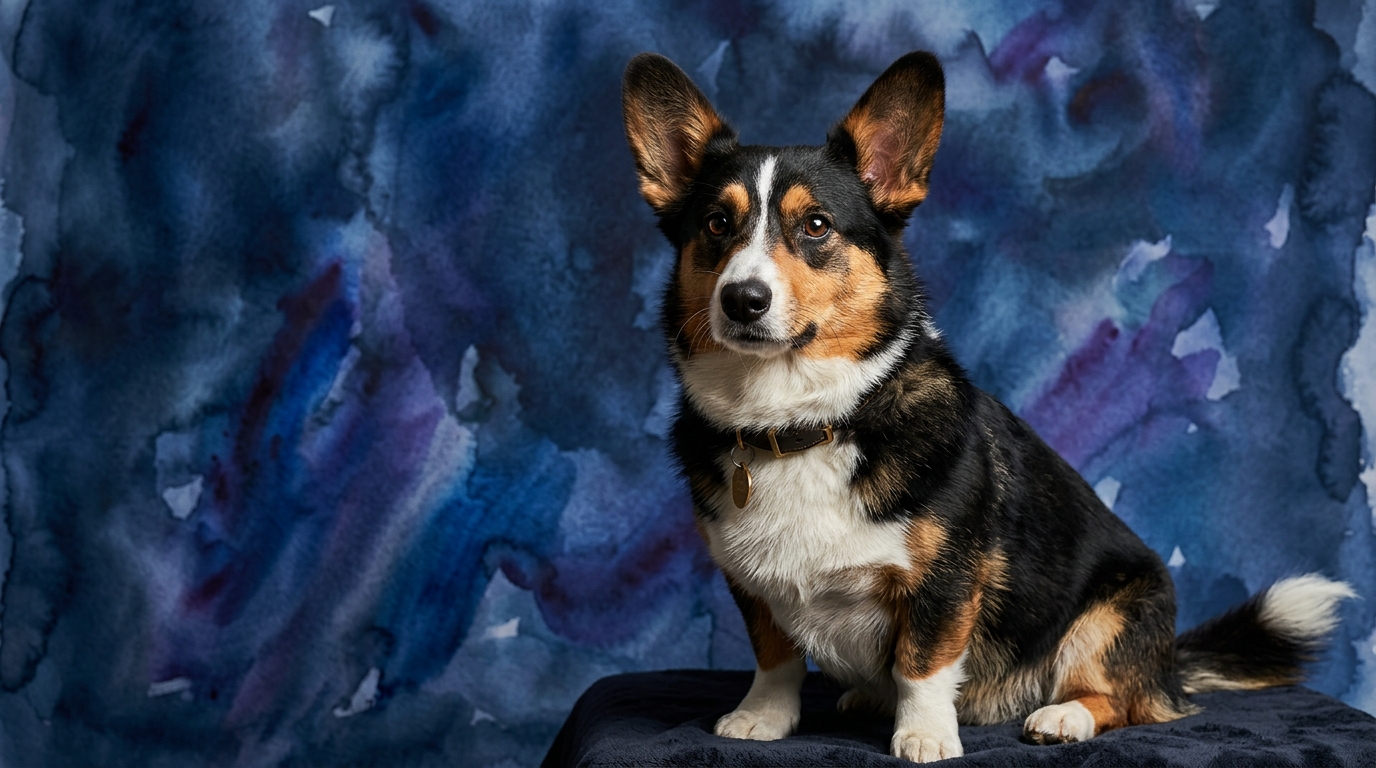
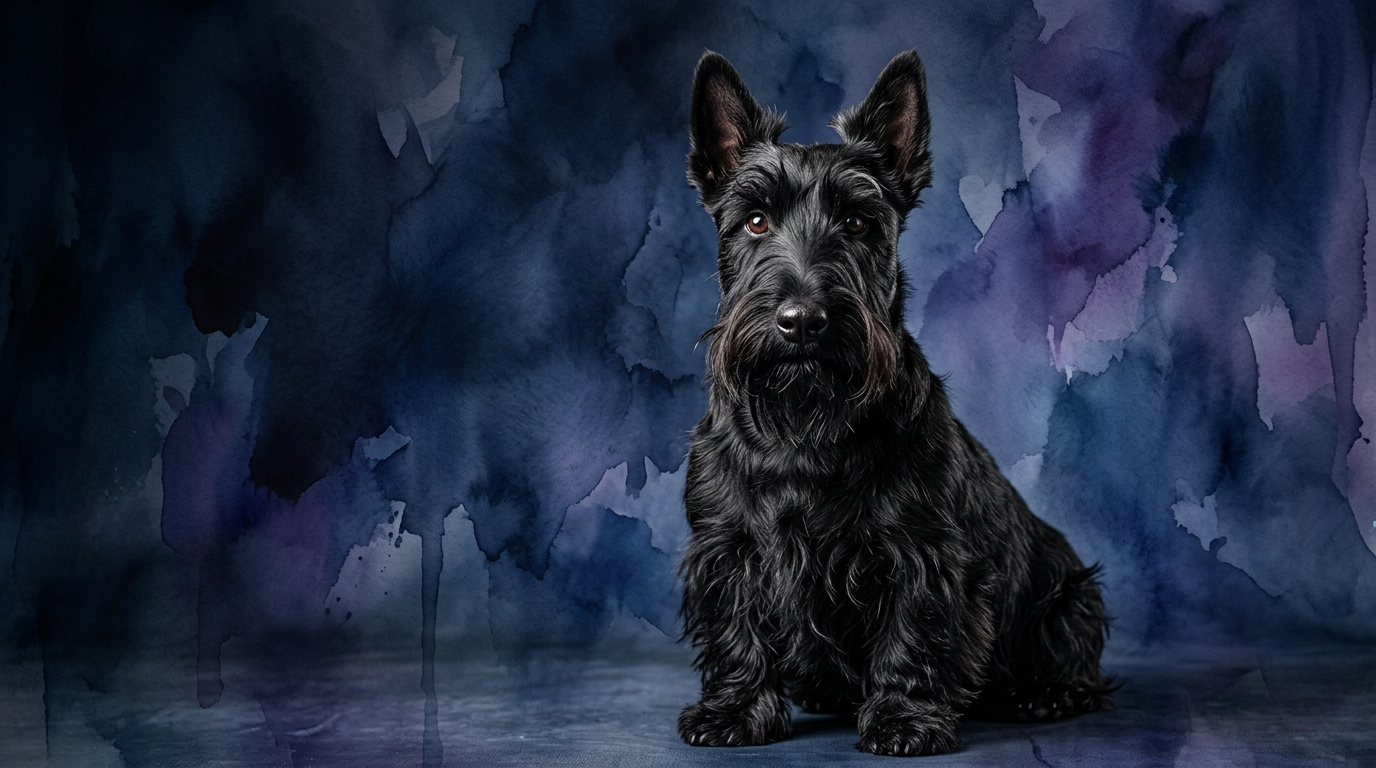
Side-by-Side IQ Profile: Cardigan Welsh Corgi vs. Scottish Terrier
The Cosmic Pet Pet IQ Lab employs a multi-faceted approach to assess canine intelligence, moving beyond simple obedience to explore problem-solving, training speed, social intelligence, instinctive drive, and memory. Our analysis reveals distinct cognitive blueprints for the Cardigan Welsh Corgi, holding a Coren rank of #26, and the Scottish Terrier, ranked #65, reflecting their specialized historical roles. Understanding these dimensions provides a clearer picture of what makes each breed tick.
For the Cardigan Welsh Corgi, a Herding group member, its cognitive scores paint a picture of a capable and cooperative thinker. Its Problem Solving is rated 4/5, indicating a strong ability to navigate complex situations and strategize. Training Speed is also 4/5, showcasing its rapid learning curve and receptiveness to instruction. Social Intelligence stands at 3/5, suggesting a good understanding of human cues while maintaining some independence. Instinctive Drive is 3/5, primarily focused on its herding heritage. Finally, its Memory is a robust 4/5, aiding in consistent performance and recall.
The Scottish Terrier, a member of the Terrier group, presents a different cognitive emphasis. Its Problem Solving is rated 3/5, reflecting a tenacious, often independent approach to overcoming obstacles rather than broad strategic planning. Training Speed is 3/5, indicating a moderate pace of learning that often requires more motivation tailored to its self-assured nature. Social Intelligence is 3/5, similar to the Corgi, meaning it understands its social environment but often on its own terms. Instinctive Drive is 3/5, heavily geared towards hunting and digging. Its Memory score is 3/5, functional but perhaps less comprehensive than breeds with higher scores, focusing on information relevant to its immediate interests.
Where the Cardigan Welsh Corgi Wins Cognitively
The Cardigan Welsh Corgi demonstrates a clear cognitive advantage in several key areas, largely stemming from its historical role as a herding dog. Its Problem Solving score of 4/5 indicates a superior capacity for analytical thought and adapting to new situations. Unlike breeds that might rely on brute force or instinct alone, the Corgi can assess a problem, formulate a plan, and execute it, whether that involves figuring out how to open a gate or navigating an agility course with precision. This strategic thinking is a hallmark of herding breeds, where quick decisions and an understanding of spatial relationships are paramount.
Furthermore, the Corgi’s Training Speed, also rated 4/5, highlights its impressive ability to absorb and apply new information rapidly. This isn't just about repetition; it's about an inherent drive to cooperate and understand human directives. Their strong memory (4/5) reinforces this, allowing them to retain a vast repertoire of commands, routines, and experiences. This means a Corgi can build upon previously learned skills, mastering complex sequences and tasks with relative ease, making them excellent candidates for advanced obedience, rally, or even intricate trick training. Their cognitive strength lies in their capacity for structured learning and their collaborative approach to problem-solving.
Where the Scottish Terrier Wins Cognitively
While the Scottish Terrier's overall IQ scores may appear lower than the Corgi's, its cognitive profile shines in specific, tenacious ways that are perfectly suited to its original purpose. The Scottie's Problem Solving score of 3/5, while not as high, reflects a distinct type of intelligence: one focused on independent, persistent investigation and overcoming obstacles through sheer will. A Scottie won't necessarily strategize like a herding dog managing a flock, but it will relentlessly pursue a scent or dig to find what it's looking for, demonstrating a singular focus and determination. This cognitive strength is about resourcefulness in challenging, often solitary, situations rather than collaborative problem-solving.
Its Instinctive Drive (3/5), though equal to the Corgi's, is channeled differently. For the Scottie, this drive is a powerful engine for independent action, fueling its investigative nature and its ability to work without constant human direction. This isn't a flaw; it's a cognitive asset for a dog bred to hunt vermin in tunnels. They excel at tasks requiring self-reliance and an unwavering focus on a goal, even if it means bending the rules or finding unconventional solutions. Their memory (3/5) is particularly strong for things relevant to their core drives – where the best digging spots are, which squirrel goes where, or the quickest route to a perceived "prey." This specialized cognitive tenacity, rather than broad adaptability, is where the Scottie truly demonstrates its unique intellectual prowess.
Which is Easier to Train and Why
When it comes to ease of training, the Cardigan Welsh Corgi generally presents a more straightforward experience due to its higher Training Speed (4/5) and its historical role. Corgis were bred to work closely with humans, responding to commands and signals to manage livestock. This background fosters a natural inclination towards cooperation and a desire to understand and comply with their handler's wishes. They are often eager to please, which significantly accelerates the learning process. A Corgi typically grasps new commands quickly and consistently, making basic obedience and even more advanced tasks feel like a collaborative effort. Their robust memory further ensures that once a command is learned, it's retained, leading to reliable performance.
The Scottish Terrier, with a Training Speed of 3/5, offers a different training dynamic. Scotties were bred to be independent hunters, making their own decisions in the field without constant human input. This translates into a personality that can be described as self-assured and often quite stubborn. A Scottie will learn, but they often require more patience, creativity, and a strong "what's in it for me?" attitude from the trainer. They might question the necessity of a command or decide that their own agenda is more pressing. While capable of mastering commands, their learning curve can be steeper, demanding consistent, positive reinforcement and an understanding of their terrier mindset. Training a Scottie is less about quick compliance and more about building a relationship based on mutual respect and finding compelling motivators.
Which Suits Active Owners vs. Relaxed Owners
Understanding the cognitive and instinctive drives of these breeds helps determine which might suit different owner lifestyles. The Cardigan Welsh Corgi, despite its compact size, is a robust herding dog with a 3/5 instinctive drive that translates into a need for purposeful activity. They aren't necessarily marathon runners, but they thrive on mental engagement and tasks that simulate their herding heritage. This means owners who enjoy structured activities like obedience, agility, rally, or even simply engaging in regular, varied play sessions and puzzle toys will find the Corgi a rewarding companion. They can adapt to a more relaxed home environment if their mental and moderate physical exercise needs are consistently met through interactive play, training, and enrichment. An "active owner" for a Corgi is one who is actively engaged in their dog's mental life, not just physical exertion.
The Scottish Terrier, also with a 3/5 instinctive drive, possesses a different kind of activity requirement. Their drive is rooted in hunting and investigation, meaning they need outlets for sniffing, exploring, and sometimes digging. While they enjoy walks and playtime, their independent nature means they might be content with shorter, more focused bursts of activity followed by periods of self-directed exploration or napping. A "relaxed owner" might find a Scottie suitable if they can provide secure outdoor spaces for supervised sniffing and digging, along with consistent daily walks that allow for exploration. They are not typically high-strung but require their specific breed-appropriate needs to be met to prevent boredom-driven behaviors. Both breeds benefit from owners who understand their inherent drives and provide appropriate outlets, but the *type* of activity and engagement differs significantly. The Corgi generally seeks more collaborative, structured engagement, while the Scottie often prefers independent, investigative pursuits.
The Verdict
Choose the Cardigan Welsh Corgi if you desire a highly trainable, collaborative dog eager to learn complex tasks and participate in structured activities, appreciating their keen problem-solving and strong memory.
Choose the Scottish Terrier if you admire an independent, tenacious spirit that excels at self-directed problem-solving and focused investigation, and you are prepared for a training journey that prioritizes patience and understanding their unique terrier drive.
🧠 Find Your Pet's IQ Score
Our Pet IQ Lab assessment covers 25+ tests across 5 cognitive dimensions — personalized to your breed.
Take the Full IQ Test →Frequently Asked Questions
Are Cardigan Welsh Corgis good for first-time dog owners?
With their high training speed and desire to please, Cardigan Welsh Corgis can be an excellent choice for first-time owners willing to commit to consistent training and mental stimulation. Their eagerness to learn makes the process rewarding, though their herding instincts require channeling.
Do Scottish Terriers require a lot of exercise?
Scottish Terriers have a moderate exercise requirement; they need daily walks and opportunities for independent exploration and sniffing, but aren't typically high-endurance dogs. Mental stimulation through puzzle toys and supervised outdoor time is as important as physical activity.
Which breed is better with children, based on their social intelligence?
Both breeds, with a social intelligence of 3/5, can be good with children when properly socialized and supervised. The Corgi might be more inclined to "herd" children due to instinct, while the Scottie's independence means it might tolerate rather than actively engage with boisterous play, requiring respectful interaction.