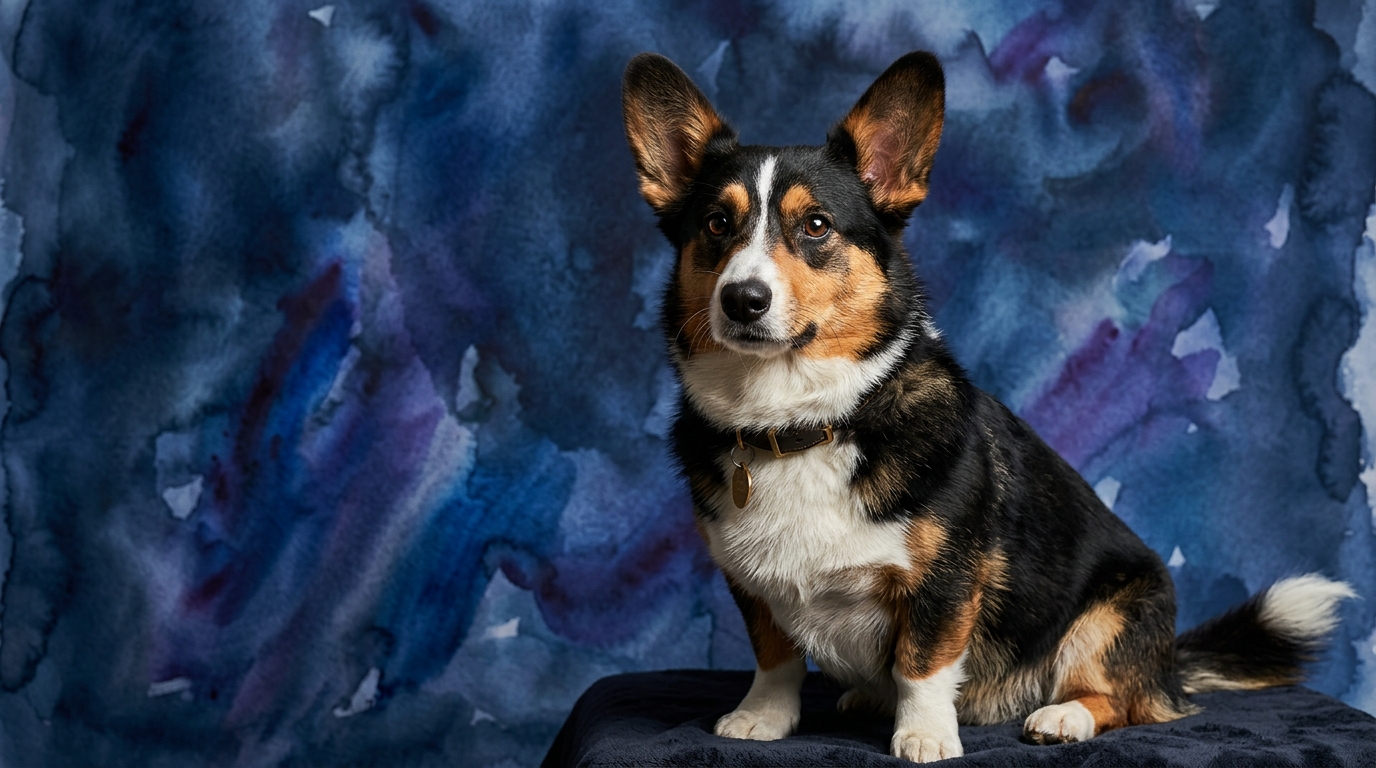
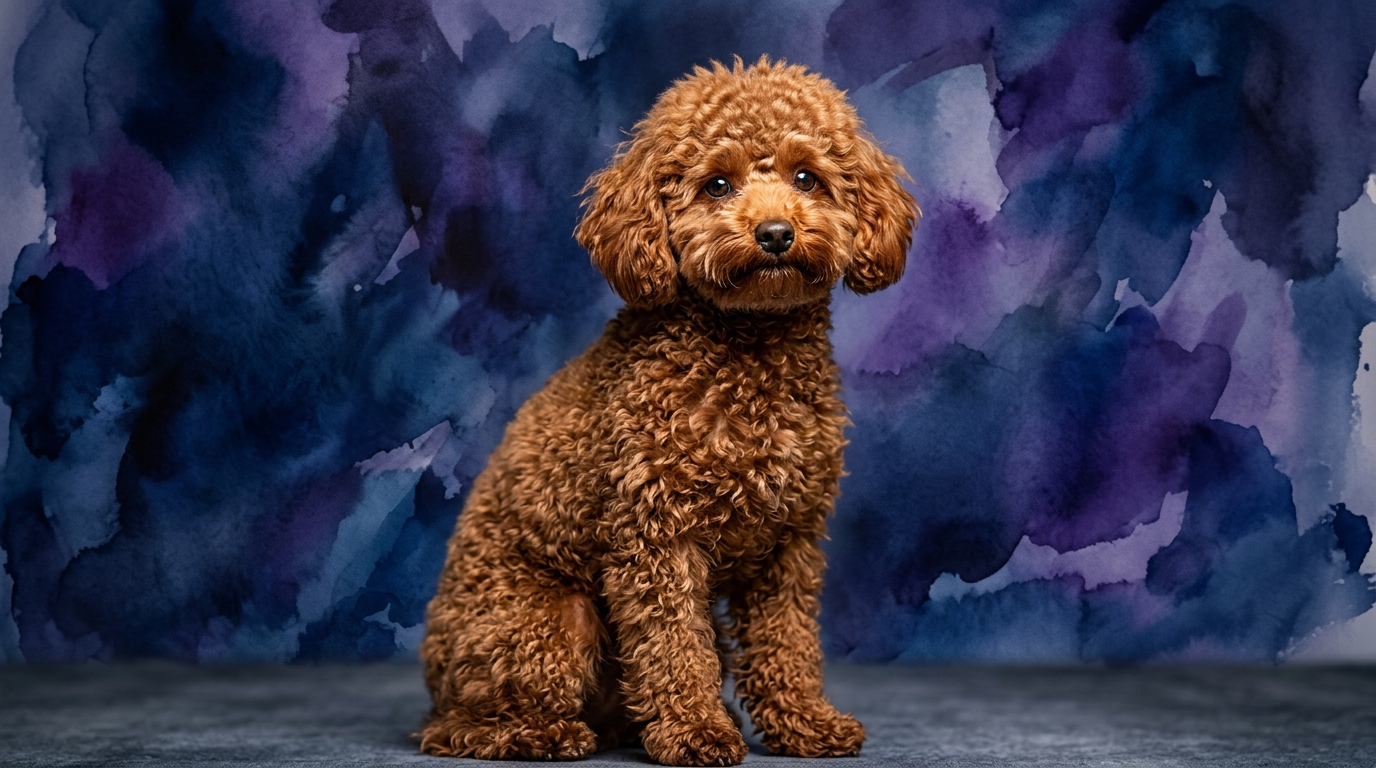
Side-by-Side IQ Profile: Cardigan Welsh Corgi vs. Toy Poodle
In The Cosmic Pet Pet IQ Lab, we evaluate canine intelligence across five crucial dimensions, offering a nuanced understanding of each breed's cognitive architecture. Here’s how the Cardigan Welsh Corgi and Toy Poodle stack up.
Problem Solving: The Cardigan Welsh Corgi, with a 4/5 rating in problem-solving, demonstrates a practical, often physically-oriented approach to challenges. Their herding lineage means they are adept at navigating complex environments, figuring out how to move objects or animals, and finding efficient pathways. This might manifest as strategically maneuvering around obstacles to retrieve a toy or figuring out how to open a slightly ajar door. The Toy Poodle, earning a perfect 5/5, exhibits a more abstract and adaptable problem-solving aptitude. They quickly grasp multi-step commands and excel at novel puzzles that require pattern recognition or sequential thinking, often preferring to “think through” a solution rather than brute-forcing it. This could involve manipulating puzzle toys with precision or understanding complex sequences of actions to earn a reward.
Training Speed: Cardigan Welsh Corgis are rated 4/5 for training speed, meaning they pick up new commands and routines with impressive efficiency. They respond well to consistent, positive reinforcement, and once a concept clicks, it typically sticks. However, their independent streak, a hallmark of many herding breeds, means they occasionally require a slightly firmer, more patient hand to maintain focus. The Toy Poodle, with a 5/5 rating, stands out for its almost instantaneous grasp of new information. They often seem to anticipate what's expected, absorbing lessons rapidly and showing a strong eagerness to comply. This makes them exceptionally quick learners, capable of mastering a vast repertoire of commands and tricks with minimal repetition.
Social Intelligence: Both breeds share a 3/5 rating in social intelligence, indicating a solid but not exceptionally dominant aptitude for reading human and canine social cues. The Cardigan Welsh Corgi is generally observant of their family's moods and routines, often forming strong bonds with their primary caregivers, but might be less overtly expressive or universally friendly with strangers. Their social interactions can be influenced by their protective instincts. The Toy Poodle, while equally astute in observing their immediate human companions, tends to be more attuned to individual owner emotions and subtle body language. They can be quite sensitive to changes in household dynamics, often mirroring their owner's emotional state, though they might not always extend this deep understanding to a wide circle of acquaintances.
Instinctive Drive: Both breeds register a 3/5 in instinctive drive, which suggests a moderate, manageable level of inherent behaviors. For the Cardigan Welsh Corgi, this drive is rooted in their herding heritage. They might exhibit nipping at heels, attempting to “herd” children or other pets, or demonstrating a strong desire to chase moving objects. This drive, while present, is typically not overwhelming and can be channeled effectively with appropriate outlets. The Toy Poodle's instinctive drive, while also moderate, often manifests as a strong retrieving instinct, a desire for interactive play, and a keen interest in exploring their environment. They can be enthusiastic participants in games that mimic hunting or tracking, and their heritage as water retrievers still surfaces in their love for toys and interactive engagement.
Memory: The Cardigan Welsh Corgi scores a 4/5 for memory, demonstrating excellent recall for learned commands, routines, and past experiences. Once they learn something, they tend to retain it for the long term, which is a significant asset in training and establishing household rules. They remember people, places, and specific events with clarity. The Toy Poodle, with a perfect 5/5, possesses an outstanding memory. They recall commands, intricate trick sequences, and even complex associations with remarkable accuracy, even after long periods of inactivity. This superior recall contributes significantly to their training prowess, allowing them to build upon a vast foundation of knowledge and skills over their lifetime.
Where the Cardigan Welsh Corgi Wins Cognitively
The Cardigan Welsh Corgi excels in practical, environmental problem-solving, particularly when it involves navigating terrain or manipulating objects with determination. Their cognitive strength lies in their persistence and independent decision-making in real-world scenarios, a direct echo of their role in autonomously managing livestock. For instance, a Corgi might more readily figure out how to bypass a gate or find a hidden path to a desired location without direct human instruction, relying on their keen spatial awareness and tenacity. They also demonstrate a robust resilience in repetitive tasks, maintaining focus and drive even when the immediate reward isn't obvious, which is invaluable for certain types of training or work. Their memory, while rated 4/5, is particularly strong for established routines and environmental details, allowing them to quickly adapt to familiar places and schedules. This means they are less likely to forget household boundaries or the daily rhythm of their family.
Where the Toy Poodle Wins Cognitively
The Toy Poodle's cognitive strengths shine in areas demanding mental agility, abstract reasoning, and nuanced communication. Their 5/5 problem-solving ability extends to complex, multi-step tasks and puzzle-solving that requires more than physical force, often demonstrating an elegant efficiency in their approach. They show a remarkable capacity for understanding subtle human cues, even anticipating intentions before a command is fully given. Their superior training speed and memory (both 5/5) allow them to rapidly acquire and retain an extensive vocabulary of commands and intricate trick sequences, making them prime candidates for advanced obedience, dog sports like agility, or even complex service roles. This breed excels at pattern recognition and applying learned concepts to novel situations, demonstrating a mental flexibility that allows for sophisticated learning and adaptation across diverse environments and training methodologies.
Which is Easier to Train and Why
Based on their IQ profiles, the Toy Poodle is generally easier to train for a broader range of commands and complex tasks. Their perfect 5/5 ratings in both training speed and memory mean they grasp new concepts almost instantly and retain them with exceptional reliability. This is often coupled with a strong desire to please their human companions, making them highly responsive to positive reinforcement and eager participants in training sessions. Their ability to quickly connect actions with consequences and their sustained recall translates into fewer repetitions needed and a faster progression through training levels. The Cardigan Welsh Corgi, with 4/5 ratings in these areas, is certainly trainable and learns effectively, but their independent herding spirit might occasionally lead to moments of self-directed decision-making or a need for more consistent reinforcement to overcome their innate drive to explore or “manage” their environment. While both breeds benefit from early socialization and consistent training, the Toy Poodle's cognitive architecture makes the process feel more fluid and rapid for most owners.
Suitability for Active vs. Relaxed Owners
For active owners seeking a dynamic partner for outdoor adventures, dog sports, or even a working role, the Cardigan Welsh Corgi is often a fitting choice. Their sturdy build, natural athleticism, and herding drive make them excellent companions for hiking, competitive obedience, or even agility. They thrive on having a “job” and benefit from owners who can provide consistent mental and physical challenges that tap into their problem-solving and instinctive drives. However, their need for engagement means they are not suited for purely relaxed owners who prefer minimal interaction. For owners who are more relaxed in terms of physical exertion but still desire deep mental engagement, the Toy Poodle is an exceptional match. While they can certainly enjoy active play, their primary need is often for mental stimulation through complex training, puzzle toys, and interactive games. They are content with indoor activities and shorter, focused outdoor excursions, making them ideal for individuals or families who appreciate a constant, mentally stimulating companion without the demanding physical requirements of a larger or more intensely driven working breed.
The Verdict
Choose a Cardigan Welsh Corgi if you are an owner who appreciates an independent, tenacious thinker with a robust spirit and a natural inclination for practical problem-solving in real-world environments, and you are prepared to channel their herding instincts into productive activities.
Opt for a Toy Poodle if you seek a highly adaptable, mentally agile companion who excels at rapid learning, complex communication, and retaining a vast repertoire of skills, and you enjoy engaging in sophisticated training or intricate interactive play.
🧠 Find Your Pet's IQ Score
Our Pet IQ Lab assessment covers 25+ tests across 5 cognitive dimensions — personalized to your breed.
Take the Full IQ Test →Frequently Asked Questions
Are Cardigan Welsh Corgis difficult to train due to their herding instincts?
Cardigan Welsh Corgis are generally responsive to training, rated 4/5 for speed and memory. While their herding instincts mean they might occasionally exhibit independent decision-making or try to “herd” family members, consistent positive reinforcement and early socialization can channel these behaviors effectively into productive outlets. They are not difficult, but require engagement.
Do Toy Poodles require a lot of physical exercise, or is mental stimulation more important for them?
Toy Poodles do benefit from regular physical activity, but their cognitive needs often outweigh purely physical demands. Their high problem-solving and training speed ratings mean they thrive on mental stimulation through puzzle toys, complex training, and interactive games, which can be just as tiring as a long walk.
How do both breeds compare in terms of their adaptability to different living situations?
Both breeds are quite adaptable, but in different ways. Cardigan Welsh Corgis adapt well to varied environments as long as their physical and mental needs are met, showing resilience. Toy Poodles adapt exceptionally well to various living situations due to their mental agility and eagerness to please, often thriving in smaller spaces if provided with ample mental engagement.