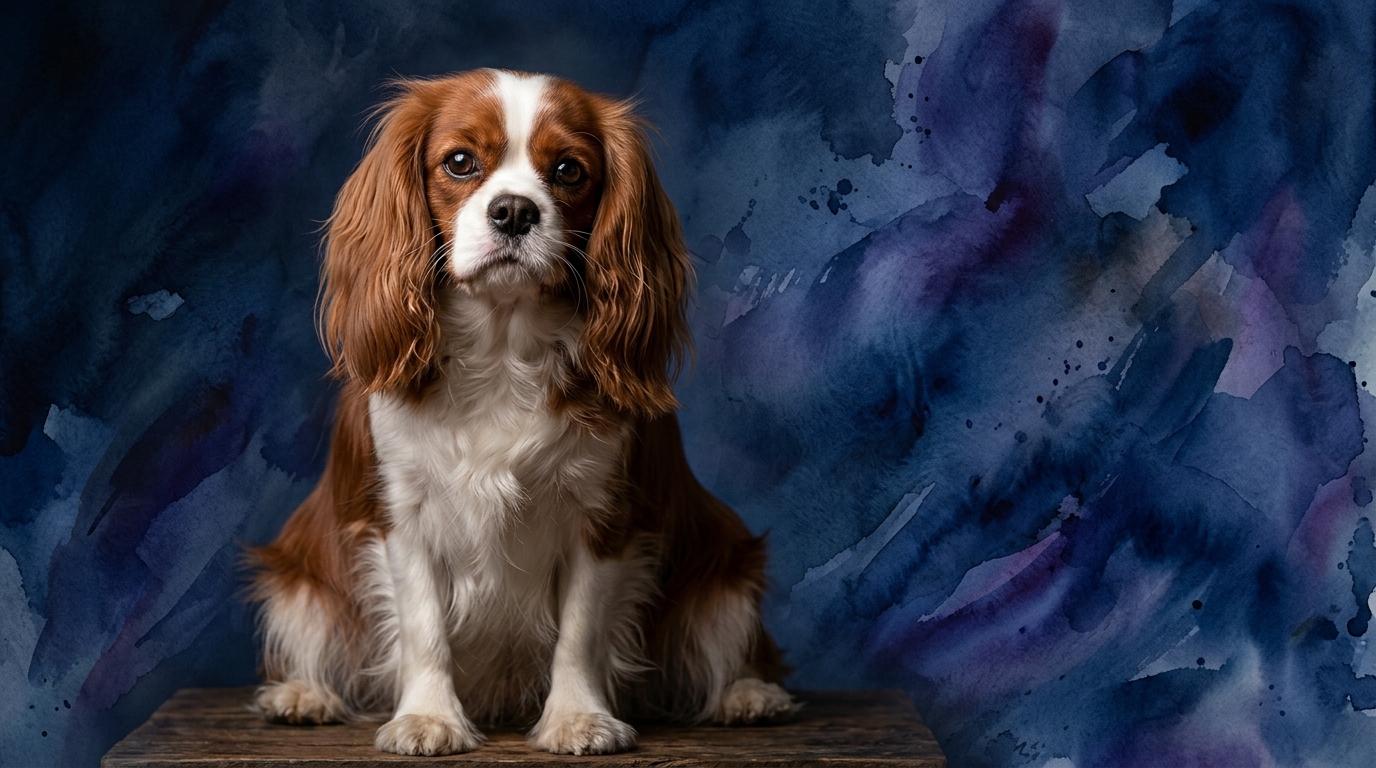
Side-by-Side IQ Profile: Cavalier King Charles Spaniel
**Problem Solving (3/5):** The Cavalier can figure out how to manipulate simple puzzle toys for treats or navigate a familiar environment to find a preferred resting spot. While they won't typically devise intricate strategies for complex tasks, their practical intelligence allows them to adapt well to household routines and learn cause-and-effect relationships within their immediate surroundings, like understanding that a specific sound precedes a walk or meal.
**Training Speed (3/5):** Cavaliers generally grasp new commands at a moderate pace, benefiting from a patient, positive approach. Their willingness to please their human companions aids in learning, though they may require consistent repetition and positive reinforcement to solidify behaviors. They aren't the quickest studies, but their cooperative nature makes the training process a rewarding bonding experience.
**Social Intelligence (5/5):** This is where the Cavalier truly shines. This exceptional capacity means Cavaliers are highly attuned to the emotional states of their human family members. They can often anticipate needs, offering a comforting presence when someone is upset or initiating gentle play when spirits are high. Their empathetic nature allows them to form incredibly strong, intuitive bonds, making them natural emotional support animals and cherished family confidantes. This understanding of social nuances extends to adapting their behavior to different people and situations, striving for harmony within their social group.
**Instinctive Drive (3/5):** While originally bred with some sporting instincts, the modern Cavalier's instinctive drive is moderate and easily managed. They may show a mild interest in chasing small critters or retrieving a tossed ball, but these drives are typically less intense than in breeds specifically developed for hunting or herding, making them less prone to wandering or intense prey pursuit.
**Memory (3/5):** Their memory is competent for daily routines, learned commands, and recognizing familiar faces and places. They will remember training cues and past experiences, such as where a favorite toy is kept or the route to the park, but might not retain intricate details over extended periods without reinforcement, similar to many moderately scoring breeds.
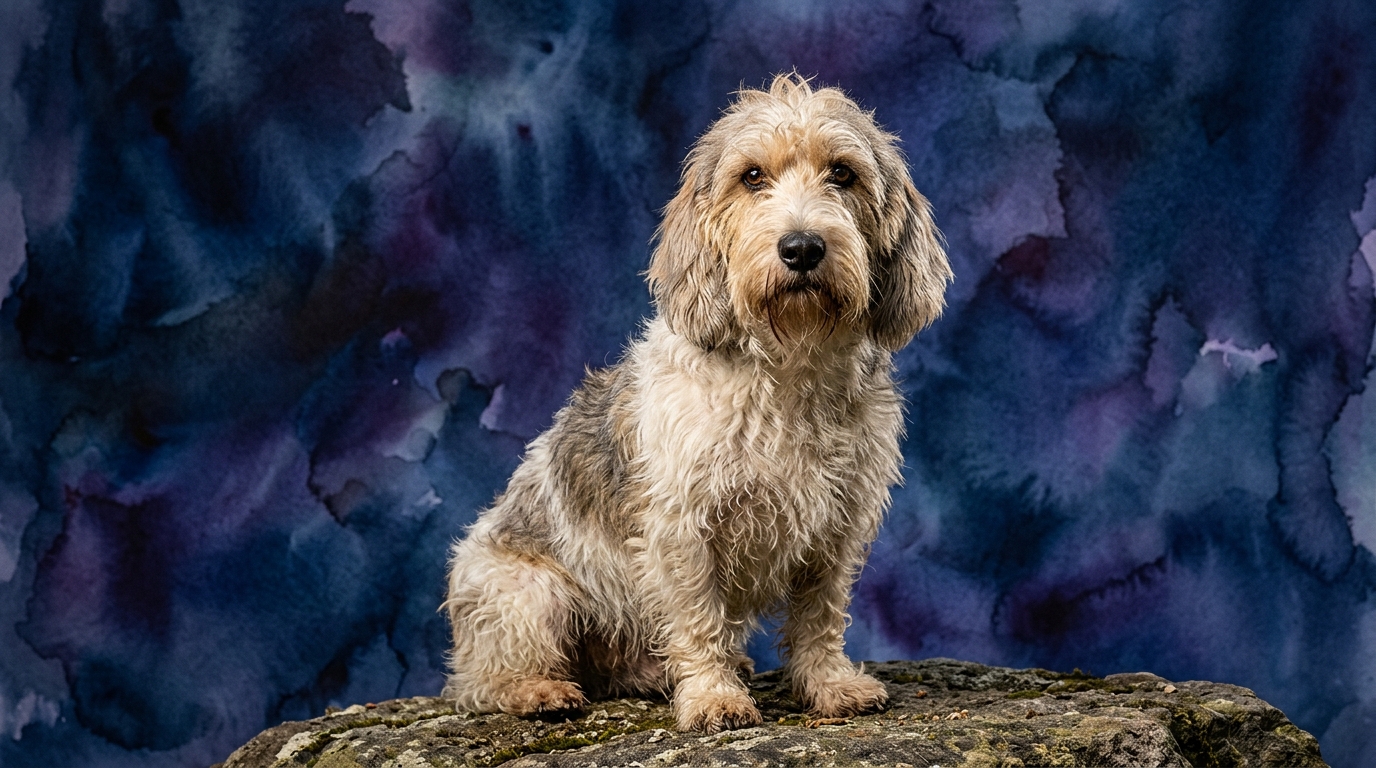
Side-by-Side IQ Profile: Petit Basset Griffon Vendéen
**Problem Solving (3/5):** The PBGV exhibits a practical, independent approach to problem-solving, often focused on its environment. Their problem-solving aptitude is often tied to their sensory exploration and environmental mastery. A PBGV might methodically work out how to squeeze through a gap in a fence to follow an intriguing scent, or how to dislodge a toy stuck under furniture using their strong muzzle. This isn't about abstract reasoning, but rather a persistent, physical application of their wits to achieve a tangible, often scent-related, goal.
**Training Speed (3/5):** PBGVs learn at a moderate pace, but their independent hound nature means they can be more selective about when and how they apply their learning. While capable of understanding commands, their strong scent drive can sometimes override their focus on training, requiring patience, consistency, and high-value rewards to maintain their attention amidst environmental distractions.
**Social Intelligence (3/5):** PBGVs are friendly and enjoy interaction, but their social intelligence is geared more towards cooperative pack dynamics and general camaraderie rather than the deep, empathetic human attunement of a companion breed. While friendly and enjoying group activities, the PBGV's social intelligence is more rooted in cooperative pack dynamics than in deep human empathy. They enjoy the company of both humans and other dogs, participating enthusiastically in play, but their self-reliance means they don't constantly seek human validation or deeply interpret subtle emotional cues in the same way a Cavalier does. They are social in a boisterous, interactive sense, appreciating companionship without being entirely dependent on it for their emotional well-being.
**Instinctive Drive (3/5):** Despite this score being numerically identical to the Cavalier's, for a hound, this 3/5 represents a significant and compelling drive to follow scent trails and explore. Their noses are highly active, and they possess a persistent, robust nature when tracking, making them determined explorers of their environment. This means they are often led by their nose, making off-leash reliability a significant training challenge in unfenced areas.
**Memory (3/5):** PBGVs possess a functional memory for their environment, scent trails, and routines. They will recall where interesting smells were found or the path taken on a previous walk, demonstrating a strong spatial and olfactory memory. Like their Cavalier counterparts, consistent reinforcement helps solidify memory for obedience commands, but their recall for a compelling scent is often superior to their recall for a verbal cue.
Where the Cavalier King Charles Spaniel Wins Cognitively
The Cavalier's unparalleled social intelligence (5/5) is its defining cognitive advantage, setting it apart as a true companion. This allows them to seamlessly integrate into human families, acting as intuitive emotional barometers. They excel at recognizing subtle shifts in human mood and responding with appropriate comfort or engagement, making them exceptional therapy companions or simply profoundly empathetic family members. Their capacity for deep social bonding means they actively seek and interpret human interaction, making them highly responsive to their owners' desires for companionship. This manifests in their readiness to cuddle when you're sad or their playful invitation when you're happy, demonstrating a nuanced understanding of social cues that few breeds match. This cognitive strength translates directly into a dog that feels less like a pet and more like an extension of the family's emotional landscape, offering intuitive support and companionship.
Where the Petit Basset Griffon Vendéen Wins Cognitively
While their scores are numerically similar in other areas, the PBGV's cognitive strength lies in the *application* of its instinctive drive (3/5) and problem-solving (3/5) within its hound context. Their robust sensory processing, particularly olfaction, allows them to independently track and interpret complex scent information, a skill vital for navigating varied terrains and locating quarry. This manifests as tenacious exploration and an unwavering focus when following a trail, even in challenging environments. Their moderate problem-solving is often applied to overcoming physical obstacles in pursuit of a scent, showcasing a practical, independent ingenuity rather than a human-directed one. They are masters of their sensory world, capable of making autonomous decisions based on environmental cues, a cognitive trait that makes them formidable scent hounds and engaging, self-reliant explorers.
Which is Easier to Train and Why
The Cavalier King Charles Spaniel generally proves easier to train due to its superior social intelligence (5/5) and inherent desire to please its human companions. Their strong focus on human interaction means they are highly motivated by praise, affection, and the opportunity to engage with their owner, often viewing training as a collaborative activity. They are attentive students, quick to understand what is expected and eager to comply for social rewards, making them responsive to positive reinforcement methods. In contrast, the Petit Basset Griffon Vendéen, with its 3/5 social intelligence and powerful instinctive drive, presents more of a training challenge. While capable of learning, their independent nature and preoccupation with scents mean they can be easily distracted by environmental stimuli. Training a PBGV requires more consistent, creative motivation, often involving high-value food rewards or engaging games, to maintain focus and override their natural inclination to follow their nose, which for them is often a far more compelling reward than human praise alone.
Which Suits Active Owners vs. Relaxed Owners
The Cavalier King Charles Spaniel is an ideal match for more relaxed or moderately active owners. Their moderate instinctive drive and energy levels mean they are content with daily walks, playtime in the yard, and a significant amount of indoor companionship, thriving on being an integral part of family life. Their high social intelligence makes them thrive on being part of family activities, whether lounging on the couch, accompanying a gentle stroll, or participating in quiet indoor games. They are adaptable to apartment living provided they receive sufficient human interaction and regular, moderate exercise. The Petit Basset Griffon Vendéen, conversely, is best suited for active owners who relish outdoor adventures and have a robust sense of humor. Their energetic nature, coupled with a persistent instinctive drive, demands substantial daily exercise, including opportunities for off-leash exploration in secure areas where they can engage their powerful sense of smell. They need owners who can commit to consistent physical and mental stimulation, like scent work or long hikes, to prevent boredom and channel their energetic, independent spirit productively, as a bored PBGV can become a mischievous one.
The Verdict
Opt for a Cavalier if you seek an exceptionally empathetic, socially attuned companion who thrives on human connection, offers profound emotional support, and fits seamlessly into a more relaxed or moderately active household environment.
Select a PBGV if you are an active owner who enjoys outdoor exploration, appreciates an independent, spirited dog with a keen scent drive, and is prepared to channel their robust energy and curiosity into engaging activities.
🧠 Find Your Pet's IQ Score
Our Pet IQ Lab assessment covers 25+ tests across 5 cognitive dimensions — personalized to your breed.
Take the Full IQ Test →Frequently Asked Questions
Is the Cavalier King Charles Spaniel prone to separation anxiety?
Due to their exceptional social intelligence and strong bond with humans, Cavaliers can be prone to separation anxiety if not properly socialized and trained for alone time from a young age. Their happiness is deeply tied to human companionship, so prolonged solitude can be distressing for them, making early training crucial.
Can a Petit Basset Griffon Vendéen live in an apartment?
A PBGV can potentially live in an apartment, but it requires an owner dedicated to providing extensive daily exercise and mental stimulation outside the home. Their high energy and strong scent drive necessitate frequent, lengthy walks and opportunities to explore safely, as apartment living alone won't fulfill their needs, and they can become restless without an outlet.
How do these breeds typically interact with children?
The Cavalier King Charles Spaniel, with its high social intelligence and gentle nature, typically interacts wonderfully with children, often forming strong, patient bonds, making them excellent family pets who enjoy being part of family activities. The Petit Basset Griffon Vendéen, being a friendly and robust breed, generally gets along well with children, especially if raised with them, though their playful exuberance and sturdy build might be better suited for slightly older, more robust kids who can handle their boisterous energy.