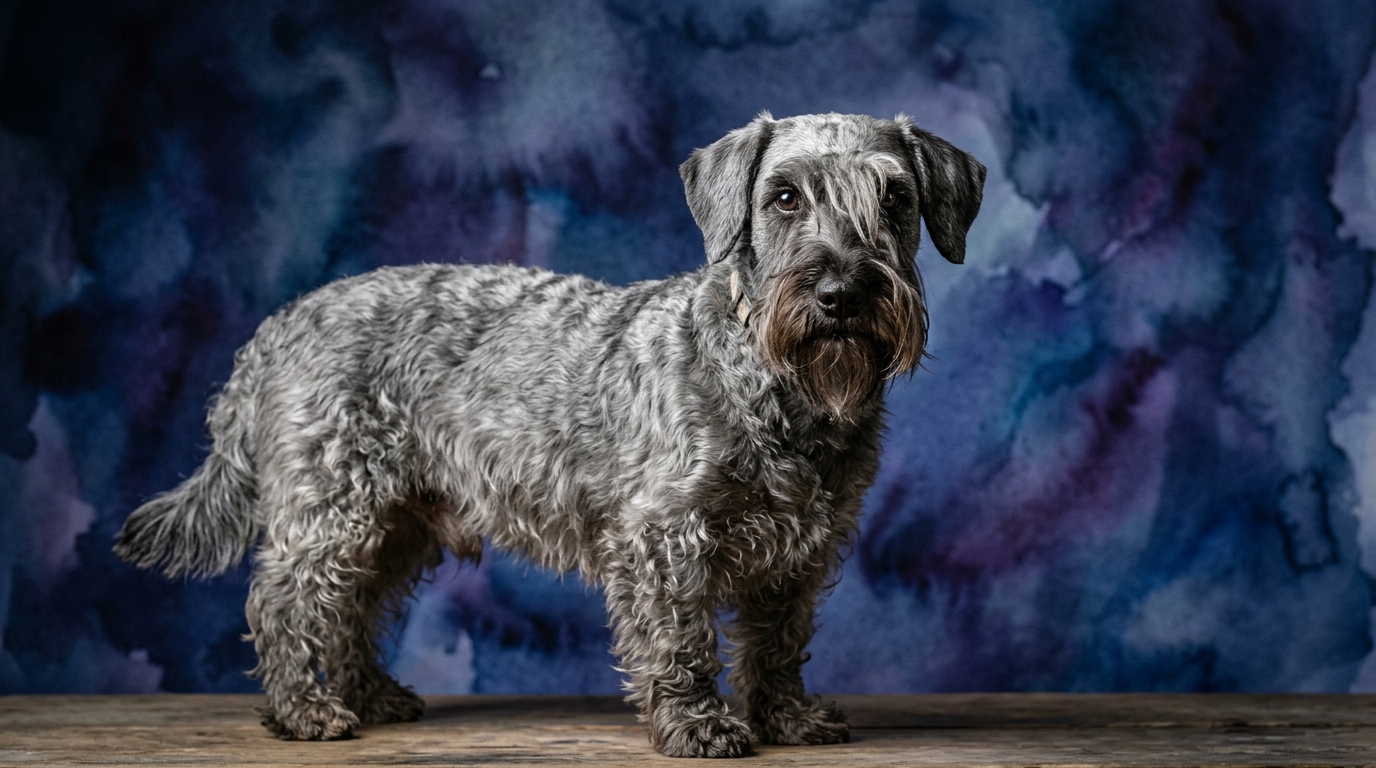
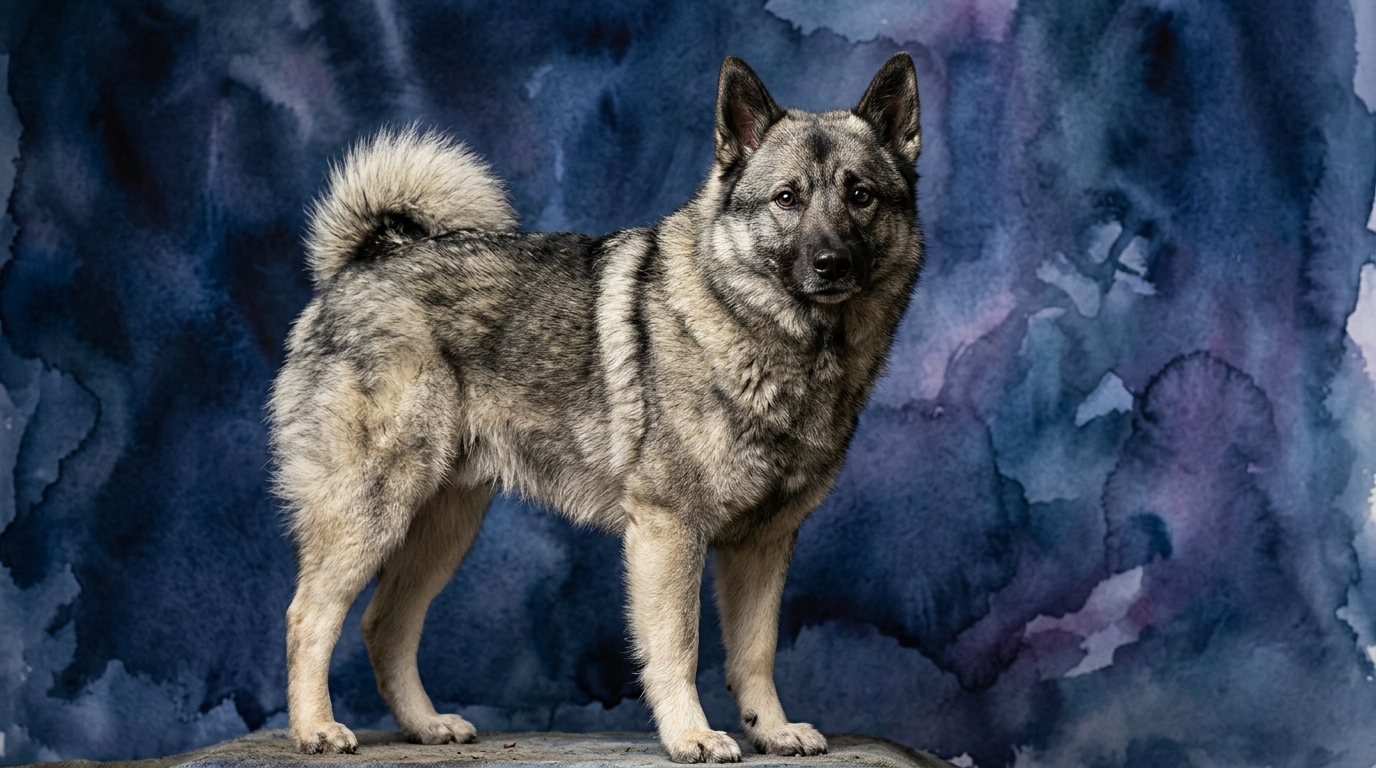
Side-by-Side IQ Profile: Cesky Terrier vs. Norwegian Elkhound
To truly understand the mental makeup of these two distinct breeds, The Cosmic Pet Pet IQ Lab employs a five-dimensional framework, evaluating Problem Solving, Training Speed, Social Intelligence, Instinctive Drive, and Memory. Each dimension is rated on a scale of 1 to 5, providing a nuanced look beyond generalized perceptions.
The Cesky Terrier, a compact and sturdy terrier originating from Czechoslovakia, presents a balanced cognitive profile, with consistent ratings across the board. They are not formally Coren-ranked, reflecting their relatively rarer status and specialized development.
**Cesky Terrier IQ Dimensions:**
**Problem Solving (3/5):** The Cesky demonstrates moderate ability to navigate straightforward puzzles or obstacles. While capable of practical solutions, complex challenges often require handler guidance and repeated exposure for mastery, rather than independent innovation.
**Training Speed (3/5):** Ceskies learn at a steady, moderate pace. They are receptive to new commands but benefit significantly from consistent, patient repetition to solidify understanding and reliable execution, especially amid distractions.
**Social Intelligence (3/5):** Their social acumen is balanced, allowing them to interpret human cues and integrate into family dynamics effectively. They respond adequately to social situations, though their innate terrier independence might occasionally influence their responses.
**Instinctive Drive (3/5):** As terriers, Ceskies possess a moderate drive for activities like digging and chasing. This drive is present and needs appropriate outlets but is often more manageable than in some other terrier breeds, balancing natural inclinations with companion living.
**Memory (3/5):** Cesky Terriers exhibit a solid, moderate memory. They reliably retain learned commands, routines, and experiences over time, though less frequently reinforced behaviors might require periodic refreshers to maintain strong recall.
The Norwegian Elkhound, a resilient hound from Scandinavia, is well-regarded for its robust working capabilities, reflected in its Coren rank of #36, placing it among breeds with a higher working and obedience intelligence. Its IQ profile showcases distinct strengths.
**Norwegian Elkhound IQ Dimensions:**
**Problem Solving (4/5):** Elkhounds excel in problem-solving, showcasing robust capacity to assess and devise effective solutions independently. Their history as hunting companions demanding field decisions translates to ingenuity in navigating complex environments or overcoming obstacles.
**Training Speed (4/5):** Elkhounds grasp new commands and tasks with notable speed, often requiring fewer repetitions than many breeds for reliable execution. This rapid acquisition makes them responsive and a rewarding partner for consistent, engaging training efforts.
**Social Intelligence (3/5):** Elkhounds share a balanced social intelligence, adept at interpreting human body language and vocal tones, fostering strong family bonds. Despite this, their independent nature can lead them to prioritize their own judgment in certain social interactions.
**Instinctive Drive (3/5):** Elkhounds possess a moderate instinctive drive, particularly for scenting, tracking, and exploration. This drive is strong enough to require outlets like structured walks or scent work but is typically manageable within a family setting, aligning with their companion hunter role.
**Memory (4/5):** This breed demonstrates strong memory, retaining learned information, routines, and experiences over extended periods. Once an Elkhound masters a command, it tends to stick, making subsequent refreshers quick and highly efficient.
Where the Cesky Terrier Wins Cognitively
While the Norwegian Elkhound generally presents higher scores in several cognitive dimensions, the Cesky Terrier's consistent 3/5 ratings across the board offer a unique advantage in terms of cognitive predictability and manageability for certain owners. Their moderate Instinctive Drive (3/5), for example, means that while they retain the terrier's zest for digging and chasing, this drive is often less intense and obsessive compared to some other terrier breeds. This can translate to a dog that is less prone to extreme prey drive behaviors or relentless scent-tracking, making them potentially easier to integrate into diverse living situations, including urban environments, where controlling intense natural instincts is paramount.
Furthermore, the Cesky's moderate Problem Solving (3/5) can be seen as a cognitive 'win' for owners who prefer a less overtly challenging dynamic. These dogs are less likely to independently devise elaborate strategies for escaping a yard, opening cabinets, or outsmarting their owners in complex ways. Their solutions to problems tend to be more direct and less innovative, which can foster a more straightforward relationship where the dog relies more on the owner for guidance, rather than constantly testing boundaries with ingenious schemes. This steady, well-rounded cognitive profile provides a comforting balance for owners seeking a companion whose mental processes are robust but rarely overwhelming.
Where the Norwegian Elkhound Wins Cognitively
The Norwegian Elkhound's cognitive strengths are particularly evident in its higher ratings for Problem Solving (4/5), Training Speed (4/5), and Memory (4/5), positioning it as a highly capable and adaptable learner. Their superior problem-solving skills mean Elkhounds can approach novel situations with significant ingenuity, often figuring out complex tasks or navigating intricate environments with minimal human intervention. This capacity for independent thought is a direct reflection of their heritage as hunting dogs who often worked ahead of their human companions, making critical decisions in challenging terrain.
The combination of faster Training Speed and robust Memory provides a substantial cognitive advantage for owners interested in advanced obedience, dog sports, or complex working roles. An Elkhound will typically grasp new commands and intricate sequences with fewer repetitions and retain that knowledge for extended periods. This efficiency allows for a more rapid progression through training levels, enabling owners to engage in sophisticated activities like competitive tracking, agility, or advanced scent work. Their strong memory ensures that once a skill is learned, it becomes a reliable part of their behavioral repertoire, making them exceptionally responsive and consistent partners in demanding tasks.
Which is Easier to Train and Why?
When evaluating ease of training, the Norwegian Elkhound generally offers a more streamlined experience due to its superior scores in Training Speed (4/5) and Memory (4/5). An Elkhound will typically absorb new commands, routines, and complex sequences with remarkable efficiency, often requiring fewer repetitions to achieve understanding and consistent execution. This rapid acquisition means that once a behavior is taught and reinforced, it tends to be retained reliably over time, reducing the need for constant refreshers. For instance, an Elkhound might master a 'stay' command with high distraction in fewer sessions compared to a Cesky, thanks to their quicker grasp and better retention.
The Cesky Terrier, with its 3/5 ratings in both Training Speed and Memory, requires a more patient, consistent, and perhaps more creative approach. While certainly receptive to training, they may take longer to fully grasp new concepts and necessitate more frequent, shorter training sessions to maintain engagement and prevent boredom. Their inherent terrier tenacity, even with a moderate instinctive drive, can sometimes manifest as a charming yet persistent independence, meaning they might weigh a command against their own immediate desires. Successful training with a Cesky relies heavily on positive reinforcement, making training feel like a rewarding game, and a handler's unwavering consistency to overcome their slightly slower learning curve and ensure behaviors are deeply ingrained. Understanding these nuanced differences in cognitive processing and retention is key to a successful training journey with either breed.
Which Suits Active Owners vs. Relaxed Owners?
The choice between a Cesky Terrier and a Norwegian Elkhound significantly hinges on an owner's lifestyle and preferred level of daily engagement, particularly concerning mental and physical activity. The Norwegian Elkhound, with its strong problem-solving and memory, coupled with a moderate but purposeful instinctive drive, thrives with owners who can provide consistent mental challenges and a structured outlet for their working heritage. These dogs excel when they have a 'job' to do, whether it's participating in dog sports like agility or tracking, engaging in advanced obedience, or accompanying owners on rigorous outdoor adventures suchiding, hiking, or even skijoring. They are best suited for active individuals or families who are eager to integrate complex training and varied, stimulating activities into their daily routine. An Elkhound without sufficient mental and physical engagement might become bored, potentially leading to self-directed entertainment such as excessive barking or destructive chewing.
The Cesky Terrier, while undeniably an active breed with a terrier’s inherent curiosity and energy, might be a better fit for owners whose activity levels are consistent but perhaps less intensely focused on competitive dog sports or advanced 'work.' Their balanced 3/5 ratings across all cognitive dimensions suggest adaptability to a moderately active lifestyle that includes regular, engaging walks, interactive playtime, and consistent, yet perhaps not overly complex, training. They appreciate opportunities to explore and satisfy their digging instincts in a controlled environment, making a secure yard beneficial. A Cesky can thrive with owners who appreciate a loyal, spirited companion for daily adventures and consistent interaction, without feeling the pressure to constantly push cognitive boundaries, valuing their steady temperament and manageable drives within a family setting. They are not 'couch potatoes' but possess a more contained energy profile than the Elkhound's higher-scoring cognitive demands might imply.
The Verdict
Select the Cesky Terrier if you appreciate a loyal companion with a balanced cognitive profile, offering manageable instinctive drives and a steady learning pace for consistent, patient training. They are well-suited for owners seeking an adaptable terrier for a moderately active lifestyle, who value predictability and a less overtly challenging cognitive partner.
Opt for the Norwegian Elkhound if you are an active owner eager to engage a dog with superior problem-solving abilities, rapid training speed, and excellent memory. This breed thrives on mental challenges and structured activities, making them an ideal partner for dog sports, advanced training, or adventurous outdoor pursuits.
🧠 Find Your Pet's IQ Score
Our Pet IQ Lab assessment covers 25+ tests across 5 cognitive dimensions — personalized to your breed.
Take the Full IQ Test →Frequently Asked Questions
Is the Norwegian Elkhound better for first-time dog owners than the Cesky Terrier?
The Norwegian Elkhound’s faster training speed and strong memory can make initial training rewarding, but their independent problem-solving and need for mental stimulation require a committed, knowledgeable owner. The Cesky Terrier, with its steadier learning pace and moderate drives, can also be a good fit for patient first-time owners willing to invest consistent effort in positive reinforcement.
Do Cesky Terriers require less exercise than Norwegian Elkhounds?
While both breeds need regular activity, the Cesky Terrier's balanced instinctive drive and moderate problem-solving might make them content with consistent daily walks and engaging playtime. Norwegian Elkhounds, with their higher cognitive scores and background as independent hunters, often benefit from more varied, challenging physical, and mental engagement to truly thrive and prevent boredom.
How do their social intelligence ratings of 3/5 compare in daily life?
A 3/5 social intelligence rating for both suggests they are generally capable of understanding human cues and integrating into family life, forming strong bonds. However, their respective independent streaks mean both breeds might occasionally prioritize their own instincts or judgment over human directives, necessitating consistent, clear social guidance and boundaries from their owners.