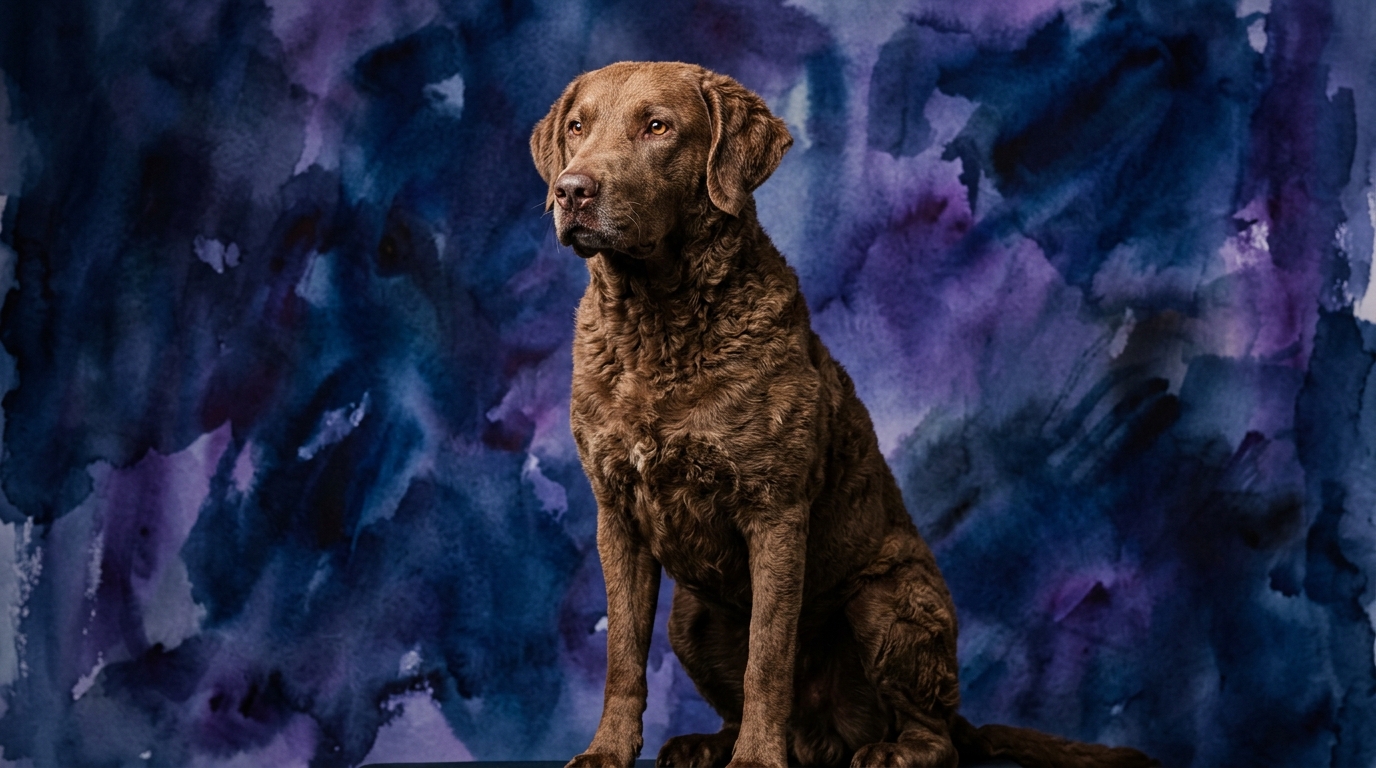
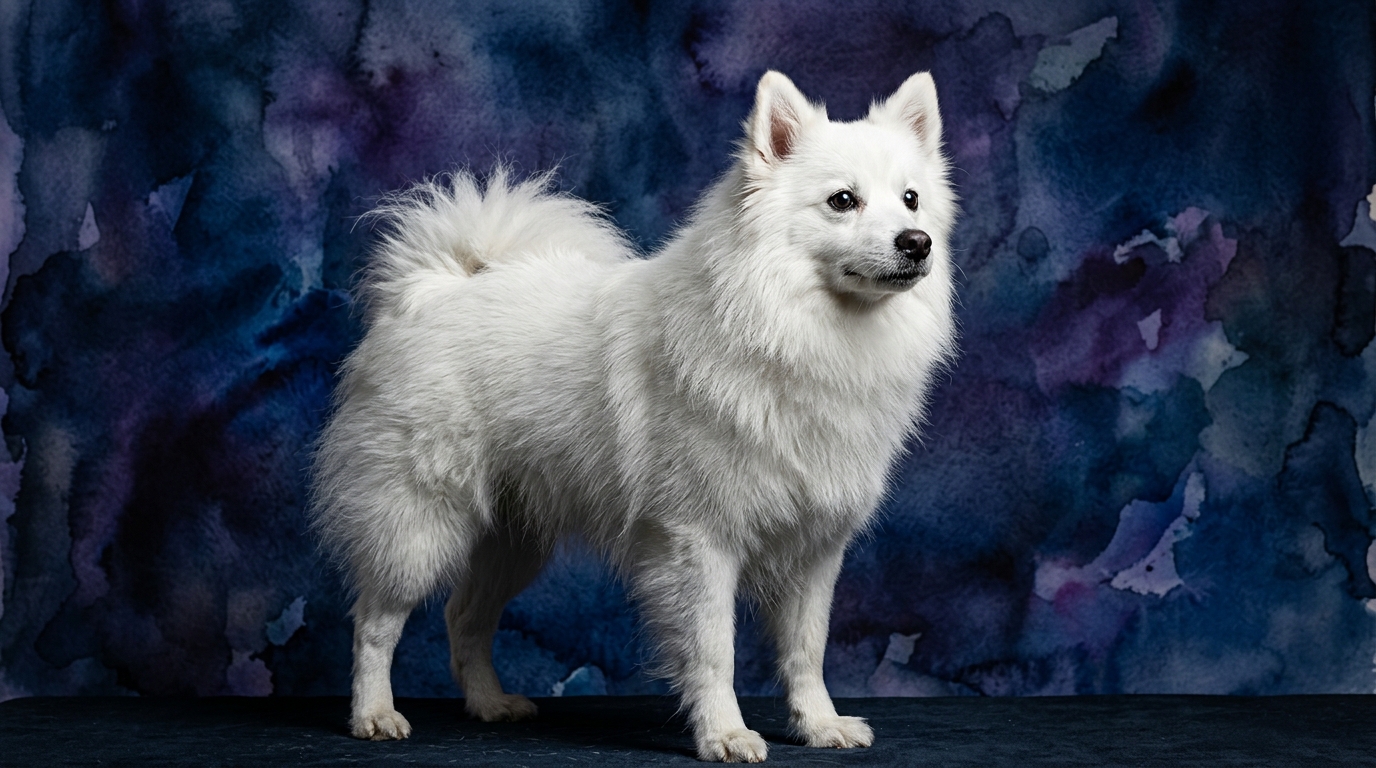
Side-by-Side Cognitive Profiles: Chessie vs. Eskie
The Cosmic Pet Pet IQ Lab employs five core dimensions to map canine intelligence, offering a granular view of how breeds process the world. For the Chesapeake Bay Retriever, a breed ranked #27 by Coren, its profile reflects a powerful working background: Problem Solving 4/5, Training Speed 4/5, Social Intelligence 3/5, Instinctive Drive 3/5, and Memory 4/5. This paints a picture of a dog adept at independent thought and learning within specific parameters.
In contrast, the American Eskimo Dog, while not Coren-ranked, presents a balanced yet distinct cognitive blueprint: Problem Solving 3/5, Training Speed 3/5, Social Intelligence 3/5, Instinctive Drive 3/5, and Memory 3/5. This profile suggests a dog that is capable and engaged, but perhaps relies more on established routines and direct guidance rather than complex, self-initiated problem-solving in challenging, dynamic environments. The scores highlight a general competency across the board, without the specialized peaks seen in breeds bred for demanding tasks.
Where the Chesapeake Bay Retriever's Cognition Excels
The Chesapeake Bay Retriever's cognitive strengths are particularly evident in its 4/5 scores for Problem Solving and Memory. This breed demonstrates a remarkable capacity to analyze complex situations, such as navigating dense cover to locate a downed bird or figuring out how to retrieve an object from challenging terrain. Their memory allows them to recall intricate sequences of commands and locations, crucial for repetitive and multi-stage retrieving tasks in the field, far beyond simple fetch.
Furthermore, their faster Training Speed (4/5) signifies a quicker uptake of new commands and concepts, enabling them to master elaborate routines and adapt to varied hunting scenarios with less repetition. This cognitive agility, combined with their strong memory, means a Chessie can rapidly integrate new information and apply it effectively, making them highly efficient learners for specialized tasks that require independent judgment and recall.
Where the American Eskimo Dog's Cognition Shines Differently
While the American Eskimo Dog's scores are consistently 3/5, this uniformity points to a balanced cognitive approach that shines in a different context. Their 3/5 Problem Solving suggests they are adept at navigating typical household challenges and learning routines, rather than devising complex solutions for outdoor work. This level of problem-solving contributes to their adaptability as family companions without an overwhelming drive to constantly explore and manipulate their environment.
The Eskie's 3/5 Social Intelligence, matching the Chessie's, means they are equally capable of forming strong bonds and understanding human cues within a family setting, but perhaps with a different focus. Their instinctive drive also at 3/5 indicates a manageable level of intrinsic motivation that is less intense than many working breeds, making them less prone to independent pursuits like intense hunting or endless retrieving, thus easing management in a non-working home. Their cognitive profile supports their role as an alert, engaging, and manageable companion.
Ease of Training: Behavioral Differences in Action
When considering ease of training, the Chesapeake Bay Retriever's higher scores in Training Speed (4/5) and Memory (4/5) translate into a dog that generally learns new commands and retains them more rapidly. A Chessie thrives on consistent, challenging training that engages its problem-solving abilities and provides a clear purpose. They are often quick to understand complex sequences and can perform them reliably, making them strong candidates for advanced obedience, dock diving, or field trials.
Conversely, the American Eskimo Dog's 3/5 scores in both Training Speed and Memory indicate that while they are trainable, they may require more repetition and patience to solidify new behaviors. Eskies respond best to positive reinforcement methods and clear, consistent instruction. Their social intelligence allows them to be very receptive to their owner's guidance, but their learning pace is more moderate, making them excellent students for foundational obedience and tricks when approached with encouragement and a structured approach that builds upon mastered concepts.
Matching Canine Minds to Owner Lifestyles
For active owners seeking a canine partner for demanding outdoor activities, hunting, or competitive dog sports, the Chesapeake Bay Retriever is an ideal match. Their robust problem-solving skills, rapid learning, and excellent memory make them highly effective in environments requiring independent thought and sustained effort. These dogs need a lifestyle that provides consistent mental challenges and physical exertion, thriving when given a 'job' that aligns with their inherent drives and cognitive strengths.
The American Eskimo Dog, with its balanced cognitive profile, is well-suited for owners who desire an engaging, alert, and affectionate companion for a more relaxed, yet still active, home environment. While they enjoy walks and playtime, their instinctive drives are less intense, meaning they don't necessarily demand the rigorous, task-oriented work of a Chessie. They are content with family involvement, moderate exercise, and consistent mental stimulation through training and interactive play, making them adaptable to suburban or even apartment living if their needs are met.
The Verdict: When to Choose Each Breed
Choosing between these two breeds hinges on your lifestyle and expectations for a canine partner's cognitive engagement. If you are an experienced dog owner with an active, outdoor-oriented lifestyle, prepared to provide consistent, challenging mental and physical work, the Chesapeake Bay Retriever's exceptional problem-solving and training speed will reward you with an incredibly capable and dedicated working companion.
If your preference leans towards a charming, alert, and trainable companion that integrates seamlessly into family life, offering affection and watchfulness without an overwhelming drive for demanding tasks, the American Eskimo Dog is likely your ideal match. Their balanced intelligence provides a wonderful foundation for a loyal and interactive pet that thrives on companionship and consistent, positive guidance in a less intense environment.
The Verdict
Choose the Chesapeake Bay Retriever if you seek a robust, independent thinker for demanding outdoor activities, field work, or competitive dog sports, valuing their problem-solving and rapid task acquisition. Their cognitive makeup thrives on purpose-driven work and extensive mental stimulation.
Opt for the American Eskimo Dog if you desire an alert, social, and trainable companion for family life, where balanced intelligence and a manageable instinctive drive are prioritized over specialized working abilities. They excel as engaging pets in homes providing consistent interaction and moderate activity.
🧠 Find Your Pet's IQ Score
Our Pet IQ Lab assessment covers 25+ tests across 5 cognitive dimensions — personalized to your breed.
Take the Full IQ Test →Frequently Asked Questions
Does the Chesapeake Bay Retriever's social intelligence score impact its family suitability?
A 3/5 social intelligence score for the Chessie means they are capable of forming strong bonds with their family, though they might be more reserved or less overtly effusive with strangers compared to some other breeds. Their loyalty is deep, but they often direct their affection and attention primarily towards their immediate human companions, reflecting their independent working nature.
How does the American Eskimo Dog's problem-solving ability manifest in daily life?
The Eskie's 3/5 problem-solving score means they are competent at figuring out common household situations, such as opening certain cabinets or navigating familiar spaces. They are not prone to overly complex mischief but can learn routines quickly and apply their understanding to achieve desired outcomes, like getting attention or finding a favorite toy.
Which breed requires more mental stimulation to prevent boredom?
Both breeds benefit from mental stimulation, but the Chesapeake Bay Retriever, with higher scores in problem-solving and memory, generally requires more intense and varied cognitive challenges to prevent boredom. Their working background means they thrive on learning new tasks, puzzle toys, and engaging in activities that demand their analytical skills, whereas an Eskie can be satisfied with consistent training and interactive play.