
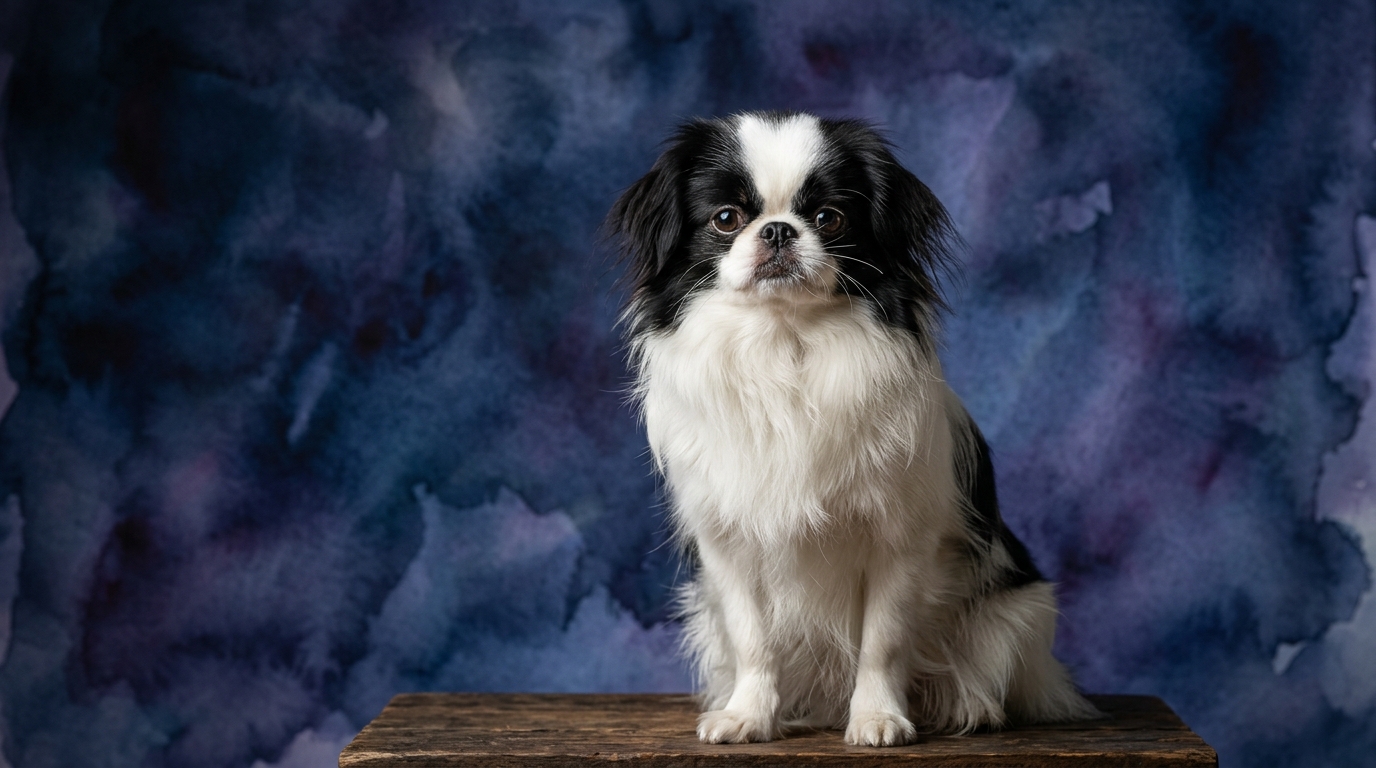
Side-by-Side IQ Profile: Chesapeake Bay Retriever vs. Japanese Chin
The Cosmic Pet Pet IQ Lab evaluates canine intelligence across five key dimensions, providing a nuanced understanding beyond simple obedience. Here’s how the Chesapeake Bay Retriever and Japanese Chin measure up individually:
**Chesapeake Bay Retriever (Coren rank #27)**
**Problem Solving (4/5):** This breed exhibits a strong capacity for figuring out complex tasks, often demonstrating resourcefulness in navigating environmental challenges or achieving goals. Their minds are adept at analyzing situations and formulating effective solutions with a notable degree of independence.
**Training Speed (4/5):** Chessies generally grasp new commands and routines with impressive swiftness, indicating an eagerness to learn and retain information efficiently. This quick uptake makes them responsive students in structured training environments, often requiring fewer repetitions to solidify learning.
**Social Intelligence (3/5):** While capable of forming deep bonds with their family, their social acumen tends to be focused on their immediate pack, often displaying a reserved demeanor with strangers. They understand social cues within their established group but may not seek extensive interaction beyond it.
**Instinctive Drive (3/5):** The Chessie possesses a moderate, yet persistent, drive rooted in its retrieving heritage. This manifests as a natural inclination towards working with purpose, whether it's retrieving objects or engaging in outdoor activities, though it's not an overwhelming, constant urge that dominates all behavior.
**Memory (4/5):** These dogs demonstrate a robust ability to recall learned behaviors, locations, and experiences over extended periods. Their retention of training, past events, and established routines is a notable cognitive asset, contributing to their reliability.
**Japanese Chin (Not Coren-ranked)**
**Problem Solving (3/5):** The Japanese Chin shows a moderate ability to solve problems, often relying on observation and a gentle persistence rather than brute force. They can navigate household puzzles and adapt to routines, but might not excel at highly complex, multi-step challenges independently.
**Training Speed (3/5):** Chins learn at a steady pace, generally requiring consistent, positive reinforcement to solidify new commands. They are receptive to training, though perhaps not as rapid in their comprehension or as driven to learn complex sequences as some working breeds.
**Social Intelligence (3/5):** This breed possesses a balanced social intelligence, thriving on interaction with their human companions and often displaying an agreeable nature with familiar faces. They are attuned to human emotions and enjoy being a central, cherished part of the family dynamic without being overly demanding.
**Instinctive Drive (3/5):** The Chin's instinctive drive is moderate, primarily focused on companionship and comfort. While they retain some innate dog behaviors, their urges are generally low-intensity, geared more towards social bonding, gentle play, and seeking proximity than intense physical or mental work.
**Memory (3/5):** Japanese Chins exhibit a sound memory for routines, people, and basic commands. They remember pleasant experiences and can recall learned behaviors reliably, though perhaps not with the same depth or detail for complex sequences as breeds bred for demanding tasks.
Where the Chesapeake Bay Retriever Wins Cognitively
The Chessie's cognitive profile clearly shines in areas demanding independent thought and robust recall. Their superior problem-solving capacity (4/5) means they are less likely to be stumped by novel situations, whether it's figuring out how to retrieve a toy from an awkward spot or navigating a complex scent trail. This mental agility, combined with a quick training speed (4/5), enables them to master complex sequences of commands and adapt to changing conditions with greater ease than the Chin. Their strong memory (4/5) further ensures that once a lesson is learned or a routine established, it is retained for the long haul, making them consistently reliable partners in tasks that require adherence to learned protocols and long-term recall. This combination of processing power, rapid learning, and solid retention makes the Chessie particularly adept at jobs requiring initiative and consistent execution.
Where the Japanese Chin Wins Cognitively
While the Japanese Chin's scores might not reach the Chessie's peaks, their cognitive strengths lie in a different, equally valuable domain: nuanced companionship and emotional attunement. Their balanced social intelligence (3/5) allows them to integrate seamlessly into family life, often acting as sensitive barometers of household moods. They excel at picking up on subtle human cues – a sigh, a shift in posture – for fostering deep emotional connections and offering comforting presence. This breed's moderate instinctive drive (3/5), focused primarily on social interaction rather than intense work, means they are often content with quiet presence and gentle engagement. This makes them particularly adept at being attuned, low-key companions who thrive on close, personal interaction and derive satisfaction from simply being near their people, rather than needing constant external mental challenges.
Which is Easier to Train and Why
Based on the IQ profiles, the Chesapeake Bay Retriever generally presents as the easier breed to train for a wide range of commands and complex tasks. Their training speed (4/5) is notably higher than the Japanese Chin's (3/5), meaning they typically grasp new concepts and associate actions with commands more quickly, often requiring fewer repetitions. This rapid comprehension is bolstered by their superior problem-solving ability (4/5), allowing them to understand the 'why' behind an action or to figure out the correct response even if the instruction isn't perfectly clear initially. For example, a Chessie might quickly generalize a 'stay' command to new environments after just a few successful trials at home. Their strong memory (4/5) further ensures that once a lesson is learned, it sticks, leading to more consistent performance over time. The Chin's training, while successful with patience and positive reinforcement, requires a more gentle and repetitive approach, often succeeding best with short, engaging sessions that keep their interest without overwhelming them, as their attention span for formal instruction can be more limited.
Which Suits Active Owners vs. Relaxed Owners
The choice between these two breeds largely hinges on an owner's lifestyle energy levels. The Chesapeake Bay Retriever, with its problem-solving acumen, quick training speed, and moderate yet persistent instinctive drive, thrives with active owners who can channel its mental and physical energy into purposeful activities. Owners who enjoy outdoor adventures, dog sports like agility or obedience, or commit to consistent, challenging training will find the Chessie an eager, capable, and deeply satisfied partner. Their cognitive makeup demands engagement; a Chessie without sufficient mental stimulation might invent its own 'problems' to solve, potentially leading to unwanted behaviors. In contrast, the Japanese Chin is an ideal match for relaxed owners seeking a gentle, observant companion. Their moderate instinctive drive and balanced social intelligence mean they are content with shorter, leisurely walks, indoor play, and significant cuddle time. They are less driven by a need for constant external stimulation and more by a desire for close proximity and affection, making them perfect for those who prefer a quieter, more sedentary home life.
The Verdict
Opt for a Chesapeake Bay Retriever if you are an active, experienced owner ready to provide consistent mental and physical challenges, valuing a dog that learns rapidly and excels in purposeful tasks.
Select a Japanese Chin if you seek a gentle, observant companion for a relaxed home environment, appreciating a dog that thrives on quiet companionship and nuanced social interaction.
🧠 Find Your Pet's IQ Score
Our Pet IQ Lab assessment covers 25+ tests across 5 cognitive dimensions — personalized to your breed.
Take the Full IQ Test →Frequently Asked Questions
Do Chesapeake Bay Retrievers require a lot of mental exercise?
Yes, their strong problem-solving ability and memory mean Chesapeake Bay Retrievers benefit significantly from consistent mental engagement. Without adequate stimulation, they can become bored and might develop unwanted behaviors, so puzzles, training, and new experiences are crucial to their well-being.
Are Japanese Chins difficult to house train due to their size?
Japanese Chins are not inherently difficult to house train, but their smaller bladders and sometimes delicate nature mean they require very consistent, positive reinforcement and frequent potty breaks. With patience and a structured routine, they can be reliably house trained like any other breed.
How do their social intelligence scores impact their interactions with children?
Both breeds have a 3/5 social intelligence score, but it manifests differently. The Chessie might be reserved and tolerant with familiar children but less outwardly playful with new ones, while the Chin, being more attuned to family dynamics, is generally gentle and affectionate with respectful children within its established household.