
Side-by-Side IQ Profile
At The Cosmic Pet Pet IQ Lab, we assess canine intelligence across five key dimensions. The Chesapeake Bay Retriever, ranking 27th in Coren's intelligence scale, demonstrates a Problem Solving score of 4/5, indicating a strong capacity for independent thought and figuring out complex tasks, particularly in practical, outdoor scenarios. Their Training Speed is also 4/5, suggesting they grasp commands quickly. Social Intelligence registers at 3/5, meaning they form deep bonds with family but can be reserved with strangers. An Instinctive Drive of 3/5 reflects their focused working heritage, while Memory stands at 4/5, showcasing excellent recall for learned tasks and routines.
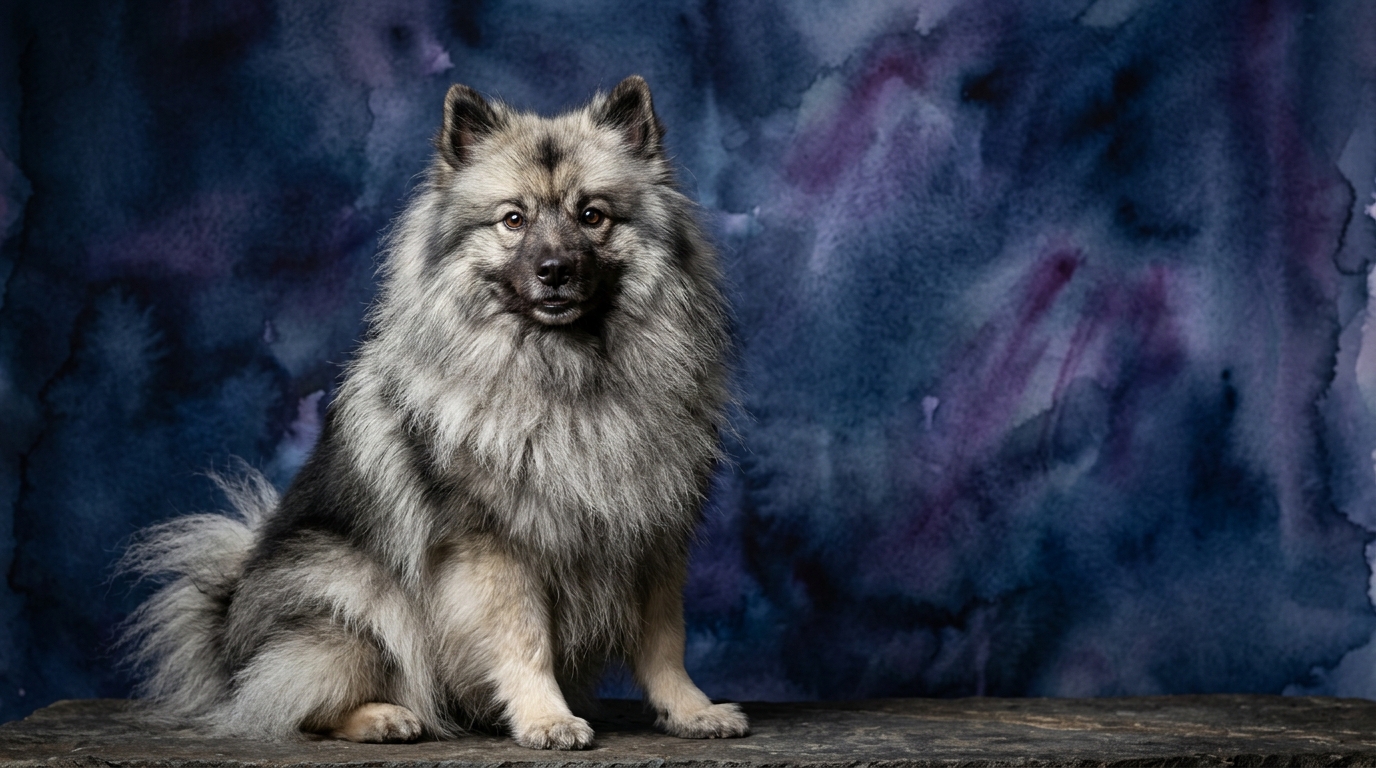
The Keeshond, with a higher Coren ranking of 16th, shares some cognitive parallels but excels in a crucial area. They also achieve a Problem Solving score of 4/5, demonstrating resourcefulness and cleverness in navigating their environment and daily challenges. Their Training Speed matches the Chessie at 4/5, indicating an eager and responsive learner. Social Intelligence is 3/5, signifying affection within their inner circle but a discerning nature towards newcomers. Their Instinctive Drive is also 3/5, rooted in their historical role as companion and watchdogs rather than intense prey pursuit. However, the Keeshond's Memory stands out with a perfect 5/5, reflecting an exceptional ability to retain information, experiences, and social interactions over long periods.
Where the Chesapeake Bay Retriever Excels Cognitively
The Chesapeake Bay Retriever's cognitive strengths are deeply intertwined with their heritage as a dedicated working dog. Their 4/5 in Problem Solving truly shines in real-world, dynamic environments, particularly those involving physical obstacles, scent tracking, or complex retrieval tasks in challenging terrain. This isn't just about solving abstract puzzles; it's about navigating difficult situations with purposeful action and ingenuity, like figuring out the most efficient path to a downed bird.
Complementing this, their 4/5 Memory allows them to recall specific locations of retrieved items, complex routes, or intricate training sequences, even after significant time lapses. This makes them exceptionally effective partners for tasks requiring sequential actions or precise object location. Furthermore, their Instinctive Drive, rated 3/5, is specifically channeled into their working heritage, providing a focused determination when tasked with a job, enabling them to pursue goals with unwavering persistence once they understand the objective.
Where the Keeshond Excels Cognitively
The Keeshond's cognitive prowess is most evident in their exceptional memory and their application of problem-solving within a more domestic, companion-oriented framework. Their standout feature is an impressive 5/5 Memory, which translates into an extraordinary ability to retain a vast repertoire of commands, household routines, and even the subtle cues of their human family. This superior recall extends to remembering past interactions, making them adept at learning from experience and anticipating future events with remarkable accuracy.
Their 4/5 in Problem Solving, when combined with this superior memory, manifests as a cleverness applied to more intricate, often socially-oriented "puzzles." They might not be retrieving ducks, but they are adept at figuring out how to gain attention, manipulate household objects to their advantage, or even outsmart barriers to access desired areas. Their Social Intelligence, while matching the Chessie's 3/5, is often expressed through a nuanced understanding of household dynamics and a watchful nature, which is a significant cognitive strength for a companion breed that remembers who belongs and who doesn't.
Training Ease: Chesapeake Bay Retriever vs. Keeshond
Both breeds boast a Training Speed of 4/5, suggesting they are quick studies, but the nuances of their personalities dictate different training approaches. The Chesapeake Bay Retriever, with its independent streak and strong will, often requires a confident, consistent handler. They learn commands rapidly but might test boundaries, necessitating an owner who can establish clear leadership and make training feel like a meaningful, purposeful task. They respond exceptionally well to task-oriented rewards and thrive when given a job to do, integrating commands into their natural drive.
The Keeshond, on the other hand, benefits greatly from its 5/5 Memory, which ensures commands are retained exceptionally well once learned. Generally eager to please their family, they respond positively to engaging training sessions and positive reinforcement. While they can exhibit a stubborn streak, their desire for companionship and inclusion in family activities often motivates them to comply. For a novice owner, the Keeshond might feel 'easier' to train due to their strong retention and eagerness, whereas the Chessie demands a more experienced, firm, and purposeful hand to navigate their independent nature, despite their equal speed of acquisition.
Matching Breeds to Lifestyles: Active vs. Relaxed Owners
When considering lifestyle compatibility, these two breeds diverge significantly. The Chesapeake Bay Retriever is unequivocally suited for active owners. Their high drive and retrieving instincts demand substantial physical exercise and rigorous mental engagement. They excel in activities like swimming, extended fetch sessions, hunting, and demanding dog sports such as dock diving or agility. An owner who enjoys outdoor pursuits and can provide a 'job' or strenuous activity daily will find the Chessie a dedicated and tireless partner. They are not content with short walks; they require significant outlets for their energy and purpose.
The Keeshond, in contrast, aligns better with more relaxed owners, though they are far from sedentary. Their exercise needs are moderate, typically satisfied with regular walks, interactive playtime, and consistent mental stimulation. They enjoy being an integral part of family activities but do not demand intense, prolonged physical exertion. They are adaptable to various living situations, including apartments, as long as they receive consistent attention, engagement, and their daily dose of activity. An owner who provides daily walks and interactive play, but isn't seeking an endurance athlete, will find a Keeshond a delightful and affectionate companion.
The Verdict
Choose the Chesapeake Bay Retriever if you are an active, experienced owner seeking a rugged, dedicated working partner who thrives on challenging outdoor activities and values a dog with independent problem-solving skills in practical, physical tasks.
Opt for the Keeshond if you desire a highly companionable, clever family member who excels at remembering routines and commands, and enjoys moderate activity alongside plenty of engaging interaction within a family setting.
🧠 Find Your Pet's IQ Score
Our Pet IQ Lab assessment covers 25+ tests across 5 cognitive dimensions — personalized to your breed.
Take the Full IQ Test →Frequently Asked Questions
Are Chesapeake Bay Retrievers good family dogs?
Yes, Chessies form strong, loyal bonds with their families, often being protective and affectionate. However, their reserved nature with strangers and strong will mean they thrive best with experienced owners who can provide consistent training and socialization from a young age.
Do Keeshonds bark a lot?
Keeshonds are known for their watchdog tendencies and can be vocal, using barks to alert their family to anything unusual or new in their environment. Early training and consistent management can help moderate their barking habits, though they will always retain some level of alertness and expressiveness.
Which breed is better for apartment living?
The Keeshond is generally more adaptable to apartment living due to their moderate exercise needs, smaller size, and strong desire to be near their family, provided they receive daily walks and mental enrichment. The Chesapeake Bay Retriever, with their higher energy and drive, typically requires more space and extensive outdoor access to thrive.