
Side-by-Side Cognitive Profiles
The Cosmic Pet Pet IQ Lab employs five key dimensions to evaluate canine intelligence, offering a nuanced view beyond simple obedience. For the Chesapeake Bay Retriever, a Coren rank of #27 places it among breeds demonstrating notable working and obedience intelligence, while the Otterhound, a breed not Coren-ranked, presents a different set of cognitive strengths.
The Chesapeake Bay Retriever (Chessie) excels in Problem Solving with a 4/5, indicating a strong capacity to analyze situations and devise solutions, often independently. Its Training Speed also rates 4/5, suggesting it grasps new commands and routines with efficiency. Social Intelligence stands at 3/5, meaning it is moderately responsive to human cues and interactions. Its Instinctive Drive, rated 3/5, centers on its retrieving heritage, manifesting as a strong desire to fetch and carry. Finally, its Memory scores 4/5, allowing it to retain learned behaviors and recall specific locations or tasks over time.
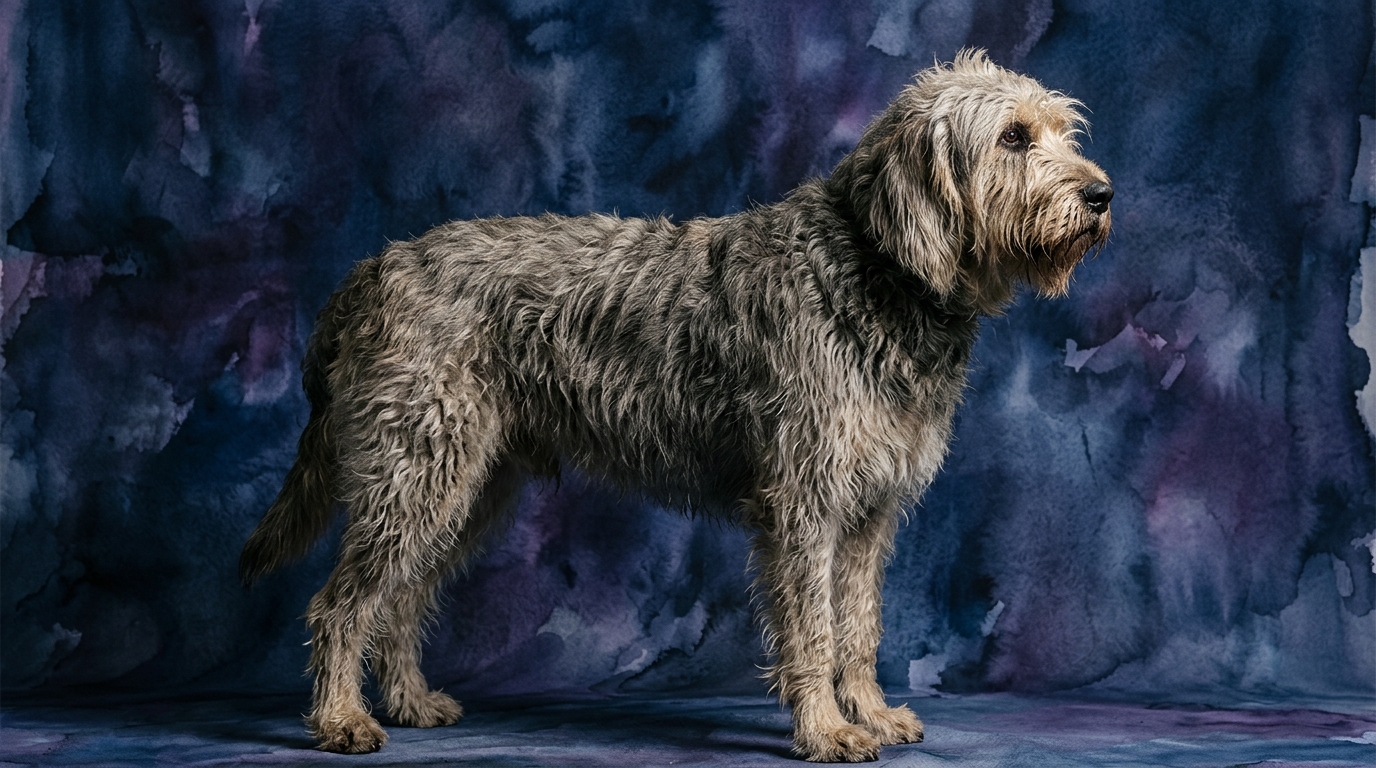
In contrast, the Otterhound shows a consistent 3/5 across all five IQ dimensions: Problem Solving, Training Speed, Social Intelligence, Instinctive Drive, and Memory. This profile indicates a dog that is capable but often deliberate in its cognitive processes. Its Problem Solving at 3/5 suggests it can work through challenges, especially those involving scent, but may not be as quick or abstract as a Chessie. Training Speed at 3/5 means it learns at a steady pace, requiring consistent reinforcement. A 3/5 in Social Intelligence denotes moderate attentiveness to human interaction. Its Instinctive Drive, also 3/5, is powerfully geared towards scent tracking and persistent pursuit. Memory at 3/5 implies it retains information adequately but might not have the same recall precision as a Chessie.
Where the Chesapeake Bay Retriever Shines Cognitively
The Chessie's cognitive advantages are most evident in its capacity for complex task learning and its readiness to engage in structured work. Its 4/5 Problem Solving score translates into a dog that isn't easily stumped by environmental puzzles or novel commands; a Chessie often figures out how to open gates or retrieve objects from challenging spots with impressive ingenuity. This aptitude extends to advanced dog sports, where it can quickly learn intricate sequences and adapt to changing conditions.
Furthermore, the Chessie's superior Training Speed (4/5) means it can master a wider repertoire of commands more quickly than many breeds, including the Otterhound. This allows for a deeper and more versatile working relationship, where the Chessie can be taught to perform specific tasks, follow multi-step instructions, and respond reliably in varied situations. Its 4/5 Memory reinforces this, ensuring that once a lesson is learned, it tends to stick, leading to consistent performance without constant reteaching.
Unique Cognitive Strengths of the Otterhound
While the Otterhound's IQ scores might be numerically lower in some areas compared to the Chessie, its cognitive strengths lie in its deep specialization and independent thought, particularly concerning scent work. Its Instinctive Drive of 3/5, while numerically equal, manifests as an unparalleled dedication to following a trail, demonstrating a unique form of 'problem-solving' that is entirely olfactory. This isn't about abstract puzzles, but rather the intricate, persistent decoding of scent information, often over long distances and varied terrain.
The Otterhound's 3/5 in Problem Solving, combined with its strong scent drive, means it excels at independently navigating complex scent puzzles without needing constant human direction. This self-reliance, while sometimes perceived as stubbornness in traditional obedience, is a cognitive asset in its original role, allowing it to work tenaciously and autonomously. Its moderate Social Intelligence (3/5) means it can connect with its family, but it doesn't necessarily seek constant human instruction when a compelling scent presents itself, showcasing a distinct cognitive focus.
Training Ease: Chessie's Compliance vs. Otterhound's Independence
When it comes to ease of training, the Chesapeake Bay Retriever generally presents a more straightforward path for most owners. Its 4/5 Training Speed and 4/5 Problem Solving scores mean it is eager to learn and quick to understand what is being asked. Chessies typically possess a strong desire to work collaboratively with their human partners, seeking to please through performance and retrieve tasks, which makes them highly receptive to positive reinforcement methods and consistent instruction.
The Otterhound, with its 3/5 in Training Speed and Problem Solving, requires a different approach and more patience. Its powerful instinctive drive for scenting often overrides a desire for human-directed tasks, making it less inherently compliant. An Otterhound might understand a command perfectly well but choose to ignore it if a more interesting scent distraction is present. This independent nature is not a lack of intelligence, but rather a prioritization of its primary sensory input, meaning training needs to be engaging, consistent, and often conducted in low-distraction environments to be effective.
Suiting Lifestyles: Active Engagement vs. Scent-Driven Exploration
For owners seeking a highly engaged and active canine partner for structured activities, the Chesapeake Bay Retriever is often the more suitable choice. Its cognitive profile, with high scores in problem-solving, training speed, and memory, makes it an excellent candidate for dog sports like obedience, agility, dock diving, and field trials. These dogs thrive on having a 'job' and benefit greatly from mental challenges that complement their physical prowess, making them ideal for owners committed to active, goal-oriented pursuits.
The Otterhound, while requiring substantial exercise, appeals to owners who appreciate a more relaxed but equally dedicated approach to their dog's activities. Its cognitive strengths lean towards extensive outdoor exploration, following intriguing scents, and enjoying long, meandering walks or hikes rather than highly structured drills. Owners who understand and embrace the Otterhound's independent, scent-driven nature, and are prepared for a dog that marches to the beat of its own nose, will find a deeply rewarding companion. They are less about performing tricks on command and more about immersive sensory experiences.
The Verdict
Choose the Chesapeake Bay Retriever if you desire a highly trainable, task-oriented companion eager to engage in complex activities and structured learning, excelling in obedience and dog sports.
Opt for the Otterhound if you value an independent, scent-driven explorer who thrives on extensive outdoor adventures and whose unique cognitive focus on olfactory input provides a different kind of deep companionship.
🧠 Find Your Pet's IQ Score
Our Pet IQ Lab assessment covers 25+ tests across 5 cognitive dimensions — personalized to your breed.
Take the Full IQ Test →Frequently Asked Questions
Are Chesapeake Bay Retrievers suitable for first-time dog owners?
Chesapeake Bay Retrievers possess a strong will and require consistent, firm, but positive training. While their quick learning makes them rewarding, their independent streak and need for mental engagement mean first-time owners should be prepared to dedicate significant time to training and socialization, ideally with professional guidance.
How much mental stimulation does an Otterhound require to prevent boredom?
Otterhounds require significant mental stimulation, primarily through scent-based activities and exploration. While not as focused on structured 'jobs' as a Chessie, they need opportunities for long walks where they can follow scents, participate in scent work games, or engage in tracking activities to satisfy their powerful instinctive drive and prevent boredom.
Can Otterhounds be reliably off-leash given their strong scent drive?
Due to their intense instinctive drive for scenting, Otterhounds typically cannot be reliably off-leash in unsecured areas. Once they pick up a compelling trail, their focus becomes singular, and even well-trained recall can be challenging to enforce. For their safety, secure fencing and leashed walks are generally recommended.