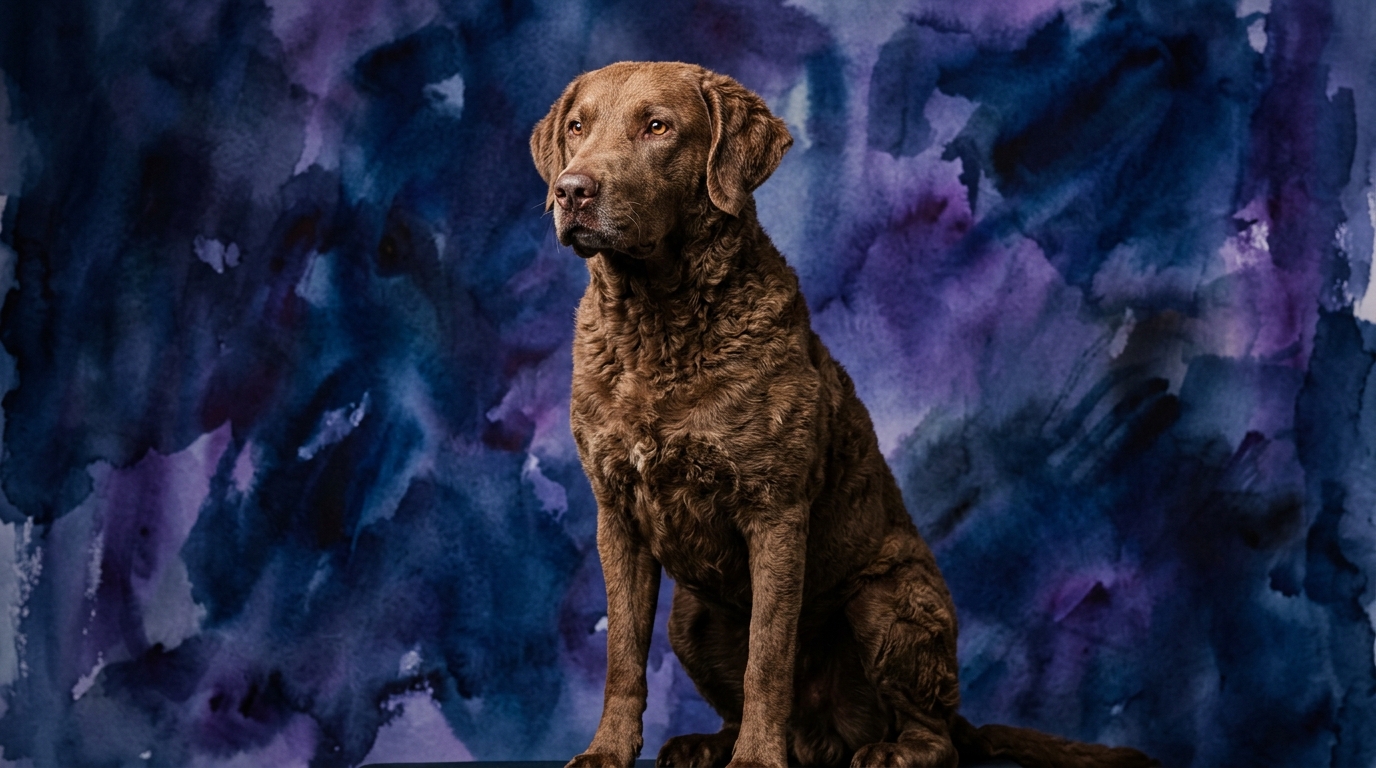
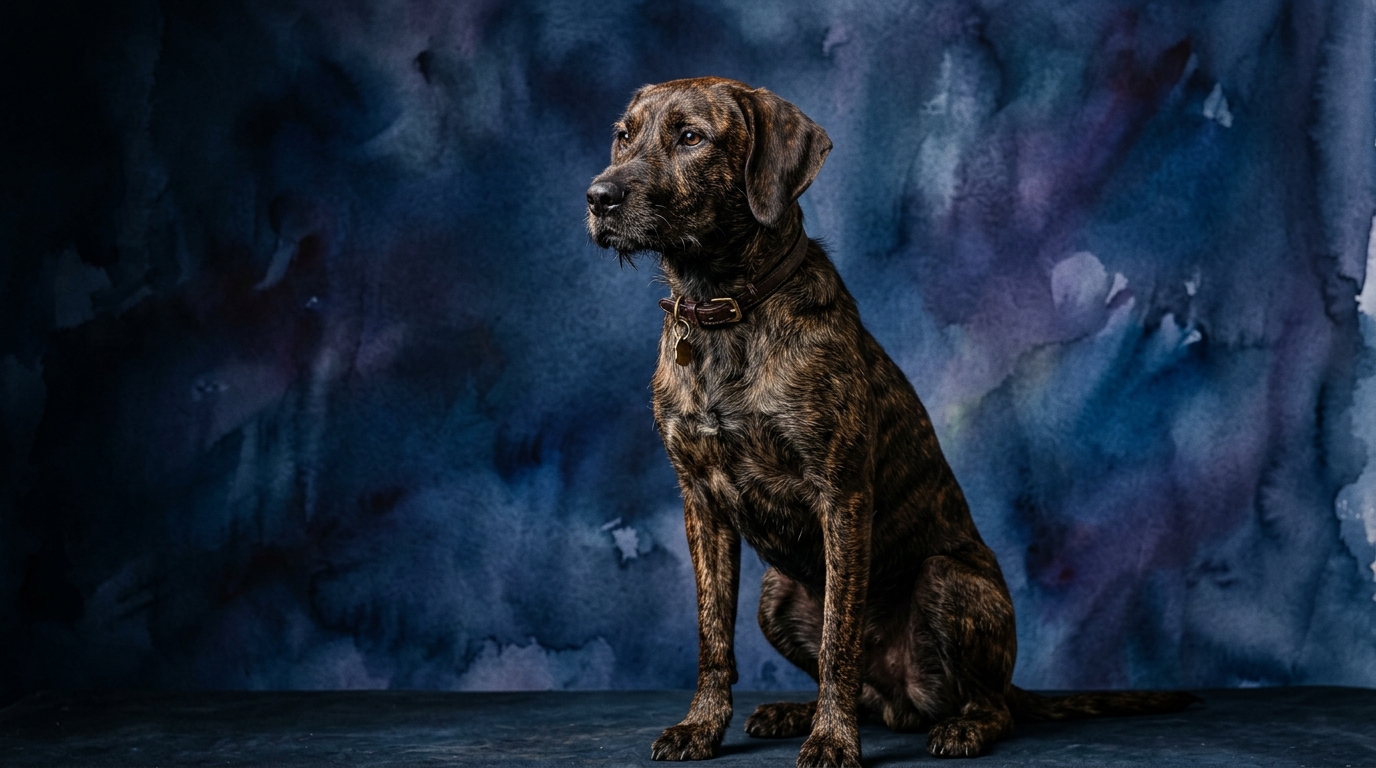
Side-by-Side IQ Profile: Chesapeake Bay Retriever vs. Plott Hound
The Cosmic Pet Pet IQ Lab employs a five-dimensional framework to assess canine intelligence, providing a nuanced view beyond simple obedience. For the Chesapeake Bay Retriever, a Sporting group dog, their Coren rank of #27 places them among breeds with a notable capacity for understanding new commands. Their cognitive breakdown includes Problem Solving at 4/5, indicating a strong ability to navigate novel situations and devise solutions. Training Speed also scores 4/5, suggesting they grasp new instructions with efficiency. Social Intelligence is rated 3/5, showing an adequate awareness of human cues and emotional states, while Instinctive Drive, crucial for their retrieving role, stands at 3/5. Finally, their Memory is strong at 4/5, allowing them to retain learned behaviors and retrieve locations effectively.
In contrast, the Plott Hound, a member of the Hound group, does not hold a specific Coren ranking, reflecting their specialized working heritage which often prioritizes instinct over general obedience. Their IQ profile shows Problem Solving at 3/5, indicating a moderate capacity for independent thought in varied scenarios. Training Speed is also 3/5, meaning they require more repetition and patience to learn new commands compared to some other breeds. Their Social Intelligence matches the Chesapeake Bay Retriever at 3/5, suggesting they are reasonably attuned to their human companions. Instinctive Drive, paramount for a scent hound, is rated 3/5, channeling their energy into tracking. Their Memory score is 3/5, indicating a solid, but not exceptional, recall of experiences and training.
Where the Chesapeake Bay Retriever Wins Cognitively
The Chesapeake Bay Retriever (CBR) demonstrates clear cognitive advantages, particularly in areas valued for complex task execution and rapid learning. Their Problem Solving score of 4/5 means a CBR is more likely to independently figure out how to retrieve a challenging object, navigate an obstacle course, or even open a gate. This isn't just about raw brainpower, but about their proactive approach to environmental challenges, often exhibiting innovative solutions to reach a desired outcome.
Furthermore, the CBR's Training Speed of 4/5 is a significant asset. This breed processes and internalizes new commands and routines with impressive alacrity. Owners will find that a CBR can master a series of complex tasks, such as 'sit,' 'stay,' 'come,' and then 'retrieve a specific item' in a relatively short timeframe, often requiring fewer repetitions than many other breeds. This quick uptake stems from their attentiveness and strong desire to work cooperatively. Their Memory, also at 4/5, complements this speed, ensuring that once a skill is learned, it is retained over long periods, making them reliable partners in sustained training and working environments without needing constant refreshers.
Where the Plott Hound Wins Cognitively
While the Plott Hound's general cognitive scores might appear modest compared to the Chesapeake Bay Retriever, their unique strengths lie in their specialized application of these faculties, particularly concerning their primary purpose. The Plott Hound's instinctive Drive, rated 3/5, manifests as an unparalleled focus and determination when on a scent trail. This isn't merely a physical drive; it's a profound cognitive engagement, where their problem-solving (3/5) and memory (3/5) are intensely channeled into unraveling complex scent puzzles.
A Plott Hound's cognitive 'win' is their mastery of olfactory problem-solving. While a CBR might excel at retrieving a dummy from water, a Plott excels at following a faint, broken trail over varied terrain, ignoring distractions that would derail other breeds. Their 3/5 Problem Solving, in this context, translates to an astute ability to interpret subtle scent changes, deduce the direction of travel, and persist through environmental interference. Their memory, while 3/5 generally, is acutely tuned to remembering scent patterns and geographical cues related to a chase, making them incredibly effective in their specialized hunting roles. This single-minded dedication, a cognitive specialization, allows them to 'win' in scenarios where sustained, independent scent work is paramount.
Which is Easier to Train and Why
Without question, the Chesapeake Bay Retriever is generally easier to train than the Plott Hound, a distinction directly supported by their respective IQ profiles. The CBR's Training Speed of 4/5 means they absorb and respond to new commands quickly, often with a keen desire to please their handler. They are typically eager to engage in structured training sessions, viewing them as a collaborative activity. Their higher Problem Solving (4/5) allows them to understand the 'why' behind a command more readily, making them adaptable to various training methods and capable of generalizing learned behaviors to new situations. For instance, a CBR quickly learns that "stay" applies whether indoors, outdoors, or amidst distractions.
Conversely, the Plott Hound's Training Speed of 3/5 indicates they require more patience, consistency, and often more creative motivation. Their independent nature, a hallmark of scent hounds, means they are less inherently driven to please and more inclined to follow their nose. While they are certainly trainable, their problem-solving (3/5) is often geared towards their instinctive drives rather than human-centric tasks. Owners frequently report that a Plott Hound might perfectly execute a 'recall' command in the living room but become 'deaf' to it when a compelling scent trail captures their attention outdoors. Their training requires understanding their inherent motivations and making commands more rewarding than the allure of the trail, demanding a persistent and inventive approach from their handler.
Which Suits Active Owners vs. Relaxed Owners
Both the Chesapeake Bay Retriever and the Plott Hound are breeds that thrive with active owners, though the *nature* of that activity differs significantly. A Chesapeake Bay Retriever's high problem-solving and training speed, coupled with their instinctive drive, means they need consistent physical exertion combined with substantial mental engagement. They are ideal for owners who enjoy structured activities like retrieving, obedience trials, agility, or long hikes and swims. A CBR will excel with an owner who can integrate training and purposeful 'work' into their daily routine, preventing boredom and channeling their intellect and energy constructively. Their biddability makes them excellent partners for a wide range of active pursuits.
The Plott Hound, with its pronounced instinctive drive and lower general training speed, is best suited for owners who are not only active but also understand and respect a hound's specialized needs. These dogs require extensive opportunities to use their nose and expend their boundless energy. This means long, vigorous walks, secure off-leash areas for scent work (if well-trained on recall, which takes significant effort), or participation in canine sports like tracking or scent work. A 'relaxed' owner, in the sense of someone seeking a low-maintenance companion, would find either breed challenging. However, a Plott Hound's independent nature and deep-seated scent drive make them particularly unsuitable for a sedentary lifestyle, as their unfulfilled instincts can lead to destructive behaviors or persistent vocalization. They need an owner who is committed to providing outlets for their specialized cognitive and physical needs, often through less structured, more exploratory activities.
The Verdict: When to Choose Each Breed
The Verdict
Choose the Chesapeake Bay Retriever if you seek a highly biddable, intelligent partner eager for structured training, complex tasks, and consistent interaction, excelling in retrieving and obedience. They fit an owner who values a cooperative working relationship and can provide ample mental and physical challenges.
Opt for the Plott Hound if you're an experienced, patient owner who appreciates a dog with an independent spirit and an unparalleled drive for scent work, ideal for tracking or extensive outdoor exploration. They thrive with dedicated individuals who understand their specialized instincts and can provide outlets for their unique cognitive strengths.
🧠 Find Your Pet's IQ Score
Our Pet IQ Lab assessment covers 25+ tests across 5 cognitive dimensions — personalized to your breed.
Take the Full IQ Test →Frequently Asked Questions
Are Chesapeake Bay Retrievers good with children?
Chesapeake Bay Retrievers (Social Intelligence 3/5) can be good family dogs, but their intense energy and strong drive mean they thrive best with active families and require proper socialization and training from a young age. Their robust nature means supervision around very young children is always advisable.
How much exercise does a Plott Hound need daily?
Plott Hounds (Instinctive Drive 3/5) require significant daily exercise, typically an hour or more of vigorous activity, including opportunities for extensive sniffing and exploration. Their strong scent drive means mental stimulation through tracking games is as crucial as physical exertion to keep them content.
Can Plott Hounds be trained off-leash?
Training a Plott Hound for reliable off-leash recall is possible but requires immense patience and consistent reinforcement due to their independent nature and powerful scent drive (Instinctive Drive 3/5). Their tendency to follow a compelling scent often overrides other commands, making secure, fenced areas essential for safety.