
Side-by-Side Cognitive Profiles
The Chesapeake Bay Retriever, ranking at Coren #27, demonstrates a significant capacity for applied intelligence. Our Pet IQ Lab assessment highlights their Problem Solving at 4/5, indicating an ability to independently navigate complex situations, such as retrieving game from challenging terrain or figuring out physical obstacles. Their Training Speed also scores 4/5, reflecting a quick grasp of new commands and a strong drive to perform learned tasks. While their Social Intelligence and Instinctive Drive are rated at 3/5, suggesting a focused disposition that prioritizes their job over constant human interaction, their Memory at 4/5 ensures they retain complex learned behaviors and spatial information vital for their working roles.
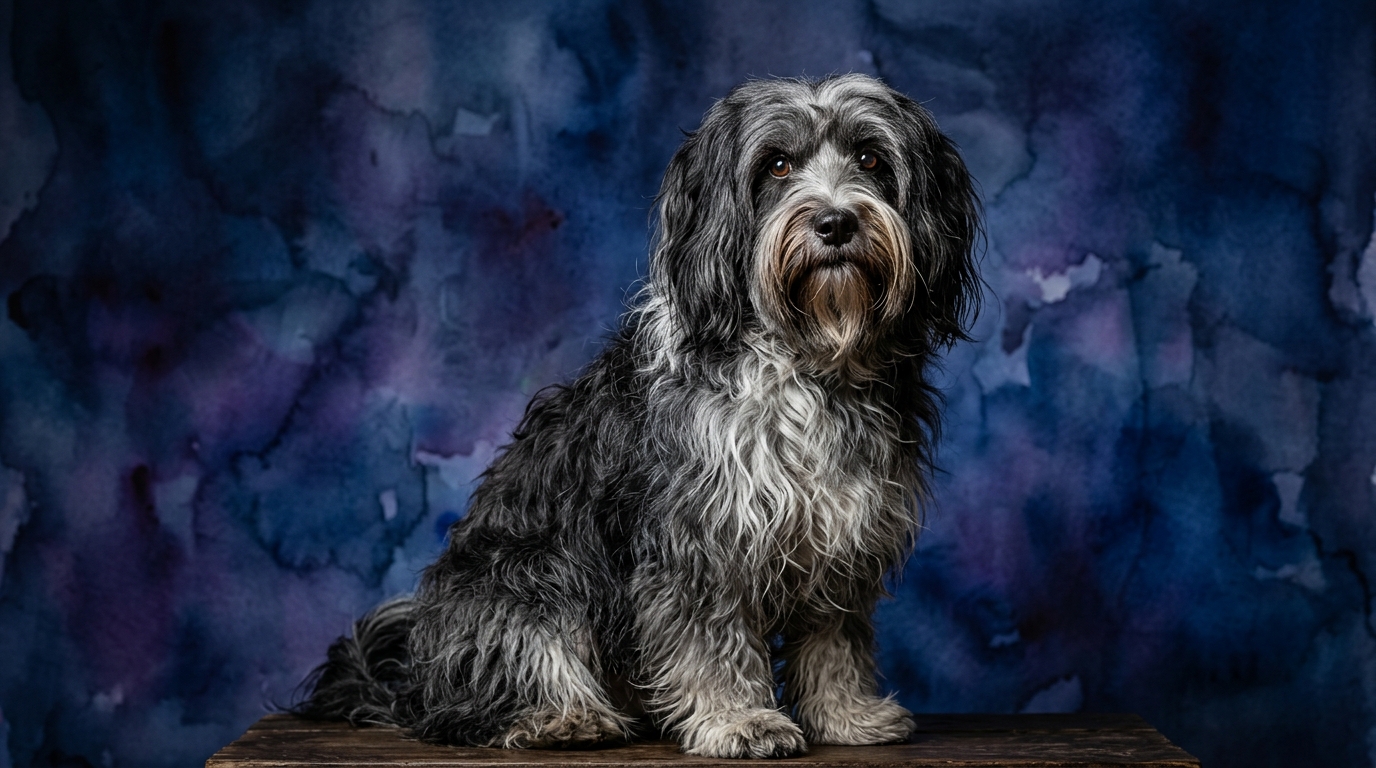
In contrast, the Tibetan Terrier, positioned at Coren #63, exhibits a different spectrum of cognitive strengths. With Problem Solving, Training Speed, Social Intelligence, Instinctive Drive, and Memory all rated at 3/5, this breed demonstrates a more balanced, albeit less specialized, cognitive profile compared to the Chessie. Their problem-solving often involves understanding social dynamics or navigating home environments, rather than complex physical tasks. Learning new commands may require more repetition, reflecting an independent streak rather than a lack of capability. Their social intelligence is keenly attuned to their family unit, and their memory is strong for routines and familiar people, fitting their historical role as watchful companions.
Where the Chesapeake Bay Retriever Excels Cognitively
The Chesapeake Bay Retriever's cognitive prowess truly shines in task-oriented scenarios, particularly those involving physical challenges and a clear objective. Their 4/5 rating in Problem Solving means they can often devise their own solutions to reach a hidden toy or retrieve an object from a tricky spot without direct human intervention, leveraging their environment and physical capabilities. This independent problem-solving is a direct asset in their traditional retrieving work, where conditions are often unpredictable.
Furthermore, their superior Training Speed (4/5) and Memory (4/5) combine to make them exceptionally adept at mastering intricate sequences of commands and performing them reliably. Owners can teach them advanced obedience, agility routines, or complex hunting commands with relative efficiency. This capacity for rapid skill acquisition and durable retention makes them highly suitable for roles requiring precise, repeatable actions and a strong understanding of their handler's expectations in a working context.
Where the Tibetan Terrier Excels Cognitively
The Tibetan Terrier's cognitive strengths lean towards nuanced social perception and an adaptability within their immediate environment. While their problem-solving is rated 3/5, it manifests in understanding household routines, anticipating family members' actions, and subtly influencing interactions, rather than strictly physical puzzles. They often display cleverness in finding comfortable perches or navigating the home to be near their preferred person, showcasing a different kind of practical intelligence.
Their 3/5 Social Intelligence, while not overtly demonstrative, is deeply attuned to their family's emotional landscape. They are perceptive observers, often picking up on subtle shifts in mood or household dynamics, making them wonderfully empathetic companions. This breed's memory, also 3/5, is particularly strong for personal connections and established routines, solidifying their role as a steadfast, observant family member who remembers important people and predictable daily events.
Training Dynamics: Chessie vs. TT
Training a Chesapeake Bay Retriever typically involves a clear structure and leveraging their strong desire to work. Their 4/5 Training Speed means they absorb commands quickly, especially when those commands are linked to a tangible reward or a task. They respond well to consistent, positive reinforcement and thrive when given a 'job' to do, channeling their instinctive drive into productive activities. However, their independent nature means early socialization and firm, patient guidance are crucial to prevent them from making their own rules.
The Tibetan Terrier, with a 3/5 Training Speed, requires a more patient and creative approach. Their independence can sometimes be interpreted as stubbornness; they learn best when training feels like a partnership, not a command-and-obey dynamic. Owners often find success by making training sessions engaging, varied, and using high-value rewards to capture their attention. Their intelligence shines in understanding context and social cues, so integrating training into daily life and using gentle, consistent methods will yield the best results, rather than rote drills.
Matching Breeds to Lifestyles: Active vs. Relaxed Owners
For the active owner, the Chesapeake Bay Retriever is an ideal match. This breed requires significant physical exertion and mental engagement to prevent boredom and destructive behaviors. Owners who enjoy running, hiking, swimming, or participate in dog sports like agility, obedience, or field trials will find a dedicated and enthusiastic partner in a Chessie. Their robust energy levels and inherent drive for activity mean they thrive in environments where they can regularly expend their physical and mental energy outdoors.
Conversely, the Tibetan Terrier is well-suited for owners seeking a more relaxed, yet engaged, companion. While they enjoy regular walks and playtime, their exercise needs are moderate compared to the Chessie. They are content to be involved in family activities within the home, observing and interacting with their people. Their contentment stems more from social connection and understanding their 'pack' dynamics than from intense physical endeavors, making them a wonderful fit for those who appreciate an observant and affectionate presence without demanding extreme athleticism.
The Verdict
Choose the Chesapeake Bay Retriever if you seek a dedicated, task-oriented canine partner for rigorous outdoor activities, advanced training, and a strong working relationship.
Opt for the Tibetan Terrier if you desire an observant, independent, and socially attuned companion who thrives on family interaction and offers a more relaxed, yet mentally engaging, presence.
🧠 Find Your Pet's IQ Score
Our Pet IQ Lab assessment covers 25+ tests across 5 cognitive dimensions — personalized to your breed.
Take the Full IQ Test →Frequently Asked Questions
Are Chesapeake Bay Retrievers difficult to manage due to their independence?
Chesapeake Bay Retrievers possess a strong independent streak, which, while beneficial for their working roles, requires consistent and early training. With clear boundaries and positive reinforcement, their independence can be channeled into a confident, cooperative demeanor, rather than being a management challenge.
Do Tibetan Terriers tend to bark excessively?
Tibetan Terriers were historically monastery watchdogs, so they do possess a natural inclination to alert their families to perceived intruders or unusual sounds. While not typically excessive, their barking can be managed with early training and by addressing the root causes of their alerts.
How do these breeds interact with children?
Chesapeake Bay Retrievers can be devoted family dogs, but their energy and strength mean they are best suited for families with older, respectful children who understand how to interact with a robust dog. Tibetan Terriers are often gentle and patient with children, forming strong bonds, especially when raised with them from a young age and properly socialized.