Side-by-Side IQ Profile: Chesapeake Bay Retriever vs. Treeing Walker Coonhound
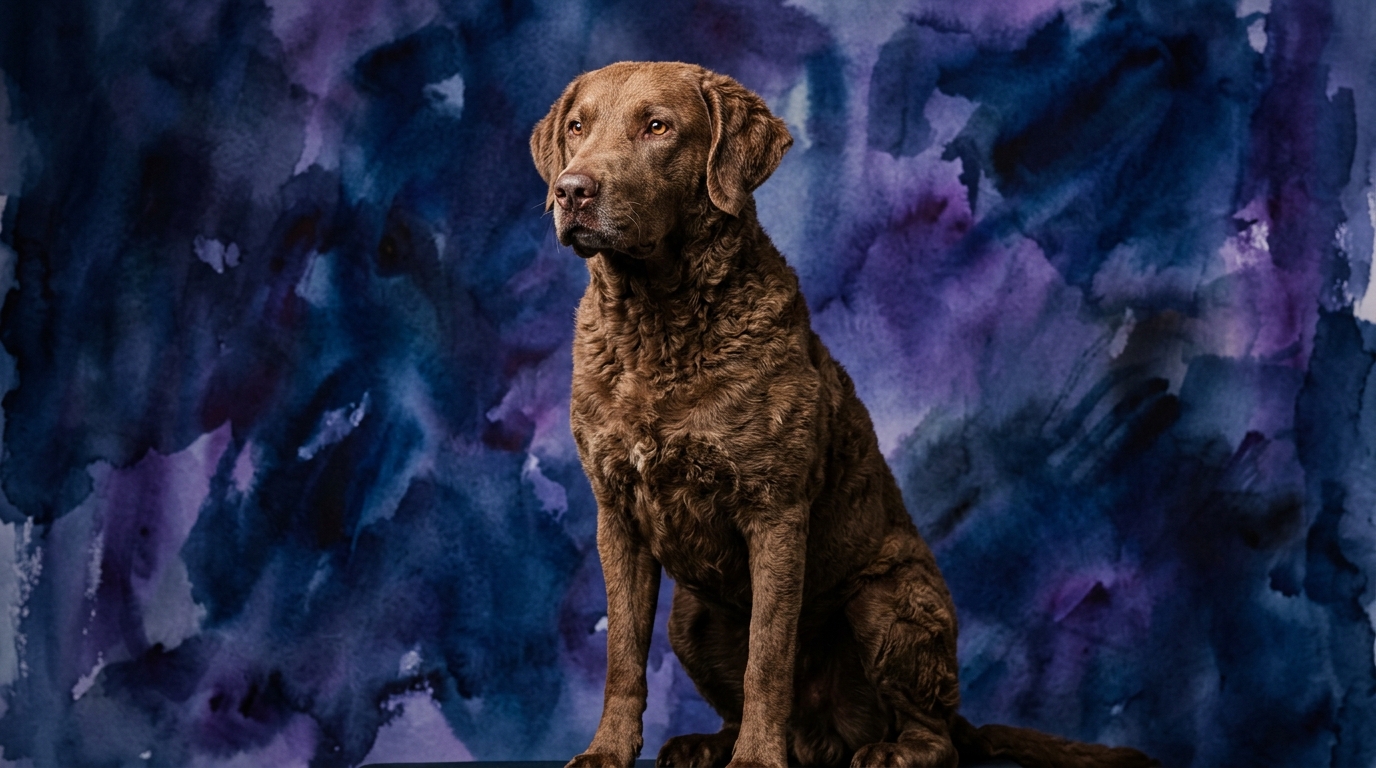
The Cosmic Pet Pet IQ Lab offers a nuanced look into canine cognition, assessing breeds across five crucial dimensions. For the Chesapeake Bay Retriever, a breed ranked #27 by Coren for working intelligence, its profile reflects a powerful, water-loving retriever. It boasts a Problem Solving score of 4/5, indicating a strong capacity for navigating complex scenarios, particularly those involving retrieving objects from challenging environments. Its Training Speed is also 4/5, suggesting a quick grasp of new commands and routines, often eager to engage with its handler. Social Intelligence for the Chessie stands at 3/5, meaning while capable of deep family bonds, it might exhibit a more reserved and independent nature with strangers. Its Instinctive Drive is rated 3/5, strongly geared towards retrieving with a powerful natural inclination for water work. Finally, its Memory is a robust 4/5, crucial for recalling learned commands, routines, and specific retrieve locations.
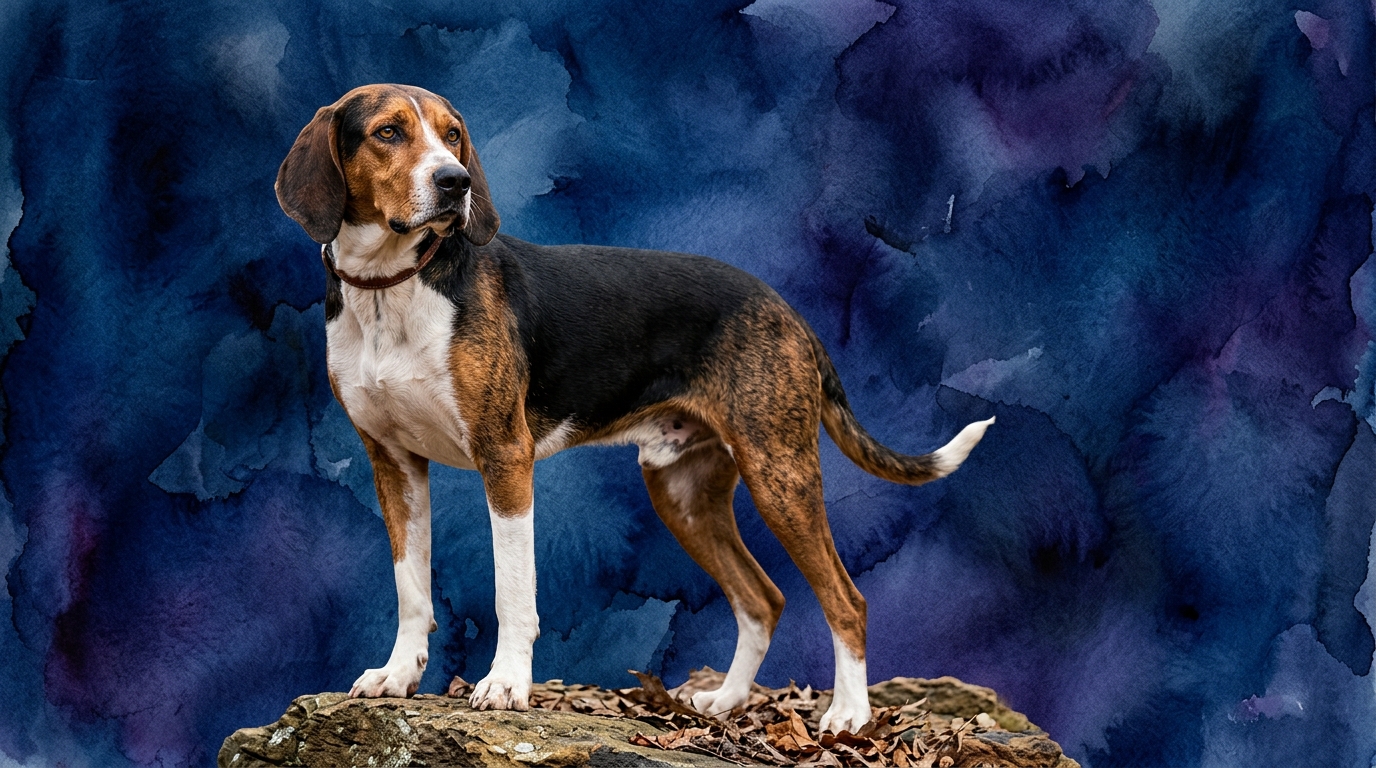
The Treeing Walker Coonhound, while not Coren-ranked, presents a specialized cognitive blueprint tailored for its role as a scent hound. Its Problem Solving score is 3/5, primarily centered around deciphering intricate scent trails and navigating terrain to locate quarry. Training Speed for the TWC is 3/5, indicating a moderate learning pace that often requires consistent patience due to their independent, scent-driven nature. Social Intelligence also scores 3/5; these hounds are generally amiable and sociable within their pack, though their deep focus on scent can sometimes make them appear less attuned to human social cues in the field. The TWC’s Instinctive Drive is a profound 3/5, overwhelmingly dominated by its powerful nose and the relentless pursuit of scent. Their Memory is rated 3/5, demonstrating good recall for familiar scents, territories, and routines, vital for their specialized tracking work.
Where the Chesapeake Bay Retriever Excels Cognitively
The Chesapeake Bay Retriever's cognitive profile showcases distinct advantages, particularly in areas demanding structured engagement and rapid assimilation of new information. With a Problem Solving score of 4/5, compared to the TWC's 3/5, the Chessie demonstrates a more versatile approach to novel challenges. This manifests in their ability to quickly strategize pathways to a retrieve target, adapting to changing environmental conditions like shifting currents or unexpected obstructions in dense cover. Their mental agility allows them to process multiple variables simultaneously, making quick, effective decisions in dynamic situations that demand both physical and mental dexterity.
In terms of Training Speed, the Chessie's 4/5 rating outpaces the TWC's 3/5, indicating a greater predisposition for learning and retaining human-initiated commands. This isn't merely about eagerness; it reflects a neurocognitive efficiency in forming associations between cues and actions. A Chessie typically requires fewer repetitions to master a new skill, making them highly responsive to complex obedience routines, competitive dog sports, or intricate working tasks where precision and prompt execution are paramount. This quicker uptake translates into a more fluid and less demanding training experience for the dedicated handler seeking a highly cooperative partner.
Furthermore, the Chesapeake Bay Retriever's Memory score of 4/5, again surpassing the TWC's 3/5, underpins their proficiency in complex tasks. This superior recall extends beyond basic commands to include spatial memory for specific retrieve locations, the sequence of multiple tasks, or even the identification of particular objects. For a breed whose historical role involves remembering where multiple birds have fallen or navigating intricate landscapes to bring back game, this robust memory is a cornerstone of their working capacity, allowing them to execute multi-stage plans with reliability and precision, even after significant time lapses.
Where the Treeing Walker Coonhound Excels Cognitively
While the Treeing Walker Coonhound's raw scores might appear lower in some generalized cognitive areas, their profile reveals a profound specialization that constitutes a distinct cognitive "win" within their own domain. Their Problem Solving score of 3/5, though numerically lower than the Chessie's, is intensely focused on olfactory puzzles. A TWC excels at interpreting fragmented scent trails, differentiating between multiple animal scents, and persistently following a specific one over vast, varied, and often challenging terrain. This isn't just following; it's a sophisticated analysis of environmental cues, wind patterns, and time degradation of scent, requiring an intricate form of deduction that is unparalleled in its specificity and effectiveness in their field.
The TWC's Instinctive Drive, rated 3/5, while numerically matching the Chessie's, represents a different kind of cognitive tenacity. This drive is a singular, unyielding obsession with the chase and the "treeing" aspect of their work. It's a cognitive engine that allows them to maintain focus on a scent for hours, overriding distractions and fatigue. This sustained, intense focus is a cognitive strength, enabling them to persevere where other breeds might lose interest or become sidetracked by other stimuli. Their brain is wired for the hunt, making them masters of endurance and unwavering dedication to their primary task, a testament to specialized cognitive endurance.
Furthermore, while their general Memory is rated 3/5, their olfactory memory is exceptional. They can recall specific animal scents, the layout of hunting territories, and patterns of prey movement with impressive detail, which is a critical cognitive asset for a tracking hound. This specialized memory allows them to build a complex mental map of their environment through scent, guiding their relentless pursuit. In their specific niche, the TWC's cognitive architecture, even with seemingly moderate generalized scores, makes them supremely effective and showcases a unique form of specialized cognitive excellence, prioritizing sensory input and sustained focus over broad adaptability.
Training Dynamics: Which is Easier to Train?
When considering ease of general obedience training, the Chesapeake Bay Retriever generally presents a more straightforward experience for the average owner, largely due to its Training Speed score of 4/5. Chessies typically possess a strong "work ethic" and a desire to collaborate with their human partners. This manifests as a greater attentiveness to commands and a quicker understanding of what is expected of them. Their historical role as retrieving companions has ingrained a strong tendency to focus on the handler during tasks, making them receptive to structured lessons and eager to earn praise or rewards. They are often inherently motivated by retrieving games and structured activities, which can be leveraged effectively in training, fostering a cooperative learning environment.
The Treeing Walker Coonhound, with a Training Speed score of 3/5, often requires a different approach and a higher degree of patience. Their primary motivation is not necessarily to please a handler in the same way a retriever's might be; instead, it is their profound instinctive drive for scent work that truly captivates them. This intense focus on olfactory stimuli means that a TWC can become single-minded when a compelling scent is present, making it challenging to redirect their attention to human commands. They are not unintelligent, but their cognitive priorities are different. Training a TWC often means competing with the allure of a scent trail, requiring creative, high-value rewards and consistent, engaging methods to keep their attention. Behavioral differences like a propensity for "selective hearing" when on a scent, or a strong desire to explore independently, mean that while they absolutely can be trained, it often demands more persistence and understanding of their hound nature. Their independence, while a strength in the field, can be a hurdle in a typical obedience class, requiring owners to truly understand and work with their breed-specific motivations.
Matching Breeds to Lifestyles: Active vs. Relaxed Owners
Neither the Chesapeake Bay Retriever nor the Treeing Walker Coonhound are suitable for genuinely "relaxed" owners who prefer minimal activity; both breeds possess significant energy levels and require substantial engagement to thrive. However, the type of activity they suit differs considerably, guiding which breed aligns with specific active lifestyles.
The Chesapeake Bay Retriever is an excellent match for active owners who enjoy structured outdoor activities and mental challenges. Their high problem-solving and training speed scores mean they excel in dog sports like obedience, agility, dock diving, and field trials. Owners who can provide daily vigorous exercise, such as long runs, swimming sessions, or extensive retrieving games, along with consistent mental stimulation through training and puzzle toys, will find a Chessie to be a devoted and fulfilled companion. They thrive on having a "job" and appreciate a routine that incorporates both physical exertion and cognitive engagement, making them ideal for individuals or families committed to a dynamic, goal-oriented partnership.
The Treeing Walker Coonhound, conversely, is ideal for active owners whose idea of activity revolves around exploration, endurance, and scent-driven pursuits. While they also need vigorous exercise, a TWC's cognitive satisfaction comes less from structured obedience drills and more from opportunities to use their exceptional nose. Long walks, hikes in varied terrain, or participation in scent work, tracking, or even coonhound field events will meet their needs. Owners must understand that a TWC needs an outlet for its strong instinctive drive; simply walking around the block won't suffice. They are less about precise execution of commands and more about sustained, independent exploration guided by scent, making them perfect for owners who appreciate a dog with a strong, independent spirit and a love for the great outdoors, even if it means a less predictable pace and a dog that follows its nose wherever it leads.
The Verdict
Choose the Chesapeake Bay Retriever if you seek a highly trainable, focused partner for structured activities, water sports, and a reliable companion eager to work alongside you. Their robust problem-solving and memory make them adaptable to diverse challenges and complex routines.
Opt for the Treeing Walker Coonhound if you are an owner who embraces independence and has a deep appreciation for a dog driven by its incredible nose, enjoying extensive, scent-focused outdoor adventures. Their specialized problem-solving and relentless instinctive drive make them unparalleled tracking companions.
🧠 Find Your Pet's IQ Score
Our Pet IQ Lab assessment covers 25+ tests across 5 cognitive dimensions — personalized to your breed.
Take the Full IQ Test →Frequently Asked Questions
Do Chesapeake Bay Retrievers make good family pets?
Yes, Chessies can be wonderful family pets, especially for active families who understand their need for physical and mental engagement. While their social intelligence score of 3/5 suggests they might be reserved with strangers, they form deep, loyal bonds with their immediate family, often being very protective and affectionate once comfortable.
Is a Treeing Walker Coonhound suitable for apartment living?
Generally, no. A Treeing Walker Coonhound's strong instinctive drive and need for extensive, scent-driven exercise make apartment living challenging. They require ample space to roam and opportunities to use their nose daily, otherwise, they may develop undesirable behaviors stemming from boredom and unfulfilled instincts.
How do the grooming needs of these two breeds compare?
The grooming needs differ due to coat types. The Chesapeake Bay Retriever has a short, dense, oily double coat that requires minimal brushing but benefits from occasional baths to manage shedding and maintain coat health. The Treeing Walker Coonhound has a short, hard, dense coat that is very low maintenance, requiring only infrequent brushing and bathing.