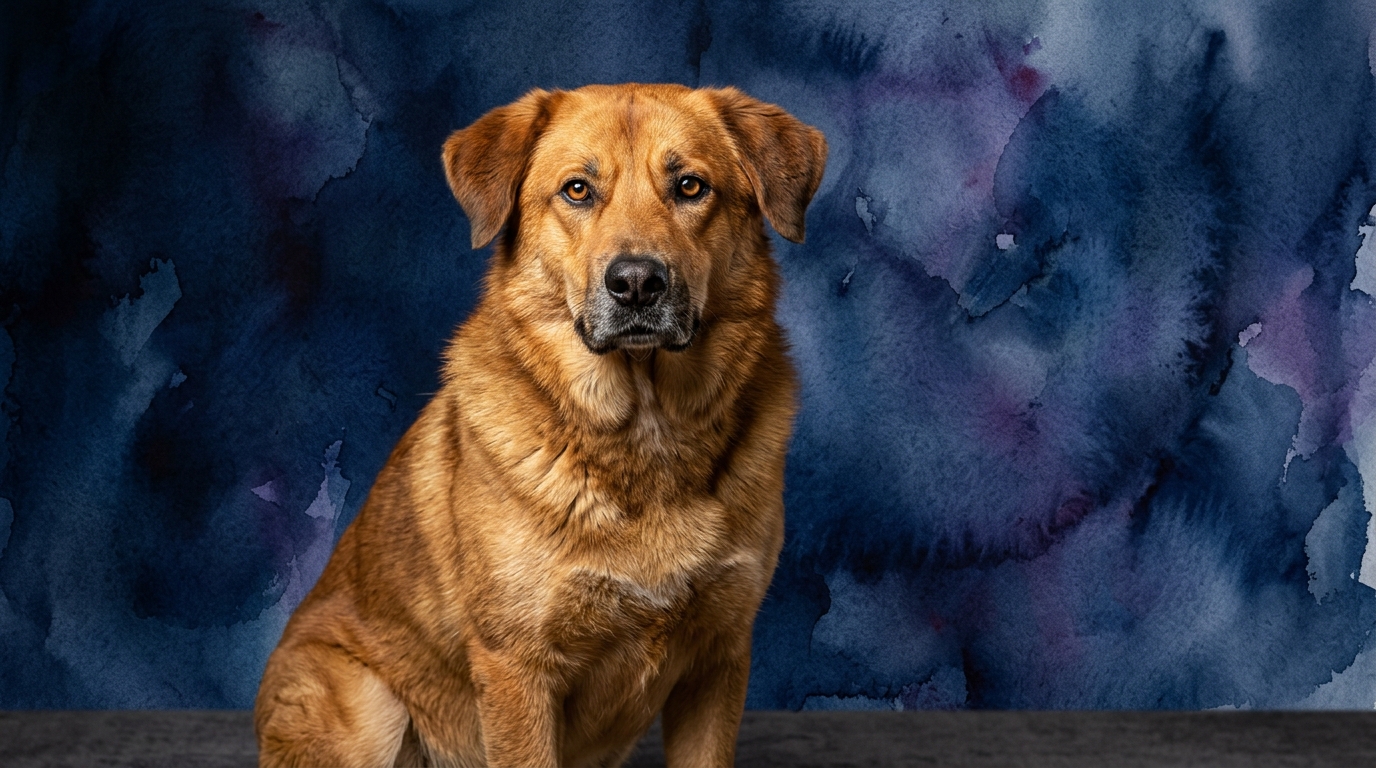
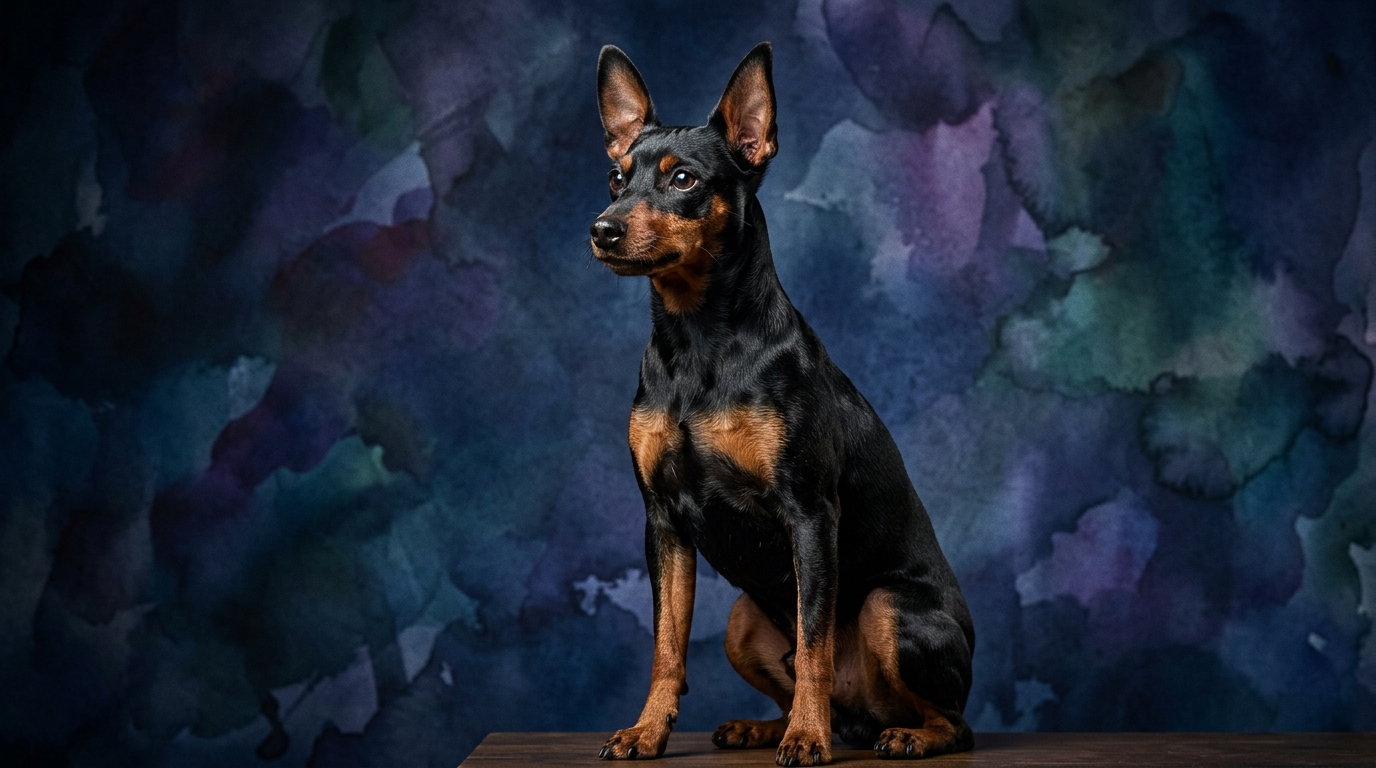
Side-by-Side IQ Profile: Chinook vs. Miniature Pinscher
Despite their vastly different appearances and traditional roles, the Chinook and Miniature Pinscher both register a consistent 3/5 across The Cosmic Pet Pet IQ Lab's five core cognitive dimensions. This identical scoring suggests a comparable foundational capacity for learning and adaptation, though the expression of these abilities is deeply flavored by their breed-specific histories.
For the **Chinook (Working Group)**:
**Problem Solving (3/5)**: Chinooks demonstrate moderate ability to navigate environmental challenges and understand multi-step tasks, such as finding objects or opening gates, often leveraging observation and trial-and-error within a working context.
**Training Speed (3/5)**: They learn new commands at a moderate pace, receptive to consistent, structured training that leverages their purpose-driven working dog heritage.
**Social Intelligence (3/5)**: This breed shows moderate understanding of human cues, forming deep bonds within their family and responding appropriately to familiar dynamics, though often reserved with strangers.
**Instinctive Drive (3/5)**: Chinooks possess a moderate drive linked to their sled dog ancestry, including a desire to pull, explore, and work cooperatively, providing motivation for structured activities.
**Memory (3/5)**: They exhibit a solid ability to recall learned commands, routines, and experiences, retaining information over time with moderate reinforcement, aiding reliability in tasks.
For the **Miniature Pinscher (Toy Group)**:
**Problem Solving (3/5)**: Miniature Pinschers display moderate aptitude for figuring things out, often applied to immediate, self-serving goals like accessing treats or navigating household obstacles with clever manipulation.
**Training Speed (3/5)**: They learn new commands at a moderate rate, quickly grasping concepts, but their independent streak requires consistent motivation and engaging positive reinforcement to maintain focus.
**Social Intelligence (3/5)**: This breed shows moderate understanding of social cues, adept at leveraging human attention and resources to their advantage, communicating desires and reacting to family dynamics.
**Instinctive Drive (3/5)**: Miniature Pinschers possess a moderate but distinct prey drive from their ratting heritage, alongside natural alertness and territoriality, fueling their energetic demeanor.
**Memory (3/5)**: They have a good capacity for remembering routines, commands, and experiences, especially those associated with rewards, making them consistent in learned behaviors.
Where the Chinook Wins Cognitively
Despite identical scores, the Chinook's cognitive strengths often manifest in areas demanding sustained focus, physical endurance, and collaborative problem-solving, reflecting its working heritage. Their 3/5 in problem-solving translates to aptitude for navigating complex outdoor environments and executing multi-step tasks requiring sequential thought, like following a trail or maneuvering equipment. This robust application of cognitive abilities to physical challenges, combined with their 3/5 memory, allows them to reliably recall intricate routes or complex command sequences for working roles. Their social intelligence, while rated the same, leans towards a cooperative, partnership-oriented understanding of human communication, making them adept at activities requiring mutual effort towards a shared goal.
Where the Miniature Pinscher Wins Cognitively
Conversely, the Miniature Pinscher's identical 3/5 scores frequently translate into cognitive advantages honed by their history as alert ratters and spirited companions. Their 3/5 problem-solving often excels in situations requiring quick, agile thinking and resourcefulness in immediate spaces, such as accessing hidden treats or cleverly manipulating objects. Their social intelligence, also 3/5, involves sharp perception of human moods, which they skillfully leverage for attention or rewards, demonstrating a nuanced understanding of social influence. Their 3/5 instinctive drive, particularly prey drive and alertness, contributes to exceptional situational awareness and rapid reaction times, allowing them to process and respond to stimuli with remarkable speed and confidence.
Which is Easier to Train and Why?
Both breeds are rated 3/5 for training speed, indicating a moderate learning curve that benefits from consistent methods. However, practical training experiences differ due to their underlying behavioral tendencies. The Chinook, from its working heritage, often approaches training with a desire for purpose and cooperation. While needing patience, their willingness to engage in sustained tasks and focus on partnership makes the process feel collaborative, responding well to positive reinforcement and task-oriented challenges, guided by their moderate social intelligence.
The Miniature Pinscher, though equally capable of learning at a 3/5 pace, presents a different challenge. Their independent spirit, high energy, and strong prey drive (also 3/5) mean they grasp concepts quickly, but maintaining focus and ensuring consistent compliance demands more. They are quick-witted and test boundaries, requiring unwavering consistency and engaging, positive reinforcement to counteract distraction and strong-willed decision-making. Therefore, while both learn similarly, the Chinook might be perceived as 'easier' for a cooperative partner, while the Min Pin demands a more experienced trainer adept at managing a spirited personality.
Which Suits Active Owners vs. Relaxed Owners?
The Chinook thrives with active owners providing consistent physical exercise and mental engagement through 'work.' Their moderate instinctive drive (3/5) creates a strong desire for activity and purpose, whether long hikes, sledding, or agility. Owners who enjoy significant outdoor time and structured activities will find a Chinook rewarding, as their problem-solving and memory are best utilized with tasks.
The Miniature Pinscher, despite being a toy breed, is not sedentary. Their moderate instinctive drive (3/5) manifests as bursts of energy, alertness, and a keen desire for exploration. They suit owners active enough for daily walks, play sessions, and mental stimulation to satisfy their quick minds. While their exercise needs are less extensive than a Chinook's, they require consistent engagement to prevent boredom. Truly relaxed, low-engagement owners might find the Min Pin's spirited independence overwhelming, as their problem-solving and social intelligence will be applied to finding their own entertainment, potentially outside household rules.
The Verdict
Choose the Chinook if you're an active owner seeking a robust, cooperative partner for outdoor adventures and structured activities, valuing a dog that thrives on purposeful engagement and collaborative problem-solving.
Opt for the Miniature Pinscher if you appreciate a spirited, alert, and independent companion in a compact form, prepared to provide consistent mental stimulation and engaging training for a quick-witted personality.
🧠 Find Your Pet's IQ Score
Our Pet IQ Lab assessment covers 25+ tests across 5 cognitive dimensions — personalized to your breed.
Take the Full IQ Test →Frequently Asked Questions
Do Chinook and Miniature Pinscher have similar intelligence levels?
According to The Cosmic Pet Pet IQ Lab, both breeds score identically at 3/5 across problem-solving, training speed, social intelligence, instinctive drive, and memory. While their raw scores are the same, how these cognitive abilities manifest and are applied in real-world scenarios differs significantly due to their distinct breed histories and physical attributes.
Which breed is better for first-time dog owners?
Neither breed is typically recommended for entirely novice owners without prior research and commitment. Chinooks, while cooperative, require dedicated time for training and exercise. Miniature Pinschers, despite their size, possess a strong-willed personality and high energy, demanding consistent and experienced handling to channel their moderate instinctive drive effectively.
How do their instinctive drives differ in daily life?
The Chinook's 3/5 instinctive drive often translates to a desire for pulling, exploring, and cooperative work, making them eager for structured outdoor activities. The Miniature Pinscher's 3/5 drive, rooted in ratting, manifests as high alertness, a strong prey drive, and a tendency towards independent investigation, requiring consistent redirection and mental stimulation.