
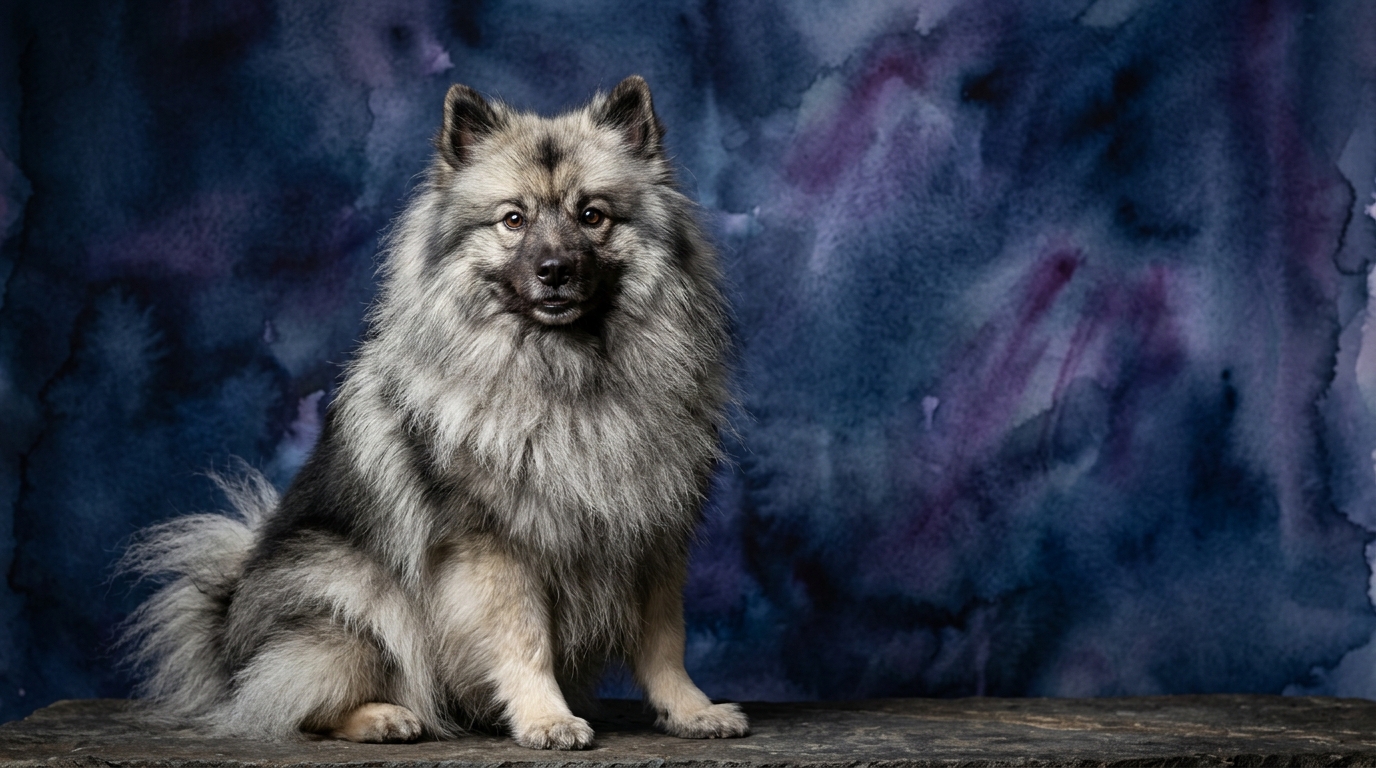
Side-by-Side Cognitive Profiles: Chow Chow vs Keeshond
The Cosmic Pet Pet IQ Lab offers a nuanced look into the cognitive dimensions of our canine companions, assessing problem-solving, training speed, social intelligence, instinctive drive, and memory. For the majestic Chow Chow, a breed rooted in ancient China and ranked #76 by Coren, its profile shows a consistent score across the board: problem-solving at 3/5, training speed at 3/5, social intelligence at 3/5, instinctive drive at 3/5, and memory also at 3/5. This suggests a balanced, yet moderately paced, cognitive approach to its environment and interactions.
In contrast, the Keeshond, a lively Dutch barge dog with a Coren rank of #16, presents a more varied and often higher-scoring cognitive blueprint. Its problem-solving ability stands at an impressive 4/5, indicating a greater aptitude for figuring out novel situations. Training speed is also higher at 4/5, suggesting a quicker grasp of new commands and routines. While its social intelligence and instinctive drive mirror the Chow Chow at 3/5, the Keeshond truly shines in memory, achieving a remarkable 5/5, pointing to an exceptional capacity for retaining information and experiences.
These individual scores paint a vivid picture: the Chow Chow embodies a steady, predictable intellect, where no single cognitive area dramatically overshadows another. The Keeshond, however, demonstrates specific peaks in cognitive function, particularly in its ability to learn, adapt, and recall, making it a notably quick study in many scenarios. Understanding these foundational differences is key to appreciating their distinct approaches to learning and interaction.
Where the Chow Chow's Cognition Shines
While the Keeshond outpaces the Chow Chow in several cognitive dimensions, the Chow Chow's unique strength lies in its profound consistency and self-contained intellect. Its uniform 3/5 scores across problem-solving, training speed, social intelligence, instinctive drive, and memory result in a remarkably predictable cognitive profile. This consistency means a Chow Chow is less prone to the fluctuations of a highly reactive or overly complex mind, offering a steady, dependable presence.
This balanced cognitive blueprint fosters a dignified independence; a Chow Chow processes information and social cues at a moderate pace, leading to a dog that is neither overly demanding nor easily flustered. Owners seeking a companion that understands routines and expectations without requiring constant mental gymnastics or elaborate interaction will find this cognitive steadiness a distinct advantage, allowing the Chow Chow to be a self-sufficient and calm presence in the home. Its moderate instinctive drive also means it's less likely to be overwhelmed by environmental stimuli or strong urges, contributing to its composed demeanor.
The Chow Chow's moderate social intelligence, paired with its consistent cognitive scores, means it forms strong, albeit selective, bonds without an overwhelming need for constant attention or validation. This cognitive independence allows it to observe and participate in family life on its own terms, making it an ideal choice for individuals who appreciate a companion with a self-possessed intellect rather than one constantly seeking engagement or direction. Its cognitive strengths lie in its reliability and serene self-sufficiency.
Where the Keeshond's Cognition Excels
The Keeshond's cognitive profile reveals several areas where it demonstrates a clear advantage, making it a compelling study in canine intellect. Its problem-solving ability, rated at 4/5 compared to the Chow Chow's 3/5, indicates a greater natural aptitude for navigating new challenges and figuring out solutions independently. This means a Keeshond is more likely to assess unfamiliar situations, adapt its behavior, and learn through exploration rather than relying solely on direct instruction.
A significant cognitive win for the Keeshond is its training speed, scoring 4/5 against the Chow Chow's 3/5. This higher rating suggests a quicker comprehension of commands and a faster rate of skill acquisition during training sessions. Owners will likely find the Keeshond more receptive to learning new tricks, obedience cues, and complex tasks, often requiring fewer repetitions to solidify a behavior. Its eagerness to engage in learning activities makes training a more dynamic and rewarding experience.
However, the Keeshond's most outstanding cognitive attribute is its memory, topping the charts at a perfect 5/5, a substantial leap from the Chow Chow's 3/5. This exceptional memory means the Keeshond not only learns quickly but also retains that information over extended periods, making it less prone to forgetting previously learned commands or routines. This robust memory also extends to remembering people, places, and past experiences, contributing to its consistent behavior and ability to adapt to changes based on prior knowledge. This cognitive strength is invaluable for complex training, consistent household manners, and forming lasting associations.
Training Dynamics: Ease and Engagement
When considering ease of training, the Keeshond holds a distinct advantage due to its higher training speed (4/5) and exceptional memory (5/5). These cognitive traits mean a Keeshond will typically grasp new commands and concepts more quickly and retain them for longer durations. Their natural inclination to problem-solve (4/5) also contributes to their trainability, allowing them to better understand the 'why' behind a task and adapt their approach as needed. This often translates to a more engaged and responsive training partner, making the process feel collaborative and efficient for owners.
The Chow Chow, with its moderate training speed (3/5) and memory (3/5), presents a different training experience. This breed requires more patience, consistency, and a deep understanding of its independent nature. Chow Chows are not inherently driven by a strong desire to please in the same way some other breeds might be; their moderate social intelligence means they may weigh their own interests against the owner's request. Training a Chow Chow often involves finding what truly motivates them, utilizing positive reinforcement consistently, and accepting that progress may be slower but no less profound when achieved.
Real behavioral differences highlight this contrast: a Keeshond might eagerly offer behaviors it thinks you want, keen to engage and learn. A Chow Chow, conversely, might consider a command, decide if it's worth its effort, and then perform it with a certain dignified deliberation. This is not a lack of capacity, but a difference in cognitive motivation and processing. Owners seeking a dog that responds quickly to cues and enjoys structured learning will find the Keeshond more straightforward, while those who appreciate a challenge and are willing to invest in building a strong, respectful bond through consistent, patient training will find the Chow Chow rewarding.
Lifestyle Suitability: Active vs. Relaxed Owners
The differing cognitive profiles of the Chow Chow and Keeshond naturally align with different owner lifestyles. For owners who enjoy an active, mentally stimulating relationship with their pet, the Keeshond is often a more fitting choice. Its higher problem-solving (4/5), training speed (4/5), and exceptional memory (5/5) make it an ideal candidate for activities like advanced obedience, trick training, or even some dog sports where mental engagement and quick learning are paramount. While its instinctive drive is moderate (3/5), its cognitive agility means it thrives on structured activities that challenge its intellect, making it a rewarding companion for those who enjoy teaching and interacting through complex tasks. This doesn't necessarily mean high physical activity, but rather high mental engagement.
Conversely, the Chow Chow's balanced, moderate cognitive scores across the board make it a superb fit for more relaxed owners who appreciate a dignified and self-contained companion. Its moderate problem-solving and training speed mean it's not constantly seeking new mental challenges or demanding intricate training sessions. While they certainly benefit from regular walks and basic training, their cognitive makeup suggests they are content with a predictable routine and less intense mental stimulation. Their moderate social intelligence and instinctive drive contribute to a calm presence that doesn't typically require constant interaction or elaborate play sessions.
Therefore, if you're an owner who revels in teaching new skills, exploring advanced training, or engaging in mentally stimulating games, the Keeshond's cognitive strengths will likely resonate more deeply with your lifestyle. If your preference leans towards a composed, independent companion who is content with a steady routine, appreciates quiet companionship, and requires a more patient, consistent approach to learning, the Chow Chow's unique cognitive blueprint is likely to be a more harmonious match for your home and personal rhythm.
The Verdict
Choose the Chow Chow if you value a dignified, independent companion with a predictable cognitive profile, content with routine and less demanding of constant mental engagement or elaborate training.
Opt for the Keeshond if you seek an engaged, intelligent partner eager to learn, capable of excelling in various training endeavors, and who thrives on mental stimulation and consistent interaction.
🧠 Find Your Pet's IQ Score
Our Pet IQ Lab assessment covers 25+ tests across 5 cognitive dimensions — personalized to your breed.
Take the Full IQ Test →Frequently Asked Questions
Is the Chow Chow difficult to train due to its 3/5 training speed?
The Chow Chow is not inherently difficult to train, but it does require more patience and consistency than breeds with higher training speed scores. Its independent nature means owners must build a strong, trusting bond and find effective motivators, but with the right approach, they are capable of learning and retaining commands.
Do Keeshonds require constant mental stimulation to be content?
Yes, Keeshonds, with their 4/5 problem-solving and 5/5 memory, thrive on regular mental stimulation to prevent boredom and destructive behaviors. Daily training sessions, puzzle toys, and engaging activities are crucial for their cognitive well-being and overall happiness.
How does social intelligence (3/5 for both) impact interaction with these breeds?
A 3/5 social intelligence score for both means they are capable of understanding social cues but may not be overly effusive or constantly seeking interaction. For the Chow Chow, this contributes to its dignified independence, while for the Keeshond, combined with its high memory and problem-solving, it means it's adept at learning social rules and remembering past interactions, even if not overtly clingy.