
Side-by-Side Cognitive Profiles
At The Cosmic Pet Pet IQ Lab, we assess canine intelligence across five key dimensions, offering a detailed look at how different breeds process and interact with their world. Both the Clumber Spaniel and the American Eskimo Dog register a consistent 3 out of 5 across all evaluated dimensions, indicating a solid, adaptable cognitive foundation, yet their expressions of these traits diverge significantly based on their historical roles.
The Clumber Spaniel, a Sporting Group member with a Coren rank of 55, demonstrates its Problem Solving at a 3/5 through its methodical approach to flushing game in dense cover, requiring independent thought to navigate complex environments and retrieve. Its Training Speed, also 3/5, reflects a steady learning pace, preferring consistency and clear direction over flashy, rapid-fire instruction. Social Intelligence at 3/5 translates to a calm, observant nature, attuned to its handler's subtle cues during fieldwork but not overly demonstrative. Instinctive Drive, 3/5, is strongly rooted in scent work and retrieving, propelling them to fulfill their gundog purpose with quiet determination. Memory, 3/5, enables them to recall complex scent trails, retrieve locations, and established commands over extended periods.
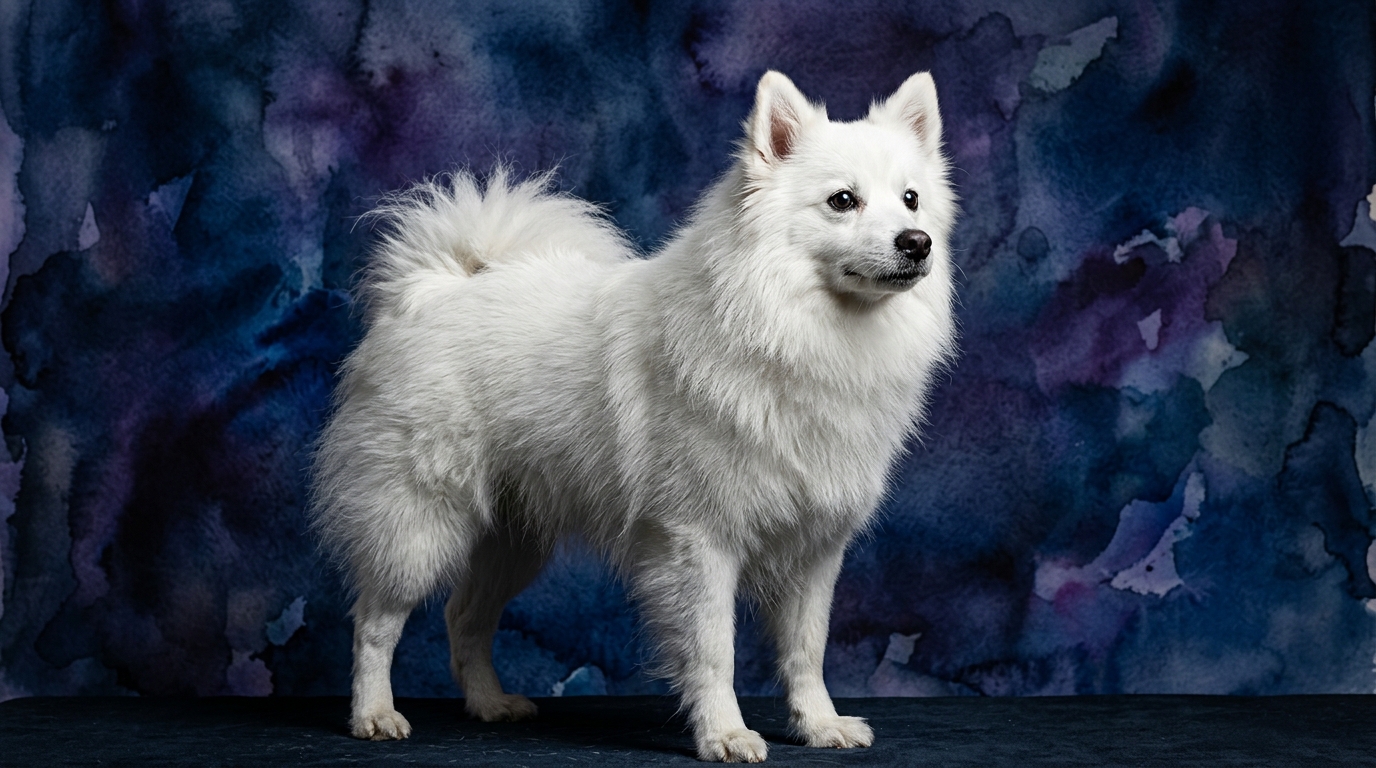
The American Eskimo Dog, from the Non-Sporting Group and unranked by Coren, exhibits its 3/5 Problem Solving through clever, often attention-seeking behaviors, such as figuring out how to manipulate objects or situations to achieve a desired outcome, often involving human interaction. Its Training Speed, also 3/5, suggests a capacity for quick learning, particularly when tasks are engaging and reward-driven, though consistency is key to prevent boredom. Social Intelligence at 3/5 manifests as a highly perceptive and communicative nature, adept at reading human emotions and intentions, and often utilizing vocalizations to express themselves. Instinctive Drive, 3/5, is expressed through a strong desire to alert, guard their family, and engage in interactive play, often with a mischievous streak. Memory, 3/5, allows them to retain routines, tricks, and the details of past interactions, influencing future behaviors.
Where the Clumber Spaniel Excels Cognitively
The Clumber Spaniel's cognitive strengths truly shine in environments demanding focused, independent application of skills, particularly those involving scent and retrieval. Their 3/5 Problem Solving isn't about flashy tricks, but rather a methodical, persistent ability to work through environmental challenges, such as tracking a scent through varied terrain or locating a hidden retrieve in thick underbrush. This reflects an innate capacity for sustained concentration on a singular task, a hallmark of a dedicated working gundog.
Their 3/5 Instinctive Drive is channeled into a deep-seated desire to fulfill their traditional role, manifesting as a calm yet determined work ethic in the field. This isn't a frenetic energy, but a steady, deliberate pursuit of their objective, showcasing an internal motivation that guides their cognitive processes. Furthermore, their 3/5 Memory is particularly robust for recalling specific locations, scent patterns, and complex sequences of field commands, allowing them to build upon past experiences for more effective future performance in their specialized tasks. This makes them particularly suited for owners who appreciate a dog that can independently apply learned skills in a practical, task-oriented manner.
Where the American Eskimo Dog Wins Cognitively
The American Eskimo Dog's cognitive edge lies in its highly interactive and adaptable nature, particularly concerning human engagement and novel situations. Their 3/5 Problem Solving often involves figuring out how to gain attention, solve puzzles, or learn complex trick sequences, demonstrating a quick-wittedness focused on social and environmental manipulation. This breed frequently displays a cleverness in adapting to new challenges, making them adept at learning intricate routines or navigating household dynamics.
Their 3/5 Social Intelligence is a standout feature, as they are exceptionally attuned to human emotions and intentions, often predicting actions and reacting with expressive vocalizations and body language. This makes them highly communicative companions, capable of forming deep bonds and understanding subtle social cues. The Eskie's 3/5 Memory is particularly sharp for routines, specific commands associated with rewards, and the nuances of human interaction, allowing them to quickly adapt their behavior based on past outcomes. This blend of social acuity and adaptable problem-solving makes them excellent candidates for activities requiring close partnership and intricate communication, such as obedience, agility, or even therapy work.
Which Is Easier to Train and Why
When considering ease of training, the Clumber Spaniel and American Eskimo Dog present different approaches, despite both having a 3/5 Training Speed. The Clumber Spaniel, with its steady and methodical nature, responds best to consistent, patient training methods. They may not pick up new commands with lightning speed, but once learned, their 3/5 Memory ensures a reliable retention. Their focus is often task-oriented, meaning they respond well to clear, repetitive instructions and positive reinforcement that links directly to the desired behavior, especially if it mimics their natural retrieving instincts. Distractions are less likely to derail a Clumber once they are engaged in a task, making them dependable learners in structured environments.
The American Eskimo Dog, conversely, can appear to learn more quickly due to their eagerness to please and love for attention, but their cleverness and 3/5 Instinctive Drive for engagement can also lead to mischief if training isn't kept stimulating. They thrive on variety and interactive sessions, picking up tricks and commands with enthusiasm, but might also test boundaries or get bored if training becomes monotonous. Their 3/5 Social Intelligence means they are highly responsive to their trainer's mood and tone, making positive reinforcement and engaging play essential. While they can master complex sequences, consistency is crucial to ensure these clever behaviors are directed appropriately rather than towards independent, potentially undesirable, problem-solving.
Suitability for Active vs. Relaxed Owners
Choosing between a Clumber Spaniel and an American Eskimo Dog often comes down to lifestyle and the kind of companionship an owner seeks. The Clumber Spaniel, despite its Sporting Group classification, tends to suit more relaxed owners who appreciate a calm, deliberate pace. While they need regular, moderate exercise—especially mental stimulation through scent games or short walks—they are not typically high-energy dogs requiring constant, intense activity. Their 3/5 Instinctive Drive is satisfied by purposeful, sniff-heavy outings rather than endless running. They are content with quiet companionship indoors, enjoying a comfortable spot near their family, making them excellent for owners who enjoy a serene home environment.
The American Eskimo Dog, on the other hand, is a better fit for active owners seeking an engaging, spirited companion. Their 3/5 Instinctive Drive for interaction and mental stimulation means they thrive on regular exercise that includes playtime, walks, and opportunities for learning new tricks or participating in dog sports like agility or obedience. They possess a lively curiosity and a desire to be involved in family activities, requiring more consistent attention and engagement to prevent boredom and potential undesirable behaviors. Owners who enjoy an energetic, communicative dog and are committed to providing consistent mental and physical outlets will find the Eskie a rewarding match.
The Verdict: When to Choose Each Breed
The Verdict
Choose the Clumber Spaniel if you seek a calm, steady companion for a more relaxed lifestyle, appreciating a dog with quiet determination and a methodical approach to tasks. They are ideal for owners who value a dog that can work independently on scent-based activities but is equally content with serene indoor companionship.
Opt for the American Eskimo Dog if you're an active owner looking for an expressive, engaging, and clever companion who thrives on interaction, mental challenges, and consistent participation in family activities. They are best suited for those who can provide ample mental and physical stimulation to channel their spirited nature.
🧠 Find Your Pet's IQ Score
Our Pet IQ Lab assessment covers 25+ tests across 5 cognitive dimensions — personalized to your breed.
Take the Full IQ Test →Frequently Asked Questions
Are Clumber Spaniels good family dogs?
Yes, Clumber Spaniels are generally excellent family dogs, known for their gentle and affectionate nature. Their calm demeanor and patience make them suitable companions for children and other pets, provided they are properly socialized from a young age.
Do American Eskimo Dogs bark a lot?
American Eskimo Dogs can be quite vocal, often using barks, howls, and 'talking' to communicate with their families. This stems from their natural alertness and strong guarding instincts, so early training is essential to manage excessive barking.
Which breed is better for apartment living?
While both breeds need exercise, the Clumber Spaniel's lower energy demands and generally calm indoor demeanor might make them marginally better suited for apartment living, provided they receive regular, purposeful walks and mental engagement. The Eskie's higher need for interaction and potential for vocalization might be more challenging in smaller spaces.