
Side-by-Side IQ Profile
The Cocker Spaniel, a Sporting group member and Coren-ranked #20, exhibits a nuanced cognitive makeup. Its Problem Solving at 3/5 suggests it can navigate moderately complex scenarios, adapting to new challenges with some guidance. Training Speed, rated 4/5, indicates a quick grasp of commands and routines, often eager to please its human companions. Its standout trait is Social Intelligence at 5/5, reflecting an exceptional ability to interpret human cues, emotions, and intentions, fostering deep bonds. Instinctive Drive, at 4/5, points to a strong innate desire to work and fulfill its historical role, whether retrieving or engaging in scent work. Memory, also 4/5, means it retains learned behaviors and associations effectively over time.
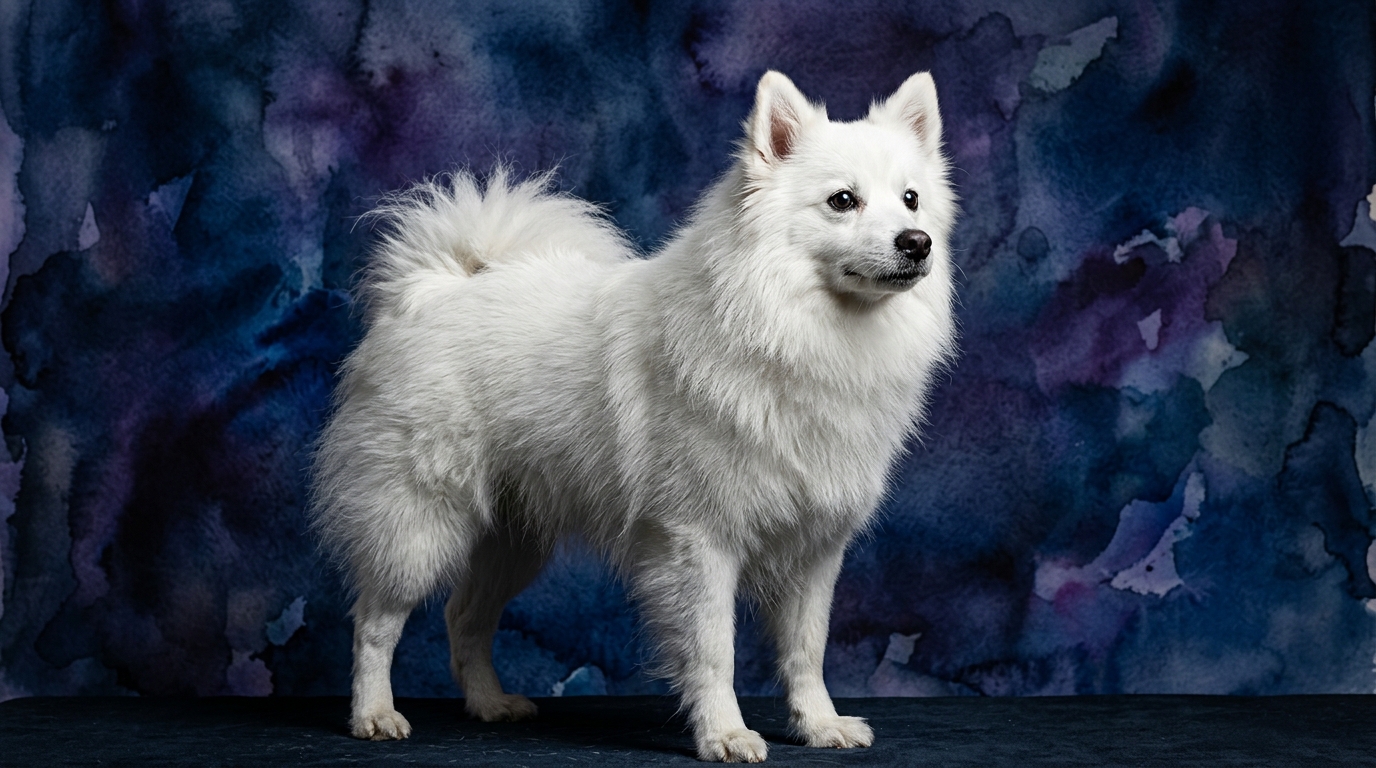
Belonging to the Non-Sporting group and not Coren-ranked, the American Eskimo Dog presents a different cognitive landscape. Its Problem Solving matches the Cocker Spaniel at 3/5, demonstrating an independent capacity to figure things out without constant human intervention, though not necessarily with advanced strategic thinking. Training Speed is rated 3/5, implying it learns at a steady pace but may require more repetition or motivation than some other breeds. Social Intelligence stands at 3/5, indicating it forms connections and understands human communication, but perhaps with less intensity or nuance than a breed specifically bred for close partnership. Instinctive Drive, at 3/5, suggests a moderate innate drive, often expressed through watchfulness or a desire to “herd” its family, rather than a strong working impulse. Memory, also 3/5, means it remembers lessons and experiences, but perhaps with less long-term precision than breeds scoring higher.
Where Cocker Spaniel Wins Cognitively
The Cocker Spaniel’s cognitive profile clearly excels in areas demanding deep human interaction and rapid learning. Its perfect 5/5 in Social Intelligence means it possesses an unparalleled capacity to attune to its owner's moods, anticipate needs, and respond to subtle non-verbal cues. This makes them exceptionally empathetic companions, often seeming to understand unspoken wishes, translating into a dog that's remarkably in sync with its family's emotional landscape. Furthermore, with a Training Speed of 4/5, the Cocker Spaniel typically absorbs new commands and routines with impressive alacrity, often showing a keen desire to perform and receive positive reinforcement. This quick uptake, combined with its strong Memory (4/5), means it not only learns rapidly but also retains that information effectively, making complex sequences of commands or tricks more accessible. Its 4/5 Instinctive Drive, rooted in its retrieving heritage, further fuels its willingness to engage in structured activities, often displaying a joyful enthusiasm for tasks that involve working alongside its human.
Where American Eskimo Dog Wins Cognitively
While the American Eskimo Dog's scores generally fall in the mid-range, its cognitive profile shines in particular ways, especially for owners who appreciate a degree of independent thought. Its Problem Solving score of 3/5, identical to the Cocker Spaniel, suggests an ability to navigate novel situations and figure things out on its own, often without needing explicit human direction. This isn't about outsmarting its human, but rather about a self-reliant approach to environmental challenges. Coupled with a moderate Social Intelligence (3/5), the Eskie tends to process information and make decisions based on its own assessment of a situation, rather than constantly seeking human approval or guidance. This manifests as a thoughtful, sometimes ingenious, approach to obstacles, whether it's figuring out how to open a gate or locating a hidden toy. This cognitive independence, while sometimes perceived as stubbornness in training, can also be a significant asset for owners who value a companion capable of making sound judgments and adapting autonomously in various scenarios.
Which is Easier to Train and Why
When it comes to ease of training, the Cocker Spaniel generally offers a smoother experience. Its exceptional Social Intelligence (5/5) means it is acutely sensitive to human intentions and desires, making it naturally inclined to cooperate and respond to commands. This breed often thrives on pleasing its owner, interpreting even subtle cues to understand what is expected. Coupled with its high Training Speed (4/5) and strong Memory (4/5), the Cocker Spaniel typically grasps new concepts quickly and retains them reliably, making repetitive training sessions less necessary.
On the other hand, the American Eskimo Dog, with its 3/5 in both Training Speed and Social Intelligence, requires a more consistent and patient approach. While capable of learning, the Eskie’s independence means it may not always see the immediate value in complying, sometimes preferring to ponder a request before acting. This isn't a lack of ability, but rather a cognitive preference for self-direction over constant human-centric cooperation, which can make training a more deliberate and rewarding process, demanding creativity and strong motivation from the handler.
Which Suits Active Owners vs Relaxed Owners
For active owners seeking a dog to participate enthusiastically in various pursuits, the Cocker Spaniel often presents a more aligned cognitive profile. Its 4/5 Instinctive Drive means it possesses a robust innate desire to engage in activities, whether it's retrieving, agility, or long walks with purpose. This drive, combined with its high Social Intelligence (5/5), results in a companion eager to share experiences and work alongside its human, making it a joyful partner for hiking, field sports, or even competitive obedience. They thrive on shared activity and interaction.
Conversely, for owners who might describe themselves as more relaxed, or who appreciate a dog with a greater degree of self-sufficiency, the American Eskimo Dog's cognitive makeup may be a better fit. While still requiring regular exercise, its more moderate Instinctive Drive (3/5) means it isn't constantly seeking an outlet for intense working energy. Its 3/5 Social Intelligence suggests it's content with its family but doesn't demand constant interactive engagement to the same degree as a Cocker. This allows the Eskie to be a calm, watchful presence in the home, often happy to observe and interact on its own terms, making it suitable for owners who enjoy a companion that can entertain itself or be less demanding of constant interactive tasks.
The Verdict
Opt for a Cocker Spaniel if you seek a highly empathetic, cooperative companion eager to learn quickly and thrive on deep, interactive bonds and shared activities.
Select an American Eskimo Dog if you value an independent, thoughtful companion capable of self-reliance, and you are prepared for a more patient, perhaps less overtly people-pleasing training approach.
🧠 Find Your Pet's IQ Score
Our Pet IQ Lab assessment covers 25+ tests across 5 cognitive dimensions — personalized to your breed.
Take the Full IQ Test →Frequently Asked Questions
Does the Coren ranking impact a breed's overall intelligence?
The Coren ranking primarily measures "working and obedience intelligence," focusing on trainability and command following, rather than a comprehensive measure of all cognitive dimensions. While useful, it doesn't fully capture aspects like social intelligence or problem-solving in a broader sense, as seen with the American Eskimo Dog.
Can an American Eskimo Dog learn complex tricks despite its lower training speed?
Absolutely. An American Eskimo Dog can certainly learn complex tricks and advanced behaviors, though it might require more patience, consistency, and creative motivational techniques from the owner due to its 3/5 training speed and independent nature. Their 3/5 problem-solving ability means they are capable of understanding complex sequences.
How does "Instinctive Drive" manifest differently in these two breeds?
In a Cocker Spaniel (4/5), Instinctive Drive often manifests as a strong desire to retrieve, track scents, or engage in activities reminiscent of their sporting heritage, showing enthusiasm for purposeful work. For an American Eskimo Dog (3/5), it typically appears as a keen watchfulness, a desire to "herd" or guard its family, and sometimes independent problem-solving related to its environment, rather than a strong urge for cooperative tasks.