
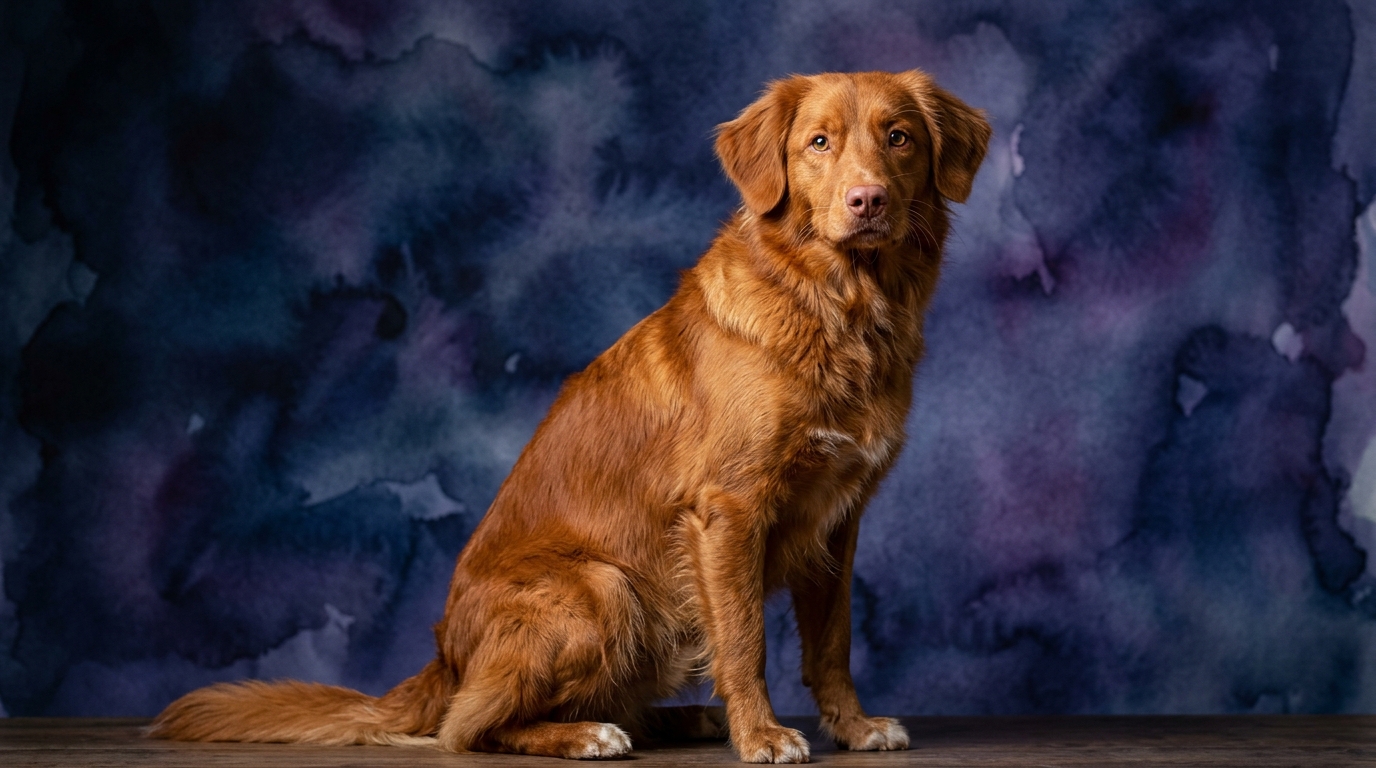
Side-by-Side IQ Profile: Cocker Spaniel vs. Nova Scotia Duck Tolling Retriever
The Cocker Spaniel presents a nuanced cognitive profile, highlighted by an exceptional 5/5 in Social Intelligence. This indicates a profound ability to understand and respond to human emotions and social cues, fostering deep bonds. Their Training Speed is a commendable 4/5, suggesting a quick grasp of new commands, while their Memory also scores 4/5, aiding in retention. Problem Solving stands at 3/5, indicating competence in learning complex tasks, and their Instinctive Drive is 4/5, reflecting their strong flushing and retrieving heritage.
The Nova Scotia Duck Tolling Retriever, or Toller, exhibits a consistent 3/5 across all five cognitive dimensions: Problem Solving, Training Speed, Social Intelligence, Instinctive Drive, and Memory. This uniform scoring suggests a balanced yet moderate approach to learning and interaction. Their problem-solving is practical for their working roles, their training requires consistency, and their social interactions, while affectionate with their circle, are less overtly expressive than some breeds, with their instinctive drive focused on their unique 'tolling' method.
Where the Cocker Spaniel Excels Cognitively
The Cocker Spaniel's outstanding 5/5 score in Social Intelligence is a clear cognitive advantage, demonstrating an innate ability to read and interpret human emotions, intentions, and subtle cues with remarkable accuracy. They are masters of non-verbal communication, often anticipating their owner's needs or moods, which translates into an incredibly intuitive and responsive companionship experience, making them highly adaptable to household dynamics and eager to please.
With a Training Speed of 4/5 and Memory at 4/5, Cocker Spaniels generally exhibit a quicker acquisition of new commands and routines compared to the Toller. Their eagerness to gain human approval, combined with their strong memory, means they form associations between actions and consequences rapidly, solidifying learned behaviors with fewer repetitions. This cognitive agility makes them particularly rewarding for owners who enjoy diverse training activities or require a dog that adapts swiftly to new situations and expectations.
While both are sporting dogs, the Cocker Spaniel's Instinctive Drive of 4/5 is often more broadly adaptable than the Toller's specialized drive. Their strong flushing and retrieving instincts are readily channeled into various activities, from competitive obedience to scent work or simply engaging play in a family setting. This versatility, coupled with their social intelligence, allows their natural drives to be integrated seamlessly into a companion lifestyle, providing mental stimulation without necessarily requiring highly specific, intensive outlets.
Cognitive Strengths of the Nova Scotia Duck Tolling Retriever
While both breeds score 3/5 in Problem Solving, the Toller's cognitive strength lies in the *application* of this ability within its specialized working context. Their problem-solving often involves independent thought and initiative in the field, navigating complex environments to execute tasks like retrieving with less direct human micro-management once trained. This self-reliance in practical, task-oriented scenarios is a distinct cognitive advantage for owners seeking a canine partner capable of making sound decisions autonomously during specific activities.
The Nova Scotia Duck Tolling Retriever's Instinctive Drive, while rated 3/5, is intensely and uniquely focused on the 'tolling' behavior—a deceptive, playful luring of waterfowl. This specific cognitive predisposition requires a particular blend of cunning, high energy, and strategic thinking to engage and attract birds. It's a highly specialized form of instinct that, when channeled, provides an unparalleled outlet for mental and physical energy for owners interested in this specific type of work or related dog sports that demand similar focused intensity and stamina.
Though not directly a numerical 'win,' the Toller's overall cognitive profile, with consistent 3/5s, suggests a balanced mental hardiness crucial for sustained, demanding work. Their steady training speed, practical problem-solving, and focused drive combine to create a dog that can endure long periods of activity requiring mental engagement without exhibiting the same level of emotional sensitivity as a Cocker. This cognitive stamina makes them exceptionally suited for prolonged, focused tasks in challenging conditions.
Training Dynamics: Which Breed is Easier to Train?
The Cocker Spaniel generally presents an easier and more rewarding training experience for most owners. Their exceptional Social Intelligence (5/5) means they are profoundly attuned to human signals and desires, making them eager to please and highly responsive to praise and positive reinforcement. Coupled with a strong Training Speed (4/5) and Memory (4/5), Cockers quickly grasp new commands and routines, retaining them over time. Their inherent desire for partnership and emotional connection translates into a dog that actively seeks to understand and comply, simplifying the learning process significantly.
Training a Toller, while certainly achievable and gratifying, typically requires more patience, consistency, and creative engagement. Their Training Speed (3/5) and Social Intelligence (3/5) suggest they are bright but can be more independent and less overtly motivated by pleasing their human alone. Tollers thrive on engaging, fun, and varied training methods that leverage their natural drives, but they may need more repetitions and a clear purpose for tasks to maintain their interest and solidify commands. Their inherent self-reliance means they might question or explore alternatives rather than immediately comply, necessitating an owner who understands how to channel their cognitive strengths effectively.
Matching Canine Cognition to Owner Lifestyles
For truly active owners, the Nova Scotia Duck Tolling Retriever is the clear choice, demanding consistent, high-energy mental and physical challenges daily. Their heritage requires significant stamina, focused activity, and outlets for their unique drives, making them ideal for dog sports like agility, flyball, or advanced retrieving work. They thrive when given a 'job' and can become restless without sufficient engagement, requiring an owner dedicated to providing sustained, focused interaction.
While neither breed is suited for a sedentary lifestyle, the Cocker Spaniel is far more adaptable to a slightly less demanding pace. They certainly enjoy and require long walks, engaging play, and mental puzzles, but their activity needs are generally less intense and less specialized than a Toller's. Their high social intelligence means they are often content to simply be near their human, even during quieter moments, provided their baseline exercise and companionship needs are met. For owners who enjoy regular activity but prefer flexibility in their daily routine, the Cocker Spaniel's more adaptable energy levels are a better match.
The Verdict
Choose the Cocker Spaniel if you seek a highly communicative, emotionally intuitive companion that thrives on close partnership and learns quickly in a variety of settings, making them an adaptable and deeply connected family member.
Opt for the Nova Scotia Duck Tolling Retriever if you are an active individual or family capable of providing consistent, high-energy mental and physical challenges, particularly if you are interested in dog sports or working roles that leverage their specialized drive and independent problem-solving capabilities.
🧠 Find Your Pet's IQ Score
Our Pet IQ Lab assessment covers 25+ tests across 5 cognitive dimensions — personalized to your breed.
Take the Full IQ Test →Frequently Asked Questions
Are Cocker Spaniels truly more socially intelligent than Tollers?
Yes, our data suggests Cocker Spaniels excel at reading human cues and adapting to social dynamics (5/5), whereas Tollers, while affectionate with their family, show a more moderate social intelligence (3/5) focusing more on task-oriented interaction. This distinction impacts their responsiveness and the depth of their human-canine bond.
Does a Toller's lower 'instinctive drive' score mean they are less driven?
Not necessarily; while their score is 3/5 compared to a Cocker's 4/5, a Toller's drive is highly specialized for 'tolling' and retrieving, demanding a unique blend of focus and energy for specific tasks rather than a broader range of instinctive behaviors. This concentrated drive is a strength for specific working or sporting pursuits.
Which breed would be better for a first-time dog owner?
The Cocker Spaniel, with its higher training speed and exceptional social intelligence, often presents an easier learning curve for new owners due to its eagerness to please and clear communication. Tollers, while rewarding, typically require more experienced handling to manage their independent nature and specific exercise needs, which can be challenging for novices.