
Side-by-Side IQ Profile: Unpacking Cognitive Dimensions
The Cosmic Pet Pet IQ Lab employs a multi-faceted approach to understanding canine cognition, evaluating breeds across five key dimensions. This nuanced perspective allows us to appreciate the distinct mental strengths each breed brings to the world.
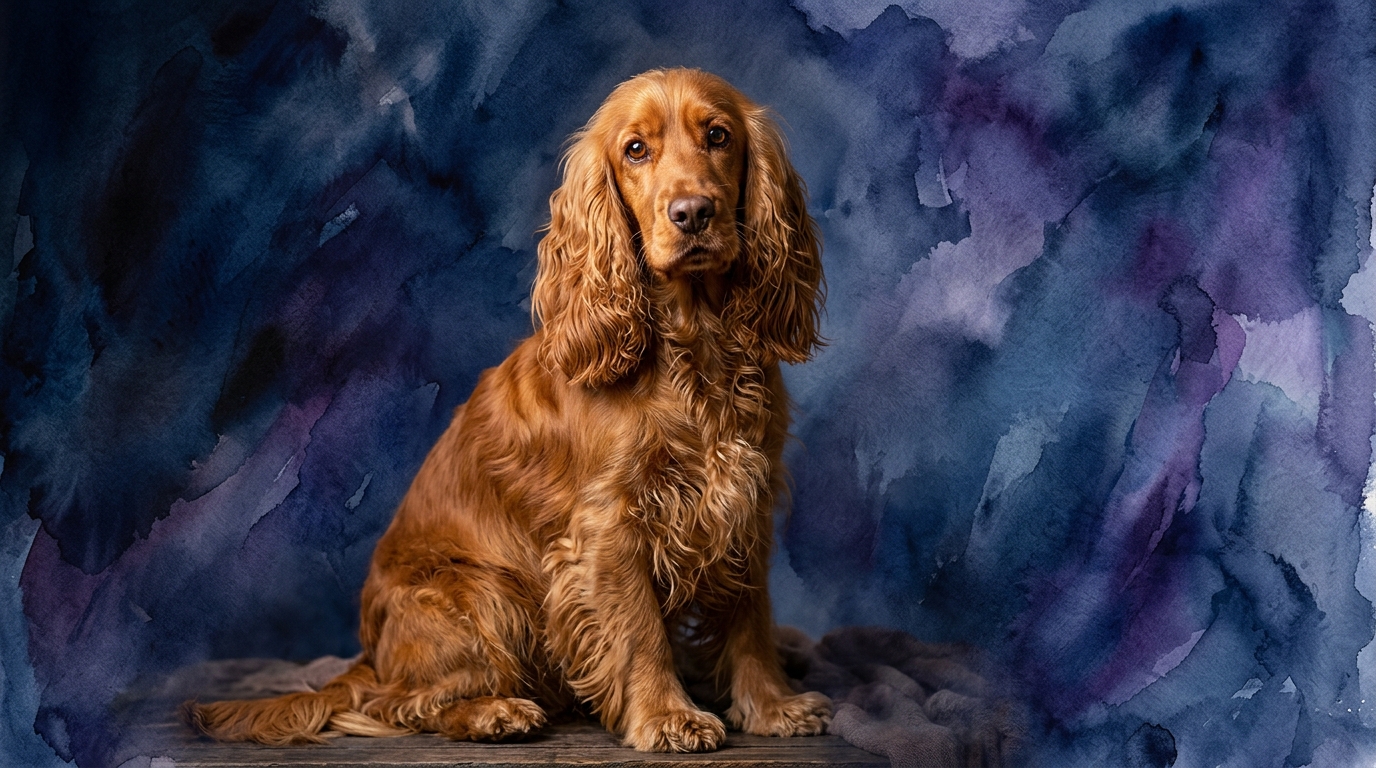
For the Cocker Spaniel, ranked #20 by Coren, their cognitive blueprint shows a balanced blend of practical and social acumen. Their problem-solving ability scores a respectable 3/5, indicating they can navigate common household challenges and learn complex tasks, though perhaps not always driven by abstract curiosity. Training speed is a notable 4/5, reflecting an eagerness to absorb new commands and cues efficiently. Where they truly shine is social intelligence, earning a perfect 5/5; these dogs are remarkably attuned to human emotions and social dynamics, making them exceptional companions. Their instinctive drive comes in at 4/5, pointing to strong natural aptitudes for retrieving and flushing, while their memory, at 4/5, allows them to retain a wide array of experiences and learned behaviors.
The Plott Hound, a breed not traditionally Coren-ranked but evaluated by our lab, presents a different cognitive signature, heavily influenced by their heritage. Their problem-solving ability also registers at 3/5, but this often manifests in their capacity to unravel complex scent trails and environmental puzzles rather than abstract challenges. Training speed for a Plott Hound is 3/5, suggesting they are capable learners but may require more patience and tailored motivation compared to some other breeds. Their social intelligence is 3/5; while they form deep bonds with their family, their primary focus can often be external—on a scent—rather than solely on human social cues. Instinctive drive, at 3/5, indicates a highly specialized and powerful drive for tracking and hunting, even if not broadly expressed across all instinctive behaviors. Finally, their memory scores 3/5, meaning they are adept at remembering specific trails and patterns, but perhaps less inclined to recall a vast repertoire of unrelated commands without consistent reinforcement.
Where the Cocker Spaniel Wins Cognitively
The Cocker Spaniel’s cognitive strengths are particularly evident in their capacity for social interaction and rapid learning. Their exemplary social intelligence (5/5) means they are not just capable of understanding human commands, but also of interpreting subtle emotional shifts, body language, and vocal inflections. This profound empathy allows them to integrate seamlessly into family life, often anticipating needs and offering comfort, making them highly responsive partners in various activities. Coupled with their swift training speed (4/5), Cocker Spaniels excel in obedience, trick training, and even canine sports where a strong partnership with their handler is paramount. They quickly grasp new concepts and sequences, often motivated by the sheer joy of interaction and pleasing their people. Their robust memory (4/5) further solidifies these advantages, enabling them to reliably recall a broad spectrum of commands, routines, and social expectations, making them consistently predictable and adaptable companions in diverse settings.
Where the Plott Hound Wins Cognitively
The Plott Hound's cognitive prowess lies in its specialized, independent problem-solving and its unwavering dedication to a task. While their general problem-solving is rated 3/5, this score doesn't fully capture their exceptional ability to navigate intricate natural environments, decipher complex scent puzzles, and make autonomous decisions when tracking. Their instinctive drive (3/5), though not universally high, is intensely focused on scent work, allowing them to block out distractions and pursue a trail with relentless determination. This makes them unparalleled in tasks requiring sustained concentration and independent initiative, such as hunting or search and rescue. Their memory (3/5) is particularly strong for spatial information and scent patterns, enabling them to remember specific trails, terrain features, and the location of quarry with impressive accuracy. These cognitive traits combine to create a dog that is a master of its specific domain, capable of sophisticated, self-directed work in challenging outdoor conditions.
Which Is Easier to Train and Why?
When considering ease of training, the Cocker Spaniel generally presents a more straightforward experience for most owners. Their high social intelligence (5/5) means they are inherently motivated by human approval and connection, often eager to engage and understand what is expected of them. This, combined with their 4/5 training speed, allows them to pick up new commands and cues rapidly, often requiring fewer repetitions to solidify a behavior. They thrive on positive reinforcement, seeing training as an enjoyable, interactive activity that strengthens their bond with their owner. Their inherent desire to cooperate makes them highly receptive to instruction, translating into quicker and more consistent results in obedience and manners.
The Plott Hound, in contrast, typically offers a more challenging training journey, primarily due to their independent nature and specialized drives. Their training speed (3/5) and social intelligence (3/5) scores indicate that while they are capable of learning, their primary focus is often external, driven by scent and their inherent purpose. A Plott Hound might perceive a training session as a distraction from a more interesting scent or a potential tracking opportunity. This means training requires immense patience, consistency, and a deep understanding of their motivations. Owners must find ways to make training engaging and relevant to the Plott's natural instincts, often incorporating scent games or outdoor exploration into their learning. Without this tailored approach, their independent decision-making, crucial for a hunting dog, can be mistaken for stubbornness, making general obedience a more arduous process.
Which Suits Active Owners vs. Relaxed Owners?
The choice between a Cocker Spaniel and a Plott Hound also hinges significantly on an owner's lifestyle and activity levels. A Cocker Spaniel is remarkably adaptable, capable of thriving with moderately active owners who enjoy regular walks, interactive play, and consistent mental stimulation through training and companionship. While they certainly appreciate outdoor adventures, their social nature means they are equally content as an indoor companion, provided their needs for interaction and exercise are met daily. They are well-suited for owners who seek a present and engaged canine partner for shared activities, both inside and outside the home, and can provide ample social engagement.
Conversely, the Plott Hound is unequivocally suited for active owners. Their strong, specialized instinctive drive and history as a working hound mean they possess significant stamina and a profound need for physical exertion and mental engagement that taps into their scenting abilities. A Plott Hound requires more than just a casual walk around the block; they need consistent opportunities for vigorous exercise, such as long hikes, runs, or dedicated scent work like tracking or nose work. Relaxed owners who cannot commit to providing these outlets will likely find a Plott Hound to be restless, potentially leading to undesirable behaviors born of boredom and unchanneled energy. They are ideal for individuals or families passionate about outdoor activities, who appreciate an independent spirit, and are prepared to integrate their dog’s natural working instincts into their daily routine.
The Verdict
Choose a Cocker Spaniel if you seek a highly interactive, empathetic companion eager for shared activities and quick to learn, thriving on deep social connections within a family setting.
Opt for a Plott Hound if you're an active, outdoor-oriented individual who values an independent, scent-driven working dog and can commit to channeling their focused energy into meaningful physical and mental tasks.
🧠 Find Your Pet's IQ Score
Our Pet IQ Lab assessment covers 25+ tests across 5 cognitive dimensions — personalized to your breed.
Take the Full IQ Test →Frequently Asked Questions
Are Plott Hounds difficult to live with?
Plott Hounds are not inherently difficult, but their strong scent drive and need for significant activity can be challenging for inexperienced owners. They require consistent training, ample exercise, and mental engagement to thrive as well-adjusted companions, especially to manage their independent nature.
Do Cocker Spaniels need a lot of exercise?
Cocker Spaniels require regular, moderate exercise to stay healthy and happy, typically 30-60 minutes daily. This can include walks, interactive play, or training sessions, ensuring both their physical and mental needs are met without being overly demanding.
Which breed is better with children?
Cocker Spaniels, with their high social intelligence and gentle nature, generally adapt very well to families with children, often forming close bonds and being quite tolerant. Plott Hounds can be good with children too, but their exuberance and independent nature might require more supervision and consistent training, especially with very young kids, to ensure harmonious interactions.