
Side-by-Side IQ Profile
The Cosmic Pet Pet IQ Lab evaluates canine intelligence across five key dimensions: Problem Solving, assessing a dog's capacity to navigate novel challenges; Training Speed, measuring how quickly new commands and behaviors are acquired; Social Intelligence, reflecting their ability to understand and respond to human cues and social dynamics; Instinctive Drive, indicating the strength of their inherent breed-specific behaviors; and Memory, gauging their retention of learned information and experiences. These metrics provide a comprehensive lens through which to appreciate each breed's unique cognitive makeup.
Hailing from the Sporting group, the Cocker Spaniel scores 3/5 in Problem Solving, suggesting a practical approach to challenges rather than complex abstract reasoning. Their Training Speed stands at a commendable 4/5, indicating a quick grasp of new commands, while their Social Intelligence is a perfect 5/5, highlighting their exceptional responsiveness to human interaction and emotional cues. An Instinctive Drive of 4/5 underscores their strong natural retrieving and flushing behaviors, further supported by a Memory score of 4/5, which allows for consistent recall of learned tasks and social interactions.
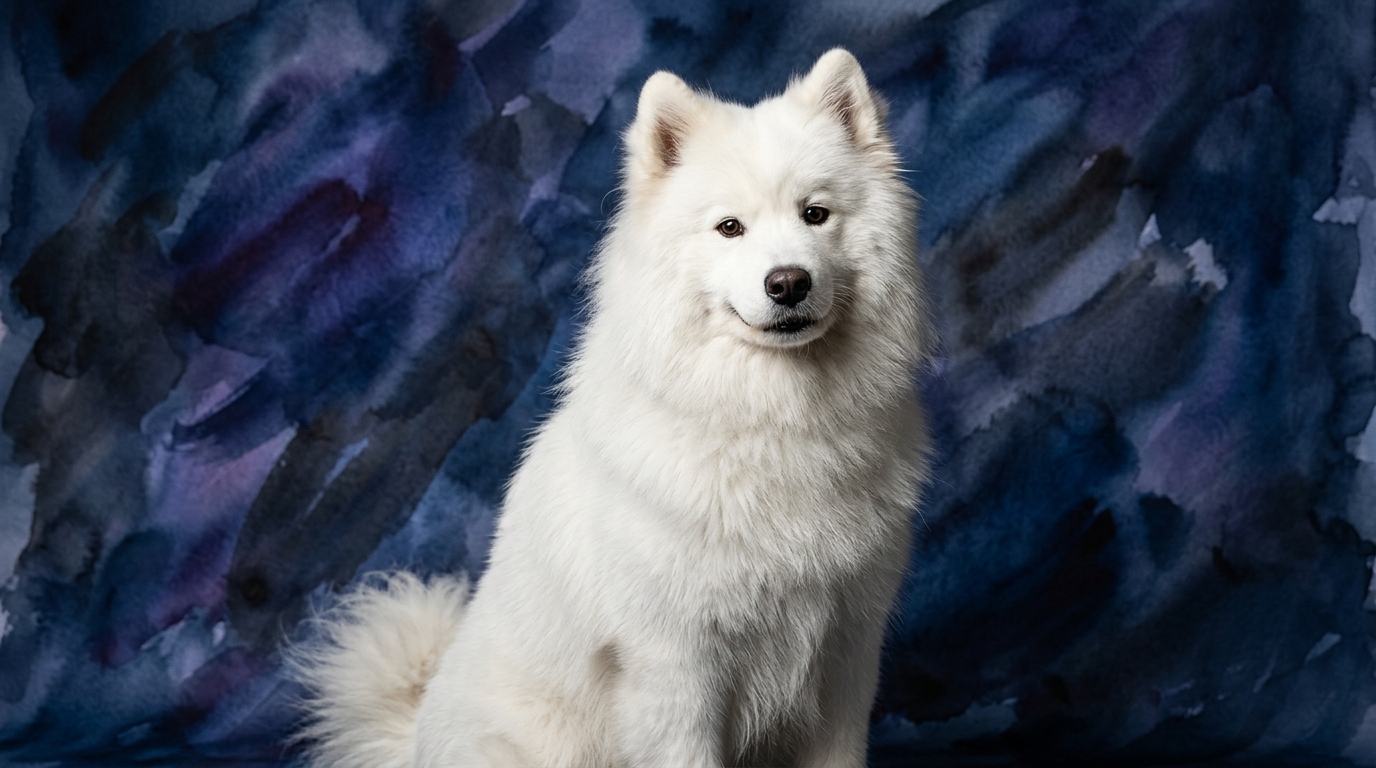
As a member of the Working group, the Samoyed shares a 3/5 in Problem Solving, demonstrating a similar practical, though often more independent, approach to obstacles. Their Training Speed is rated 3/5, suggesting a more deliberate learning pace compared to the Spaniel, while their Social Intelligence matches at 5/5, indicating a strong capacity for bonding and understanding human social signals. Their Instinctive Drive is also 4/5, reflecting their heritage in sledding and herding, but their Memory score of 3/5 implies a need for more consistent reinforcement to maintain learned behaviors over time.
Where Cocker Spaniel Wins Cognitively
The Cocker Spaniel distinctly shines in areas related to cooperative learning and retention, primarily due to their superior scores in Training Speed (4/5) and Memory (4/5) compared to the Samoyed's 3/5 in both categories. This means a Cocker Spaniel typically processes new commands and routines more rapidly, often requiring fewer repetitions before a behavior becomes ingrained. Their quicker acquisition of skills makes them particularly rewarding for owners who enjoy structured training sessions and competitive dog sports, where precision and speed of response are paramount.
This cognitive advantage in training and memory is deeply rooted in their history as gundogs, where a quick, reliable response to handler commands and the ability to remember complex retrieval patterns were essential for success in the field. A Cocker Spaniel's ability to recall a sequence of tasks or maintain focus on a specific objective over extended periods gives them an edge in scenarios demanding consistent, directed performance. Furthermore, their 4/5 memory score ensures that once a lesson is learned, it tends to stick, minimizing the need for constant re-teaching and reinforcing their reputation as eager, cooperative pupils.
Where Samoyed Wins Cognitively
While the Samoyed's raw scores in training speed and memory might not surpass the Cocker Spaniel's, their cognitive strengths lie in a different domain: robust, independent application of their instinctive drives and social intelligence within challenging environments. With a 4/5 Instinctive Drive, Samoyeds possess an inherent motivation for specific tasks, often manifesting as a powerful desire to pull, herd, or explore, which, when channeled appropriately, can be a profound cognitive asset. Their 3/5 Problem Solving, though numerically equal to the Cocker, often expresses itself as a more self-reliant approach, where they might assess a situation and devise a solution based on their own judgment rather than waiting for human direction.
This independence, coupled with their perfect 5/5 Social Intelligence, means Samoyeds are adept at understanding group dynamics and human intentions, yet they retain a strong sense of self-agency. In their ancestral role as sled dogs, this translated into the ability to make critical decisions on the trail, such as navigating treacherous terrain or sensing changes in weather, even when separated from their human handlers. This form of practical, self-directed problem-solving, driven by instinct and informed by social awareness, represents a unique cognitive triumph for the Samoyed, allowing them to thrive in roles demanding resilience and autonomous thinking.
Which is Easier to Train and Why
When evaluating ease of training, the Cocker Spaniel holds a distinct advantage, primarily due to their higher Training Speed (4/5) and Memory (4/5) scores compared to the Samoyed's 3/5 in both categories. Cocker Spaniels were selectively bred to work closely with humans, responding promptly and reliably to commands during hunting expeditions. This historical role cultivated a strong desire to please and an inherent receptiveness to instruction, making them generally more eager to engage in structured training sessions and absorb new information quickly. Their excellent memory ensures that once a command or behavior is learned, it is retained effectively, reducing the need for constant refreshers.
The Samoyed, in contrast, while possessing a strong social intelligence (5/5), comes from a working background that emphasized independence and self-reliance in harsh Arctic conditions. Their 3/5 Training Speed and Memory reflect a more deliberate, sometimes opinionated, learning style. They are capable of learning, but they often require more patience, consistent motivation, and a clear understanding of "what's in it for them." Their strong instinctive drive (4/5) for activities like pulling or exploring can sometimes override compliance with human directives if not managed with positive, engaging training methods. Therefore, while both breeds can be trained, the Cocker Spaniel generally offers a smoother, faster, and more consistently cooperative training experience.
Which Suits Active Owners vs Relaxed Owners
Neither the Cocker Spaniel nor the Samoyed would be ideal for truly "relaxed" owners who prefer minimal interaction and physical activity with their pet, as both breeds possess significant energy and cognitive needs. However, their specific requirements diverge. The Cocker Spaniel, with its Sporting group heritage and strong cooperative drive, thrives with active owners who enjoy engaging in structured activities like obedience, agility, or scent work. They require consistent mental stimulation and daily physical exercise, enjoying long walks, retrieving games, and interactive play that leverages their desire to work alongside their human companions.
The Samoyed, from the Working group, demands a more robust and often outdoor-centric lifestyle. Owners who are genuinely active and enjoy activities such as hiking, jogging, or even urban mushing will find a compatible partner in the Samoyed. Their powerful instinctive drive (4/5) means they require ample opportunities to expend energy and engage their minds, often through exploring or "working" alongside their owner. While they are affectionate companions with a 5/5 social intelligence, their need for substantial, consistent physical outlets makes them a better fit for owners whose definition of "active" involves more vigorous and enduring outdoor pursuits, rather than merely occasional structured play.
The Verdict
Opt for a Cocker Spaniel if you desire a highly cooperative companion eager to learn, quick to pick up new commands, and thrives on structured training and interactive play within a family setting.
Select a Samoyed if you are an adventurous owner seeking a robust, independent, and resilient outdoor partner for vigorous activities, appreciating a companion who sometimes thinks for themselves.
🧠 Find Your Pet's IQ Score
Our Pet IQ Lab assessment covers 25+ tests across 5 cognitive dimensions — personalized to your breed.
Take the Full IQ Test →Frequently Asked Questions
Do Cocker Spaniels get along well with other pets and children?
With a perfect 5/5 Social Intelligence, Cocker Spaniels generally integrate well into multi-pet households and are known for their gentle disposition with children, provided they are properly socialized from a young age. Their cooperative nature makes them adaptable and eager to please, contributing to harmonious family dynamics.
How much exercise does a Samoyed truly need to be content?
Samoyeds possess a 4/5 Instinctive Drive and are from the Working group, meaning they require substantial daily exercise, typically 1-2 hours of vigorous activity such as running, hiking, or long walks, to prevent boredom and destructive behaviors. Their strong build and endurance make them ideal partners for active outdoor enthusiasts.
Is a Samoyed difficult to train because of its independence?
While Samoyeds have a 3/5 Training Speed and Memory, indicating they may take longer to learn and retain commands than some other breeds, their independence isn't an insurmountable barrier. Consistent, positive reinforcement training methods and understanding their working dog mentality can lead to a well-behaved companion, though it requires more patience and creative engagement.