
Side-by-Side IQ Profile: A Cognitive Blueprint
The Cosmic Pet Pet IQ Lab employs a multi-dimensional approach to assess canine intelligence, moving beyond a single score to reveal a nuanced cognitive profile for each breed. For the Cocker Spaniel, ranked #20 in canine working intelligence, their profile reflects a strong aptitude for collaborative tasks. Their Problem Solving is rated 3/5, indicating a capacity for moderately complex puzzles, often seeking human guidance or input. Training Speed at 4/5 means they acquire new commands and routines with relative swiftness, eager to engage. A stand-out Social Intelligence score of 5/5 highlights their exceptional ability to read human cues and intentions, fostering deep, communicative bonds. Their Instinctive Drive, at 4/5, is geared towards their sporting heritage – flushing and retrieving with focus. Finally, Memory at 4/5 ensures they retain learned behaviors and social interactions effectively.
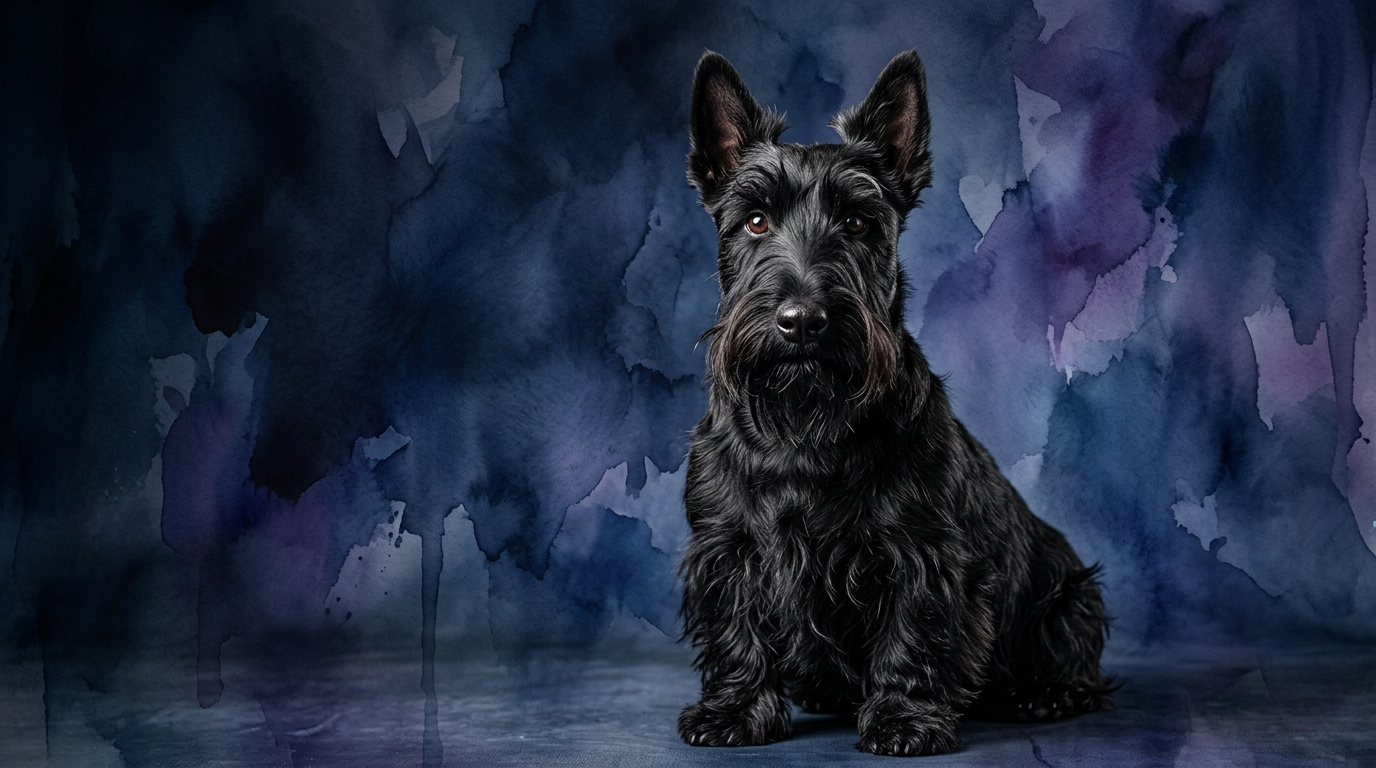
In contrast, the Scottish Terrier, holding a Coren rank of #65, presents a profile rooted in self-reliance and persistence. Their Problem Solving also scores 3/5, but this often manifests as a determined, independent approach to overcoming obstacles, less reliant on human direction. Training Speed is rated 3/5, suggesting a moderate learning pace that requires consistent, engaging methods to capture their attention. Social Intelligence at 3/5 indicates they are observant and form strong bonds with their chosen few, but are generally less outwardly expressive or universally people-focused than a Cocker. Their Instinctive Drive, also 3/5, is powerfully tied to their original purpose of hunting vermin, characterized by digging and chasing with singular focus. Memory at 3/5 means they retain information, though perhaps not with the same effortless recall or immediate association with human instruction as their Sporting counterpart.
Where the Cocker Spaniel Wins Cognitively
The Cocker Spaniel truly shines in areas demanding cooperative intelligence and social attunement. Their perfect 5/5 Social Intelligence score means they are incredibly adept at understanding and responding to human emotions, body language, and verbal cues. This makes them extraordinarily communicative companions, often anticipating their owner's wishes and seeking interaction. This deep social understanding is a significant cognitive advantage, fostering a seamless partnership in daily life and training scenarios.
Furthermore, the Cocker Spaniel's 4/5 Training Speed, combined with their strong social intelligence, makes them exceptionally receptive to learning. They are motivated by pleasing their human and excel in structured environments where they can work alongside their handler. Their 4/5 Memory reinforces this, allowing them to consistently recall a wide repertoire of commands, routines, and social expectations, making them highly adaptable to various training disciplines and household dynamics. This blend of attributes positions them as eager, capable students who thrive on shared mental engagement.
Where the Scottish Terrier Wins Cognitively
While their scores might appear numerically lower in some areas, the Scottish Terrier's cognitive strengths lie in their tenacious independence and focused drive, a testament to their Terrier heritage. Their Problem Solving, rated 3/5, is characterized by a persistent and often self-directed approach. A Scottie confronted with an obstacle, whether it's a puzzle toy or a perceived burrow, will often employ a determined, individual strategy to achieve their goal, rather than immediately looking to a human for assistance. This self-reliance in problem-solving is a distinct cognitive advantage when facing challenges that require grit and autonomy.
Their Instinctive Drive, also 3/5, while not as high as a Sporting dog's, is acutely honed for their specific purpose. This manifests as an intense focus on small movements, a powerful motivation for digging, and an unwavering pursuit of their 'prey' – be it a squirrel or a rogue dust bunny. This focused, self-motivated drive, though potentially challenging for owners, is a cognitive win in terms of their original design, enabling them to work independently and persistently on tasks that resonate with their innate instincts, demonstrating a profound internal motivation that doesn't always require external human direction.
Which Is Easier to Train and Why
Based on their cognitive profiles, the Cocker Spaniel is generally considered easier to train. Their 4/5 Training Speed and exceptional 5/5 Social Intelligence mean they are highly motivated to cooperate with their human partners and quickly grasp new concepts. They thrive on positive reinforcement and are attuned to their owner's desires, making obedience training, trick learning, and even complex tasks a more fluid and rewarding experience. Their strong memory further aids in solidifying learned behaviors, leading to consistent performance.
The Scottish Terrier, with a 3/5 Training Speed and 3/5 Social Intelligence, requires a different approach to training. Their independent nature means they are less inherently driven to please and may question the necessity of a command, especially if it doesn't align with their immediate interests. Training a Scottie demands patience, consistency, and creative motivation, often leveraging their natural curiosity and prey drive in engaging ways. While capable of learning, their progress might be slower, and their compliance less enthusiastic, requiring an owner who appreciates their unique blend of intelligence and spirited autonomy.
Which Suits Active Owners vs. Relaxed Owners
The Cocker Spaniel typically suits owners who appreciate and participate in an active, collaborative lifestyle. Their moderate Instinctive Drive (4/5) for working alongside humans, combined with their high Social Intelligence, means they thrive on structured activities like retrieving games, obedience training, or even dog sports such as agility. They require consistent mental stimulation and physical exercise to be content, and their strong desire for companionship means they do best with owners who can dedicate significant time to interaction and joint activities. They are not necessarily high-strung, but they are certainly not content to be wallflowers.
The Scottish Terrier can suit a range of owners, but perhaps leans more towards those who appreciate a dog's independent spirit. While they require daily walks and mental engagement to satisfy their investigative instincts and natural energy, they are often content to relax indoors once their needs are met. Their independent Problem Solving and Instinctive Drive (3/5 each) mean they might enjoy self-directed exploration in a secure yard or focused scent work, rather than constant, highly structured human-led activities. Owners who understand and respect their self-sufficient nature, providing outlets for their terrier instincts without demanding constant participation, will find a harmonious balance with a Scottie.
The Verdict
Choose a Cocker Spaniel if you seek a highly collaborative, socially attuned companion eager for joint activities and quick to learn structured tasks, thriving on shared engagement.
Choose a Scottish Terrier if you appreciate an independent, persistent companion who will form deep, selective bonds and thrives on self-directed exploration and tenacious problem-solving, even if training requires more creativity.
🧠 Find Your Pet's IQ Score
Our Pet IQ Lab assessment covers 25+ tests across 5 cognitive dimensions — personalized to your breed.
Take the Full IQ Test →Frequently Asked Questions
Are Cocker Spaniels truly 'smarter' than Scottish Terriers?
The Coren rank of #20 for Cocker Spaniels versus #65 for Scottish Terriers indicates that Cocker Spaniels generally excel in cooperative working intelligence and command learning. However, 'intelligence' is multifaceted; while Cocker Spaniels shine in social cues and quick training, Scottish Terriers demonstrate a robust, independent problem-solving ability and tenacity in their own right.
How does the 'instinctive drive' differ between these two breeds?
The Cocker Spaniel's instinctive drive (4/5) is primarily geared towards their sporting heritage, manifesting as a desire to flush and retrieve alongside a human handler. The Scottish Terrier's instinctive drive (3/5) is more self-directed, rooted in their original purpose of hunting vermin, which translates into a strong inclination for digging, chasing, and independent exploration of scents and small movements.
Can a Scottish Terrier be trained for advanced obedience?
Yes, a Scottish Terrier is capable of learning advanced obedience, but it typically requires more consistent effort, patience, and engaging, reward-based methods than with a Cocker Spaniel. Their independent streak means they might not offer the same enthusiastic, immediate compliance, but they are certainly capable of mastering complex tasks with the right, understanding approach.