
Side-by-Side IQ Profile
The Cocker Spaniel, a cherished Sporting Group member, historically assisted hunters in flushing and retrieving game, a role demanding close cooperation and responsiveness. Ranked #20 by Coren, its cognitive profile reflects this heritage: Problem Solving at 3/5 suggests an adaptable mind capable of learning various tasks, though perhaps not consistently innovating novel solutions. Its Training Speed of 4/5 highlights a strong eagerness to please and a quick grasp of commands, making it a receptive student. Social Intelligence, rated 5/5, is a standout trait, indicating a profound attunement to human emotions and social cues, fostering deep bonds. Instinctive Drive at 4/5 points to its inherent drive for scent work and retrieving, yet this is typically manageable within a family context. Memory at 4/5 ensures it retains learned behaviors and associations effectively, contributing to its trainability.
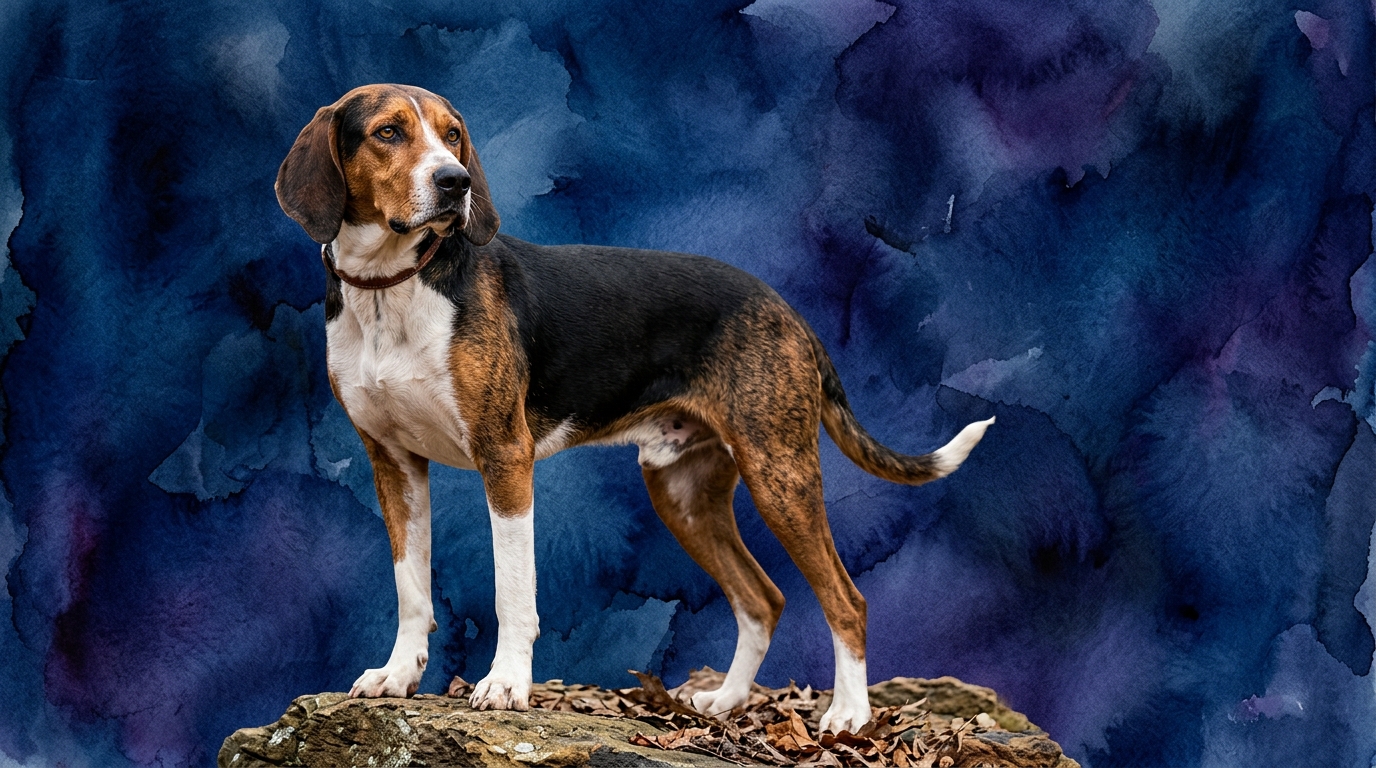
In contrast, the Treeing Walker Coonhound, a dedicated Hound Group member, developed for independent night hunting of raccoons and opossums, exhibits a cognitive makeup optimized for persistence and autonomy. Lacking a Coren rank, its IQ scores paint a picture of a specialized intellect: Problem Solving at 3/5 is geared towards navigating complex scent trails and overcoming environmental obstacles, rather than human-devised puzzles. Training Speed at 3/5 suggests a more independent learner; while capable, its focus can be more on its environment than on human instruction, demanding patient, consistent methods. Social Intelligence at 3/5 indicates it forms bonds but might be less attuned to subtle human social cues, often prioritizing its nose over human interaction during tasks. Instinctive Drive at 3/5 is predominantly a powerful prey drive for tracking and treeing, requiring significant outlets. Its Memory at 3/5 is robust for scents and locations pertinent to its hunting role, but perhaps less for arbitrary human commands if not consistently reinforced.
Where Cocker Spaniel Wins Cognitively
The Cocker Spaniel excels in areas that foster harmonious human-canine cohabitation and partnership. Its superior Social Intelligence (5/5) means it is acutely aware of human moods, intentions, and communication, making it exceptionally empathetic and responsive to its family's emotional landscape. This breed often anticipates needs and seeks interaction, translating into a dog that feels deeply connected and understood. This cognitive strength also underpins its high Training Speed (4/5), as its desire to engage and please humans drives a rapid acquisition of new commands and routines. Furthermore, its Problem Solving (3/5) is often directed towards tasks that involve human cooperation, such as navigating household rules or understanding complex daily schedules, making it highly adaptable to a structured domestic environment. The Cocker's memory (4/5) also ensures that these learned social protocols and commands are retained consistently, fostering reliability.
Where Treeing Walker Coonhound Wins Cognitively
The Treeing Walker Coonhound's cognitive strengths are deeply rooted in its heritage as an independent hunter, particularly in tasks requiring sustained focus and self-reliance in the field. Its Problem Solving (3/5) manifests powerfully in its ability to follow and decipher intricate scent trails over varied terrain, demonstrating exceptional environmental navigation and deductive reasoning specific to its olfactory world. This isn't about solving abstract puzzles but about methodically working through a real-world, dynamic challenge. Its Instinctive Drive (3/5), while lower numerically, is intensely focused on its primary purpose of tracking and treeing, endowing it with remarkable endurance and unwavering determination to complete a scent-driven task. This drive allows it to work independently for extended periods, making complex decisions based on sensory input without constant human direction. Its Memory (3/5) is particularly strong for recalling specific scents, the layout of hunting grounds, and the successful application of tracking strategies, enabling it to learn from experience in its specialized domain.
Which is Easier to Train and Why
The Cocker Spaniel generally presents as the easier breed to train due to a synergistic combination of its cognitive attributes. Its high Social Intelligence (5/5) means it actively seeks to understand and please its human companions, making it highly motivated by positive reinforcement and praise. When a Cocker Spaniel looks to its owner for guidance, it is processing a wealth of social cues that inform its next action. Coupled with a Training Speed of 4/5, this translates into a dog that often grasps new commands quickly and enthusiastically. Behavioral differences reflect this: Cocker Spaniels typically offer sustained attention during training sessions and are less prone to distraction by environmental stimuli, prioritizing human interaction. In contrast, the Treeing Walker Coonhound, with its lower Social Intelligence (3/5) and a strong, independent Instinctive Drive (3/5) geared towards scent work, can be more challenging. Its mind is frequently drawn to the rich olfactory world around it, making sustained focus on human-centric commands more difficult. Training a Coonhound often requires greater patience, creative motivation to compete with environmental distractions, and an understanding that its primary drive is often independent exploration rather than direct human partnership.
Which Suits Active Owners vs Relaxed Owners
For owners seeking a companion that fits into a moderately active or even somewhat relaxed household, the Cocker Spaniel is often the more adaptable choice. While they enjoy walks, playtime, and mental stimulation, their robust Social Intelligence (5/5) means much of their fulfillment comes from interaction with their family. A Cocker Spaniel can be content with a good daily walk, indoor play, and plenty of cuddles, thriving on attention and shared activities. They adapt well to apartment living if their exercise needs are met and they receive ample social engagement. Conversely, the Treeing Walker Coonhound is decidedly suited for active owners who can provide substantial outlets for its inherent drives. Its powerful Instinctive Drive (3/5) and need for physical exertion, particularly opportunities to run and use its nose, mean it requires significant daily exercise. This breed thrives with long runs, scent work games, or even participation in dog sports like tracking or agility. A relaxed, sedentary owner would likely find a Treeing Walker Coonhound to be a restless and potentially destructive companion, as its unmet needs could lead to undesirable behaviors. They are not content with just a quick walk around the block; they need purposeful activity that engages both their body and their specialized mind.
The Verdict
Choose the Cocker Spaniel if you desire a highly responsive, socially attuned companion eager to integrate into family life and participate in cooperative activities. Its cognitive profile makes it an excellent choice for owners who prioritize ease of training and emotional connection.
Opt for the Treeing Walker Coonhound if you are an active, outdoors-oriented individual or family who can provide ample opportunities for physical exertion and scent-driven exploration. This breed thrives with owners who appreciate its independent spirit and specialized working intellect.
🧠 Find Your Pet's IQ Score
Our Pet IQ Lab assessment covers 25+ tests across 5 cognitive dimensions — personalized to your breed.
Take the Full IQ Test →Frequently Asked Questions
Are Cocker Spaniels prone to separation anxiety?
Due to their high social intelligence and deep bonding with humans, Cocker Spaniels can develop separation anxiety if left alone for extended periods without proper training. They thrive on companionship and consistent interaction, so owners should consider their ability to provide this.
Do Treeing Walker Coonhounds need a large yard?
While not strictly requiring a large yard, Treeing Walker Coonhounds do need ample space to run and opportunities for off-leash exercise in secure areas to satisfy their strong instinctive drive. A secure yard is beneficial, but consistent outdoor adventures are more crucial for their well-being.
Which breed is better with children?
Both breeds can be good with children, but the Cocker Spaniel's higher social intelligence and eagerness to please often make it more naturally patient and attuned to a child's temperament. The Treeing Walker Coonhound's independent nature means it needs more careful supervision to ensure its boisterous play style is appropriate for younger children.