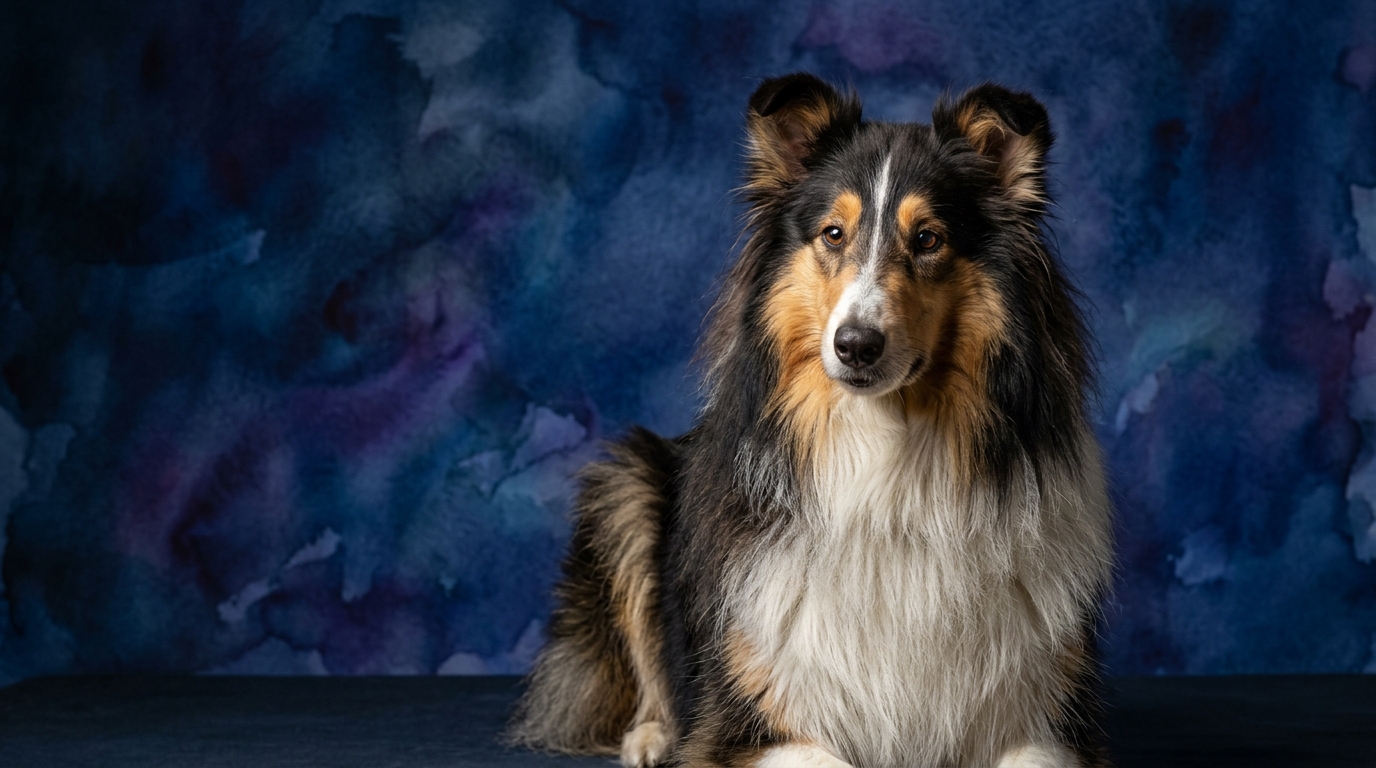
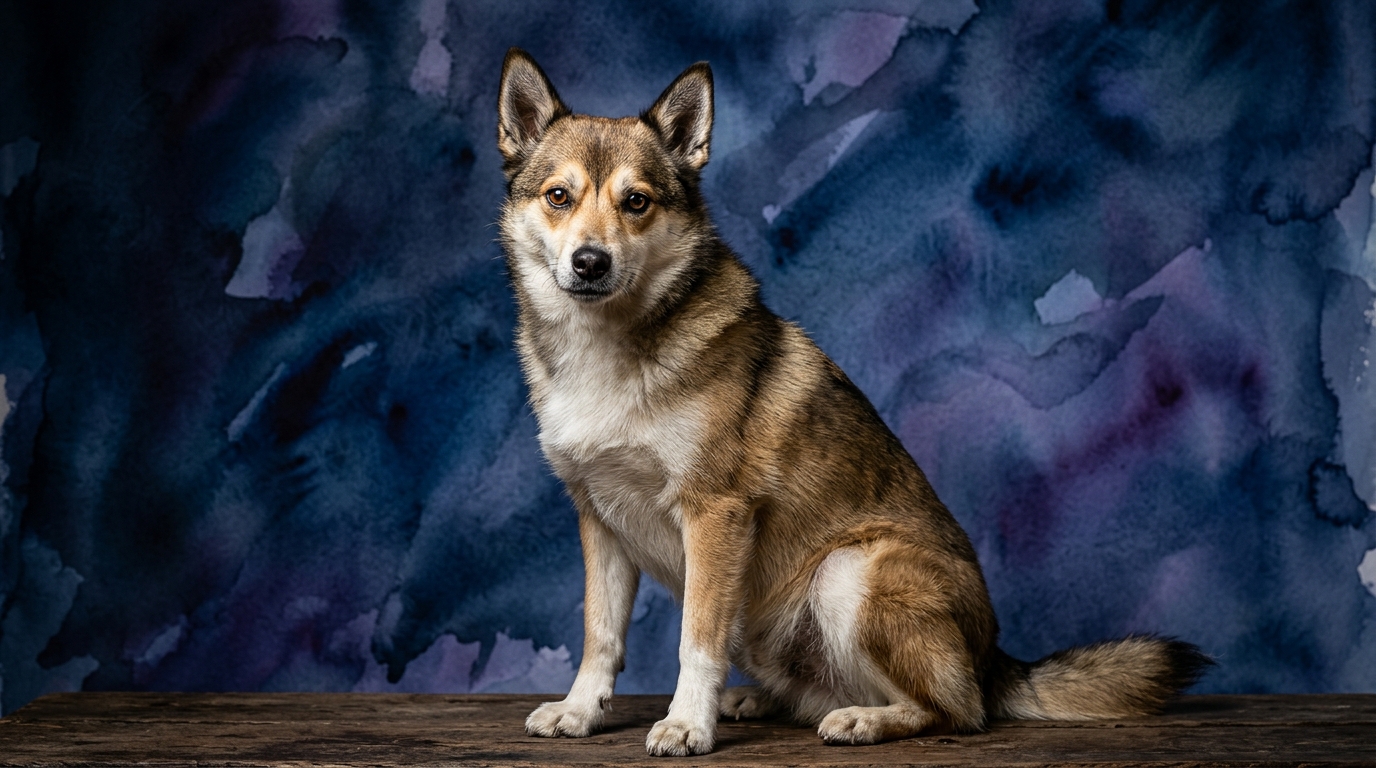
Side-by-Side Cognitive Profiles
The Cosmic Pet Pet IQ Lab provides a nuanced framework for understanding canine intelligence across five key dimensions. For the Collie (Rough), a breed renowned for its herding prowess and companionship, we observe a Problem Solving score of 4/5, indicating a strong capacity for navigating complex situations and learning from experience. Their Training Speed stands at an impressive 4/5, reflecting their eagerness to learn and retain commands efficiently. Social Intelligence is rated 3/5, suggesting a generally agreeable disposition within their family unit, while Instinctive Drive, specifically their herding impulse, also scores 3/5, present but typically manageable. A standout feature is their Memory, earning a perfect 5/5, highlighting their exceptional ability to recall learned behaviors and routines over time.
In contrast, the Norwegian Lundehund presents a profile reflecting its highly specialized origins as a puffin hunter on steep coastal cliffs. This breed is not Coren-ranked, underscoring its unique cognitive framework rather than a broad applicability to general obedience tasks. Its Problem Solving ability is rated 3/5, indicating a resourceful nature tailored to specific environmental challenges rather than abstract puzzles. Training Speed also scores 3/5, suggesting that while capable of learning, they require more patience and understanding of their independent streak. Social Intelligence is 3/5, similar to the Collie, implying they form strong bonds but might be more reserved with strangers. Instinctive Drive is 3/5, which for the Lundehund translates to a powerful exploratory and hunting drive, including climbing and burrowing. Their Memory is rated 3/5, sufficient for their daily needs and survival in challenging terrains, but not as expansive for complex sequences as the Collie’s.
Where the Collie (Rough) Excels Cognitively
The Collie (Rough) demonstrates clear cognitive advantages in areas demanding abstract reasoning, rapid learning, and robust recall. Their Problem Solving score of 4/5, compared to the Lundehund's 3/5, means Collies are more adept at deciphering novel situations and applying learned solutions efficiently, often exhibiting a strategic approach to tasks. This is evident in their historical role as herders, where they needed to understand and execute complex multi-step commands to manage livestock effectively, adapting to dynamic environmental factors.
Perhaps the most striking win for the Collie is in Memory, with a perfect 5/5 against the Lundehund's 3/5. This superior recall allows Collies to retain a vast repertoire of commands, remember specific routines, and recognize individuals and situations with remarkable accuracy over extended periods. For owners, this translates into a dog that reliably remembers its training, even after breaks, and anticipates daily patterns with ease. Coupled with a Training Speed of 4/5, their capacity to quickly absorb and retain information makes them exceptionally responsive and adaptable to a wide array of training disciplines, from advanced obedience to competitive dog sports, where consistency and precision are paramount.
Where the Norwegian Lundehund Shines Cognitively
While the Lundehund's overall IQ scores may appear lower in a general comparison, its cognitive strengths are highly specialized and deeply rooted in its unique evolutionary niche. Its Problem Solving score of 3/5, though numerically lower, reflects a distinct form of spatial and physical intelligence honed for navigating treacherous, vertical environments. These dogs possess an unparalleled ability to assess and conquer difficult terrain, using their extraordinary flexibility and extra toes to climb and descend cliffs with agility that few other breeds can match. This isn't about solving an abstract puzzle, but about physically outmaneuvering their environment, a cognitive feat of practical, embodied problem-solving.
The Lundehund's Instinctive Drive of 3/5, while matching the Collie's, manifests as an intense curiosity and independent exploratory nature. This drive, combined with their specialized physical adaptations (such as being able to tip their heads back to touch their spine or rotate their shoulders to almost a right angle), showcases a unique cognitive-physical synergy. Their intelligence is geared towards independent hunting, burrowing, and self-preservation in harsh conditions, requiring a different kind of resourcefulness and self-reliance. This makes them remarkably adept at independent work and exploration, often demonstrating a persistent, singular focus when pursuing an objective, a cognitive 'win' in terms of self-sufficiency and environmental mastery.
Trainability: Collie's Eagerness vs. Lundehund's Independence
When it comes to ease of training, the Collie (Rough) generally presents a more straightforward experience for most owners. Their Training Speed of 4/5, combined with a strong desire to please their handlers, means they typically pick up new commands and behaviors quickly. Collies thrive on mental stimulation and positive reinforcement, often eager to engage in training sessions and demonstrating a high degree of focus. Their background as herding dogs instilled a cooperative spirit and a responsiveness to human direction, making them excellent candidates for obedience, agility, and other canine sports where precision and teamwork are key.
The Norwegian Lundehund, with a Training Speed of 3/5, requires a different approach. Their historical role as independent hunters meant they often worked without direct human supervision, fostering a self-reliant and sometimes stubborn streak. Training a Lundehund demands significant patience, consistency, and a deep understanding of positive reinforcement techniques. They are intelligent and capable of learning, but they may question the necessity of a command or be easily distracted by their environment, especially if their strong exploratory instincts are engaged. Behavioral differences like their tendency to 'Lundehund bark' (a high-pitched, excited sound) or their digging habits are instinctual and require consistent, gentle guidance to manage, rather than simply suppress, making training more of a partnership with a unique individual.
Matching Breeds to Lifestyles: Active vs. Relaxed Owners
For active owners seeking a highly engaged and trainable companion, the Collie (Rough) is an excellent match. Their Problem Solving (4/5) and Memory (5/5) capabilities mean they thrive on mental challenges, making them ideal partners for dog sports like obedience, agility, rally, or even therapy work. Their need for regular physical activity, combined with their desire for human interaction, means they integrate seamlessly into a lifestyle that includes daily walks, play sessions, and ongoing training. They enjoy being part of family activities and are generally adaptable to various environments, provided they receive sufficient mental and physical engagement.
The Norwegian Lundehund, while possessing an active and exploratory nature, suits a different kind of owner. Their independence and specialized instincts mean they are often best suited for owners who appreciate a dog with a unique personality and are prepared for a companion that might not always be eager to please in a conventional sense. Owners who enjoy exploring varied terrains, perhaps hiking or scrambling, and who can provide secure outdoor spaces for their Lundehund to satisfy its natural climbing and digging instincts, will find a rewarding partnership. They are not necessarily for 'relaxed' owners in terms of minimal activity, but rather for those relaxed about strict obedience and who value a more self-directed canine presence in their lives, appreciating their quirky independence rather than demanding constant engagement.
The Verdict
Choose the Collie (Rough) if you desire a highly trainable, responsive companion for obedience, dog sports, and a family life centered around consistent engagement and mental challenges.
Opt for the Norwegian Lundehund if you appreciate a unique, independent, and physically adept companion, valuing their specialized problem-solving and exploratory drive over conventional obedience.
🧠 Find Your Pet's IQ Score
Our Pet IQ Lab assessment covers 25+ tests across 5 cognitive dimensions — personalized to your breed.
Take the Full IQ Test →Frequently Asked Questions
Are Norwegian Lundehunds difficult to train due to their independence?
Norwegian Lundehunds can be more challenging to train compared to breeds like the Collie due to their independent nature and historical role as solitary hunters. They require patience, positive reinforcement, and a consistent approach, as they may question commands or be easily distracted by their environment. Their intelligence is geared towards self-sufficiency rather than eager compliance.
Which breed is better for a family with children?
The Collie (Rough) is generally considered an excellent family dog, often gentle and patient with children, making them a very suitable choice for families. The Norwegian Lundehund can also be good with children, especially if raised with them, but their sometimes reserved nature and strong independent streak mean they might not be as universally tolerant or openly affectionate with all family members or guests.
Do either of these breeds require significant grooming?
Yes, both breeds require regular grooming, though for different reasons. The Collie (Rough) has a long, dense double coat that needs frequent brushing (several times a week) to prevent mats and reduce shedding. The Norwegian Lundehund has a shorter, harsher double coat that is easier to maintain, requiring weekly brushing, but they do shed seasonally.