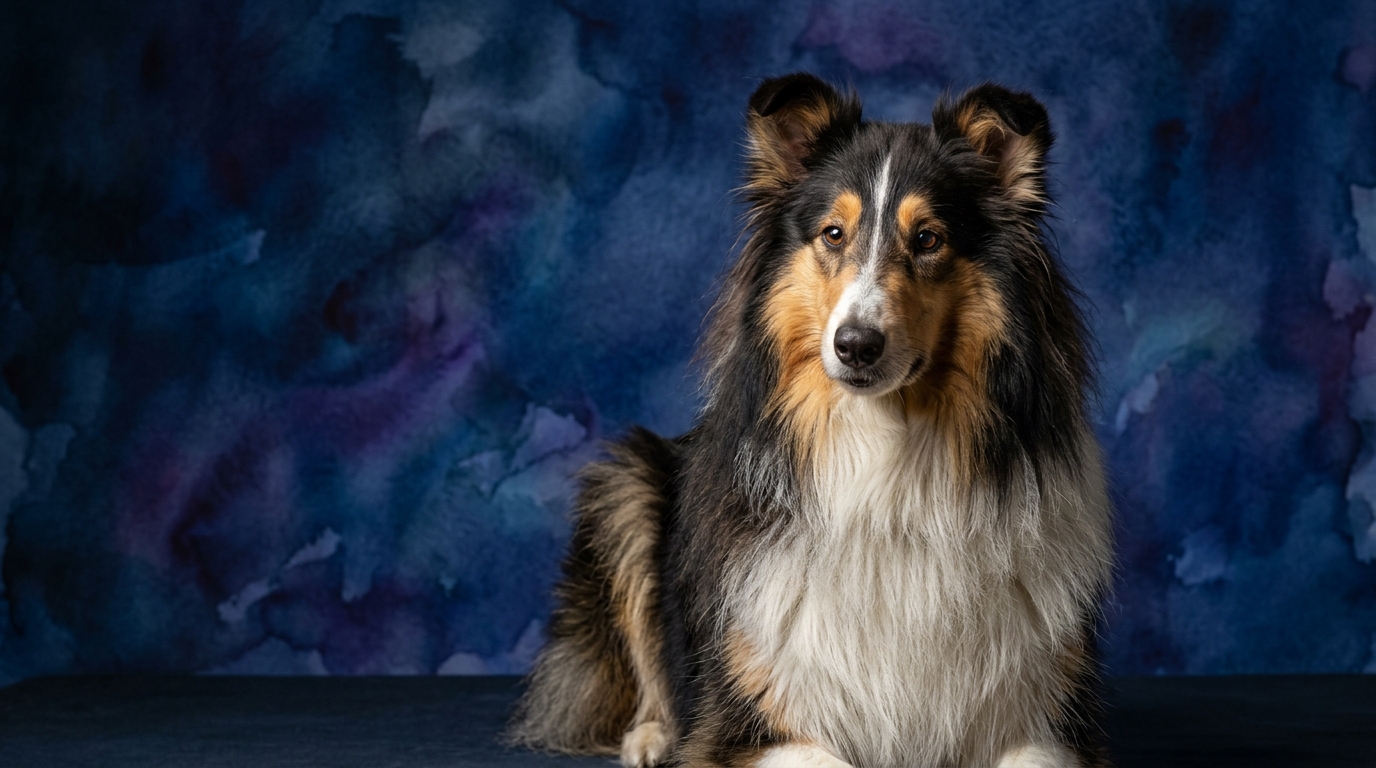
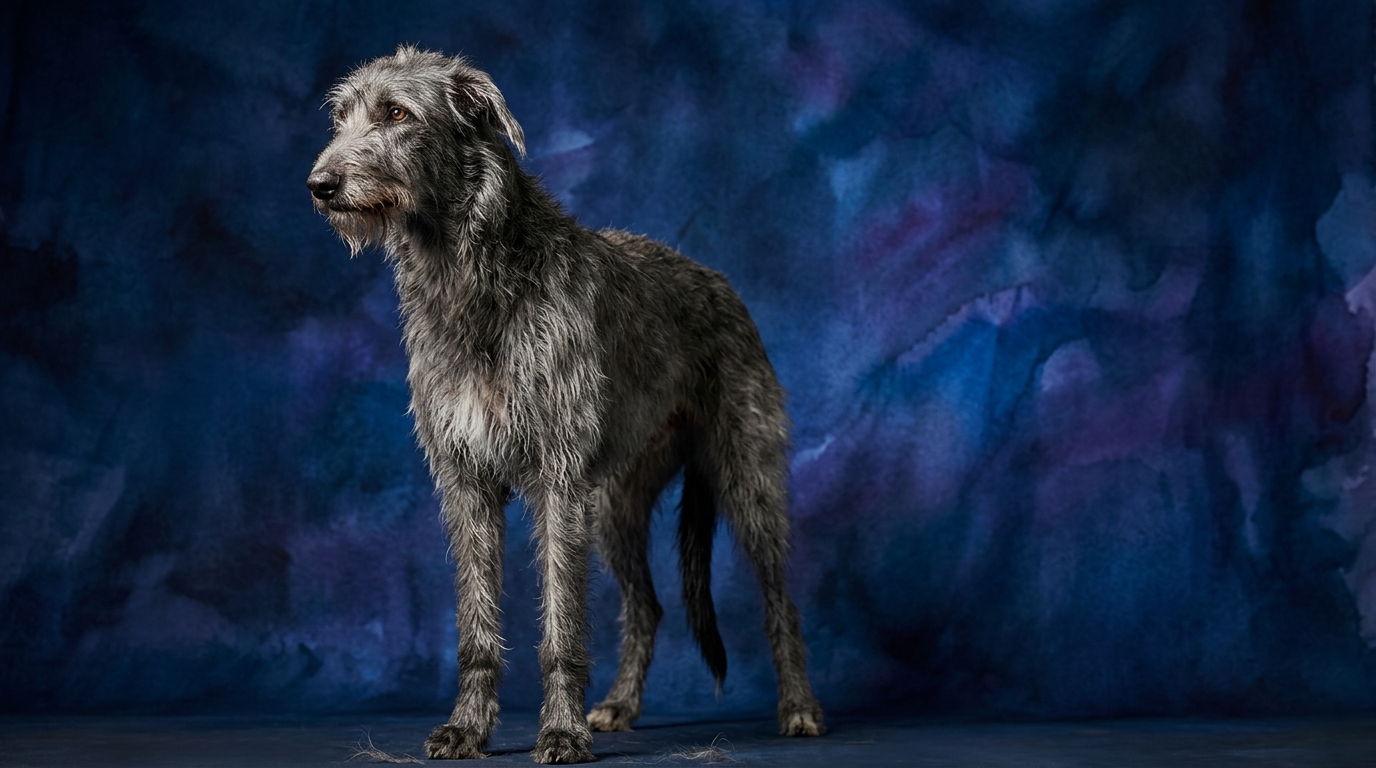
Side-by-side IQ profile
The Collie (Rough), holding a notable Coren rank of #16, exhibits a cognitive profile tailored for cooperative work and learning. Its Problem Solving is rated 4/5, indicating a strong capacity for navigating complex situations and devising solutions, while its Training Speed, also 4/5, signifies a quick assimilation of new commands and routines. Social Intelligence for the Collie stands at 3/5, reflecting a solid understanding of human cues and social dynamics, fostering strong bonds. Their Instinctive Drive is 3/5, a moderate yet present herding instinct geared towards grouping and controlling movement. A standout feature is their Memory, an exceptional 5/5, demonstrating remarkable recall of learned information and experiences.
In contrast, the Scottish Deerhound, not listed in Coren's rankings, expresses its intelligence through a different lens, shaped by its sighthound heritage. Its Problem Solving is rated 3/5, indicating an ability for independent thought and challenge resolution, often focused on its primary drive. Training Speed also sits at 3/5, suggesting a steady learning pace that benefits from consistent and engaging methods. Social Intelligence for the Deerhound is 3/5, displaying a gentle and perceptive nature that understands social interactions with quiet dignity. Their Instinctive Drive, 3/5, is a strong sighthound predisposition primarily focused on spotting and pursuing movement. The Deerhound's Memory is 3/5, retaining information adequately, though perhaps less focused on intricate details compared to the Collie.
Where Collie (Rough) wins cognitively
The Collie (Rough) distinctly shines in its cognitive architecture, particularly in areas demanding retention and adaptive learning. Its exceptional memory, rated at 5/5, means a Collie not only learns a new command swiftly but retains that knowledge with remarkable fidelity over long periods, making advanced training and complex routines accessible. This breed's problem-solving acumen, scoring 4/5, allows it to analyze novel situations and devise effective strategies, whether figuring out how to open a gate or understanding a sequence of tasks. Coupled with a training speed of 4/5, the Collie (Rough) processes and internalizes new information rapidly, translating lessons into consistent behavior with fewer repetitions than many other breeds. This cognitive suite makes them adept at precision work, such as competitive obedience or intricate agility courses, where consistent recall and quick decision-making under pressure are paramount.
Where Scottish Deerhound wins cognitively
While the Scottish Deerhound's cognitive scores might not align with the Collie's in traditional obedience metrics, its unique intellect is deeply rooted in its ancient purpose as a sighthound. The Deerhound's instinctive drive, rated 3/5, is a specialized form of intelligence centered on acute visual perception, rapid processing of movement, and an inherent understanding of pursuit dynamics. This isn't about solving abstract puzzles but an unparalleled ability to spot distant prey, calculate trajectories, and execute a chase with breathtaking efficiency. Their problem-solving (3/5) often manifests in an independent, self-reliant manner, making quick, on-the-spot decisions in open spaces without constant human direction. Their social intelligence (3/5) allows them to form deep, gentle bonds, understanding subtle emotional cues without the overt 'eagerness to please' seen in some working breeds, fostering quiet, dignified companionship. The Deerhound's cognitive strengths lie in its profound connection to primal senses and capacity for graceful, independent action, showcasing a different yet equally valid form of canine brilliance focused on perception and swift, decisive physical response.
Which is easier to train and why
Comparing training ease, the Collie (Rough) demonstrably holds an advantage due to its higher scores in Training Speed (4/5) and Memory (5/5). A Collie grasps new commands with remarkable alacrity, often requiring fewer repetitions to solidify a behavior. Their exceptional memory ensures that once a lesson is learned, it's rarely forgotten, leading to consistent performance over time. This makes them highly responsive to verbal cues and hand signals, thriving on structured training sessions and excelling in activities like obedience trials or service work. In contrast, the Scottish Deerhound, with a Training Speed of 3/5 and Memory of 3/5, learns at a more measured pace. While perfectly trainable, they often require more patience, consistency, and engaging methods to master new tasks. Their independent nature, stemming from their sighthound heritage, means they might choose to comply based on their own assessment rather than immediate eagerness. Training a Deerhound often benefits from positive reinforcement and making the process fun, as they can become bored with repetitive drills. The Collie's inherent drive to work closely with its handler and superior cognitive retention makes the training journey generally smoother.
Which suits active owners vs relaxed owners
When considering lifestyle compatibility, the Collie (Rough) typically suits owners who appreciate a moderate level of daily engagement and mental stimulation. While their instinctive drive (3/5) is present, it's often directed towards partnership and activity. They thrive on regular walks, structured play, and opportunities to use their problem-solving skills, such as learning new tricks or participating in dog sports like agility or rally. Their desire for companionship and mental work means they are not content to be mere couch potatoes; they need purpose and interaction. Conversely, the Scottish Deerhound, despite its impressive speed and hunting heritage, can be surprisingly well-suited for more relaxed owners, provided their specific needs are met. Their instinctive drive (3/5) is primarily focused on bursts of intense, short-duration activity – a sprint in a secure, expansive area is often more fulfilling than a long, meandering hike. After these bursts, Deerhounds are generally calm, dignified, and enjoy lounging. Owners who can provide a safe space for them to gallop freely a few times a week, combined with quiet companionship at home, will find the Deerhound a content, dignified housemate. They don't typically demand constant mental tasks, preferring a peaceful coexistence.
The Verdict
Choose the Collie (Rough) if you desire a highly responsive, trainable companion eager for consistent mental engagement, excelling in structured activities and thriving on a close working partnership.
Opt for the Scottish Deerhound if you appreciate a noble, gentle giant with an independent spirit, content with occasional explosive sprints and quiet, dignified companionship at home.
🧠 Find Your Pet's IQ Score
Our Pet IQ Lab assessment covers 25+ tests across 5 cognitive dimensions — personalized to your breed.
Take the Full IQ Test →Frequently Asked Questions
Is the Scottish Deerhound difficult to train due to its lower Coren ranking?
The Scottish Deerhound is not difficult to train, but its intelligence manifests differently than a traditional working breed. Its independent sighthound nature means training requires patience, positive reinforcement, and understanding its distinct motivations, rather than expecting immediate, eager compliance.
Do both breeds require a lot of exercise?
Both breeds benefit from regular exercise, but their needs differ. The Collie (Rough) requires consistent daily walks and mental engagement, while the Scottish Deerhound needs opportunities for full-speed sprints in a safe, enclosed area a few times a week, balanced with significant periods of rest.
Which breed is better with children?
Both breeds can be good with children, given proper socialization and training. The Collie (Rough) is often more overtly playful and tolerant, while the gentle Scottish Deerhound is typically calm and patient, though their large size means supervision is always wise with very young children.