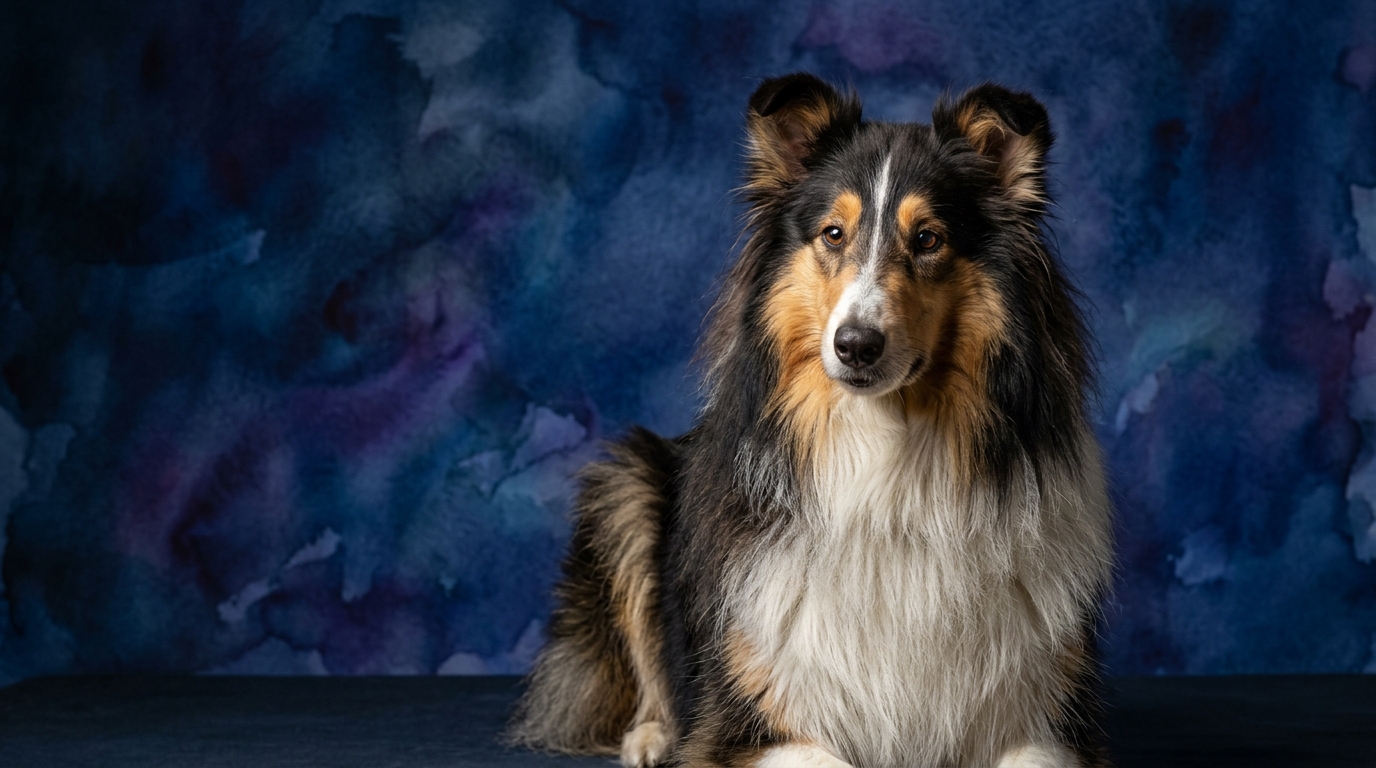
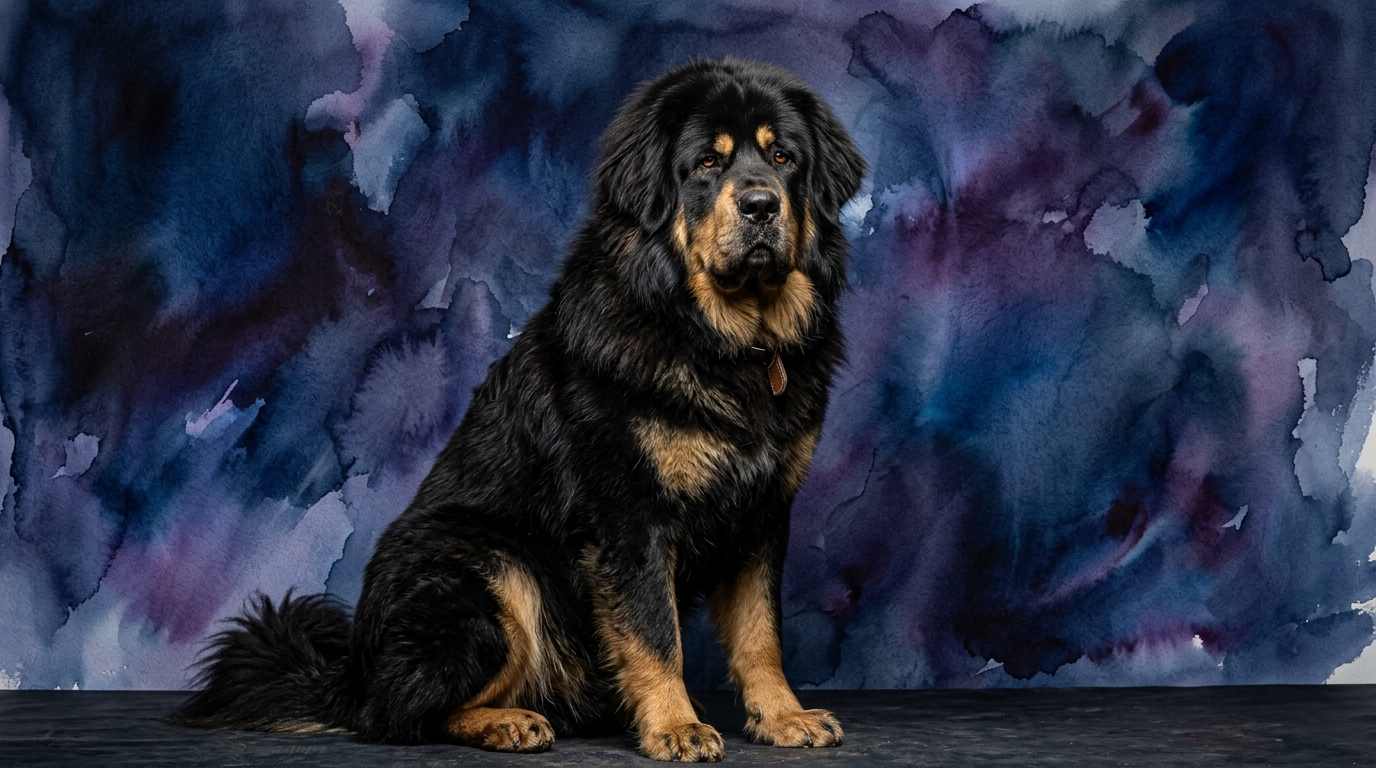
Side-by-Side Cognitive Profiles: Collie (Rough) vs. Tibetan Mastiff
Our Cosmic Pet Pet IQ Lab employs a five-dimensional framework to assess canine intelligence, offering a nuanced view beyond simple obedience. For the Collie (Rough), a breed deeply rooted in herding, its cognitive blueprint reflects centuries of collaboration with humans, earning it a notable Coren ranking of #16. The Tibetan Mastiff, a powerful guardian breed, operates with a different set of priorities, often valuing independent judgment over human-directed tasks, and thus is not included in Coren's traditional obedience-focused ranking.
Let's break down their respective scores:
**Collie (Rough) Cognitive Profile:**
Problem Solving (4/5): This breed demonstrates a strong capacity for figuring out novel situations, often connecting cause and effect to overcome challenges, a trait honed by managing livestock.
Training Speed (4/5): Rough Collies grasp new commands and routines with impressive swiftness, requiring fewer repetitions to solidify learning, making them highly receptive to instruction.
Social Intelligence (3/5): While attuned to human cues and capable of forming deep bonds, their social understanding is more about cooperative partnership than deep empathy or complex social manipulation.
Instinctive Drive (3/5): Their herding instinct is present but generally manageable, channeled into structured activities or controlled environments rather than overwhelming their daily interactions.
Memory (5/5): This breed exhibits a remarkable ability to recall a vast array of commands, locations, and past experiences, enabling complex sequential tasks and consistent performance over time.
**Tibetan Mastiff Cognitive Profile:**
Problem Solving (3/5): Tibetan Mastiffs are capable of solving problems, particularly those related to guarding their territory or resources. However, their solutions often stem from an independent, self-reliant approach rather than seeking human guidance.
Training Speed (3/5): They learn at a moderate pace, requiring consistent and patient repetition. Their learning is often motivated by perceived value or necessity, rather than an inherent desire to please.
Social Intelligence (3/5): Their social intelligence is primarily geared towards discerning friend from foe within their guarded domain, often displaying aloofness towards strangers while being devoted to their immediate family. This is more about discernment than eager interaction.
Instinctive Drive (3/5): The Tibetan Mastiff possesses a strong, ancient guarding instinct that is deeply ingrained. This drive dictates much of their behavior, particularly territoriality and protectiveness, which requires careful management.
Memory (3/5): They have a functional memory, recalling individuals and past events relevant to their guarding duties or daily routines, but may not retain complex, multi-step commands with the same precision as other breeds.
Where the Collie (Rough) Shines Cognitively
The Rough Collie's cognitive strengths are most apparent in its aptitude for rapid learning and exceptional memory retention. With a training speed score of 4/5, these dogs process new information and associate actions with commands quickly, often requiring fewer repetitions than many other breeds to master a new skill. This makes them particularly adept at advanced obedience, agility, and other dog sports where precision and prompt execution are paramount. Their 5/5 memory score means they don't just learn quickly, they remember for the long haul, allowing them to build an extensive repertoire of behaviors and reliably perform complex sequences of commands over extended periods.
Furthermore, their problem-solving ability (4/5) is often applied in a cooperative context, allowing them to interpret human instructions to navigate obstacles or achieve specific goals, such as finding a lost item or guiding livestock. This collaborative intelligence, coupled with their strong memory, establishes the Rough Collie as a highly trainable and responsive companion, capable of intricate work and consistent performance in structured environments.
Where the Tibetan Mastiff Demonstrates Unique Strengths
The Tibetan Mastiff's cognitive prowess, while different from the Collie's, is equally effective within its specialized role. Its problem-solving (3/5) is often applied independently, particularly in scenarios concerning territorial defense or assessing potential threats. This breed can make sound judgments on its own, deciding how to best protect its domain without constant human direction, a critical trait for a guardian. Their social intelligence (3/5) is finely tuned to evaluate strangers, distinguishing between benign visitors and perceived intruders, rather than focusing on eager interaction or complex social games.
Their instinctive drive (3/5) for guardianship is a profound cognitive asset. This isn't just a physical tendency; it's a deep-seated mental framework that informs their decision-making, spatial awareness, and vigilance. While their training speed and memory scores are moderate (3/5), their learning is often deeply rooted when it aligns with their protective instincts. They might not learn a trick as fast, but they will remember who belongs and who doesn't with unwavering consistency, and how to respond to perceived threats effectively and autonomously. This independent, discerning intellect makes them formidable and reliable protectors.
Training Aptitude: Which Breed is Easier and Why?
When considering ease of training, the Collie (Rough) generally presents a smoother journey for most owners. Their 4/5 training speed and 5/5 memory mean they absorb commands rapidly and retain them consistently. This breed is eager to engage, responsive to positive reinforcement, and thrives on the mental stimulation that comes with learning new tasks. Their herding background has ingrained a strong desire to work in partnership with a handler, making them naturally inclined to follow direction and execute commands with precision. They are often forgiving of minor handler inconsistencies and recover quickly from mistakes.
The Tibetan Mastiff, by contrast, requires a different approach. Their 3/5 training speed and 3/5 memory mean they will need more patience, consistency, and a clear understanding of their motivations. These dogs are independent thinkers; they learn, but they often weigh the value of a command against their own judgment or instinct. Rote obedience for the sake of it is less appealing to them. Training must be built on trust, respect, and clear leadership, focusing on shaping desired behaviors rather than forcing compliance. Their inherent guardian drive means they might prioritize patrolling the perimeter over perfecting a 'stay,' requiring an owner who understands and respects their intrinsic nature while gently guiding them.
Lifestyle Match: Active Engagement vs. Independent Guardianship
The Rough Collie is an ideal match for active owners who relish engaging deeply with their canine companions. Their cognitive profile, particularly their problem-solving and memory, makes them excel in activities that demand mental and physical participation, such as obedience trials, agility, rally, and even therapy work. They thrive on having a 'job' and benefit immensely from consistent training and interactive play that stimulates their keen intellect. Owners who enjoy teaching new skills, exploring varied environments, and fostering a close working partnership will find the Rough Collie a rewarding and responsive companion. They adapt well to family life and are generally eager to be involved in daily activities, requiring mental engagement as much as physical exercise.
The Tibetan Mastiff suits owners who appreciate and can accommodate an independent, discerning guardian. While they do require regular exercise, their cognitive needs lean more towards purposeful patrolling and assessing their environment rather than high-octane sports. Owners must provide secure boundaries, understand their strong protective instincts, and be prepared for a dog that will make its own judgments about situations. They are not typically dogs for casual off-leash park visits or constant social interaction with strangers. An ideal owner is one who seeks a steadfast, loyal protector, understands the breed's historical role, and can provide a calm, structured environment where its natural guardian tendencies can be managed responsibly, often with a more relaxed, observant approach to companionship.
The Verdict
Choose the Collie (Rough) if you seek a highly trainable, cooperative companion eager for mental challenges and shared activities, excelling in rapid learning and memory.
Opt for the Tibetan Mastiff if you desire a self-reliant, discerning guardian with strong protective instincts, valuing independent judgment and a more reserved companionship.
🧠 Find Your Pet's IQ Score
Our Pet IQ Lab assessment covers 25+ tests across 5 cognitive dimensions — personalized to your breed.
Take the Full IQ Test →