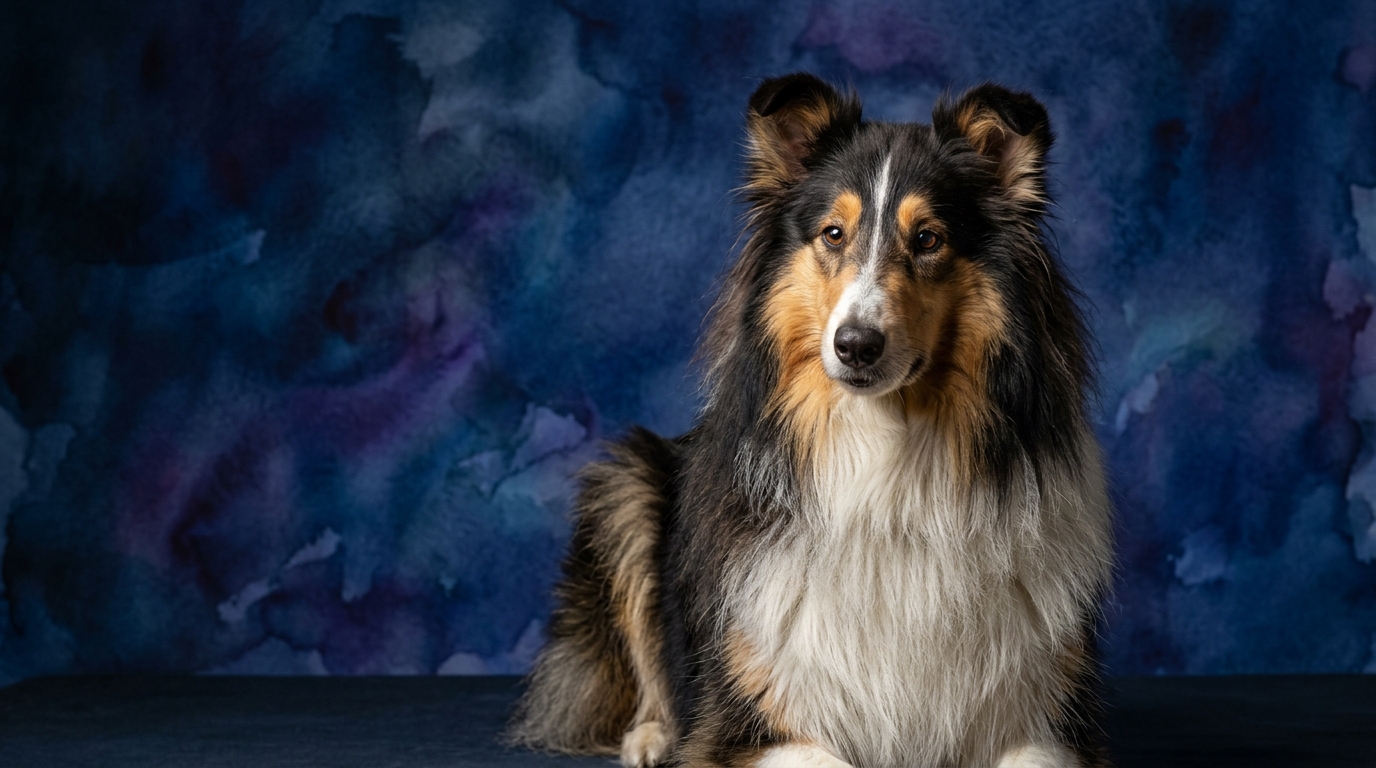
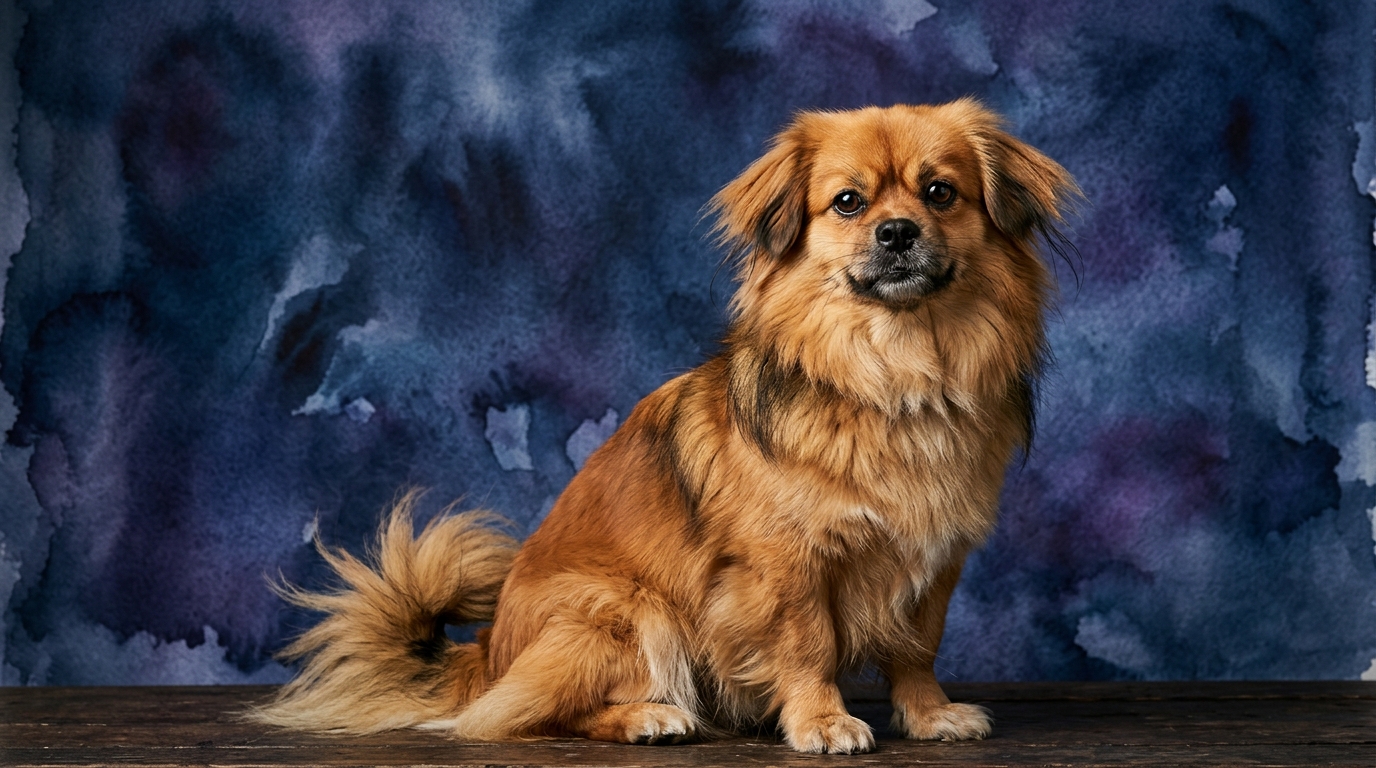
Side-by-Side IQ Profile: Collie (Rough) vs. Tibetan Spaniel
The Cosmic Pet Pet IQ Lab employs a five-dimensional framework to assess canine intelligence, moving beyond simple obedience scores to reveal a more nuanced cognitive landscape. For the Collie (Rough), a breed historically valued for its working acumen, and the Tibetan Spaniel, a cherished companion, these dimensions highlight distinct mental aptitudes.
The Collie (Rough), recognized with a Coren rank of #16 for its working and obedience intelligence, demonstrates a robust cognitive profile. Its Problem Solving is rated 4/5, indicating an excellent capacity to analyze novel situations, devise effective strategies, and adapt its approach to overcome obstacles, often showing remarkable initiative. Training Speed is also 4/5, meaning Collies grasp new commands and complex routines with impressive swiftness, typically requiring fewer repetitions to solidify learning and exhibiting a focused attention span during instructional periods. Social Intelligence stands at 3/5, reflecting a solid understanding of human cues, emotional states, and social dynamics, allowing them to form deep bonds and respond appropriately within a family setting. Instinctive Drive is 3/5, manifesting as a moderate but purposeful herding instinct, which can translate into a desire to gather, control movement, or engage in goal-oriented tasks. Finally, Memory is an outstanding 5/5, signifying an exceptional ability to retain learned behaviors, intricate sequences, and past experiences over long durations, making advanced training highly rewarding and enduring.
The Tibetan Spaniel, while not Coren-ranked, possesses a unique cognitive makeup perfectly suited for its role as a watchful companion. Its Problem Solving is rated 3/5, indicating a moderate ability to navigate new challenges or puzzles, often employing observation and a steady trial-and-error approach, though they may benefit from more guidance than breeds with higher scores. Training Speed is 3/5, meaning Tibetan Spaniels learn at a consistent pace, mastering commands with positive reinforcement and patience, but generally requiring more repetitions to firmly embed new behaviors. Social Intelligence is 3/5, on par with the Collie, allowing them to connect deeply with their human family, discern moods, and adapt well to various social situations, forming affectionate and responsive relationships. Instinctive Drive is 3/5, primarily expressed as an alert and observant nature, typical of a historical watch and companion dog, rather than a strong working drive, manifesting as attentiveness to their surroundings and a desire for proximity to their people. Memory is 3/5, indicating good retention of routine commands and past experiences, though more complex lessons might require occasional refreshers to maintain proficiency.
Where the Collie (Rough) Shines Cognitively
The Collie (Rough)'s cognitive strengths are particularly evident in its superior Problem Solving (4/5 versus 3/5), Training Speed (4/5 versus 3/5), and especially its outstanding Memory (5/5 versus 3/5). These attributes are deeply rooted in its herding lineage, where dogs needed to make quick, independent decisions, learn intricate patterns for flock management, and remember complex commands over vast and varied terrains. This breed's capacity for complex problem-solving means it can process multi-step tasks, figure out how to open childproof latches, or navigate an elaborate agility course with impressive efficiency. They are not simply following instructions; they are actively engaging their minds to achieve a goal.
Their quicker training speed means less time is spent on repetition and more on advancing to sophisticated behaviors. This makes them ideal candidates for competitive dog sports like obedience, rally, or herding trials, where precision and rapid learning are paramount. Coupled with a 5/5 memory, a Collie (Rough) can retain these advanced skills for years, often needing minimal refreshers. An owner can teach a Collie a complex sequence of tricks, put it aside for months, and find the dog still remembers most of the routine. This cognitive permanence allows for a deeper and more progressive training journey, enabling the Collie to continuously build upon its knowledge base without significant decay.
Where the Tibetan Spaniel's Cognitive Profile Excels
While the Tibetan Spaniel's numerical scores are not higher than the Collie's, its cognitive profile is uniquely suited for its role, leading to distinct advantages for specific lifestyles. The Tibetan Spaniel's moderate Problem Solving (3/5) and Training Speed (3/5), combined with its balanced Instinctive Drive (3/5), mean it is a less mentally demanding companion in certain aspects. Unlike a breed with a strong working drive and high problem-solving, the Tibetan Spaniel isn't constantly seeking complex mental puzzles or a 'job' to prevent boredom, which can be a significant advantage for owners who prefer a more relaxed daily routine.
Its cognitive balance fosters a contentment with its role as a watchful, affectionate presence rather than a canine intellectual constantly pushing boundaries. This means a Tibetan Spaniel is less likely to 'outthink' an inexperienced owner or develop complex behavioral patterns that stem from under-stimulation, making it a more predictable and manageable companion for many households. Their steady social intelligence (3/5) ensures they are highly attuned to their family's needs without an overwhelming need for constant, high-level mental engagement, providing companionship that is both responsive and undemanding from a cognitive stimulation standpoint. Their moderate memory also means they remember household rules and routines well enough for a harmonious home life, without the intense drive that might lead to more intricate mischief.
Ease of Training: Behavioral Differences
When considering ease of training, it's crucial to differentiate between training for complex tasks versus training for basic household manners. The Collie (Rough) is generally easier to train for advanced obedience, intricate tricks, and competitive dog sports due to its higher Training Speed (4/5) and exceptional Memory (5/5). They grasp new concepts quickly and retain them over time, often showing a keen desire to participate in structured learning sessions. Their problem-solving ability allows them to generalize learned behaviors to new contexts more readily, meaning a command learned in the living room is likely to be understood in the park. Their herding drive, while present, can be effectively channeled into structured activities, making them eager and focused students who thrive on having a 'job' to do.
The Tibetan Spaniel, with a Training Speed of 3/5 and Memory of 3/5, requires more patience and consistency for training, but this doesn't equate to difficulty for basic companionship. They are highly trainable for household manners, leash walking, and basic commands, but may need more repetitions and a slower pace to solidify learning. Their moderate instinctive drive means they aren't constantly looking for intense mental work, which can simplify training for a pet owner who isn't seeking a competitive partner. While they might not pick up complex sequences as rapidly as a Collie, their focus is often on being a cherished member of the family, making them responsive to positive reinforcement centered around social bonding. Their less intense problem-solving means they are less likely to try and 'outsmart' their owner in training scenarios, leading to a more straightforward learning dynamic for many.
Suitability for Active vs. Relaxed Owners
For active owners seeking a canine partner for sports, adventure, and continuous mental engagement, the Collie (Rough) is an exceptional match. Their superior problem-solving, rapid training speed, and outstanding memory mean they thrive on significant mental stimulation and physical activity. They excel in dog sports like agility, obedience, and rally, enjoy long hikes, and benefit immensely from complex training regimes that challenge their impressive cognitive abilities. An active owner can fully engage the Collie's mind, preventing boredom and channeling its natural drives into constructive outlets, leading to a deeply fulfilled and responsive companion.
Conversely, the Tibetan Spaniel is an ideal fit for relaxed owners who appreciate a steady, affectionate companion without the need for intense daily mental challenges or extensive outdoor activities. Their balanced cognitive profile makes them content with moderate exercise, such as daily walks and indoor play, and they find great satisfaction in simply being close to their family. While they enjoy learning and can certainly participate in some activities, their contentment stems more from social interaction and being a watchful presence than from fulfilling a strong working drive. They are well-suited for apartment living or homes with less active lifestyles, providing loyal companionship without demanding constant, high-level cognitive engagement.
The Verdict: When to Choose Each Breed
The Verdict
Choose the Collie (Rough) if you desire a highly engaged canine partner eager for complex training, dog sports, and a significant mental challenge, as their impressive memory and problem-solving abilities thrive with purposeful activities. They are best for owners who can dedicate time to channeling their cognitive strengths into a rich, stimulating life.
Choose the Tibetan Spaniel if you seek a steady, affectionate companion who learns at a moderate pace and is content with being a watchful, loving presence rather than a demanding working dog. Their balanced cognitive profile is an excellent match for owners valuing companionship and a less intense mental engagement from their canine friend.
🧠 Find Your Pet's IQ Score
Our Pet IQ Lab assessment covers 25+ tests across 5 cognitive dimensions — personalized to your breed.
Take the Full IQ Test →Frequently Asked Questions
Do Collies (Rough) truly need a 'job' to be happy?
While not strictly needing a traditional herding role, Collies (Rough) benefit immensely from structured activities that engage their high problem-solving and memory abilities, such as obedience, agility, or advanced trick training, to prevent boredom and ensure mental fulfillment. Without adequate mental stimulation, their cognitive strengths can lead to undesirable behaviors.
Is a Tibetan Spaniel difficult to train because its training speed is 3/5?
A Tibetan Spaniel is certainly trainable, but its 3/5 training speed means it requires more patience, consistency, and positive reinforcement compared to faster-learning breeds; they are not inherently 'difficult' but rather require a steady, encouraging approach. They respond well to reward-based methods and thrive on positive interaction during learning.
How does the memory difference impact daily life with these breeds?
The Collie (Rough)'s 5/5 memory means it retains complex routines and commands over long periods, making advanced training durable, while the Tibetan Spaniel's 3/5 memory might necessitate occasional refreshers for less frequently practiced behaviors. Both breeds, however, remember core household rules and family members well, ensuring a harmonious home life.