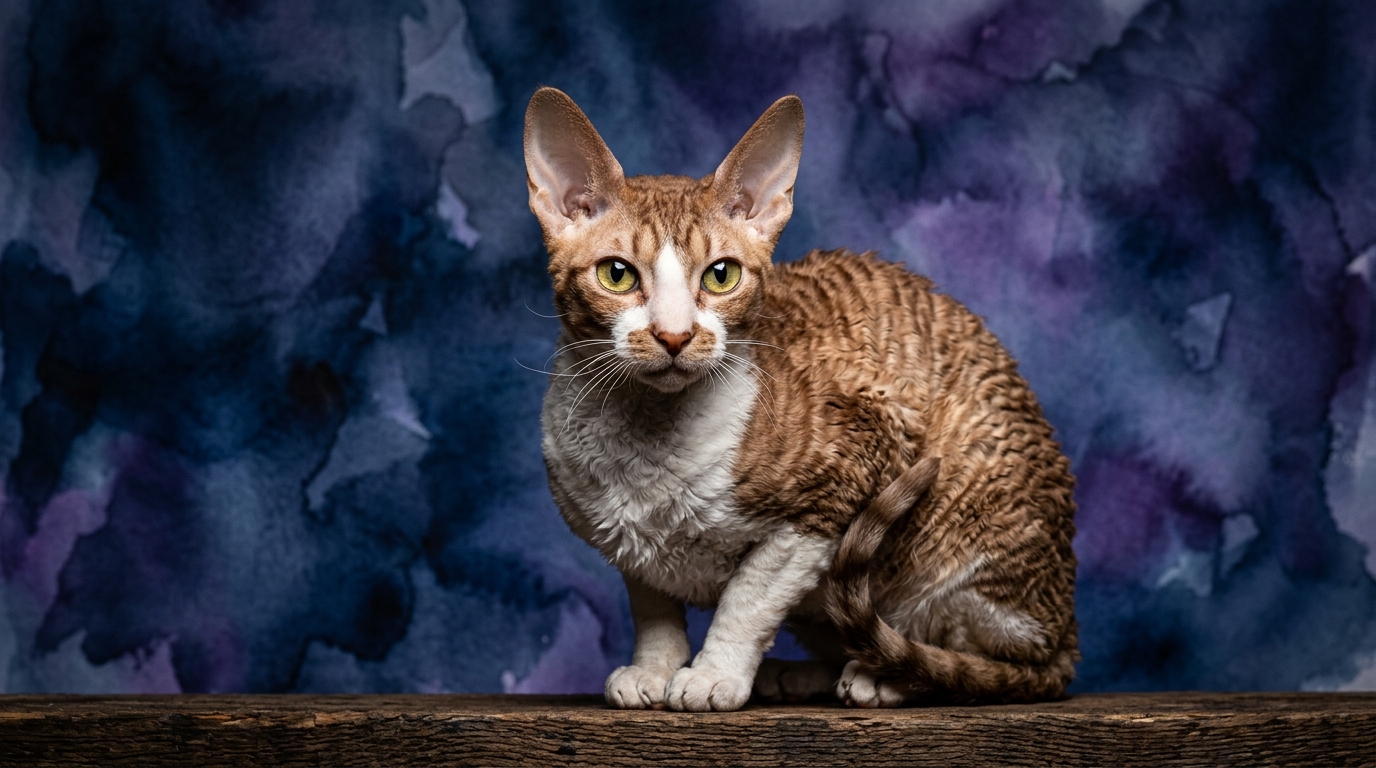
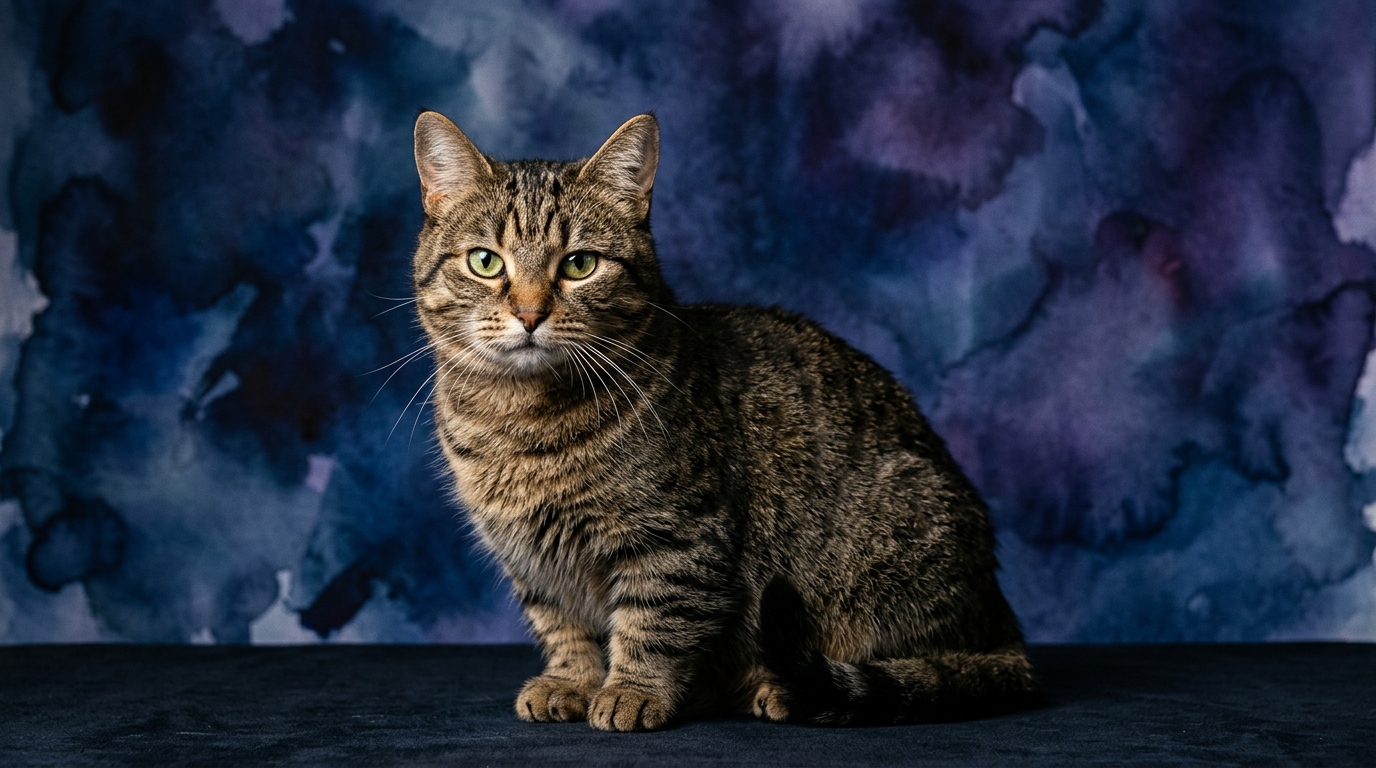
Side-by-Side IQ Profile: Cornish Rex vs. Munchkin
The Cosmic Pet Pet IQ Lab employs a multi-faceted approach to assess feline cognitive abilities, breaking down intelligence into five key dimensions. For the Cornish Rex, their Problem Solving is rated at 4/5, indicating a strong capacity to analyze situations and devise solutions, often with a clever, agile approach. Their Training Speed is an impressive 5/5, suggesting they grasp new commands and routines with remarkable swiftness, making them highly receptive students. Social Intelligence stands at 4/5, reflecting their nuanced understanding of human cues and a desire for meaningful interaction. Instinctive Drive is a balanced 3/5, indicating a moderate level of natural hunting and exploration behaviors. Finally, their Memory is rated 4/5, showcasing an excellent ability to retain information about their environment, routines, and experiences over time.
In contrast, the Munchkin cat presents a more uniformly moderate cognitive profile across most dimensions. Their Problem Solving is rated 3/5, meaning they are capable of navigating challenges but might take a more direct or trial-and-error approach compared to the Rex. Training Speed is also 3/5, signifying an average pace of learning, where consistency and patience yield good results. Social Intelligence for the Munchkin is 3/5, indicating they are affectionate and enjoy company, though perhaps with less complexity in their interactive responses than their Cornish counterparts. Their Instinctive Drive mirrors the Cornish Rex at 3/5, suggesting a similar moderate engagement with natural feline instincts. Lastly, their Memory is 3/5, meaning they retain learned behaviors and environmental information effectively, but perhaps not with the same depth or speed as a cat with a higher score in this area.
Where the Cornish Rex Excels Cognitively
The Cornish Rex clearly demonstrates superior cognitive strengths in several key areas, making them distinctively sharp thinkers. Their Problem Solving score of 4/5, compared to the Munchkin's 3/5, means a Cornish Rex is more likely to independently figure out how to access a desired toy hidden in a puzzle feeder, or even learn to open certain types of doors. They exhibit a cleverness in manipulating their environment to achieve goals, often observing and strategizing rather than relying solely on brute force or simple trial-and-error. This breed's Training Speed, an outstanding 5/5 against the Munchkin's 3/5, is perhaps their most striking cognitive advantage. A Cornish Rex can pick up complex tricks like 'fetch,' 'sit,' or even walking on a leash with remarkable alacrity, often requiring fewer repetitions to solidify a command. This rapid learning curve stems from their keen observational skills and responsiveness to human instruction. Furthermore, their Social Intelligence at 4/5, surpassing the Munchkin's 3/5, allows them to form exceptionally deep bonds, often appearing more attuned to their owner's moods and capable of initiating intricate interactive play. This higher social awareness translates into a companion that doesn't just tolerate interaction but actively seeks and responds to it with a nuanced understanding. Their 4/5 Memory also ensures they retain these learned behaviors, social cues, and environmental layouts with greater precision and for longer durations, contributing to their reputation as highly engaging and responsive felines.
Where the Munchkin's Cognitive Profile Shines
While the Munchkin's cognitive scores are generally more moderate when directly compared to the Cornish Rex, their profile presents a unique set of 'wins' that cater to different owner preferences and lifestyles. The Munchkin's consistent 3/5 across Problem Solving, Training Speed, Social Intelligence, and Memory, while not indicating exceptional prowess in any single area, points to a wonderfully balanced and generally uncomplicated cognitive makeup. This balance can be a significant advantage, as cats with extremely high cognitive scores sometimes require constant mental stimulation to prevent boredom and potential mischievous behaviors. A Munchkin, with its average problem-solving ability, is less likely to become adept at opening cabinets or figuring out complex escape routes, which can be a relief for owners seeking a companion that is content with simpler forms of engagement. Their 3/5 Social Intelligence ensures they are affectionate and enjoy companionship without exhibiting the potentially demanding or overly complex emotional needs that sometimes accompany higher social scores. They are content with cuddles and straightforward play, providing a consistent and amiable presence. Furthermore, their moderate memory means they will remember routines and beloved people, but perhaps without the intense recall that might lead to an overly rigid adherence to schedules or a strong reaction to minor changes. The Munchkin's cognitive profile makes them highly adaptable and generally content with their surroundings, offering a steady and charming companionship that is less prone to the complexities sometimes associated with more cognitively intense breeds.
Trainability: Which Feline Learns Faster?
Without a doubt, the Cornish Rex is the easier cat to train, a direct reflection of their outstanding 5/5 Training Speed. This breed possesses an intrinsic desire to engage with their human companions and a remarkable ability to quickly associate commands with actions. Their high Problem Solving (4/5) and Memory (4/5) further bolster their trainability; they can quickly understand what is being asked of them and retain that information over time. For example, a Cornish Rex might learn to navigate an agility course or consistently perform a specific trick like 'high-five' within just a few dedicated sessions, often seeming to enjoy the mental challenge and the positive reinforcement. Their keen social intelligence also means they are more receptive to verbal cues and body language from their trainers, making the communication loop more efficient. In contrast, the Munchkin, with its 3/5 Training Speed, requires a more patient and consistent approach. While they are certainly trainable and can learn basic commands and routines, they will likely need more repetitions and a clearer, more predictable training environment to solidify new behaviors. Their moderate memory means that while they will remember, the initial learning phase might extend longer. Owners training a Munchkin should focus on short, positive sessions and clear, simple instructions, understanding that progress might be slower but equally rewarding with dedication.
Matching Cognitive Profiles to Owner Lifestyles
The cognitive profiles of these two breeds naturally align with different owner lifestyles. The Cornish Rex, with its high scores in Problem Solving (4/5), Training Speed (5/5), Social Intelligence (4/5), and Memory (4/5), is an ideal match for active owners who thrive on interaction and mental engagement. These cats need consistent mental stimulation through interactive play, puzzle toys, and ongoing training sessions to prevent boredom and channel their sharp minds constructively. An active owner who enjoys teaching tricks, playing complex games, or even leash training will find the Cornish Rex an incredibly responsive and enthusiastic partner. Their social nature means they will actively seek out their owner for companionship and engagement, making them a constant, lively presence. Conversely, the Munchkin, with its more balanced and moderate cognitive profile (3/5 across most dimensions), is an excellent choice for relaxed owners seeking a charming and generally content companion without the need for intense daily mental workouts. While they enjoy play and affection, their cognitive needs are less demanding. A relaxed owner who appreciates a cat that is happy with a good cuddle, a few simple play sessions, and a predictable routine will find the Munchkin to be a delightful and low-stress addition to their home. They offer steady companionship without requiring constant, complex mental engagement, making them well-suited for quieter households or those with less time for rigorous training.
The Verdict
Opt for a Cornish Rex if you are an active owner eager to engage in advanced training, enjoy teaching tricks, and desire a highly responsive, socially interactive feline companion that thrives on mental challenges.
Choose a Munchkin if you seek a charming, affectionate cat that is content with a more relaxed pace of life, offers steady companionship, and requires less intensive mental stimulation compared to the Cornish Rex.
🧠 Find Your Pet's IQ Score
Our Pet IQ Lab assessment covers 25+ tests across 5 cognitive dimensions — personalized to your breed.
Take the Full IQ Test →Frequently Asked Questions
Are Cornish Rex cats prone to boredom if not mentally stimulated?
Yes, due to their higher Problem Solving (4/5) and Social Intelligence (4/5), Cornish Rex cats can indeed become bored without adequate mental engagement. They thrive on interactive play, puzzle toys, and learning new things, and without these outlets, they might invent their own less desirable forms of entertainment.
Do Munchkin cats struggle with physical challenges due to their short legs, and how does this affect their problem-solving?
Munchkin cats adapt remarkably well to their short stature, and it doesn't inherently hinder their Problem Solving (3/5) in typical household environments. While they may not jump as high as other cats, they are agile and clever at finding alternative routes or methods to reach desired locations, often using their environment creatively.
How does the social intelligence difference manifest between the two breeds?
A Cornish Rex (4/5 Social Intelligence) often displays a more nuanced understanding of human emotions, initiating complex interactions and responding keenly to subtle cues, sometimes appearing almost dog-like in their devotion. A Munchkin (3/5 Social Intelligence) is affectionate and enjoys company but might express their social needs in a more straightforward manner, happy with cuddles and simpler forms of interaction without the same level of interactive complexity.