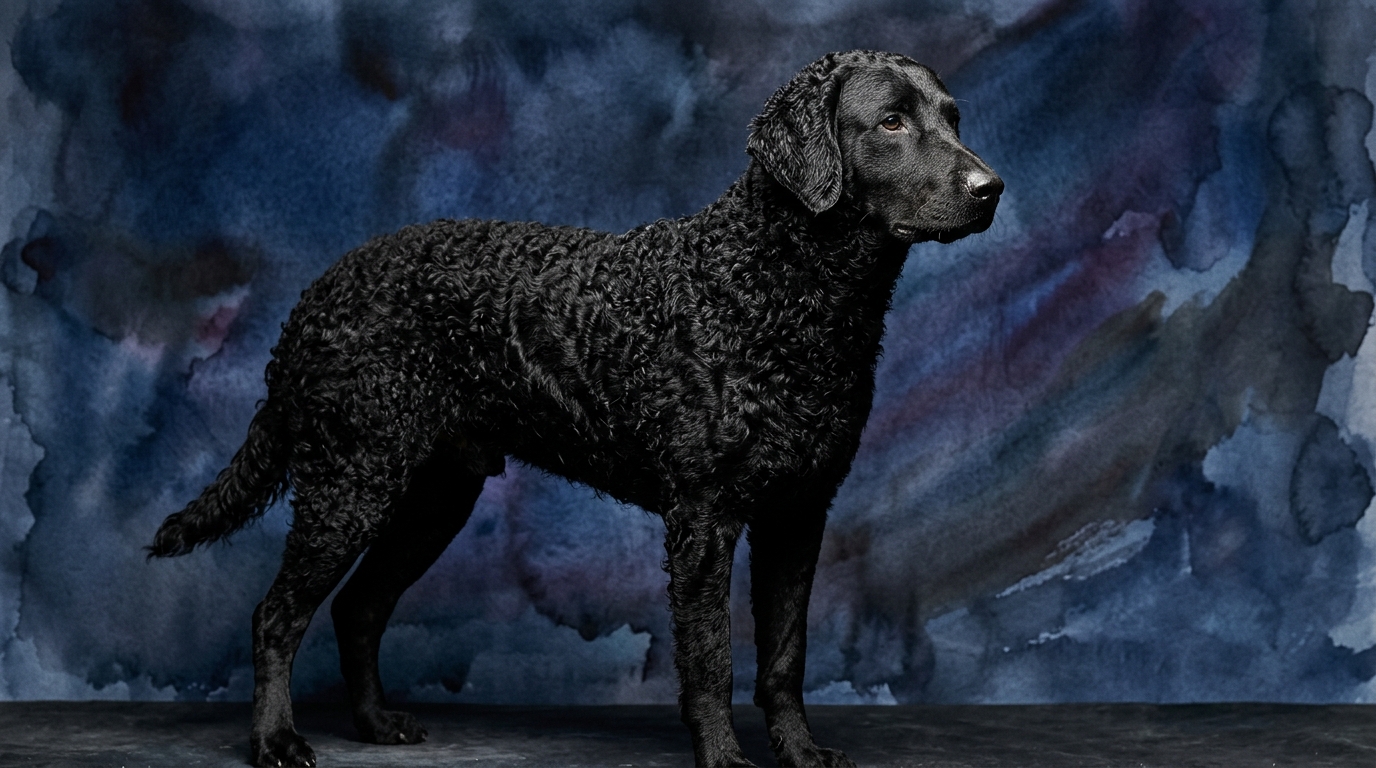
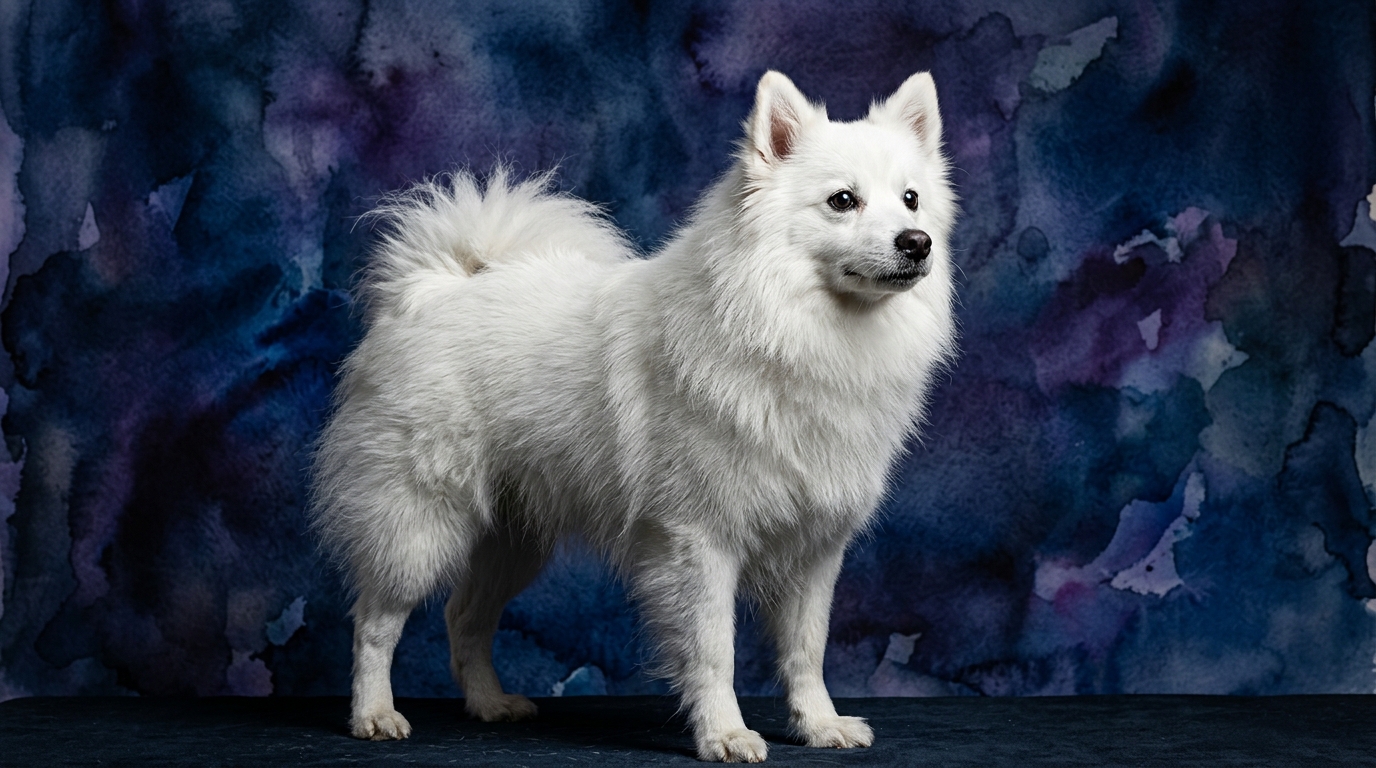
Side-by-side IQ profile
At The Cosmic Pet Pet IQ Lab, we dissect canine cognition across five crucial dimensions. The Curly-Coated Retriever, a member of the Sporting group and holding a respectable Coren rank of #41, shows a Problem Solving score of 3 out of 5, indicating a good capacity for navigating challenges and figuring out tasks independently. Its Training Speed is also 3 out of 5, suggesting it learns new commands and routines at a steady, capable pace. Social Intelligence registers 3 out of 5, meaning it capably understands human cues and social dynamics within its environment. Instinctive Drive, rated 3 out of 5, reflects its inherent breed traits, particularly its drive for retrieving and working. Crucially, its Memory stands out at 4 out of 5, signifying a strong ability to retain information, sequences, and past experiences.
The American Eskimo Dog, from the Non-Sporting group and not assigned a Coren rank, presents a very similar profile in most areas. Its Problem Solving is 3 out of 5, demonstrating an equal aptitude for figuring things out and adapting to new situations. Training Speed matches at 3 out of 5, indicating it also learns at a good, consistent rate when properly motivated. Social Intelligence is 3 out of 5, showing a comparable ability to connect with its human companions and interpret their intentions. Instinctive Drive is also 3 out of 5, reflecting its historical role as a companion and performer, possessing inherent breed-specific behaviors. The primary distinction lies in its Memory, which is 3 out of 5, suggesting it retains information adequately but perhaps not with the same depth or longevity as the Curly-Coated Retriever.
Where Curly-Coated Retriever wins cognitively
The Curly-Coated Retriever’s cognitive advantages primarily stem from its superior Memory and its established working dog lineage. With a Memory score of 4 out of 5 compared to the Eskie's 3 out of 5, the Curly is likely to retain complex command sequences, multi-step tasks, and past learned experiences with greater reliability and for longer durations. This enhanced recall is invaluable for field work or advanced obedience, where remembering intricate patterns and specific instructions is paramount. Furthermore, its Coren rank of #41 places it among breeds with a higher aptitude for understanding and obeying new commands on the first try, suggesting an inherent cognitive efficiency in processing and responding to human directives. This innate problem-solving capacity, coupled with its memory, enables the Curly-Coated Retriever to excel in dynamic environments where quick, accurate responses based on prior learning are essential, such as retrieving game or navigating agility courses.
Where American Eskimo Dog wins cognitively
While the American Eskimo Dog shares many cognitive scores with the Curly-Coated Retriever, its specific strengths lie in how its intelligence is applied within a companion context. With identical Problem Solving (3/5) and Social Intelligence (3/5) scores, the Eskie demonstrates an excellent capacity for navigating household challenges and forming deep, intuitive bonds with its family. Its historical role as a circus performer and companion suggests a cognitive makeup that prioritizes adaptability, engagement, and a willingness to learn for social reward, rather than purely task-oriented work. This breed’s intelligence shines in its ability to be a highly interactive and responsive family member, capable of learning a wide array of tricks and engaging in playful problem-solving scenarios that strengthen the human-animal bond. Their cognitive profile, while not geared towards complex retrieving, is perfectly suited for understanding and enriching a domestic environment, making them highly adept at being charming and attentive companions.
Which is easier to train and why
When it comes to ease of training, the Curly-Coated Retriever generally holds an edge, primarily due to its superior memory and working dog background. Its Memory score of 4 out of 5 means it will likely solidify new commands more quickly and retain them with fewer refreshers compared to the American Eskimo Dog’s 3 out of 5. The Curly’s heritage as a Sporting dog also instills a strong desire to cooperate and work alongside its human handler, making it inherently more receptive to structured training sessions and eager to please. For the American Eskimo Dog, while its Training Speed is a respectable 3 out of 5, its slightly lower memory score suggests that more repetition and consistent reinforcement might be necessary to achieve the same level of reliability. Eskies can also exhibit an independent streak, a trait common in Spitz-type breeds, which means trainers might need to employ more creative and highly motivational techniques to maintain their engagement and willingness to comply, rather than relying solely on their innate drive to work.
Which suits active owners vs relaxed owners
The Curly-Coated Retriever is undeniably better suited for active owners who can provide ample opportunities for both physical exertion and mental stimulation. Its Instinctive Drive of 3 out of 5, combined with its robust problem-solving and memory skills, means it thrives when given a job to do, whether that's retrieving, participating in dog sports like agility, or engaging in extensive outdoor adventures. A relaxed owner might find it challenging to meet the Curly’s needs, potentially leading to boredom-induced behaviors such as destructive chewing or excessive vocalization. In contrast, the American Eskimo Dog offers more versatility for both active and moderately relaxed owners. While energetic and always up for a game, its exercise requirements are generally more manageable than a retriever's. An Eskie flourishes with consistent daily walks, interactive play, and mental puzzles, but doesn't typically demand the same intensity of field work or endurance activities. A relaxed owner who prioritizes daily engagement, trick training, and being an integral part of family life would find the American Eskimo Dog a delightful and adaptable companion.
The Verdict
Choose the Curly-Coated Retriever if you are an active individual seeking a dedicated, intelligent partner for advanced training, dog sports, or fieldwork, valuing a strong memory and cooperative spirit.
Opt for the American Eskimo Dog if you desire a highly social, adaptable, and engaging companion who thrives on interactive play, trick training, and being a cherished member of the family, without demanding intense working roles.
🧠 Find Your Pet's IQ Score
Our Pet IQ Lab assessment covers 25+ tests across 5 cognitive dimensions — personalized to your breed.
Take the Full IQ Test →Frequently Asked Questions
Is the Curly-Coated Retriever truly smarter than the American Eskimo Dog?
Based on our IQ profiles, the Curly-Coated Retriever demonstrates a slight cognitive edge primarily in memory and its Coren ranking for obedience. However, both breeds possess strong problem-solving and social intelligence, making them capable learners and companions. The difference is more about how their intelligence is applied and their inherent drives.
Do American Eskimo Dogs struggle with memory?
The American Eskimo Dog's memory score of 3 out of 5 indicates a good, functional memory, not a struggle. While it might not retain information as quickly or deeply as a breed with a 4/5 score, consistent training methods will still yield excellent results, especially for companion-level obedience and tricks.
Can an American Eskimo Dog participate in dog sports like agility?
Absolutely. With a Problem Solving score of 3/5 and a Training Speed of 3/5, American Eskimo Dogs are perfectly capable of excelling in dog sports like agility, rally, and obedience. Their intelligence and eagerness to engage make them enthusiastic participants, though their independent streak might require more creative motivational strategies.