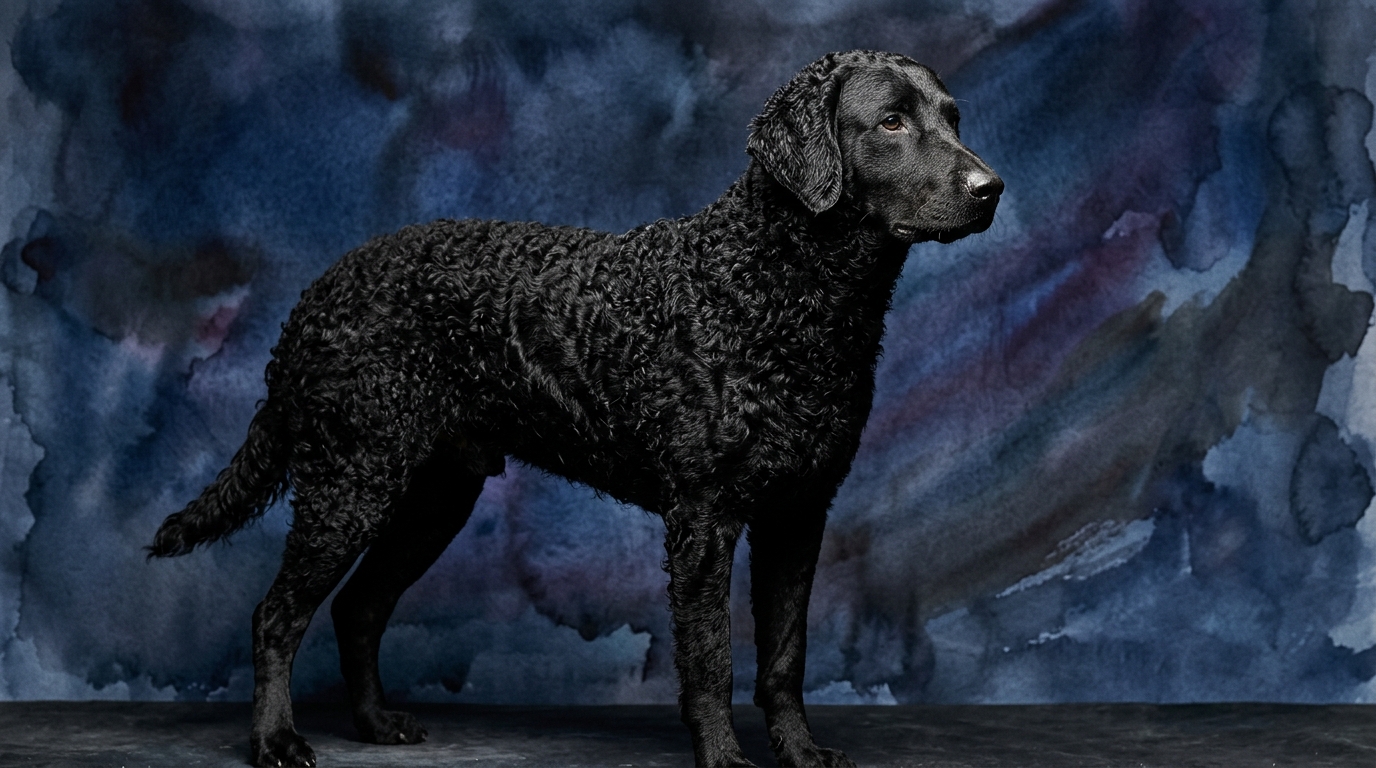
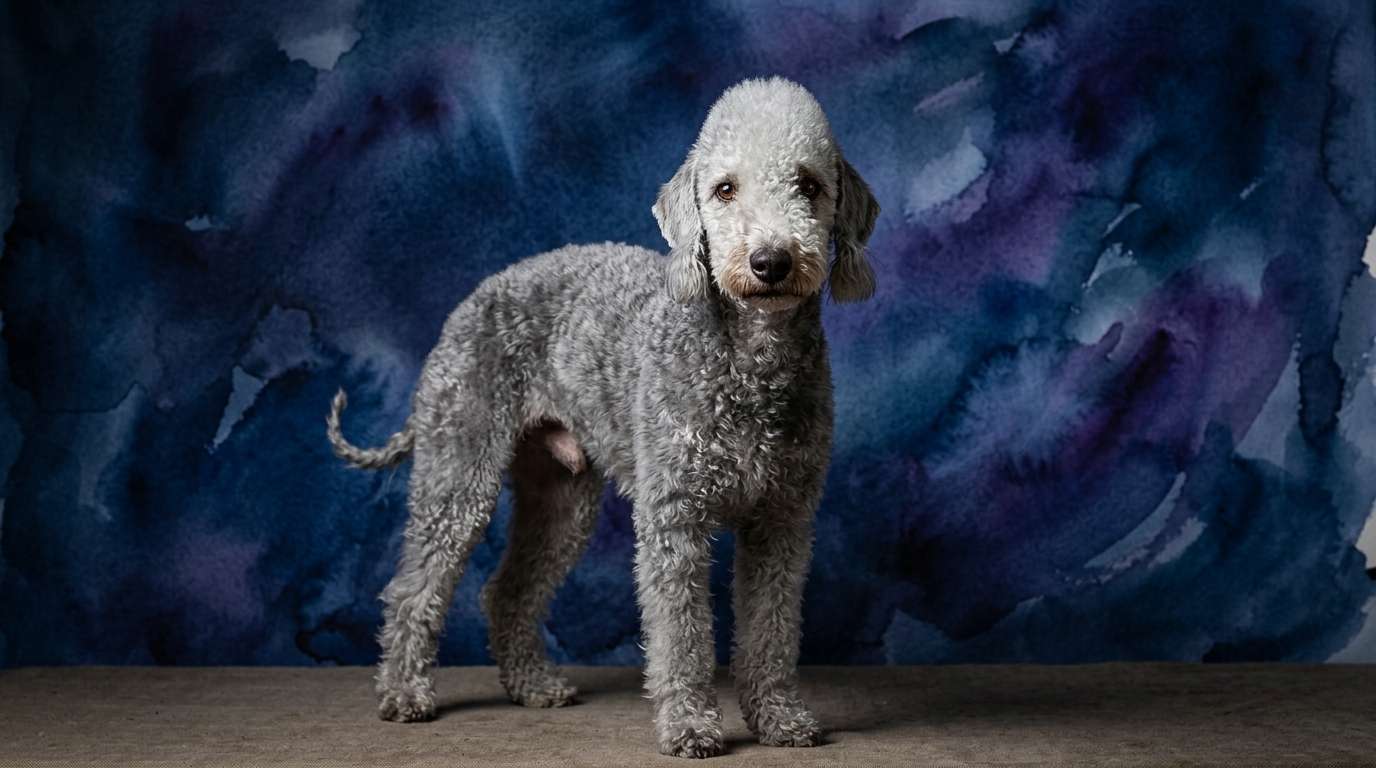
Side-by-Side Cognitive Profile: Curly-Coated Retriever vs. Bedlington Terrier
The Cosmic Pet IQ Lab's assessment provides a granular look at how these two distinct breeds approach the world cognitively. The Curly-Coated Retriever, a member of the Sporting group, holds a Coren rank of #41, indicating a solid foundation in working and obedience intelligence. Its cognitive breakdown includes Problem Solving (3/5), Training Speed (3/5), Social Intelligence (3/5), Instinctive Drive (3/5), and a notable Memory (4/5). This profile suggests a moderately adaptable dog, capable of learning and interacting effectively, with a particular strength in retaining information.
In contrast, the Bedlington Terrier, hailing from the Terrier group, is not Coren-ranked, which often implies a more independent or specialized cognitive approach rather than a general obedience focus. Its IQ scores show Problem Solving (3/5), Training Speed (3/5), Social Intelligence (3/5), Instinctive Drive (3/5), and Memory (3/5). This set of scores paints a picture of a consistent, capable canine, with a balanced set of intellectual tools, though without a standout cognitive dimension in these measured areas. Understanding these specific scores helps us appreciate the nuances of their mental makeup beyond simple labels.
Where the Curly-Coated Retriever Wins Cognitively
The Curly-Coated Retriever distinguishes itself most clearly in memory, scoring a 4 out of 5, a point higher than the Bedlington Terrier. This superior recall means a Curly is more likely to retain complex sequences of commands or remember specific locations where objects were last seen, even after a significant lapse in time. For tasks involving multi-step instructions, such as advanced obedience trials or retrieving specific items from a varied terrain, their robust memory provides a tangible advantage. This capacity allows them to build upon past experiences more efficiently, potentially leading to faster mastery of intricate skills over the long term, making less re-teaching necessary and allowing for more complex layering of learned behaviors.
Where the Bedlington Terrier Wins Cognitively
While the Bedlington Terrier's individual cognitive scores don't numerically surpass the Curly-Coated Retriever, their unique blend of traits and inherent terrier spirit presents a distinct cognitive 'win' in specific contexts. Their problem-solving at 3/5, numerically matching the Curly, is often expressed with characteristic terrier tenacity and independence. This means a Bedlington, faced with a challenge, might exhibit a more persistent, self-directed approach, less reliant on human guidance, especially for tasks involving investigating, digging, or pursuing. Their lack of a Coren ranking implies a less conventional cognitive profile, one that prioritizes keen observation and quick, decisive action in their immediate environment. For an owner seeking a dog with a strong sense of self and unwavering determination to achieve its own objectives, the Bedlington's focused, independent cognitive application can be incredibly rewarding.
Which is Easier to Train and Why
When assessing ease of training, both breeds register a 3 out of 5 for Training Speed, suggesting a similar, moderate pace. However, the *application* of this learning speed diverges due to their other cognitive traits and breed-specific tendencies. The Curly-Coated Retriever, as a sporting dog, typically possesses a stronger desire to work collaboratively with its human partner, driven by a history of retrieving game *for* people. Their 3/5 Social Intelligence and superior memory mean they are often more inclined to pay attention to cues and remember corrections or successful behaviors. While their Instinctive Drive is also 3/5, it's often directed towards cooperative tasks like retrieving, making it easier to channel into formal training.
In contrast, the Bedlington Terrier approaches training with characteristic terrier independence. Their 3/5 Instinctive Drive is often geared towards self-directed activities like chasing small prey or investigating, which can sometimes override a desire to please or follow instruction. While socially intelligent, their strong will means they might require more creative motivation and consistent reinforcement to maintain focus. Therefore, the Curly-Coated Retriever is generally perceived as 'easier' to train due to its more cooperative nature and willingness to engage as a partner, whereas the Bedlington Terrier requires an owner skilled at working with an independent streak and strong intrinsic motivations.
Suitability for Active vs. Relaxed Owners
The choice between these breeds for active versus relaxed owners hinges significantly on how their cognitive profiles manifest in daily behavior and energy levels. The Curly-Coated Retriever, with its balanced 3/5 instinctive drive and robust 4/5 memory, thrives with active owners who provide consistent mental and physical challenges. Their strong memory makes them excellent candidates for advanced dog sports like agility, obedience, or field trials, where complex routines and sustained focus are key. They enjoy long walks, swimming, and engaging in purposeful activities that tap into their retrieving instincts; a more relaxed owner might find a Curly's constant need for engagement overwhelming, potentially leading to boredom-induced behaviors.
The Bedlington Terrier, also with a 3/5 instinctive drive, often channels this into bursts of intense activity followed by periods of calm. Their problem-solving, applied to independent exploration and chasing, makes them suitable for active owners who appreciate a dog with a distinct personality and who can provide outlets for these natural instincts, such as secure off-leash areas for running or engaging in earthdog trials. However, their capacity for downtime, coupled with a slightly less demanding memory load, can also make them a surprisingly good fit for relaxed owners who commit to daily walks and interactive play but don't necessarily seek a constant training partner for complex tasks. They are often content to cuddle after a good romp, adapting to different energy levels provided their core needs for mental stimulation and exercise are consistently met.
The Verdict
Choose the Curly-Coated Retriever if you seek a cooperative training partner with exceptional memory, ideal for complex dog sports or a consistent working relationship. They thrive with owners who enjoy structured activities and can leverage their ability to retain detailed information over time.
Opt for the Bedlington Terrier if you appreciate an independent, tenacious companion with a strong will and a charmingly unique personality. They are suitable for owners who enjoy a dog that thinks for itself and can provide outlets for its natural terrier drives and bursts of energy.
🧠 Find Your Pet's IQ Score
Our Pet IQ Lab assessment covers 25+ tests across 5 cognitive dimensions — personalized to your breed.
Take the Full IQ Test →Frequently Asked Questions
How does a dog's Coren ranking impact its intelligence assessment?
The Coren ranking primarily assesses a breed's working and obedience intelligence, reflecting how quickly they learn commands and their consistency in following them. It's one facet of intelligence, providing insight into trainability but not encompassing the full spectrum of cognitive abilities like problem-solving or social intelligence.
Do these breeds require a lot of mental stimulation?
Both breeds benefit significantly from mental stimulation, though its form might differ. The Curly-Coated Retriever thrives on structured training, puzzle toys, and activities that challenge its memory, while the Bedlington Terrier enjoys independent exploration, scent work, and games that engage its natural hunting instincts.
Can a Bedlington Terrier be trained for advanced obedience despite not being Coren-ranked?
Absolutely, a Bedlington Terrier can excel in advanced obedience, though their independent nature might require more patient, creative, and highly motivating training methods. Their moderate training speed and problem-solving abilities mean they are capable learners, but their handler must be adept at channeling their terrier drive effectively.