Side-by-Side Cognitive Profile
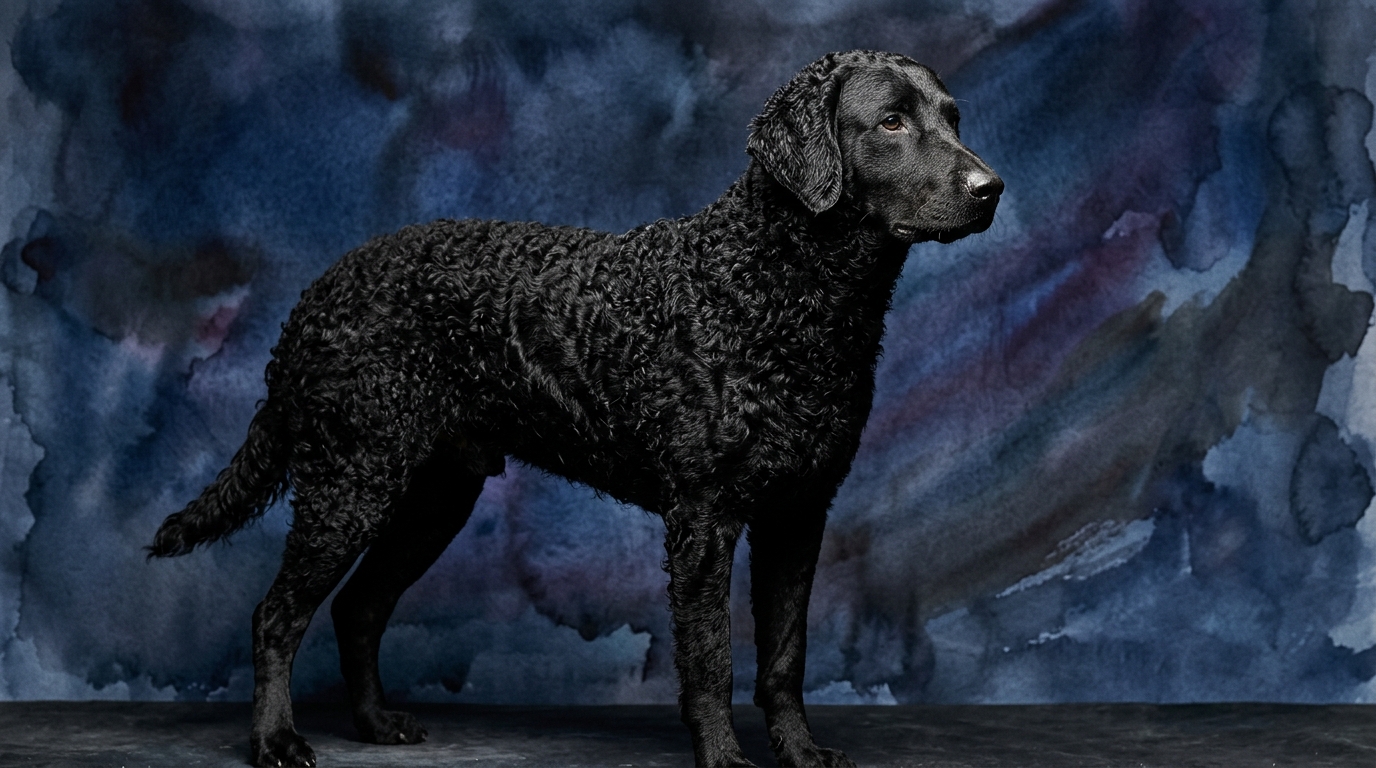
The Cosmic Pet Pet IQ Lab employs a five-dimensional model to assess canine cognition, offering a granular view beyond general perceptions. For the Curly-Coated Retriever, a breed recognized with a Coren rank of #41, its cognitive profile reveals a balanced set of abilities with a notable strength in recall. Its Problem Solving is rated at 3/5, indicating a capacity to navigate moderate challenges and learn from experience, though perhaps not always with immediate flash. Training Speed also stands at 3/5, suggesting it learns new commands at an average pace, requiring consistent, positive reinforcement to solidify understanding. Social Intelligence, at 3/5, means it generally comprehends and responds to social cues, interacting appropriately within its environment. Its Instinctive Drive, also 3/5, reflects a moderate natural inclination towards its breed-specific tasks, such as retrieving. However, the Curly-Coated Retriever truly distinguishes itself with a Memory score of 4/5, indicating a robust ability to retain complex sequences, learned behaviors, and past interactions over extended periods.
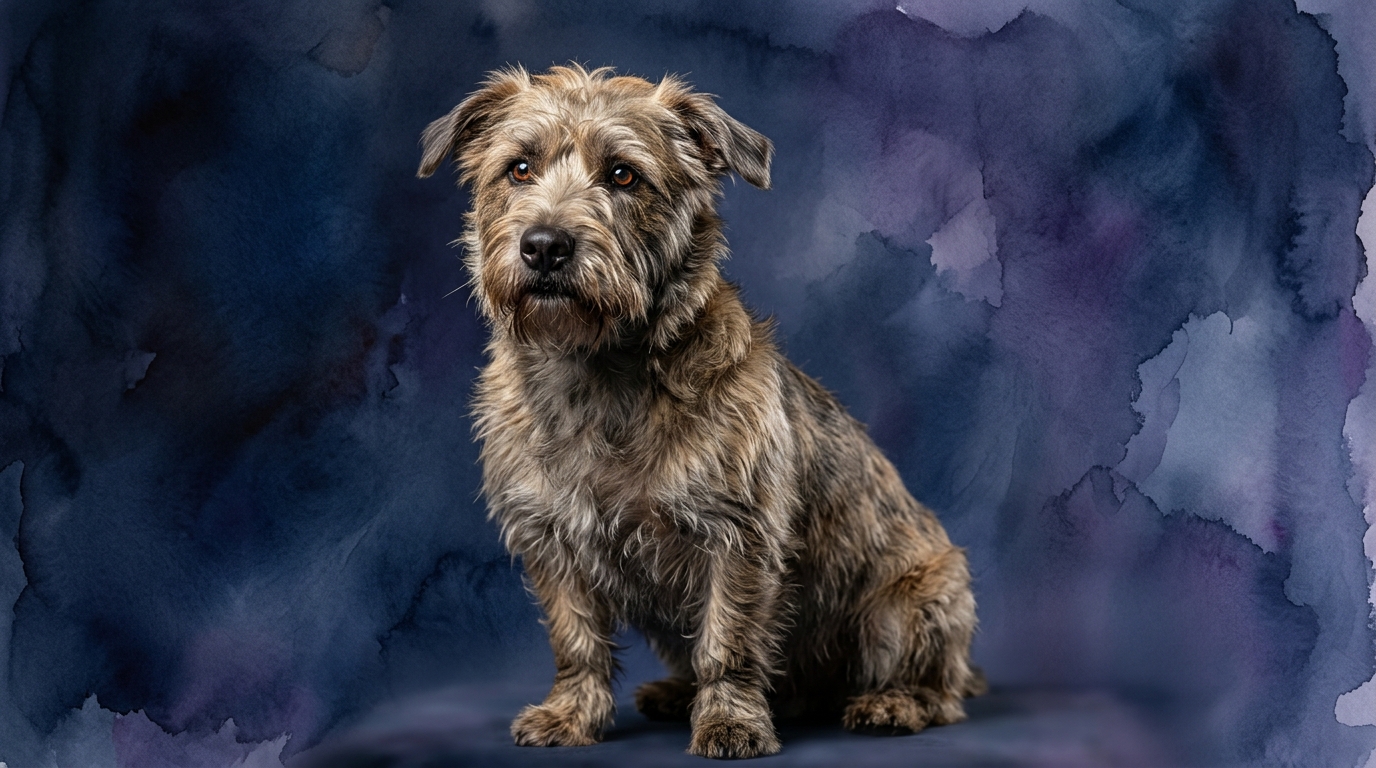
In contrast, the Glen of Imaal Terrier, a breed not evaluated within the Coren ranking system, presents a remarkably similar numerical cognitive blueprint across most dimensions. Its Problem Solving is likewise rated 3/5, suggesting it can unravel moderate puzzles, often with a terrier's characteristic determination. Training Speed also sits at 3/5, meaning it acquires new instructions at an average rate, though its independent spirit might influence the consistency of its application. Social Intelligence is also 3/5, reflecting a solid understanding of social dynamics, albeit often filtered through its self-assured terrier lens. Instinctive Drive, matching at 3/5, points to a moderate inherent inclination for its historical role, primarily focused on hunting and digging. Where the Glen of Imaal Terrier differs slightly from its counterpart is in Memory, scoring 3/5. This indicates a good, reliable memory for routines and commands, but perhaps not the same expansive recall capacity observed in the Curly-Coated Retriever.
Where the Curly-Coated Retriever Excels Cognitively
The Curly-Coated Retriever's primary cognitive advantage lies in its superior Memory, rated 4/5. This enhanced recall is not just about remembering a simple 'sit' command; it underpins its effectiveness as a gundog, allowing it to accurately recall complex retrieve patterns, the location of fallen birds, and intricate handler signals over varied terrain and extended periods. This strong memory contributes significantly to its consistency in performance once a task is learned, making it a reliable partner in activities that require sequential understanding and sustained focus. For instance, in advanced obedience or field trials, its ability to retain multiple steps of an exercise or remember specific scent trails provides a clear edge.
Furthermore, its Coren ranking of #41, while not directly a 'score' in our IQ lab, signifies a general aptitude for understanding and executing human commands efficiently. This ranking places it among breeds that demonstrate a higher 'working intelligence' – the capacity to learn and perform tasks for humans. Even with a Training Speed of 3/5, this underlying aptitude suggests a foundational willingness and capability to engage in cooperative learning that is a hallmark of many Sporting breeds. This means that while individual training sessions might progress at an average pace, the Curly-Coated Retriever's overall trajectory towards mastery in cooperative tasks is often steadier and more predictable due to its inherent cognitive structure geared towards partnership.
Where the Glen of Imaal Terrier Shows Distinct Cognitive Strengths
While the Glen of Imaal Terrier shares a 3/5 rating in Problem Solving with the Curly-Coated Retriever, its specific application of this ability is where its cognitive strength truly lies. As a terrier, its problem-solving isn't necessarily about following human instruction, but about independent thought and tenacious pursuit of its own goals. This might manifest as figuring out how to outmaneuver a pest, locate a hidden treat, or even open a cabinet. Its problem-solving is often driven by a strong, internal motivation and a determined, rather than cooperative, approach. This means it might excel at tasks requiring ingenuity and persistence, even if those tasks aren't explicitly taught by a human, showcasing a specific kind of adaptive intelligence for self-directed objectives.
The Glen of Imaal Terrier's Instinctive Drive, while also 3/5, is channeled differently, reflecting a specialized cognitive focus. Its historical purpose involved going to ground after vermin, demanding a specific blend of courage, focus, and strategic thinking within confined spaces. This suggests a cognitive architecture geared towards intense, focused engagement with a task, often independently and without direct human guidance in the moment. This translates into a dog that can exhibit remarkable determination and single-mindedness when pursuing a 'mission,' whether it's tracking a scent or solving a puzzle that appeals to its innate drives. This cognitive tenacity, though not always outwardly cooperative, is a significant mental asset for its breed type.
Trainability: Curly-Coated Retriever vs. Glen of Imaal Terrier
When considering ease of training, the Curly-Coated Retriever generally presents a more straightforward path. Despite both breeds having a Training Speed of 3/5, the Curly-Coated Retriever's Coren rank of #41 indicates a stronger inherent propensity for obedience and cooperative learning. Its 4/5 Memory score further aids in retaining commands and routines, leading to more consistent performance over time. This breed was developed to work in close partnership with humans in the field, making it generally eager to please and receptive to instruction. Owners can anticipate relatively consistent progress with positive reinforcement, clear communication, and engaging training sessions that tap into its retrieving instincts.
The Glen of Imaal Terrier, while equally capable of learning (Training Speed 3/5), often presents a more nuanced training experience due to its terrier heritage. Terriers are known for their independent nature and strong will, which can sometimes manifest as a preference for their own agenda over a handler's command. This isn't a lack of cognitive ability, but rather a difference in motivation and approach. Training a Glen of Imaal requires immense patience, creativity, and a deep understanding of positive reinforcement to keep them engaged. They are very capable of learning, but their problem-solving skills might occasionally be directed towards outsmarting the trainer or finding a more 'efficient' way to achieve a goal. Their social intelligence (3/5) will help them understand what's expected, but their strong individual drive often means the trainer must make the desired behavior incredibly rewarding to overcome their innate independence.
Ideal Owners: Active Pursuits vs. Relaxed Companionship
For owners with an active lifestyle and a desire for a highly engaged canine partner, the Curly-Coated Retriever is an excellent match. Its background as a gundog means it thrives on structured activities that engage both its body and mind. Owners who enjoy activities like advanced obedience, agility, dock diving, or field work will find the Curly-Coated Retriever eager and capable. Its strong memory and cooperative nature make it a rewarding participant in consistent training regimens. An 'active owner' for this breed isn't just someone who takes daily walks, but someone who actively involves their dog in mentally stimulating and physically demanding pursuits, channeling its instinctive drives and cognitive strengths.
The Glen of Imaal Terrier, while robust, generally suits owners who appreciate a more relaxed pace but still prioritize consistent engagement. While they enjoy regular walks and playtime, their exercise needs are typically moderate compared to high-drive sporting breeds. Their mental stimulation often comes from scent work, puzzle toys, or short, focused training sessions that challenge their independent problem-solving abilities. Owners who appreciate a companion with a strong personality and a unique, tenacious spirit, but aren't necessarily seeking a dog for extensive endurance activities, will find the Glen of Imaal Terrier a delightful fit. They are content with a comfortable home life, provided they receive daily mental stimulation and a clear, consistent leadership.
The Verdict
Opt for the Curly-Coated Retriever if you seek a cooperative partner for structured activities and appreciate a dog with strong memory retention for complex tasks. Its historical role as a gundog makes it ideal for consistent engagement and training.
Select the Glen of Imaal Terrier if you value an independent spirit capable of specialized problem-solving, and are prepared for a companion whose determination requires patient, creative training. It suits those who appreciate a unique terrier personality.
🧠 Find Your Pet's IQ Score
Our Pet IQ Lab assessment covers 25+ tests across 5 cognitive dimensions — personalized to your breed.
Take the Full IQ Test →Frequently Asked Questions
Do Curly-Coated Retrievers require extensive mental stimulation?
Yes, their memory and working background mean they thrive on regular training, puzzle toys, and activities that engage their retrieving instincts, preventing boredom and potential behavioral issues. Consistent mental challenges are crucial for their well-being.
What challenges might arise when training a Glen of Imaal Terrier?
Glen of Imaal Terriers can exhibit a strong will and independent thinking, often characteristic of terriers, which may require consistent, patient, and engaging training methods to maintain their focus and cooperation. Their determination can sometimes be directed towards their own goals.
How does the Coren ranking impact a breed's cognitive profile?
The Coren ranking primarily reflects a breed's capacity for obedience and working intelligence, indicating how quickly they learn new commands and how reliably they respond, rather than encompassing all aspects of cognitive ability like specific problem-solving or social nuances. It's a measure of cooperative trainability.