Side-by-Side IQ Profile
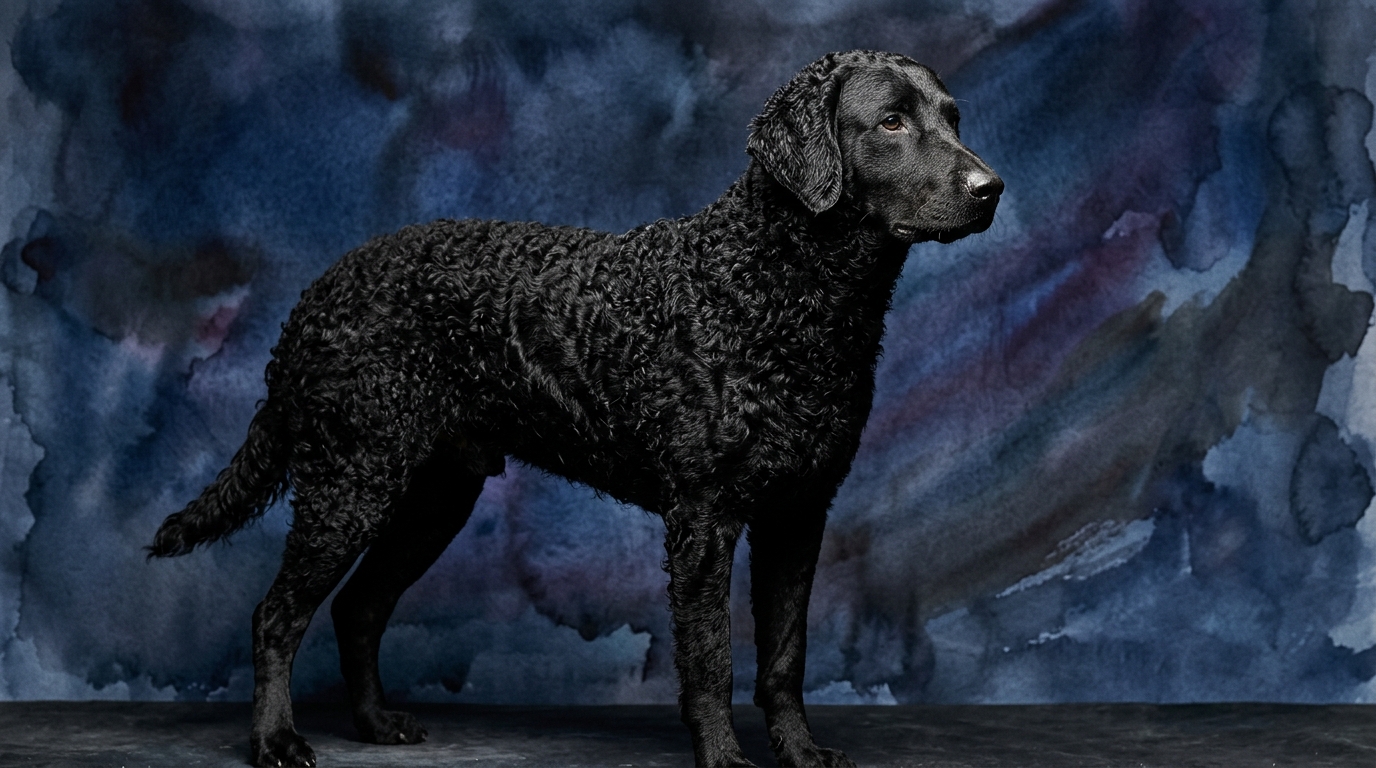
The Curly-Coated Retriever registers a 3/5 in Problem Solving, indicating an ability to navigate novel situations, often related to retrieving tasks. Its Training Speed, also 3/5, suggests a moderate learning pace requiring consistent repetition. Social Intelligence, at 3/5, means it interprets human cues well within its family, valuing cooperation. An Instinctive Drive of 3/5 reflects its inherent desire for activities like fetching and exploration, rooted in its working heritage. Its standout characteristic is Memory, scoring 4/5, pointing to a strong ability to retain learned behaviors and recall complex sequences over time, making it reliable for trained tasks.
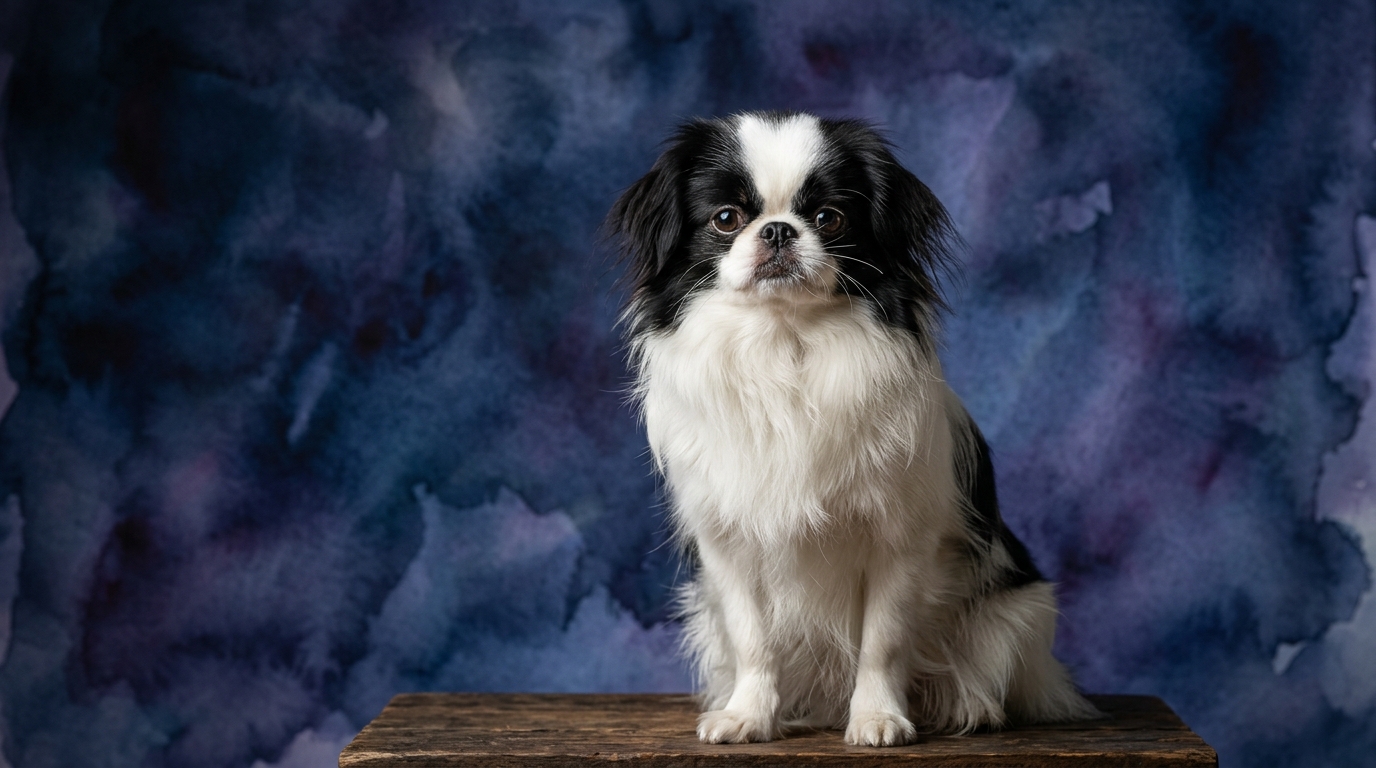
The Japanese Chin also scores 3/5 in Problem Solving, applying ingenuity to its domestic environment, perhaps finding comfortable spots or communicating needs. Its Training Speed, matching at 3/5, implies a similar learning curve for new concepts with patience. Social Intelligence, also 3/5, is particularly refined for intimate human connection, allowing deep bonds and astute understanding of family routines. An Instinctive Drive of 3/5 for the Chin is typically expressed through a desire for comfort, gentle play, and close human interaction. Its Memory, however, is rated 3/5, suggesting good capacity for recall but perhaps less long-term retention for complex, multi-step tasks than the retriever.
Where Curly-Coated Retriever Wins Cognitively
The Curly-Coated Retriever demonstrates a distinct cognitive advantage in Memory, earning a 4/5 compared to the Japanese Chin's 3/5. This superior recall means the Curly-Coated Retriever is better equipped to internalize and consistently execute multi-step commands and complex routines over extended periods, requiring fewer refreshers for intricate sequences in obedience or field work. Its Coren ranking of #41 further underscores its capacity for advanced working intelligence, indicating a general aptitude for understanding and responding to human instruction, a hallmark of more trainable working breeds. While both score 3/5 in Problem Solving, the Retriever applies its ingenuity in broader, more physically demanding contexts, strategizing how to retrieve from challenging terrain. This combination of memory and sporting heritage allows it to excel in situations demanding sustained mental effort and retention of detailed instructions, making it a stronger contender for roles requiring consistent, precise execution of learned behaviors.
Where Japanese Chin Wins Cognitively
While the Japanese Chin shares several IQ scores with the Curly-Coated Retriever, its cognitive strengths shine distinctly in the application of its Social Intelligence and Problem Solving within a domestic, companion-focused context. Though both breeds score 3/5 in Social Intelligence, the Chin's expression is finely tuned for intimate human connection, excelling at interpreting subtle emotional cues and adapting its behavior to maintain household harmony. This translates into an exceptional ability to provide comfort and companionship, often anticipating an owner's needs with remarkable sensitivity. Its 3/5 Problem Solving aptitude is often directed towards navigating social dynamics or optimizing personal comfort, such as finding the best sunbeam spot or subtly communicating a desire for attention. The Chin's instinctive drive, also 3/5, is geared towards companionship and gentle interaction, making it particularly adept at forming deep emotional bonds and understanding family life. This breed truly "wins" in the realm of sophisticated companion intelligence, dedicating its cognitive resources to enhancing the human-animal bond through perceptive interaction and adaptable, charming behavior.
Which is Easier to Train and Why
When evaluating trainability, the Curly-Coated Retriever holds a subtle yet significant edge, primarily due to its superior Memory (4/5 versus the Chin's 3/5). Both breeds share a Training Speed of 3/5, meaning they grasp new commands at a similar pace. However, the Retriever's enhanced memory allows for better retention of lessons over time and across varying environments, often requiring fewer refreshers for complex commands, making training feel more progressive. Its Instinctive Drive (3/5), rooted in a sporting background, provides natural motivation for task-oriented training like retrieving or obedience, where working alongside a human is inherently rewarding. This drive can be effectively channeled. In contrast, while the Japanese Chin also learns at a 3/5 speed, its 3/5 memory might necessitate more consistent reinforcement to solidify learning, especially for commands beyond basic house manners. The Chin's instinctive drive (3/5) focuses more on social interaction and comfort, requiring different motivators like treats or praise for gentle behaviors, rather than a strong innate desire for 'work'. Therefore, for advanced or consistent obedience work, the Curly-Coated Retriever's blend of training speed and superior memory generally makes it a more straightforward and consistently rewarding partner.
Which Suits Active Owners vs Relaxed Owners
The cognitive profiles of these two breeds clearly delineate their suitability for different owner lifestyles. The Curly-Coated Retriever, with its 3/5 Problem Solving, 3/5 Instinctive Drive, and particularly its 4/5 Memory, is an ideal match for active owners who enjoy engaging their dog in structured activities and mental challenges. Its sporting background means it thrives on purpose-driven tasks like retrieving, dog sports, or long hikes and swims. An active owner would appreciate the Retriever's capacity to learn and remember complex sequences, channeling its physical and mental energy into productive outlets; without sufficient engagement, boredom could arise. Conversely, the Japanese Chin, while possessing 3/5 Problem Solving and Social Intelligence, and a 3/5 Instinctive Drive, is perfectly suited for relaxed owners seeking a devoted companion whose intellectual engagement is primarily social and domestic. Its cognitive strengths are best appreciated in a home environment where it observes and interacts with its human family, offering comfort and subtle companionship. A relaxed owner would value the Chin's ability to adapt to a quieter routine, finding joy in shared moments without the need for extensive daily exercise or complex training regimens.
The Verdict
Opt for the Curly-Coated Retriever if you are an active individual or family seeking a devoted canine partner for outdoor adventures, dog sports, or engaging in consistent, progressive training that leverages its superior memory and working drives. This breed thrives on purpose and a structured routine that challenges its mind and body.
Select the Japanese Chin if you desire a charming, perceptive companion whose primary role is to enrich your home life with affectionate, intelligent companionship, appreciating its nuanced social acumen and adaptability to a relaxed domestic setting. This breed excels at forming deep emotional bonds without demanding extensive physical or highly structured mental exertion.
🧠 Find Your Pet's IQ Score
Our Pet IQ Lab assessment covers 25+ tests across 5 cognitive dimensions — personalized to your breed.
Take the Full IQ Test →Frequently Asked Questions
Does the Coren rank indicate overall intelligence for these breeds?
The Coren rank primarily assesses working and obedience intelligence, reflecting a dog's ability to learn and follow commands. While the Curly-Coated Retriever's rank of #41 suggests strong aptitude in this area, the Japanese Chin, not being Coren-ranked, doesn't imply a lack of intelligence but rather that its cognitive strengths are expressed differently, often in social or companion contexts not measured by Coren.
How does the "Instinctive Drive" score differ between a Sporting and a Toy breed?
While both breeds score 3/5 in Instinctive Drive, its manifestation varies significantly; for the Curly-Coated Retriever, it typically involves a strong desire for retrieving, swimming, and exploring, aligning with its sporting heritage. For the Japanese Chin, this drive is generally expressed as a strong inclination for companionship, gentle play, and seeking comfort and close proximity to its human family, reflecting its toy breed purpose.
Can a Japanese Chin learn complex tricks despite its memory score?
Yes, a Japanese Chin can certainly learn complex tricks, especially with consistent, positive reinforcement; its 3/5 Training Speed indicates good learning capacity. While its 3/5 Memory might mean it requires more frequent practice sessions to retain intricate sequences compared to a breed with higher memory, its social intelligence and desire to please can be powerful motivators for learning.