Side-by-Side IQ Profile
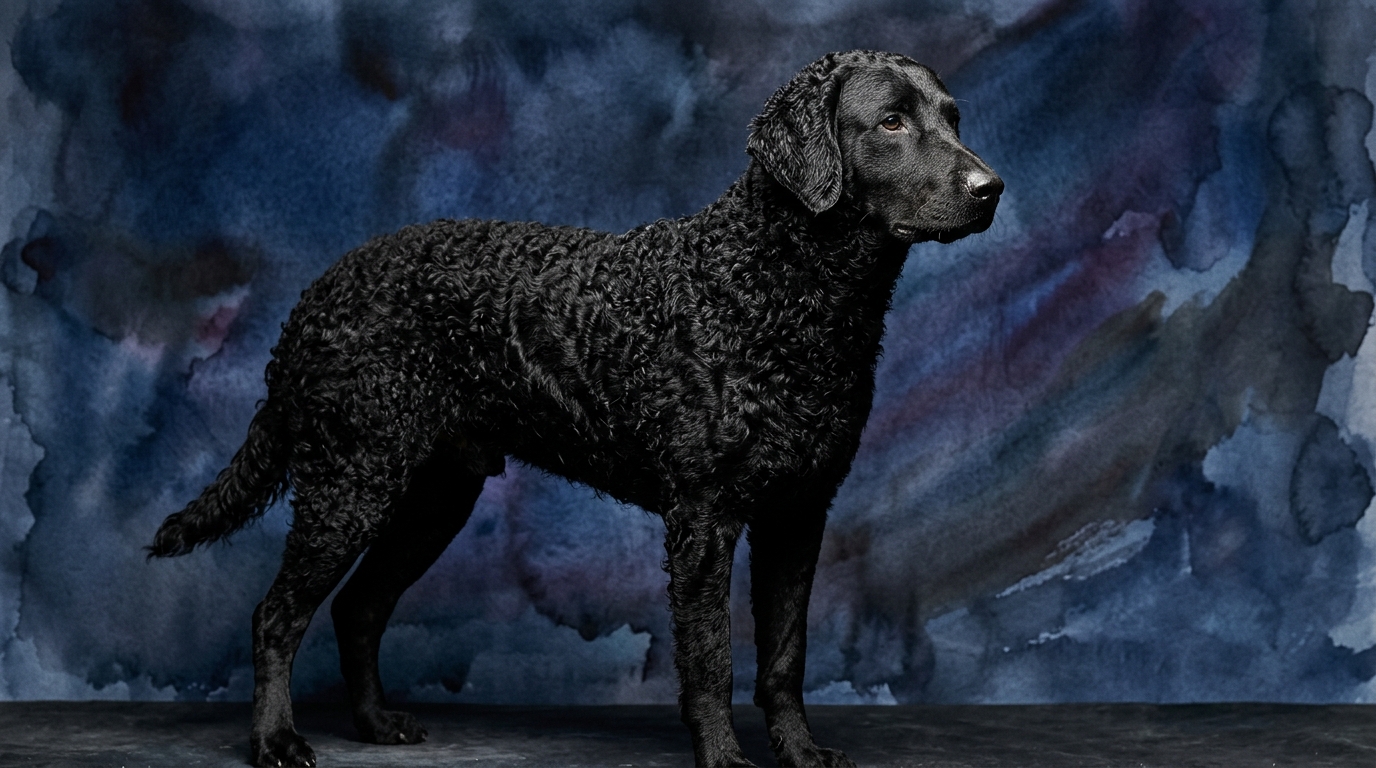
The Curly-Coated Retriever, a distinguished member of the Sporting group, exhibits a balanced cognitive profile with a notable strength in memory. Its problem-solving capacity sits at a solid 3 out of 5, indicating an aptitude for navigating novel situations and learning through experience, though not always with lightning-fast ingenuity. Training speed also registers a 3/5, suggesting a moderate pace for acquiring new commands and routines, requiring consistent and engaging methods to maintain focus. Social intelligence, at 3/5, points to an ability to understand and respond to human cues and social dynamics within its family unit, fostering strong bonds without excessive emotional complexity. Its instinctive drive, also 3/5, reflects a balanced blend of natural retrieving abilities and a general eagerness to work alongside its human companions. The standout feature is its memory, rated 4/5, enabling it to retain complex sequences, remember specific locations, and recall training cues with impressive longevity, contributing significantly to its effectiveness in field work and advanced obedience. This breed also holds a respectable #41 rank on the Coren intelligence scale, signifying its capacity for working and obedience intelligence.
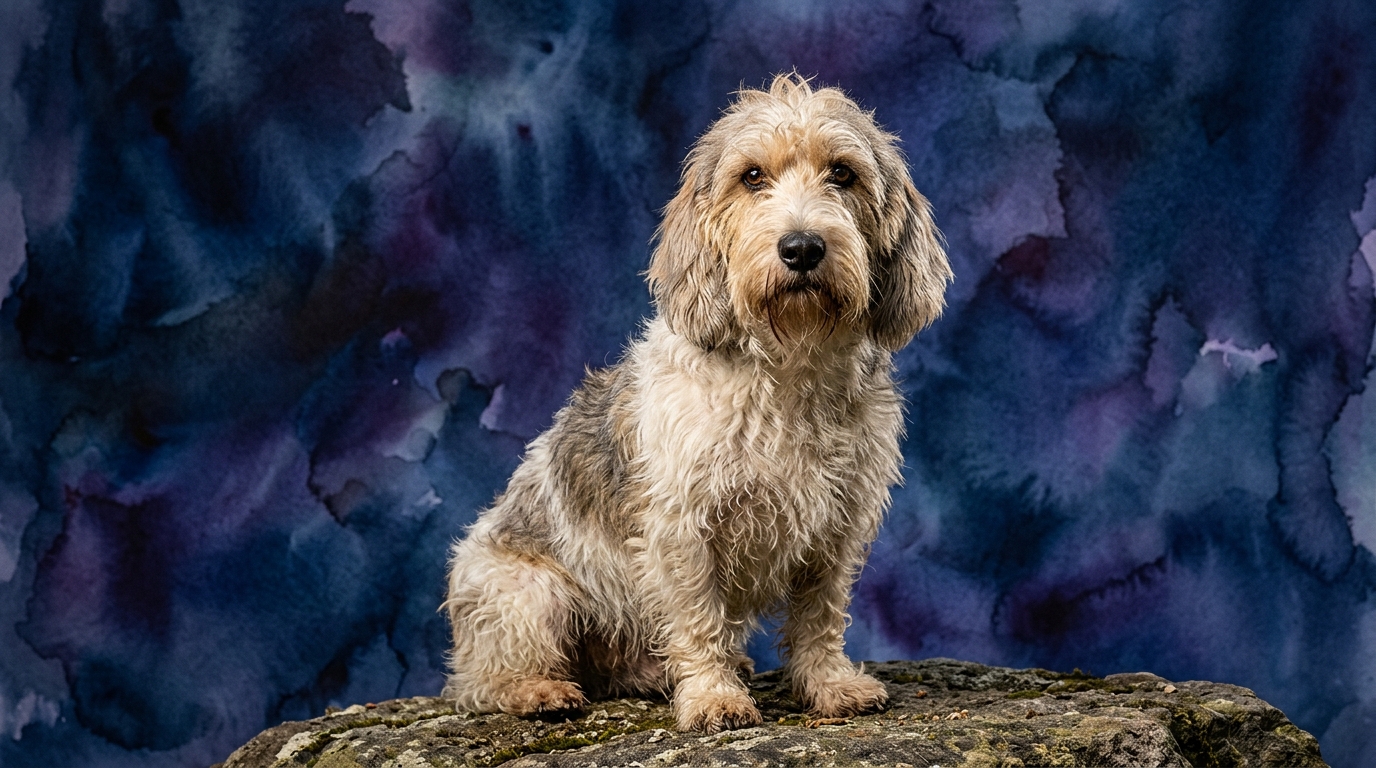
In contrast, the Petit Basset Griffon Vendéen, a boisterous representative of the Hound group, presents a consistent cognitive landscape across most dimensions. Its problem-solving ability, like the Curly-Coated Retriever, is rated 3 out of 5, meaning it can tackle challenges with a reasonable degree of success, often relying on its keen senses and tenacity rather than abstract reasoning. Training speed also aligns at 3/5, implying that while capable of learning, the PBGV may require patience and creative approaches to overcome its strong independent streak and focus on the task at hand. Social intelligence, at 3/5, allows it to form affectionate relationships with its family, though its social interactions might be more driven by pack instincts and a desire for companionship than by nuanced emotional comprehension. Its instinctive drive, also 3/5, is heavily influenced by its heritage as a scent hound, manifesting as a persistent pursuit of interesting odors and a robust desire to explore, often overriding other directives. Memory, however, is rated 3/5, suggesting it retains information adequately but might not recall intricate details or long sequences with the same precision or speed as breeds with higher memory scores. The PBGV is not ranked on the Coren scale, a common characteristic among scent hounds whose intelligence often manifests differently from traditional obedience metrics.
Where Curly-Coated Retriever Wins Cognitively
The Curly-Coated Retriever’s distinct advantage lies squarely in its superior memory, scoring a 4 out of 5 compared to the PBGV’s 3. This enhanced recall capacity translates directly into more efficient and reliable retention of learned behaviors, commands, and routines. For tasks requiring sequential steps or remembering specific locations of retrieved items, the CCR’s memory offers a significant edge, allowing it to execute complex field work or advanced obedience sequences with greater fluidity and fewer repetitions needed for mastery. This superior memory underpins its consistent performance in situations where precision and reliable recall are paramount, making it a more dependable partner for intricate tasks.
Furthermore, the CCR’s #41 Coren ranking, while not directly an IQ dimension, provides external validation of its overall working and obedience intelligence, a category where the PBGV is unranked. This ranking suggests a greater inherent capacity for understanding and executing human commands within a structured training environment. While both breeds show similar problem-solving abilities, the CCR’s combination of strong memory and higher Coren placement indicates a more adaptable mind when faced with learning new rules or adapting to novel situations that require adherence to human directives, rather than purely instinctive responses.
Where Petit Basset Griffon Vendéen Wins Cognitively
While not reflected in higher numerical scores, the Petit Basset Griffon Vendéen exhibits a specialized cognitive strength rooted in its hound heritage: an unparalleled instinctive drive for scent work and an unyielding persistence. Its 'instinctive drive' at 3/5 is deeply intertwined with its olfactory intelligence, allowing it to process and follow complex scent trails with remarkable dedication and focus, a cognitive task that requires intense concentration and problem-solving within its sensory world. This unwavering determination, often perceived as stubbornness in other contexts, is a cognitive triumph when applied to its primary purpose of tracking game.
The PBGV's problem-solving, while rated 3/5 like the CCR, often manifests differently, emphasizing tenacity and sensory input over abstract strategy. When faced with a puzzle, a PBGV might not analyze it with the same detachment as a Sporting dog, but will instead relentlessly pursue a solution through trial and error, guided by its nose and an innate understanding of its environment. This practical, sensory-driven problem-solving and its robust social intelligence, geared towards pack dynamics, make it exceptionally adept at navigating complex outdoor environments and interacting effectively within its social group, even if it requires more effort to redirect its attention from a compelling scent.
Which is Easier to Train and Why
Based on their cognitive profiles, the Curly-Coated Retriever is generally easier to train for a wide range of obedience and task-oriented commands. While both breeds share a 3/5 training speed, the CCR’s superior 4/5 memory is the critical differentiator. This means a CCR will commit new commands, cues, and sequences to long-term memory more efficiently and reliably, requiring fewer repetitions and demonstrating greater consistency once learned. Its instinctive drive, while present, is typically more aligned with human direction, making it more amenable to structured training sessions aimed at collaboration.
The Petit Basset Griffon Vendéen, despite its 3/5 training speed, presents unique challenges due to its prominent instinctive drive, heavily focused on scent. This drive can lead to a strong independent streak; when a compelling scent presents itself, the PBGV’s cognitive focus shifts entirely to tracking, often making it 'deaf' to commands. Training a PBGV therefore requires exceptional patience, creativity, and a deep understanding of its motivations, often needing to out-compete the allure of the environment. While capable of learning, its memory (3/5) means it may require more consistent reinforcement over a longer period to solidify behaviors, and its natural inclination is less about pleasing a handler and more about following its nose.
Which Suits Active Owners vs Relaxed Owners
For active owners seeking a canine partner for diverse pursuits, the Curly-Coated Retriever is an excellent match. Its balanced instinctive drive, combined with strong memory and a capacity for structured learning, makes it suitable for activities like advanced obedience, agility, retrieving sports, and even search and rescue. These dogs thrive on mental and physical engagement that allows them to utilize their problem-solving and memory skills in a collaborative context. An active owner who enjoys consistent training and outdoor adventures will find the CCR a willing and capable companion, eager to learn and execute tasks.
The Petit Basset Griffon Vendéen, while possessing an active spirit, suits a different kind of active owner or even a more relaxed owner who appreciates its independent nature and provides outlets for its specific drives. Owners who enjoy long, rambling walks where the dog can explore scents, or those interested in scent work and tracking sports, will find the PBGV an enthusiastic participant. Its energy is less about structured, repetitive tasks and more about exploratory, sensory-driven activity. For a relaxed owner, the PBGV can adapt, provided its need for mental stimulation through scent exploration and sufficient physical exercise is met, perhaps through secure off-leash areas where it can follow its nose without consequence. However, neglecting its need for mental engagement can lead to a bored and creatively destructive hound.
The Verdict
Opt for the Curly-Coated Retriever if you prioritize a highly trainable dog with superior memory for complex tasks, consistent obedience, and a collaborative spirit in structured activities like advanced training or field work.
Select the Petit Basset Griffon Vendéen if you appreciate a tenacious, independent scent hound whose problem-solving is driven by its nose, and you are prepared for creative training that respects its strong instincts and provides ample opportunities for scent exploration.
🧠 Find Your Pet's IQ Score
Our Pet IQ Lab assessment covers 25+ tests across 5 cognitive dimensions — personalized to your breed.
Take the Full IQ Test →Frequently Asked Questions
Are Curly-Coated Retrievers good family dogs?
Yes, Curly-Coated Retrievers generally possess a 3/5 social intelligence, enabling them to form strong bonds and interact well with their family. They are affectionate and loyal, though early socialization is crucial for them to adapt comfortably to various situations and people.
How much exercise does a Petit Basset Griffon Vendéen need?
Petit Basset Griffon Vendéens require a moderate to high amount of exercise, reflecting their 3/5 instinctive drive and hound heritage. Daily long walks, opportunities for off-leash exploration in secure areas, and engaging in scent games are essential to satisfy their physical and mental needs.
Can a PBGV be trained for off-leash reliability?
Training a PBGV for off-leash reliability is challenging due to their powerful 3/5 instinctive drive for scent, which can override commands. While possible with consistent, high-value reward training, their tendency to follow their nose means secure, fenced areas are often safer for off-leash activity.