Side-by-Side Cognitive Profiles: A Deeper Look
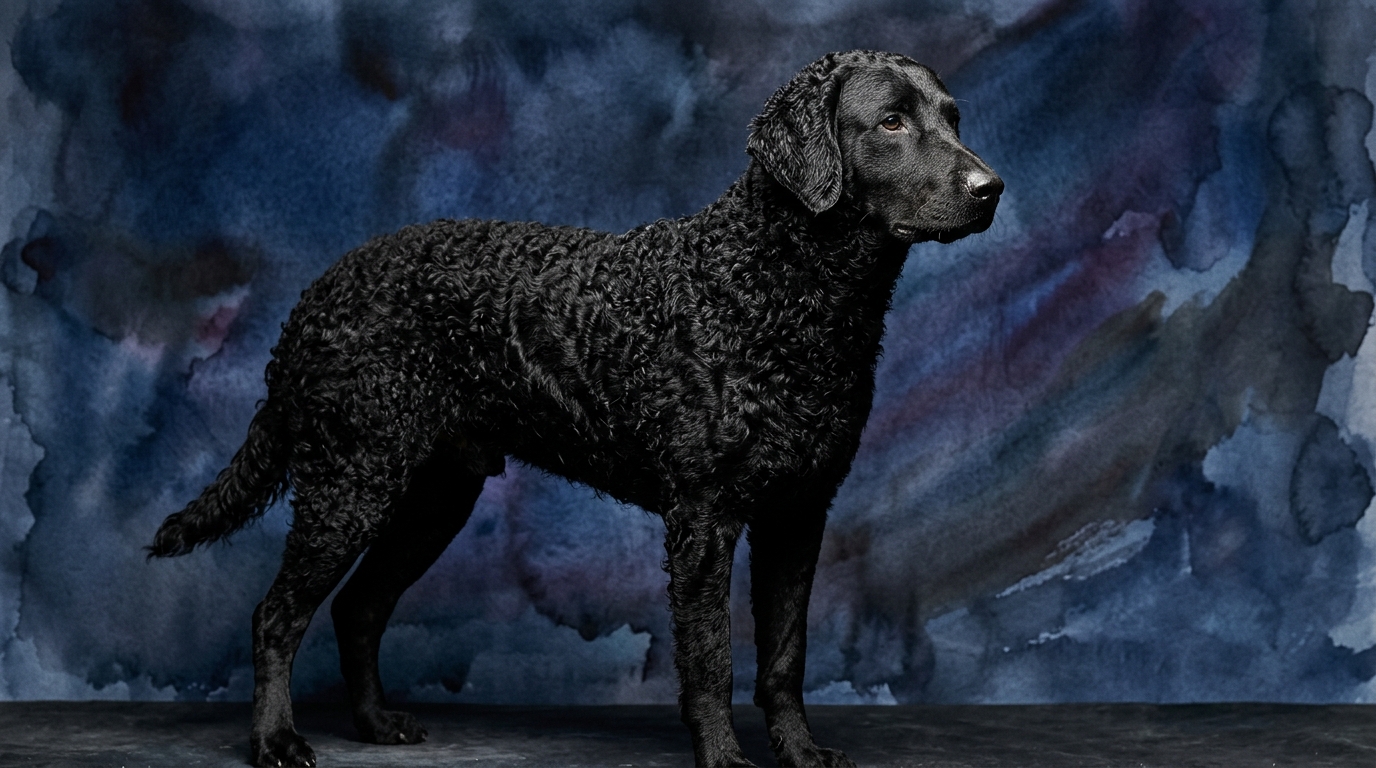
The Cosmic Pet Pet IQ Lab employs a multi-dimensional approach to assess canine intelligence, moving beyond single-score rankings to reveal a more nuanced picture of a breed's cognitive strengths. For the Curly-Coated Retriever, a Sporting group dog with a Coren rank of #41, its profile shows a balanced aptitude with a standout memory. This breed achieves a 3/5 in Problem Solving, indicating a capacity for navigating new challenges and figuring out solutions. Its Training Speed is also 3/5, suggesting it learns new commands and routines at a moderate pace. Social Intelligence, at 3/5, reflects a reasonable understanding of human cues and pack dynamics. Instinctive Drive, rated 3/5, speaks to its natural inclinations for activities like retrieving. Crucially, its Memory stands at an impressive 4/5, indicating a superior ability to retain information over time.
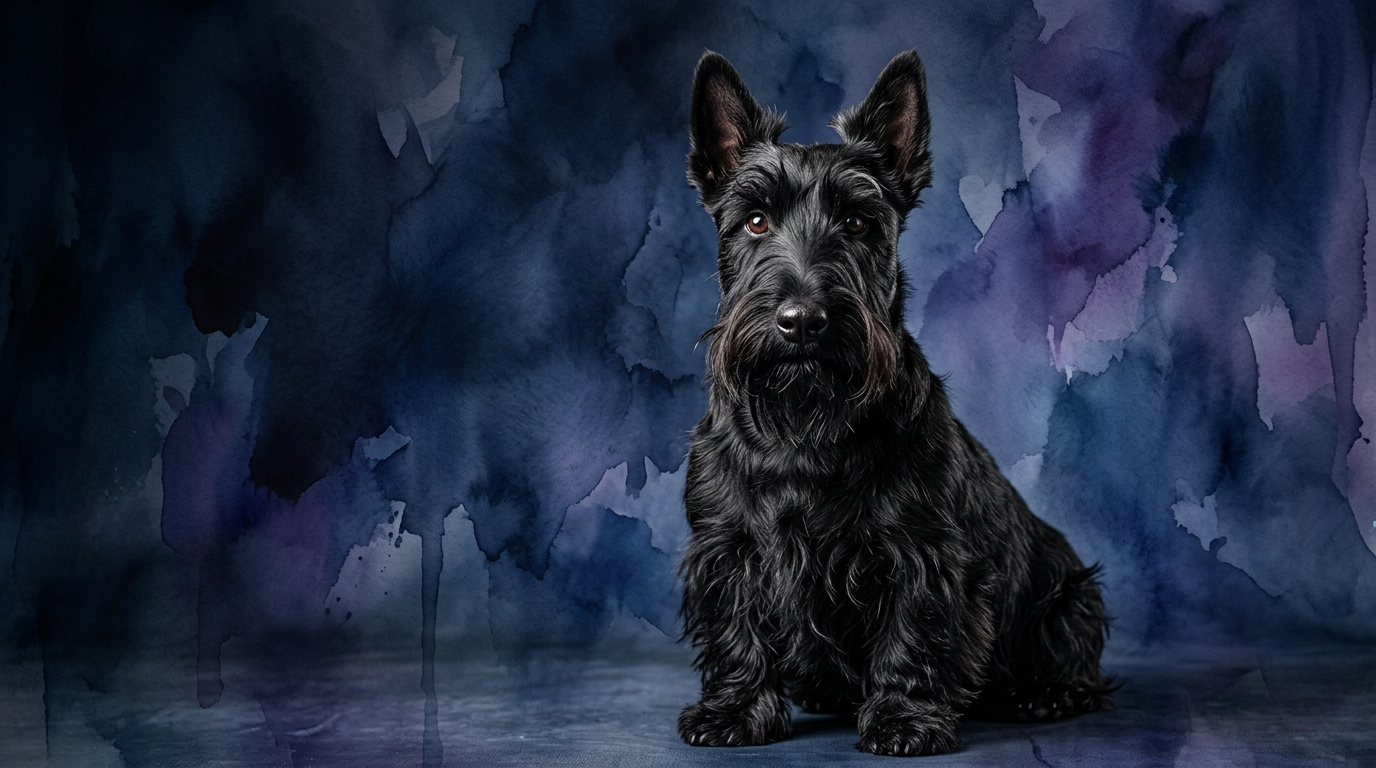
In contrast, the Scottish Terrier, a Terrier group dog with a Coren rank of #65, presents a profile marked by consistency across most dimensions, albeit with a slightly lower memory score. This breed also scores 3/5 in Problem Solving, demonstrating an ability to work through obstacles, often with a characteristic terrier tenacity. Its Training Speed is 3/5, similar to the Curly-Coated Retriever, meaning it can absorb lessons, though perhaps with a different approach required from the trainer. Social Intelligence is 3/5, implying an awareness of its environment and companions, often expressed with a discerning nature. Instinctive Drive, also 3/5, is strongly tied to its heritage of hunting vermin, manifesting as a keen desire to dig, chase, and investigate. Its Memory is 3/5, a solid capacity for recalling information, but not quite as pronounced as the Curly-Coated Retriever's.
Where the Curly-Coated Retriever Excels Cognitively
The Curly-Coated Retriever's most pronounced cognitive advantage lies in its superior Memory, rated 4/5 compared to the Scottish Terrier's 3/5. This enhanced recall ability is a significant asset in many aspects of daily life and training. A Curly-Coated Retriever can more readily remember complex sequences of commands, the location of specific items, or intricate agility courses, making it an excellent candidate for advanced obedience or competitive dog sports. Their ability to retain lessons from past experiences means they can adapt more quickly to changing routines or environments, and they are less likely to forget previously learned behaviors even after a long break.
Furthermore, while both breeds share a 3/5 Training Speed, the Curly-Coated Retriever's higher Coren rank (#41 vs #65) and its sporting background suggest a general predisposition for cooperative work. This isn't just about how quickly they pick up a command, but also their willingness and consistency in executing it. Their combined cognitive profile, especially their memory, allows them to build a comprehensive repertoire of behaviors and understand their role within a human family structure with greater ease, leading to a more fluid and predictable partnership in activities requiring consistent recall and adherence to rules.
Where the Scottish Terrier Shines Cognitively
While the Scottish Terrier doesn't boast a higher score in any single dimension compared to the Curly-Coated Retriever, its cognitive profile, particularly its combination of 3/5 Problem Solving and 3/5 Instinctive Drive, allows it to shine in areas demanding independent thought and determination. Terriers were bred to work independently, often out of sight of their human companions, requiring them to make their own decisions in challenging situations. This translates into a dog that, while equally capable of problem-solving as the Curly-Coated Retriever, often applies it with a self-reliant and tenacious approach.
Their 3/5 Instinctive Drive, rooted in their vermin-hunting heritage, means they possess a strong, focused motivation for exploration, digging, and pursuit. This drive, coupled with their problem-solving abilities, makes them adept at tasks requiring persistence and self-directed investigation, such as scent work or navigating complex environments to achieve a goal they deem worthy. Their social intelligence at 3/5, while not indicating effusive eagerness, suggests a discerning awareness that allows them to interact effectively on their own terms, making them astute observers of their surroundings and capable of making independent judgments, rather than constantly seeking human direction.
Training Dynamics: Ease and Engagement
When it comes to ease of training, the Curly-Coated Retriever generally presents a more straightforward experience for most owners. Their 4/5 Memory score is a significant advantage, enabling them to retain commands, routines, and boundaries with greater efficiency. This means fewer repetitions are often needed, and learned behaviors are more likely to stick over the long term. Their Sporting group heritage also predisposes them to a cooperative mindset, often eager to please and work alongside their human companions, making positive reinforcement highly effective. While their Training Speed is 3/5, indicating a moderate learning pace, their excellent memory ensures that once a lesson is learned, it is well-cemented.
The Scottish Terrier, despite also having a 3/5 Training Speed and Problem Solving, can be more challenging to train due to its independent nature and strong instinctive drive. Their 3/5 Instinctive Drive, geared towards independent hunting and vigilance, means they often have their own agenda. While they are capable of learning, their willingness to consistently perform a command may depend on their assessment of its value or their current level of engagement. Training a Scottish Terrier often requires more creativity, patience, and consistency from the owner, leveraging their problem-solving skills to make training feel like a collaborative challenge rather than a strict command. Their 3/5 Memory, while adequate, may require more frequent refreshers for complex tasks compared to a Curly-Coated Retriever.
Matching Breeds to Lifestyles: Active vs. Relaxed Owners
For active owners seeking a canine partner for diverse pursuits, the Curly-Coated Retriever is often an ideal match. Their balanced cognitive profile, highlighted by superior memory and a cooperative sporting instinct, makes them excellent companions for activities such as advanced obedience, agility, dock diving, hiking, and long-distance retrieving games. They thrive on mental and physical stimulation that involves working closely with their human. Owners who enjoy structured training sessions, exploring new environments, and engaging in complex problem-solving tasks will find a highly capable and enthusiastic partner in a Curly-Coated Retriever, whose memory allows them to excel in recalling intricate routes or multiple commands.
Conversely, while not a sedentary breed, the Scottish Terrier's cognitive and behavioral traits align well with owners who appreciate a dog with an independent streak and a more self-contained approach to activity. They are suited for owners who enjoy brisk walks, focused play sessions, and opportunities for their dog to explore and 'hunt' (safely) in their environment. Their 3/5 Instinctive Drive and Problem Solving mean they are perfectly capable of entertaining themselves or pursuing their own interests, without constant human direction. Relaxed owners, who desire a loyal companion with a distinct personality and a moderate, self-directed exercise routine, will find the Scottish Terrier's discerning social intelligence and tenacious spirit a rewarding fit.
The Verdict
Choose the Curly-Coated Retriever if you seek a cooperative, highly trainable companion with exceptional memory for complex tasks and a desire to engage actively in structured activities.
Opt for the Scottish Terrier if you appreciate an independent, tenacious companion with strong problem-solving skills, capable of self-directed engagement, and a discerning social nature.
🧠 Find Your Pet's IQ Score
Our Pet IQ Lab assessment covers 25+ tests across 5 cognitive dimensions — personalized to your breed.
Take the Full IQ Test →Frequently Asked Questions
Does a higher Coren rank automatically mean a dog is 'smarter' overall?
No, the Coren rank is a general measure primarily reflecting working and obedience intelligence, or how quickly a dog learns and obeys commands. The Cosmic Pet Pet IQ Lab's multi-dimensional profile, like comparing a Curly-Coated Retriever's 4/5 memory to a Scottish Terrier's 3/5, offers a more granular understanding of specific cognitive strengths beyond a single ranking.
How does the difference in memory (4/5 vs 3/5) specifically impact daily life for these breeds?
A Curly-Coated Retriever's 4/5 memory means it will more readily recall house rules, past training, and routines, making daily life smoother and requiring fewer reminders. A Scottish Terrier's 3/5 memory is perfectly adequate for most situations, but owners might find they need to reinforce less frequently used commands or specific boundaries more consistently over time to maintain recall.
Can a Scottish Terrier learn complex tricks and tasks despite its lower Coren rank?
Absolutely. While their Coren rank is lower and their memory is 3/5, Scottish Terriers possess 3/5 problem-solving abilities and a strong instinctive drive. Learning complex tasks might require a more creative, highly motivating, and patient training approach, focusing on making the task engaging and rewarding for their independent spirit, rather than relying solely on rote repetition.