A Side-by-Side Look at Cognitive Profiles
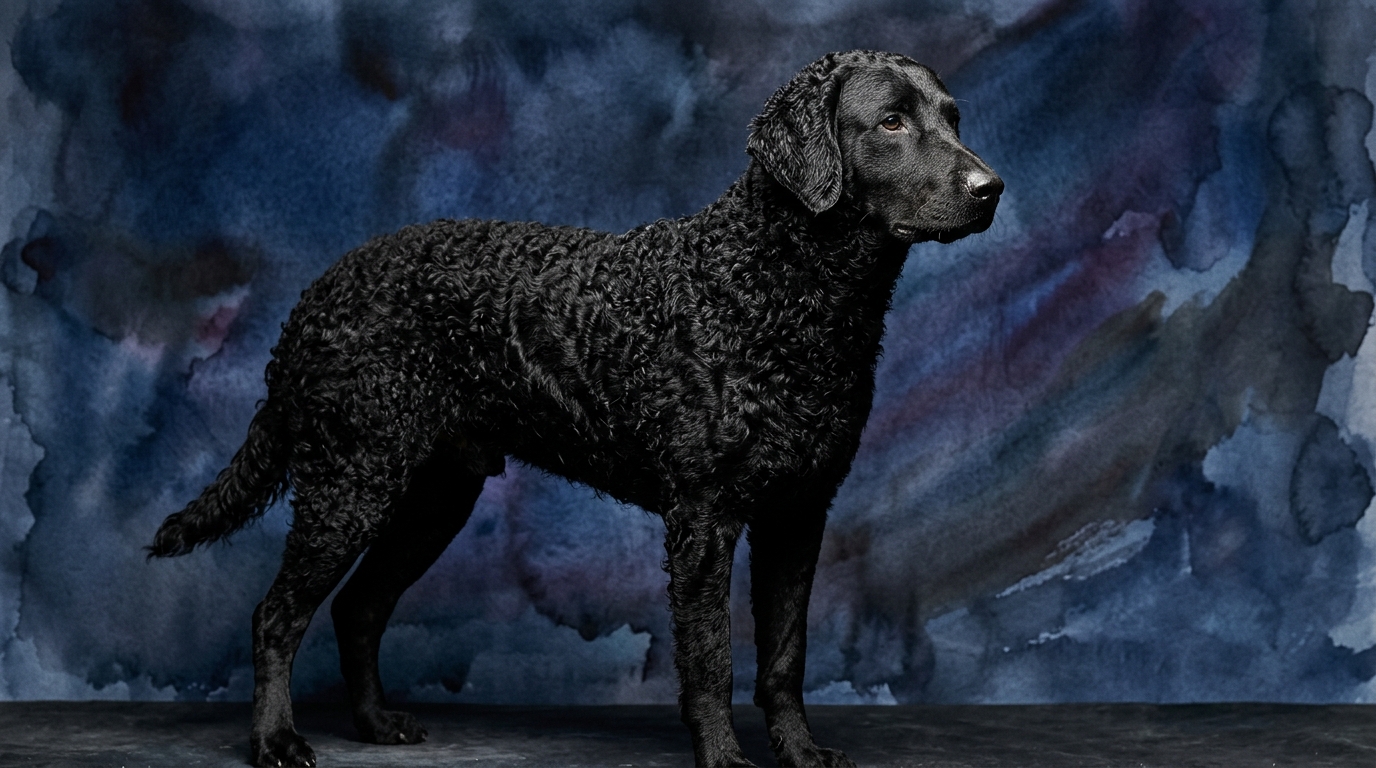
The Cosmic Pet Pet IQ Lab offers a nuanced perspective on canine intelligence, breaking it down into five key dimensions. For the Curly-Coated Retriever, a breed steeped in the tradition of efficient retrieving, its profile reveals specific strengths.
**Curly-Coated Retriever (Coren Rank #41):** Problem Solving (3/5) indicates an aptitude for navigating complex physical environments, particularly those involving retrieving tasks, where solutions lead to tangible rewards. Training Speed (3/5) suggests a moderate learning pace, benefiting greatly from consistent, engaging methods that tap into their desire for cooperative work. Social Intelligence (3/5) means they form strong bonds with their primary family, showing discernment with strangers and understanding human cues related to tasks. Instinctive Drive (3/5) highlights a robust desire for retrieving, water work, and exploration, manifesting as a need to 'do' things with purpose. Crucially, Memory (4/5) stands out, indicating a strong capacity for recalling learned behaviors, spatial layouts, and past experiences, which is vital for complex tasks and long-term retention of training.
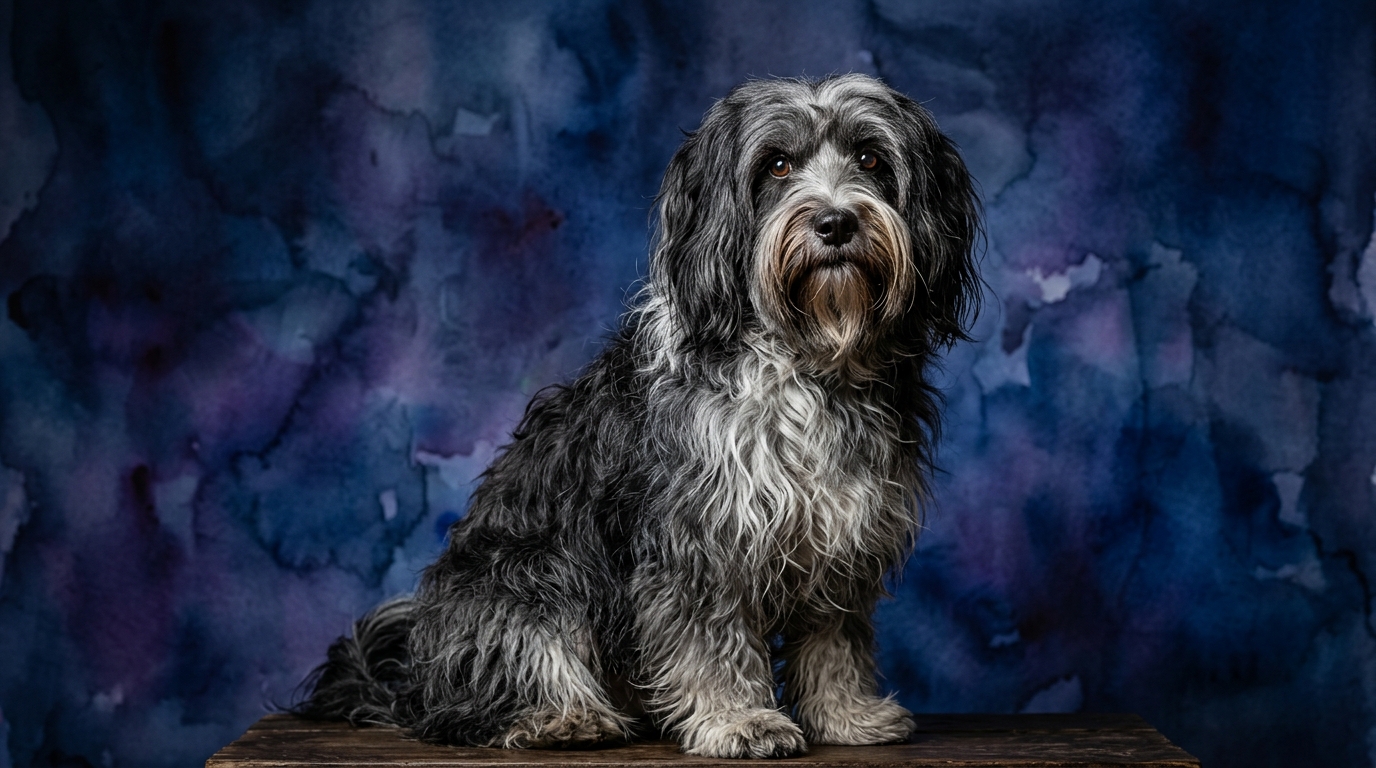
The Tibetan Terrier, with its ancient lineage as a companion and guardian in harsh climates, presents a distinct yet equally capable cognitive makeup.
**Tibetan Terrier (Coren Rank #63):** Problem Solving (3/5) shows resourcefulness in their environment, often finding creative ways to achieve comfort or attention, with their problem-solving potentially leaning towards strategic thinking within a household context. Training Speed (3/5) suggests they learn steadily, though their independent streak means motivation needs to be compelling and varied, as repetitive drills might be met with disinterest. Social Intelligence (3/5) reveals they are highly attuned to family dynamics and moods, often offering comfort or companionship, and observing social cues keenly while being reserved with outsiders. Instinctive Drive (3/5) is rooted in their historical role as vigilant companions, manifesting as loyalty, and a desire for comfort and routine. Memory (3/5) indicates a competent recall for routines, family members, and learned commands, though perhaps not with the same depth for complex sequences as the Curly-Coated Retriever.
Where the Curly-Coated Retriever Excels Cognitively
The Curly-Coated Retriever’s most pronounced cognitive advantage, according to our metrics, lies in its **superior memory, scoring 4/5 compared to the Tibetan Terrier’s 3/5**. This isn't merely about remembering simple commands; it translates into an enhanced ability to recall intricate retrieve patterns, navigate dynamic field scenarios, and retain a vast repertoire of learned behaviors over extended periods. For tasks requiring sequential execution or multi-step problem-solving, this robust memory capacity is invaluable, making them exceptionally well-suited for advanced obedience, agility, and particularly field trials where long-term retention of complex sequences and environmental details is paramount.
Furthermore, the CCR's higher Coren ranking (#41 vs. TT's #63) subtly reinforces an edge in what Coren terms “working and obedience intelligence.” While their individual IQ scores for problem-solving and training speed are similar to the TT, the Curly-Coated Retriever’s historical role as a dedicated working retriever means their cognitive functions are finely tuned for practical, task-oriented application. They are bred to understand and execute human instructions efficiently in varied, often challenging, environments. This manifests in their ability to quickly generalize learned behaviors to new situations and demonstrate consistent performance under pressure, a hallmark of robust and adaptable cognitive function that allows them to excel in roles requiring consistent application of learned skills.
Where the Tibetan Terrier Shines Cognitively
The Tibetan Terrier, despite its slightly lower Coren ranking, showcases cognitive strengths uniquely adapted to its ancient purpose as a cherished companion and sentinel in the harsh Himalayan landscape. While its memory score is 3/5, its **social intelligence (3/5)**, combined with centuries of close human interaction, suggests a nuanced and perceptive understanding of its human companions. They excel at discerning subtle human emotions, anticipating needs, and adapting their behavior accordingly, often offering comfort or companionship without needing explicit commands. This isn't about retrieving a distant object; it's about intuitively knowing when a gentle nudge or quiet presence is most needed, demonstrating a sophisticated emotional intelligence.
Their problem-solving ability (3/5) often manifests differently than the CCR's task-oriented approach. Rather than solving physical puzzles for a retrieve, TTs might excel at “people puzzles” – figuring out how to gain attention, subtly manipulate routines for their benefit, or navigate social situations within the home to achieve a desired outcome. Their inherent independence, a trait that helped them thrive in environments where they often had to make their own decisions, means they are adept at assessing situations and acting autonomously when human direction isn't clear. This self-reliance, while sometimes interpreted as stubbornness in training, is a testament to their cognitive ability to evaluate circumstances and act decisively without constant guidance, showcasing a unique form of cognitive autonomy.
Training Dynamics: Similar Scores, Different Approaches
Both the Curly-Coated Retriever and the Tibetan Terrier share a 3/5 score for training speed, implying a moderate pace of learning new commands and concepts. However, the *approach* to training and the *experience* of training can differ significantly due to their distinct motivations and instinctive drives. The Curly-Coated Retriever, with its strong instinctive drive for retrieving and cooperative work, generally responds enthusiastically to positive reinforcement methods that incorporate play, retrieves, and praise. Their superior memory means they retain complex sequences effectively, making advanced training achievable with consistency and clear goals. They thrive on having a job to do and understanding their role as a partner in a team, eager to please and engage.
The Tibetan Terrier, while equally capable of understanding and learning, often requires a more creative, patient, and persuasive approach. Their independent nature, stemming from a history where they were valued for their self-sufficiency, means they might question the utility of a command or become bored with repetitive drills. Training for a TT needs to be fun, varied, and highly rewarding, often appealing to their desire for comfort, attention, or a challenge. While they grasp concepts quickly due to their problem-solving ability, their willingness to *perform* them consistently might depend on their mood or perceived benefit. Their keen social intelligence allows them to understand human intent, but their self-reliance means they will often make their own choices about when and how to comply, necessitating a trainer who can make compliance feel like their idea.
Matching Breed to Lifestyle: Active vs. Relaxed Owners
For **active owners**, the Curly-Coated Retriever emerges as an excellent and fulfilling match. Their 3/5 instinctive drive, coupled with a history as a vigorous sporting dog, means they possess a significant need for both physical and mental exercise. Owners who enjoy long hikes, running, swimming, or engaging in demanding dog sports like agility, obedience, or field work will find the CCR to be an eager, capable, and enthusiastic partner. Their strong memory and inherent desire to work make them excel in structured activities, providing both intellectual stimulation and ample physical exertion. A Curly-Coated Retriever thrives when given a clear purpose and abundant opportunities to channel their energy and intelligence.
**Relaxed owners** might find the Tibetan Terrier a more suitable companion, though it’s crucial to understand that “relaxed” doesn't equate to sedentary. The TT also has a 3/5 instinctive drive, but it manifests differently. While they thoroughly enjoy daily walks, playtime, and mental games, their historical role emphasized companionship and vigilant observation rather than demanding physical tasks over vast distances. They are adaptable and generally content with moderate daily exercise, followed by significant periods of indoor companionship and relaxation. Their social intelligence makes them excellent housemates, attentive to family members and typically well-behaved indoors once their exercise and mental enrichment needs are met. They appreciate routine, comfort, and being an integral part of family life, making them ideal for owners who prefer a more relaxed pace but are still committed to consistent daily engagement and intellectual stimulation.
The Verdict: When to Choose Each Intelligent Companion
The Verdict
Choose the Curly-Coated Retriever if you are an active individual or family seeking a highly trainable, purpose-driven companion for dog sports, outdoor adventures, or a working role, leveraging their exceptional memory and cooperative spirit.
Choose the Tibetan Terrier if you desire a perceptive, adaptable companion who thrives on social interaction, appreciates routine, and requires moderate exercise, fitting well into a home environment that values an independent yet affectionate presence.
🧠 Find Your Pet's IQ Score
Our Pet IQ Lab assessment covers 25+ tests across 5 cognitive dimensions — personalized to your breed.
Take the Full IQ Test →Frequently Asked Questions
Do Curly-Coated Retrievers and Tibetan Terriers have similar temperaments?
While both breeds are loyal to their families, their temperaments differ significantly. Curly-Coated Retrievers are generally more outgoing, eager to please, and driven by a desire to work alongside their humans. Tibetan Terriers are often more reserved with strangers and possess a noticeable independent streak, though they are deeply affectionate and attentive with their chosen people.
Which breed is better for first-time dog owners?
The suitability for first-time owners depends heavily on the individual's lifestyle and commitment. The Curly-Coated Retriever's substantial need for consistent exercise, mental stimulation, and structured training can be a challenge for novices. The Tibetan Terrier, while independent and sometimes stubborn, can be a good fit for first-time owners who are prepared for their unique personality and can provide patient, engaging training and consistent social interaction.
How do their grooming needs compare, and does it affect their cognitive engagement?
Their grooming needs are quite different: Curly-Coated Retrievers have a low-maintenance single coat that requires minimal fuss, while Tibetan Terriers require regular brushing to prevent matting of their dense double coat. While grooming itself isn't a cognitive task, the consistent handling during grooming sessions can be a form of social engagement and routine, which both breeds, particularly the socially intelligent Tibetan Terrier, can learn to appreciate and anticipate as a bonding experience.