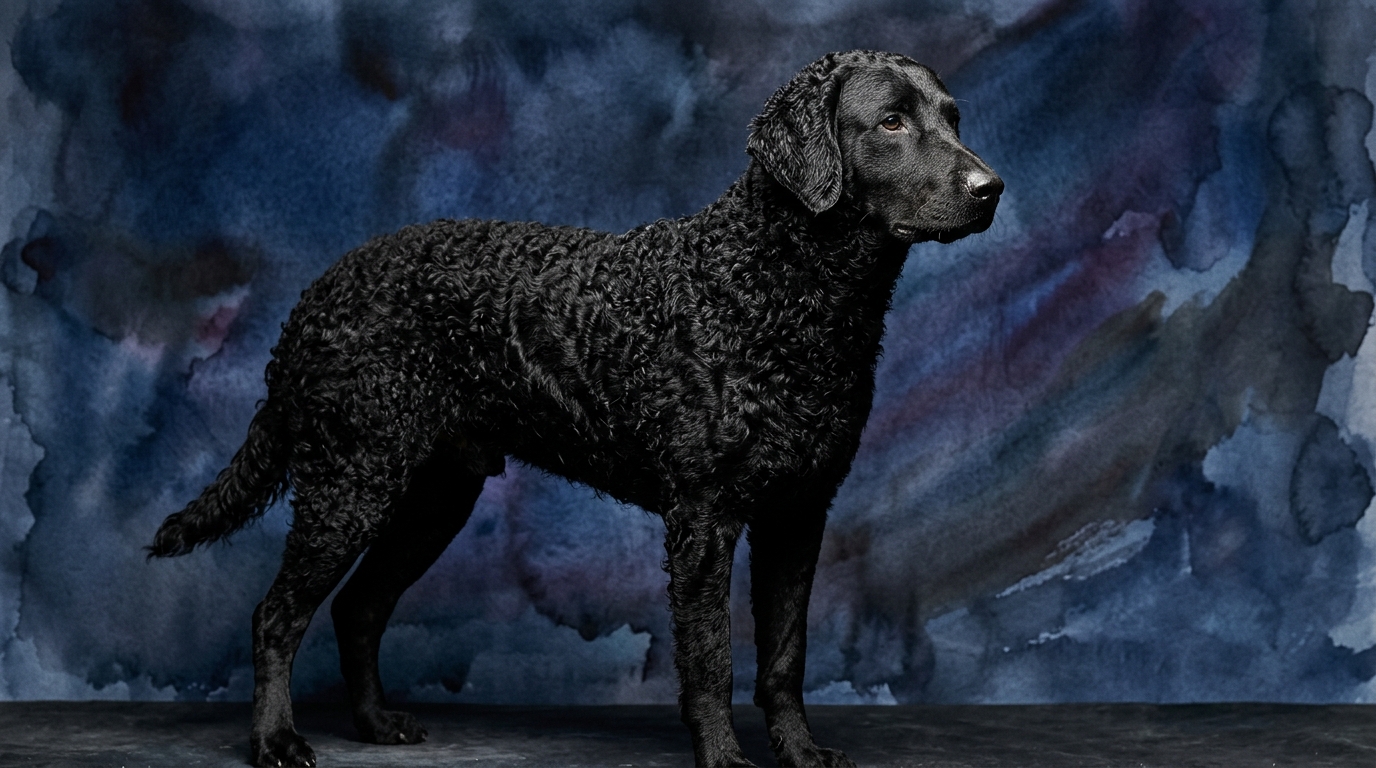
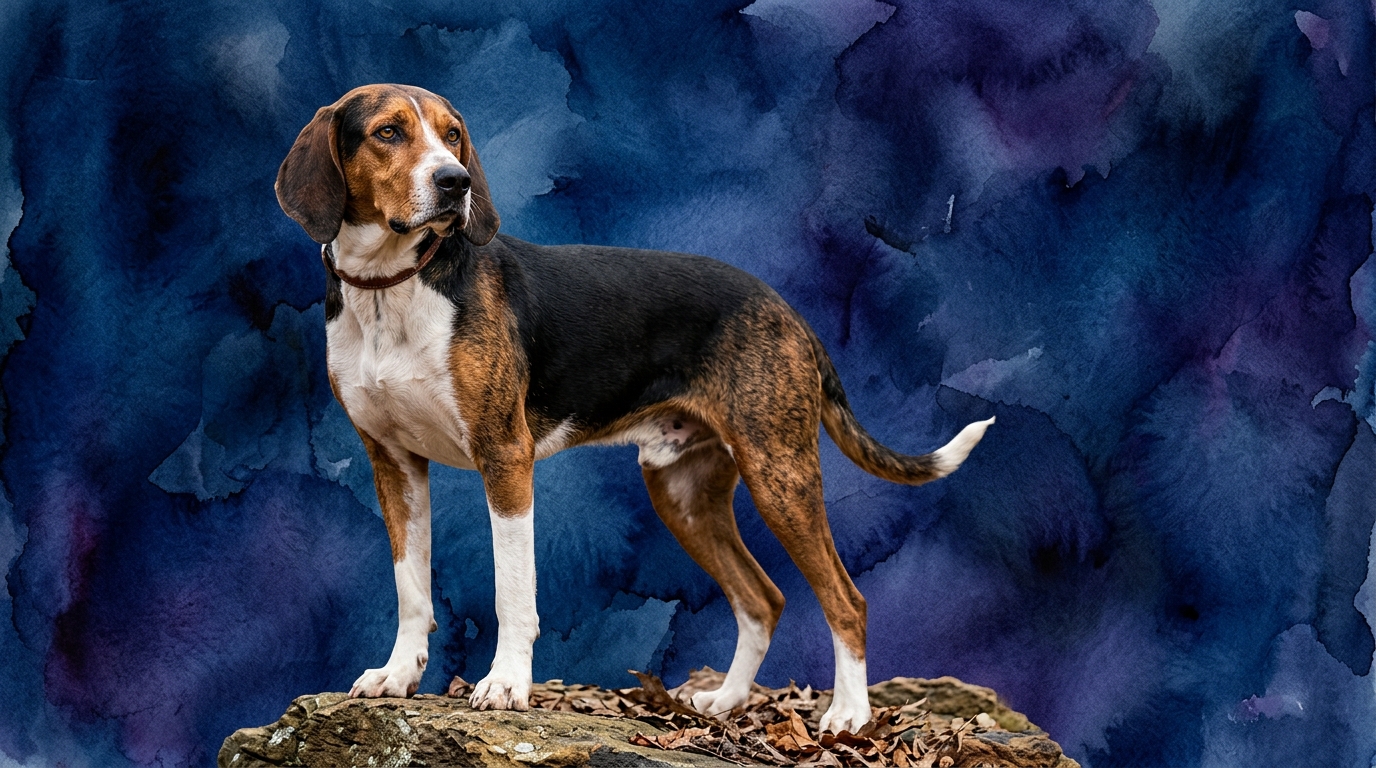
Side-by-Side Cognitive Profiles
Delving into the specific cognitive dimensions for both the Curly-Coated Retriever (CCR) and the Treeing Walker Coonhound (TWC) reveals a nuanced picture of their mental capabilities. Our Cosmic Pet Pet IQ Lab assessment scores illuminate where their strengths align and diverge.
For Problem Solving, both breeds score a 3/5. This indicates a moderate capacity for navigating novel challenges; they won't typically invent complex solutions spontaneously but can learn effective strategies through experience and guidance. A Curly might figure out how to manipulate a latch to get a toy, while a Coonhound could untangle itself from brush with focused determination.
In Training Speed, both also receive a 3/5. Neither breed is exceptionally quick nor particularly slow to grasp new commands, requiring consistent, positive reinforcement and clear communication. The Curly-Coated’s Sporting background often means a desire to work cooperatively, whereas the Coonhound's independent nature requires engaging training sessions to hold its attention.
Social Intelligence is rated 3/5 for both, reflecting a moderate ability to interpret human cues and interact appropriately within a social structure. They form strong bonds and understand household dynamics. The Curly-Coated might be slightly more attuned to a handler's subtle signals due to its cooperative retrieving history, while the Coonhound’s social interactions often revolve around pack-like family loyalty.
Instinctive Drive also scores 3/5 for both breeds, but these drives manifest quite differently. The Curly-Coated Retriever’s drive is geared towards retrieving, swimming, and working alongside a human partner, reflecting its historical role. The Treeing Walker Coonhound’s drive, by contrast, is overwhelmingly focused on scent tracking, pursuit, and treeing prey, an instinct so powerful it can often overshadow other considerations.
The most significant cognitive difference appears in Memory: the Curly-Coated Retriever scores 4/5, while the Treeing Walker Coonhound scores 3/5. The Curly-Coated demonstrates a stronger capacity for retaining learned behaviors and past experiences, aiding in complex obedience routines and recalling specific retrieve locations. The Treeing Walker Coonhound's memory, while functional for remembering scent trails and hunting patterns, is not as developed for recalling intricate sequences or long strings of commands.
Where the Curly-Coated Retriever Wins Cognitively
The Curly-Coated Retriever's superior memory (4/5 compared to the Coonhound's 3/5) provides a distinct cognitive advantage in tasks requiring retention of complex information or sequences. This means a Curly can more readily recall a series of commands, remember specific hand signals, or retain the location of multiple retrieved items over time, making it highly adaptable to structured learning environments.
Furthermore, its Coren rank of #41 implies a broader adaptability in learning and problem-solving within human-centric environments. This suggests the Curly-Coated Retriever is potentially more receptive to diverse training challenges and can generalize learned skills across various situations beyond its core retrieving function, demonstrating a robust cognitive flexibility.
Where the Treeing Walker Coonhound Wins Cognitively
While their scores are identical in Problem Solving (3/5), Training Speed (3/5), and Social Intelligence (3/5), the Treeing Walker Coonhound’s distinctive instinctive drive, though rated 3/5, is singularly powerful and highly specialized. Its cognitive strength lies in an unparalleled ability to process and follow complex scent trails, a form of problem-solving deeply ingrained and highly efficient.
This specialized cognitive function involves intricate spatial memory for routes, sophisticated pattern recognition for scent degradation over time and terrain, and an unwavering focus that can override typical distractions. The Coonhound is a master of its specific hunting domain, demonstrating a unique form of intelligence honed for olfactory detective work that few breeds can match.
Training Aptitude: Which is Easier and Why?
Despite identical 3/5 scores for Training Speed, the Curly-Coated Retriever is generally perceived as more straightforward to train for a broader range of domestic and competitive activities. This ease stems directly from its higher memory score (4/5) and a Sporting group lineage that naturally fosters a cooperative working relationship with humans. A Curly is more likely to consistently remember training cues and to generalize learned behaviors to new situations, making progress feel more linear.
The Treeing Walker Coonhound, while certainly capable of learning, faces unique challenges due to its potent instinctive drive for scent work. This drive often takes precedence over human-directed tasks, making it difficult to maintain focus when a compelling scent is present. Training a Coonhound requires exceptional patience, creativity, and a deep understanding of its motivations, often involving specialized techniques to manage its characteristic vocalizations and independent nature, which can be interpreted as stubbornness rather than a deep commitment to its primary cognitive function.
Matching Breeds to Lifestyles: Active vs. Relaxed Owners
Both the Curly-Coated Retriever and the Treeing Walker Coonhound demand an active lifestyle, but their needs stem from different cognitive and historical imperatives. The Curly-Coated Retriever thrives with owners who enjoy structured activities like obedience, agility, dock diving, or field work. Its need for mental engagement and physical exertion is best met through interactive play, consistent training, and ample opportunities to retrieve and swim.
The Treeing Walker Coonhound is ideal for owners who are equally active and passionate about outdoor adventures, especially those involving long walks, hikes, or even dedicated scent work. Its impressive stamina and unwavering drive to explore with its nose make it an excellent companion for endurance activities. However, its exercise needs are less about structured tasks and more about covering ground and following its instincts.
Neither breed is truly suited for a relaxed, sedentary lifestyle. Both require significant daily exercise and mental stimulation to prevent boredom and potential behavioral issues. A Curly-Coated Retriever might adapt slightly better to a home with less intense physical activity, provided its mental needs are met through puzzle toys and shorter, intense play sessions, but it still needs regular physical outlets. A Treeing Walker Coonhound would likely become highly restless, destructive, and vocal without ample opportunities to expend its energy and satisfy its profound scenting drive, making it a poor fit for a truly relaxed household.
The Verdict
Choose the Curly-Coated Retriever if you seek a cooperative partner for diverse activities, valuing a stronger memory for training and a general eagerness to work alongside you.
Opt for the Treeing Walker Coonhound if you are drawn to a dog with an unparalleled, specialized scenting drive, willing to embrace its independent nature and provide extensive outdoor exploration.
🧠 Find Your Pet's IQ Score
Our Pet IQ Lab assessment covers 25+ tests across 5 cognitive dimensions — personalized to your breed.
Take the Full IQ Test →Frequently Asked Questions
Do Curly-Coated Retrievers bark a lot?
Curly-Coated Retrievers are generally not excessive barkers, but they will use their voice to alert to strangers or express excitement. Consistent training and early socialization can help manage any unwanted vocalizations effectively.
Are Treeing Walker Coonhounds good family dogs?
Treeing Walker Coonhounds can be very affectionate and loyal family members, especially with children, once their significant exercise and scenting needs are adequately met. Their vocal nature and high energy require understanding and proactive management within a home environment.
Can a Treeing Walker Coonhound live in an apartment?
While possible, a Treeing Walker Coonhound in an apartment would require an extraordinary commitment to daily, extensive exercise and mental stimulation, including ample opportunities for off-leash running and scent work, to prevent restlessness and destructive behaviors. It's not an ideal living situation for their energetic nature.