Side-by-Side IQ Profile: Curly-Coated Retriever vs. Welsh Terrier
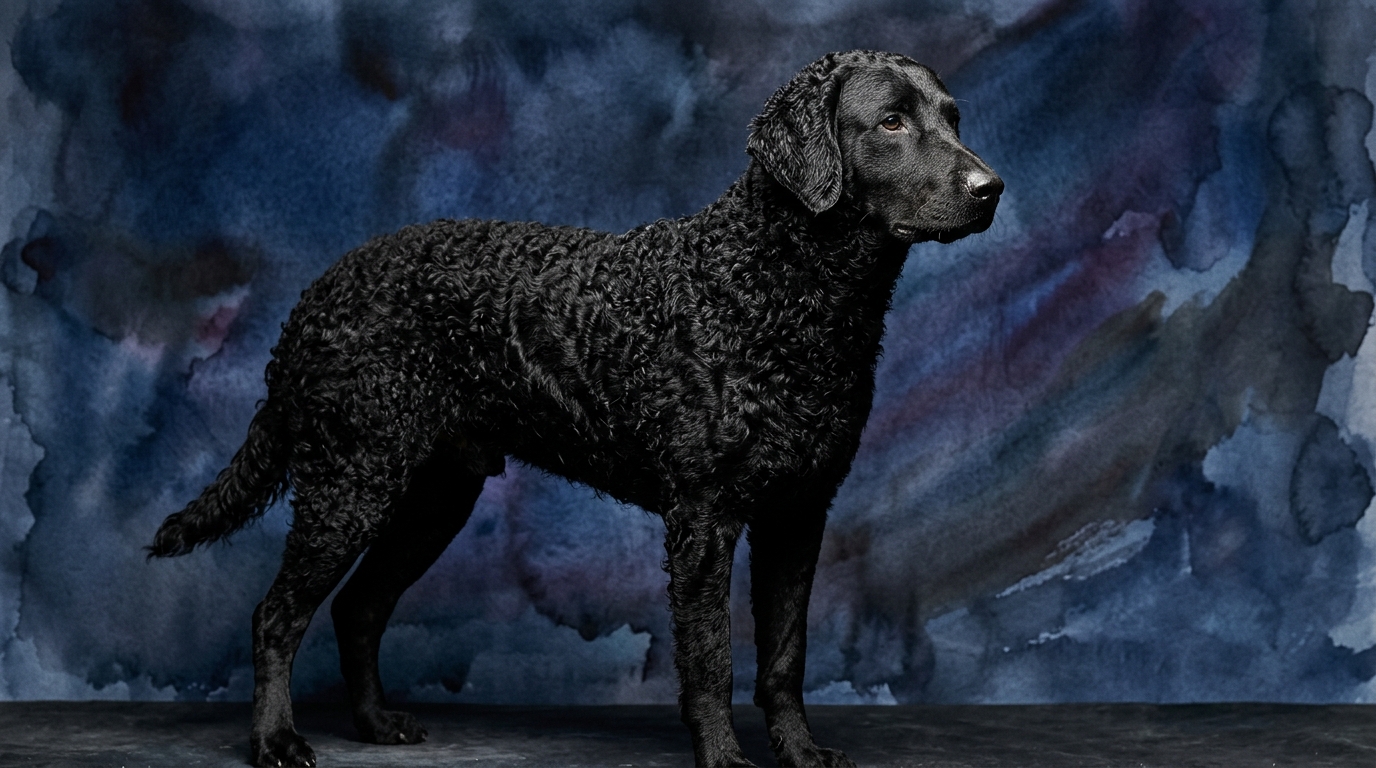
A distinguished member of the Sporting group, the Curly-Coated Retriever holds a respectable Coren rank of #41, reflecting its general trainability and working aptitude. Its Problem Solving is rated 3/5, indicating a solid capacity for navigating moderately complex challenges, particularly when these relate to its inherent retrieving tasks, such as finding a hidden dummy in varied terrain or figuring out how to access an object. Training Speed also sits at 3/5, suggesting a moderate pace of learning new commands and routines, requiring consistent and engaging positive reinforcement to build upon its cooperative nature.
Social Intelligence, at 3/5, points to an adequate understanding of human cues, body language, and canine interactions, allowing it to integrate well into family life and respond to handler direction. Its Instinctive Drive, also 3/5, reflects its heritage in retrieving waterfowl, demonstrating a balanced prey drive and an eager desire to work alongside humans. Notably, its Memory scores an impressive 4/5, indicating a superior ability to recall learned behaviors, commands, and past experiences with remarkable accuracy, which is invaluable for repetitive tasks and advanced skill acquisition.
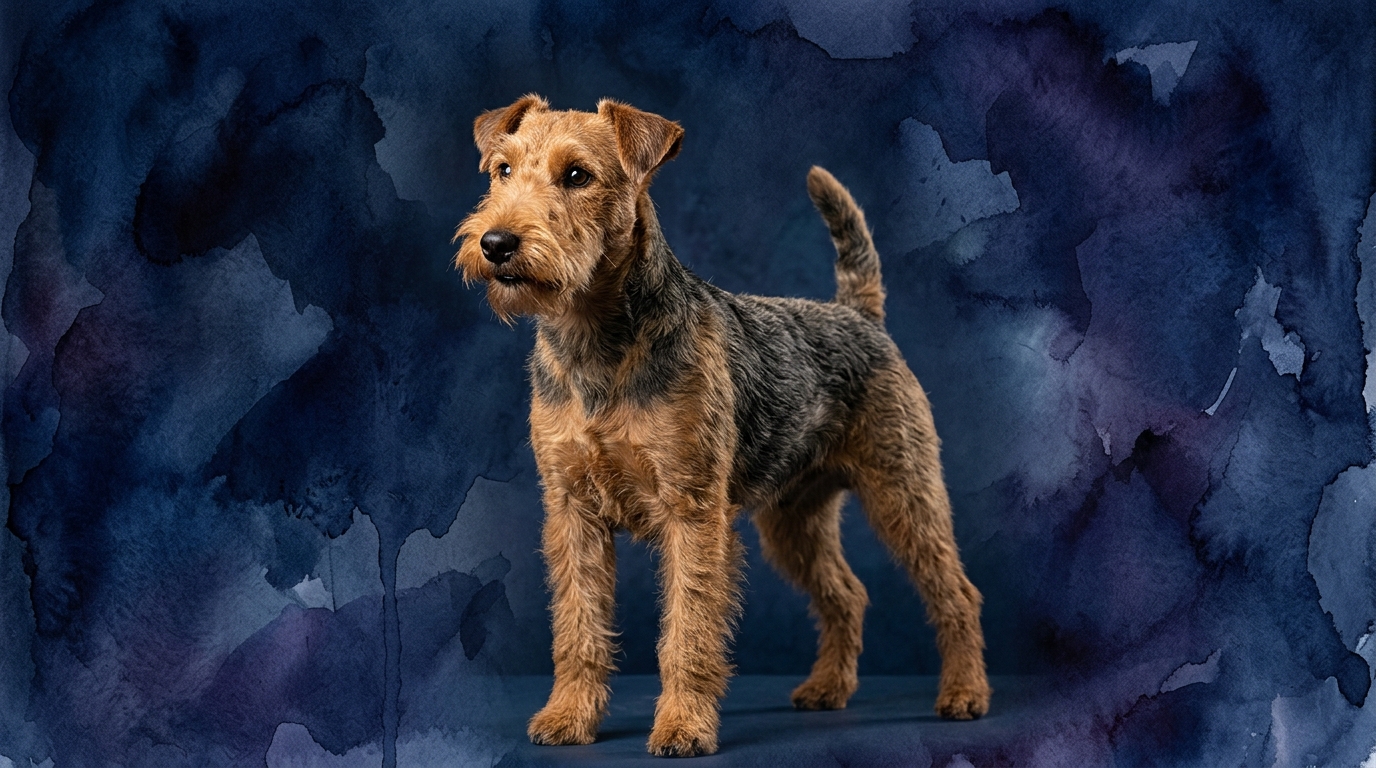
Hailing from the tenacious Terrier group, the Welsh Terrier is not included in Coren's ranking, a system that often prioritizes obedience-based working intelligence, which doesn't fully capture the terrier's independent problem-solving. Its Problem Solving matches the CCR at 3/5, but this intelligence often manifests as independent, persistent strategizing to overcome obstacles, particularly in situations requiring cunning to access or pursue quarry, such as navigating complex tunnels or outsmarting a small animal. Training Speed is also 3/5, but its innate terrier independence can sometimes make the training process a test of wills rather than a pure measure of cognitive uptake; they learn quickly but might choose when to apply that learning.
Social Intelligence, at 3/5, indicates an ability to interact with both humans and other canines, though often with a characteristic terrier bravado, discernment, and a strong sense of self-preservation. Its Instinctive Drive is 3/5, heavily focused on its prey drive, keen senses, and an unwavering desire to explore, dig, and hunt. Its Memory, at 3/5, is solid and reliable for retaining learned commands and routines, but it doesn't quite reach the exceptional recall and long-term retention often observed in breeds specifically bred for cooperative, repetitive work like the Curly-Coated Retriever.
Where the Curly-Coated Retriever Wins Cognitively
The Curly-Coated Retriever's distinct cognitive edge lies primarily in its superior Memory score of 4/5, a full point higher than the Welsh Terrier. This translates to an impressive capacity for retaining complex sequences of commands, recalling past training experiences with greater fidelity, and consistently performing learned behaviors even after periods of inactivity. This enhanced recall makes the CCR exceptionally effective in tasks requiring repetitive accuracy, such as advanced obedience trials, intricate agility courses, or demanding field work where a precise response to multiple commands is critical.
Furthermore, its position at Coren rank #41 provides a broader indication of its general amenability to structured learning and a readiness to cooperate with human direction. This cooperative intelligence, combined with its strong memory, allows the Curly to build a vast repertoire of skills and maintain them, making it a highly predictable and reliable partner in various canine activities. This excellent recall also significantly aids in proofing behaviors against distractions, as the dog remembers the desired action and its reward history even in novel or stimulating environments.
Where the Welsh Terrier Wins Cognitively
While the Welsh Terrier's numerical IQ scores largely mirror the Curly-Coated Retriever, its cognitive strengths manifest differently, rooted deeply in its terrier heritage. The Welsh Terrier's 3/5 Problem Solving, though numerically identical, is often applied with a tenacious, independent spirit, particularly in navigating confined spaces, strategizing to access a desired target, or persistently overcoming physical barriers, such as digging out vermin from underground. This isn't about cooperative retrieval; rather, it's about self-directed, persistent resolution of environmental challenges with a singular focus.
Its strong Instinctive Drive (3/5) fuels this problem-solving with an unwavering focus on its objective, often demonstrating a singular determination and resourcefulness that can be perceived as cunning independence rather than strict adherence to human commands. This unique blend of independent problem-solving and intense drive allows the Welsh Terrier to excel in situations requiring self-reliance and quick, decisive action where direct human guidance might be absent or impractical. They are masters of adapting to their immediate environment and finding their own solutions, a cognitive trait highly valued in their original working role.
Training Dynamics: Which is Easier to Train?
When assessing ease of training, the Curly-Coated Retriever generally presents a more straightforward and cooperative path. Its higher Memory (4/5) means it typically retains commands, cues, and desired behaviors more effectively and for longer periods, significantly reducing the need for constant re-teaching and reinforcing. Furthermore, as a Sporting dog, the CCR often possesses an inherent desire to work cooperatively with its handler, viewing training as a shared activity and an opportunity for partnership, rather than a series of arbitrary demands. This eagerness to engage and its excellent recall make it highly responsive to positive reinforcement methods and less prone to "forgetting" what it has learned.
The Welsh Terrier, despite a similar Training Speed score of 3/5, can prove more challenging due to its independent terrier nature. While undoubtedly capable of learning quickly, its strong Instinctive Drive and self-reliant Problem Solving often mean it will weigh a command against its own perceived interests or a more compelling environmental stimulus. This can lead to selective hearing or a preference for pursuing its own agenda, especially if a more interesting scent or activity presents itself. Training a Welsh Terrier often requires more patience, creativity, and a consistent demonstration of why cooperation benefits them, rather than relying solely on rote repetition. Success with a Welsh Terrier hinges on making training engaging, stimulating, and rewarding enough to consistently overcome its inherent independence and strong will.
Matching Breeds to Owner Lifestyles
Both breeds generally suit active owners, but their activity needs differ in intensity and type. The Curly-Coated Retriever, with its Sporting dog lineage and balanced Instinctive Drive (3/5), thrives on regular, structured exercise that often involves retrieving, swimming, or long, vigorous hikes. Its energy is typically channeled into cooperative activities, making it an excellent companion for owners who enjoy outdoor adventures and want a dog to participate actively alongside them, whether in dog sports or simply exploring nature. While adaptable to quieter periods, a CCR needs consistent physical and mental engagement to prevent boredom, maintain its physical condition, and ensure its overall well-being.
The Welsh Terrier, originating from the tenacious Terrier group, also requires significant activity, but its needs lean more towards independent exploration and outlets for its strong prey drive. While it certainly enjoys walks and playtime, a Welsh Terrier often benefits most from activities that tap into its Problem Solving and Instinctive Drive, such as earthdog trials, scent work, or vigorous games of fetch that mimic hunting and chasing. Its energy can be more intense and singularly focused on specific tasks, meaning owners need to provide stimulating activities that allow it to "work" its mind and body in ways that fulfill its breed-specific instincts. Neither breed is truly ideal for relaxed, sedentary owners; however, the CCR might be more content with a long walk followed by a quiet evening, while the WT might always be on the lookout for its next "mission" or puzzle to solve.
The Verdict
Choose the Curly-Coated Retriever if you seek a cooperative companion for structured activities, valuing its superior memory for consistent performance in obedience, sports, and family life.
Opt for the Welsh Terrier if you appreciate a dog with tenacious independence, a clever, self-reliant approach to challenges, and a spirited personality that thrives on engaging its strong instincts.
🧠 Find Your Pet's IQ Score
Our Pet IQ Lab assessment covers 25+ tests across 5 cognitive dimensions — personalized to your breed.
Take the Full IQ Test →Frequently Asked Questions
Do Curly-Coated Retrievers require a lot of mental stimulation?
Yes, Curly-Coated Retrievers, with their working heritage and good memory, benefit greatly from consistent mental engagement. Activities like puzzle toys, learning new tricks, or participating in dog sports like agility or obedience will keep their minds sharp and prevent boredom.
Are Welsh Terriers good with children despite their independent nature?
Welsh Terriers can be good with respectful children, especially if raised with them from a young age and properly socialized. Their spirited nature means they enjoy active play, but their terrier independence requires supervision to ensure boundaries are understood by both dog and child.
How do the grooming needs of these two breeds compare?
The Curly-Coated Retriever's unique coat is relatively low maintenance, requiring occasional brushing and bathing to prevent matting and keep it healthy. The Welsh Terrier's wiry coat needs regular hand-stripping or professional grooming every few months to maintain its texture and appearance, in addition to routine brushing.