
Side-by-Side IQ Profile: Dachshund vs. Akita
At the Cosmic Pet Pet IQ Lab, we analyze canine intelligence across five crucial dimensions: Problem Solving, Training Speed, Social Intelligence, Instinctive Drive, and Memory. These metrics provide a nuanced view beyond traditional obedience rankings, revealing how a breed's evolutionary purpose shapes its cognitive strengths. While the Dachshund holds a Coren rank of #49 and the Akita #54, these numbers only scratch the surface of their unique mental makeups.
The Dachshund, a small hound with a formidable spirit, displays a Problem Solving score of 4/5, indicating a strong capacity for independent thought when faced with obstacles. Its Training Speed is rated at 2/5, reflecting a selective focus, while Social Intelligence stands at 3/5, suggesting moderate adaptability. A remarkable Instinctive Drive of 5/5 underscores its deep-seated hunting heritage, constantly compelling it to investigate. Memory is assessed at 3/5, sufficient for daily routines.
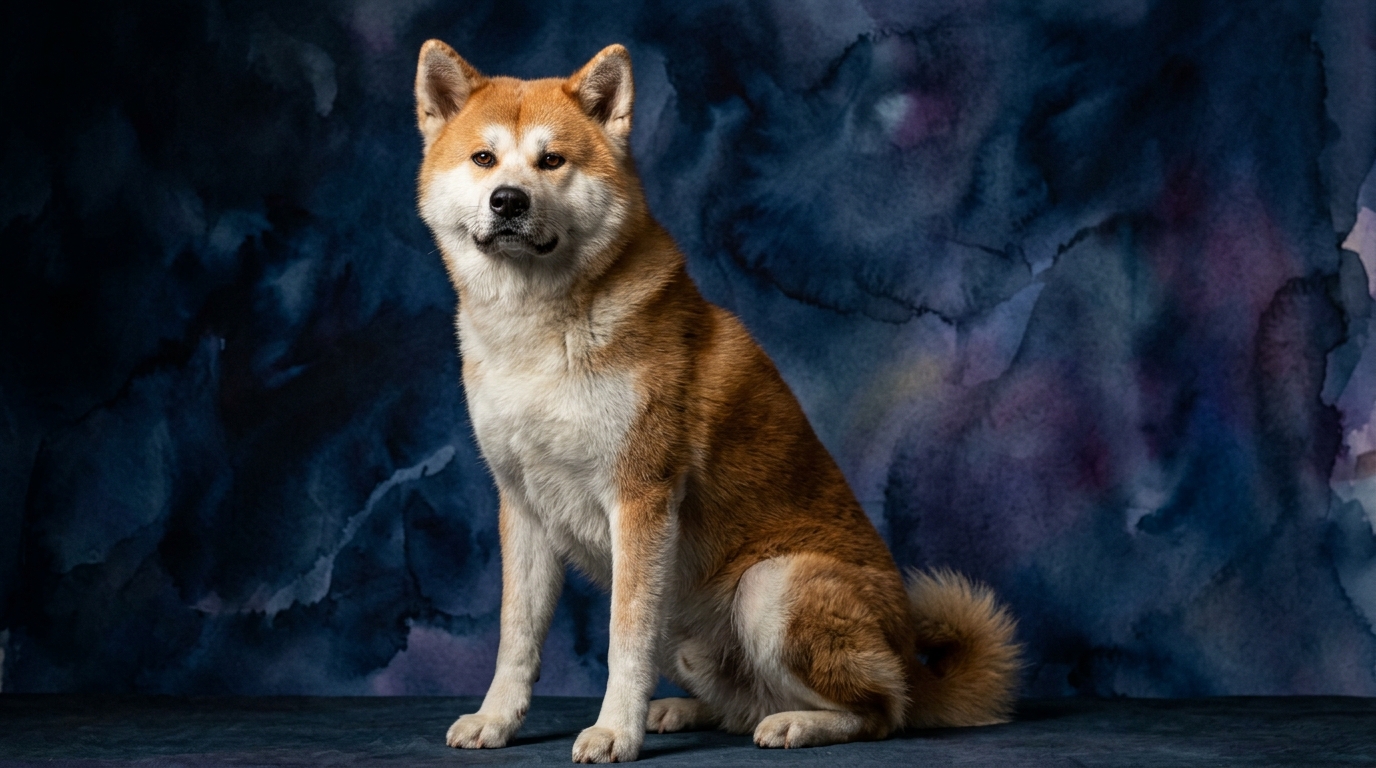
In contrast, the Akita, a powerful working dog, registers a Problem Solving score of 3/5, hinting at a more direct approach to challenges. Its Training Speed, like the Dachshund, is 2/5, emphasizing a need for patient, consistent guidance. Social Intelligence also sits at 3/5, indicative of a reserved nature, often selective in its interactions. Its Instinctive Drive matches the Dachshund at 5/5, but this manifests as a protective and territorial impulse. A significant strength lies in its Memory, rated at 4/5, showcasing a strong ability to recall experiences and behaviors.
Where the Dachshund Excels Cognitively
The Dachshund's cognitive prowess shines brightest in its Problem Solving (4/5) and its unparalleled Instinctive Drive (5/5). Descended from German badger hunters, these dogs were bred to operate independently underground, navigating complex tunnel systems without human direction. This historical role has hardwired them with an exceptional ability to assess a situation, identify a goal – be it a hidden treat or an intriguing scent – and devise a determined path to achieve it.
Their problem-solving isn't about rote learning; it's about practical, tenacious application of their will to overcome physical barriers. If a Dachshund wants something on a high counter, it might methodically push a chair into position, demonstrating an acute understanding of cause and effect in its immediate environment. This independent thought, driven by an unyielding desire to explore, makes them clever at achieving self-selected objectives.
Where the Akita Demonstrates Superior Cognition
The Akita's cognitive strengths are profoundly rooted in its role as a guardian and companion, most notably in its Memory (4/5) and a powerful Instinctive Drive (5/5) channeled towards protection and loyalty. This breed possesses an impressive capacity to recall specific individuals, past interactions, and established routines, which is crucial for its discerning nature. An Akita remembers who belongs and who doesn't, building a complex mental database of its social world.
While its Problem Solving is rated 3/5, the Akita's approach to challenges is often more deliberate and less exploratory, focused on assessing threats or maintaining order within its perceived territory. Their memory-driven cognitive style allows them to learn and retain complex tasks, such as specific guard duties or intricate household rules, making them highly reliable once a behavior or boundary is firmly established in their mind.
Training Dynamics: Navigating the Minds of Two Distinct Breeds
A fascinating point of convergence in their cognitive profiles is their identical Training Speed score of 2/5, indicating that neither breed is inherently quick to pick up new commands without significant effort. However, the reasons behind this score are vastly different. For the Dachshund, their low training speed is directly linked to their overwhelming Instinctive Drive; a captivating scent trail is often far more compelling than a 'sit' command, making sustained focus a challenge.
The Akita's 2/5 Training Speed, conversely, stems from a strong will and a discerning, independent nature. An Akita needs to understand the purpose behind a command and, more importantly, must respect and trust its trainer implicitly. They are not typically eager-to-please dogs; compliance is earned through consistent, fair leadership and a clear demonstration of the trainer's competence.
Therefore, training both breeds demands patience, consistency, and a profound understanding of their intrinsic motivations. Dachshunds respond best to training that cleverly integrates their prey drive, perhaps through engaging scent games. Akitas require a calm, confident, and utterly consistent leader who establishes clear boundaries and builds a deep, respectful bond. For both, positive reinforcement is key, tailored to what truly motivates each breed.
Tailoring to Lifestyles: Active Explorers vs. Composed Companions
Understanding the cognitive landscape of the Dachshund and Akita is vital for prospective owners seeking a harmonious partnership. The Dachshund, with its robust Problem Solving (4/5) and insatiable Instinctive Drive (5/5), thrives with owners who appreciate and can channel their innate curiosity and determination. These small hounds are active explorers of their immediate world, always investigating, sniffing, and, if given the chance, digging.
Conversely, the Akita, with its superior Memory (4/5) and powerful, protective Instinctive Drive (5/5), aligns well with owners who value loyalty, dignity, and a composed presence. An Akita's mental stimulation often revolves around its role within the family unit and vigilance over its territory. They require owners who understand their reserved nature, their need for clear leadership, and their potential selectivity with strangers and other animals.
In essence, if you seek a determined, clever companion who views every walk as a grand adventure, the Dachshund might be your match. If you desire a dignified, loyal, and discerning guardian who forms an unwavering bond with its chosen family, the Akita could be the ideal addition to your home. The key is aligning your lifestyle and expectations with their inherent cognitive blueprints.
The Verdict
Choose a Dachshund if you admire a small dog with big problem-solving tenacity and an unyielding drive for exploration, perfect for an owner who can appreciate and channel their independent spirit.
Opt for an Akita if you seek a loyal, discerning companion with an excellent memory and protective instincts, ideal for an experienced owner ready to build a respectful, trust-based relationship.
🧠 Find Your Pet's IQ Score
Our Pet IQ Lab assessment covers 25+ tests across 5 cognitive dimensions — personalized to your breed.
Take the Full IQ Test →Frequently Asked Questions
Are Dachshunds more stubborn than Akitas during training?
While both breeds present training challenges, their "stubbornness" stems from different cognitive roots. Dachshunds often appear stubborn due to their intense focus on instinctive drives like scent tracking, making them less attentive to human commands, whereas Akitas' independence comes from a discerning nature, requiring them to trust and respect the trainer's authority before complying.
How does their social intelligence differ with other pets or strangers?
Both breeds score 3/5 in social intelligence, but this manifests differently. Dachshunds might be more prone to chasing smaller animals due to their prey drive and can be vocal with strangers. Akitas are typically reserved with strangers and can be selective with other dogs, often preferring to be the sole canine in a household due to their strong protective instincts and hierarchical tendencies.
Which breed is better at adapting to new environments or routines?
The Akita's superior memory (4/5) and composed nature might lend itself to adapting to new routines once they understand them, though they can be less flexible with new environments due to their guarding instincts. Dachshunds, with their high problem-solving and exploratory drive, might adapt quickly to new physical spaces as long as there's something interesting to investigate, but their routine can be disrupted by strong scents or distractions.