
Side-by-Side Cognitive Profiles: Dachshund vs. Bedlington Terrier
The Cosmic Pet Pet IQ Lab meticulously examines five critical dimensions of canine intelligence, offering a detailed look at how the Dachshund and Bedlington Terrier stack up. The Dachshund, securing a respectable #49 on Stanley Coren's intelligence rankings for working and obedience, reveals a cognitive profile deeply rooted in its badger-hunting origins. Their problem-solving acumen shines at a 4/5, often manifesting as tenacious determination to overcome obstacles, whether it's outsmarting a gate or locating a hidden treat. Training speed, however, sits at a more modest 2/5, reflecting their independent spirit and tendency to prioritize their own agenda over immediate compliance. Social intelligence is rated 3/5; while they can read human emotions, their deep-seated instincts often guide their interactions. A powerful 5/5 in instinctive drive means they possess an almost unshakeable focus when pursuing a scent or digging, making them incredibly single-minded. Their memory, at 3/5, is sufficient for retaining commands, but also for recalling past successes in clever mischief.
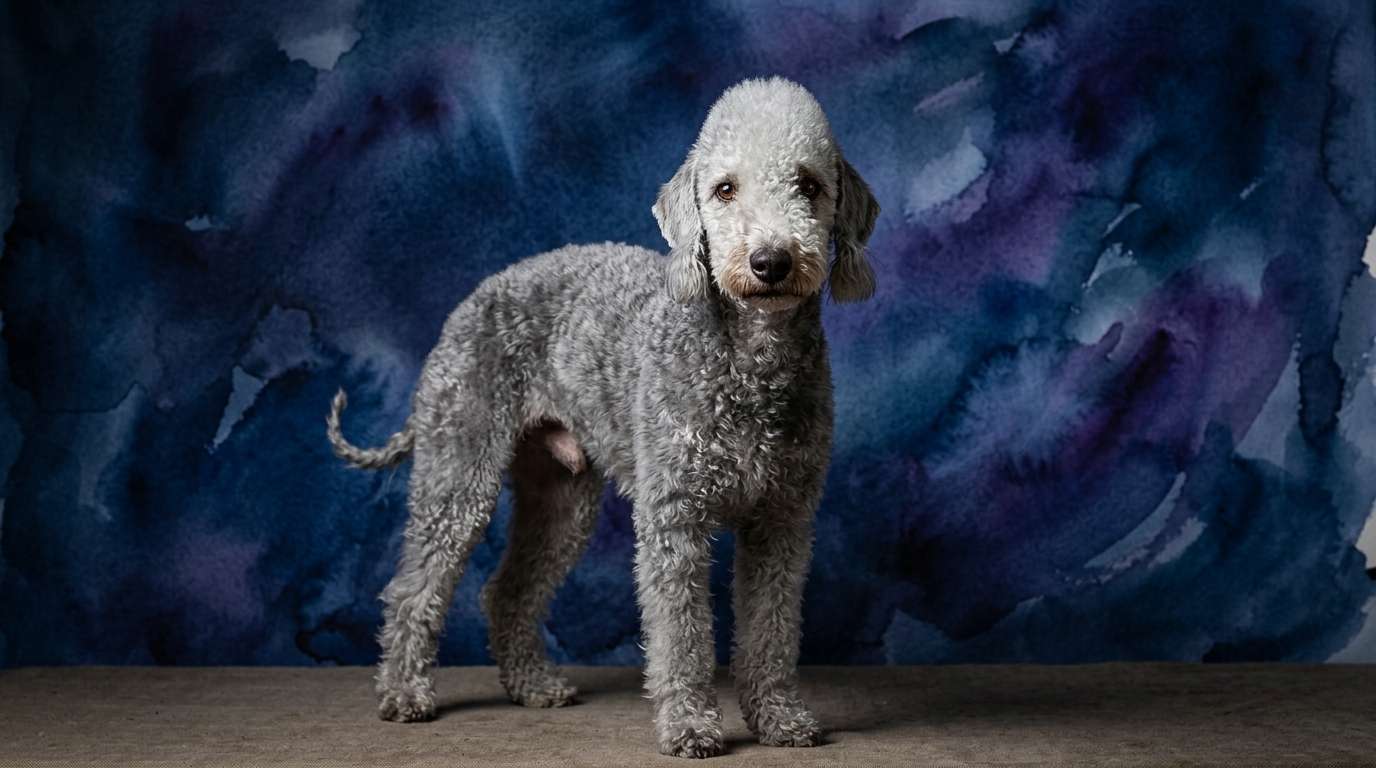
The Bedlington Terrier, though not appearing on Coren's widely cited list, possesses a distinct cognitive makeup shaped by its history as a vermin hunter. Their problem-solving ability scores a 3/5, indicating a capable but perhaps less singularly driven approach than the Dachshund. They can figure things out, but may not exhibit the same relentless tenacity. Training speed is a balanced 3/5, suggesting a willingness to learn and respond to guidance, though with a characteristic terrier independent streak. Social intelligence also stands at 3/5; they are generally amiable and perceptive to human cues, but can exhibit reserve with strangers or other dogs if not well-socialized. Their instinctive drive is a moderate 3/5, still present with an enjoyment for chasing and digging, but typically more manageable than a hound's overwhelming urge. Memory, like their social intelligence, is a solid 3/5, allowing them to effectively learn and recall routines and commands.
Where the Dachshund Excels Cognitively
The Dachshund's cognitive strengths distinctly emerge in two key areas: their tenacious problem-solving and their unparalleled instinctive drive. With a problem-solving score of 4/5, these dogs exhibit a remarkable ability to strategize and overcome physical or mental barriers to achieve a desired outcome, particularly when it involves scent or access to something intriguing. This isn't merely about following commands; it's about independent thought and creative solutions, like figuring out how to open a cupboard or tunnel under a fence. Their 5/5 instinctive drive is a profound cognitive asset, manifesting as an almost obsessive focus when their hound instincts are engaged. This deep-seated motivation for scent work and burrowing means they possess an exceptional capacity for tasks that tap into these ancient, specialized skills, allowing for intense, sustained engagement in activities like earthdog trials or advanced scent detection games.
Where the Bedlington Terrier Shows Cognitive Edge
Conversely, the Bedlington Terrier showcases its cognitive advantages in its more balanced approach to learning and its adaptable instinctive nature. Scoring 3/5 in training speed, the Bedlington often proves more amenable to instruction, absorbing new commands and routines with a comparatively steadier pace than the Dachshund's often more wilful disposition. This moderate trainability suggests an inherent willingness to engage cooperatively, making the learning process a more reciprocal experience. Furthermore, while possessing a 3/5 instinctive drive, the Bedlington's urges, though present for chasing and digging, are typically less overwhelming and singularly focused than the Dachshund's. This more balanced drive allows for greater versatility in cognitive application, enabling them to excel in a broader range of activities that require sustained attention without being solely dominated by a singular, intense instinct, such as agility or obedience sports.
Training Dynamics: Which is Easier to Guide?
When evaluating ease of training, the Bedlington Terrier generally offers a smoother experience compared to the Dachshund. The Bedlington's training speed of 3/5, coupled with a more moderate instinctive drive of 3/5, indicates a dog that is often more eager to please and less prone to intense distraction from environmental stimuli. They tend to respond well to consistent positive reinforcement, understanding and internalizing commands with fewer repetitions. Their terrier independence is certainly a factor, but it’s typically expressed in bursts rather than a constant, overriding agenda. In contrast, the Dachshund's training speed of 2/5 is directly influenced by their formidable 5/5 instinctive drive. Their primary motivation often lies in following a scent or fulfilling a burrowing urge, making human commands secondary. Training a Dachshund demands immense patience, creativity, and a deep understanding of their hound mentality. Success hinges on making training more intrinsically rewarding than their natural instincts, often by incorporating scent games or making 'obedience' part of a 'hunt.' Their problem-solving skills (4/5) can also be applied to figuring out how to *avoid* a command, adding another layer of challenge. Therefore, while both breeds require dedication, the Bedlington's more cooperative cognitive leanings generally make it the more straightforward student.
Matching Canine Cognition to Owner Lifestyles
The suitability of each breed for active versus relaxed owners hinges on their distinct cognitive and instinctive profiles. For active owners, both breeds offer engagement, but in different capacities. An active owner seeking a partner for dedicated scent work, earth dog trials, or long, exploratory walks where the dog's profound 5/5 instinctive drive can be channeled, will find the Dachshund an intensely rewarding companion. They thrive on mental challenges that tap into their problem-solving (4/5) and hunting heritage. However, an owner who is 'relaxed' in the sense of preferring less structured activity, but still willing to provide consistent mental stimulation through puzzle toys and short, engaging training sessions, can also suit a Dachshund, provided their instinctual needs are met without requiring constant physical exertion. The Bedlington Terrier, with its balanced 3/5 instinctive drive and good stamina, is an excellent match for active owners who enjoy a broader range of activities like agility, obedience, or extensive hikes, appreciating a dog that is versatile and generally amiable to new experiences. For relaxed owners, the Bedlington's adaptability allows them to enjoy downtime, but they still necessitate regular, moderate exercise to prevent boredom and channel their terrier energy. They are generally less demanding in terms of singular, intense instinctual outlets than the Dachshund, making them a good fit for those who provide consistent daily activity without needing to specialize in specific canine sports.
The Verdict
Choose a Dachshund if you appreciate a dog with a profound, independent problem-solving mind and a deeply ingrained instinctive drive for scent work and exploration, and you're prepared for the patience required in training a highly motivated hound.
Choose a Bedlington Terrier if you seek a companion with a moderate, trainable temperament, who responds well to consistent guidance and offers a versatile blend of energy and sociability for a range of activities.
🧠 Find Your Pet's IQ Score
Our Pet IQ Lab assessment covers 25+ tests across 5 cognitive dimensions — personalized to your breed.
Take the Full IQ Test →Frequently Asked Questions
Are Dachshunds stubborn?
Yes, their strong instinctive drive and independent problem-solving often make them appear stubborn, as they prioritize their own interests, like following a scent, over immediate human commands. Consistent, positive reinforcement training is key to working with their nature.
Do Bedlington Terriers need a lot of exercise?
Bedlington Terriers are energetic dogs requiring regular exercise to stay happy and healthy. Daily walks, playtime, and opportunities to run in a secure area are important to satisfy their moderate instinctive drive.
Can a Dachshund live in an apartment?
A Dachshund can thrive in an apartment if their exercise and mental stimulation needs are consistently met. Despite their small size, they require daily walks and engaging activities to satisfy their problem-solving instincts and high drive.