
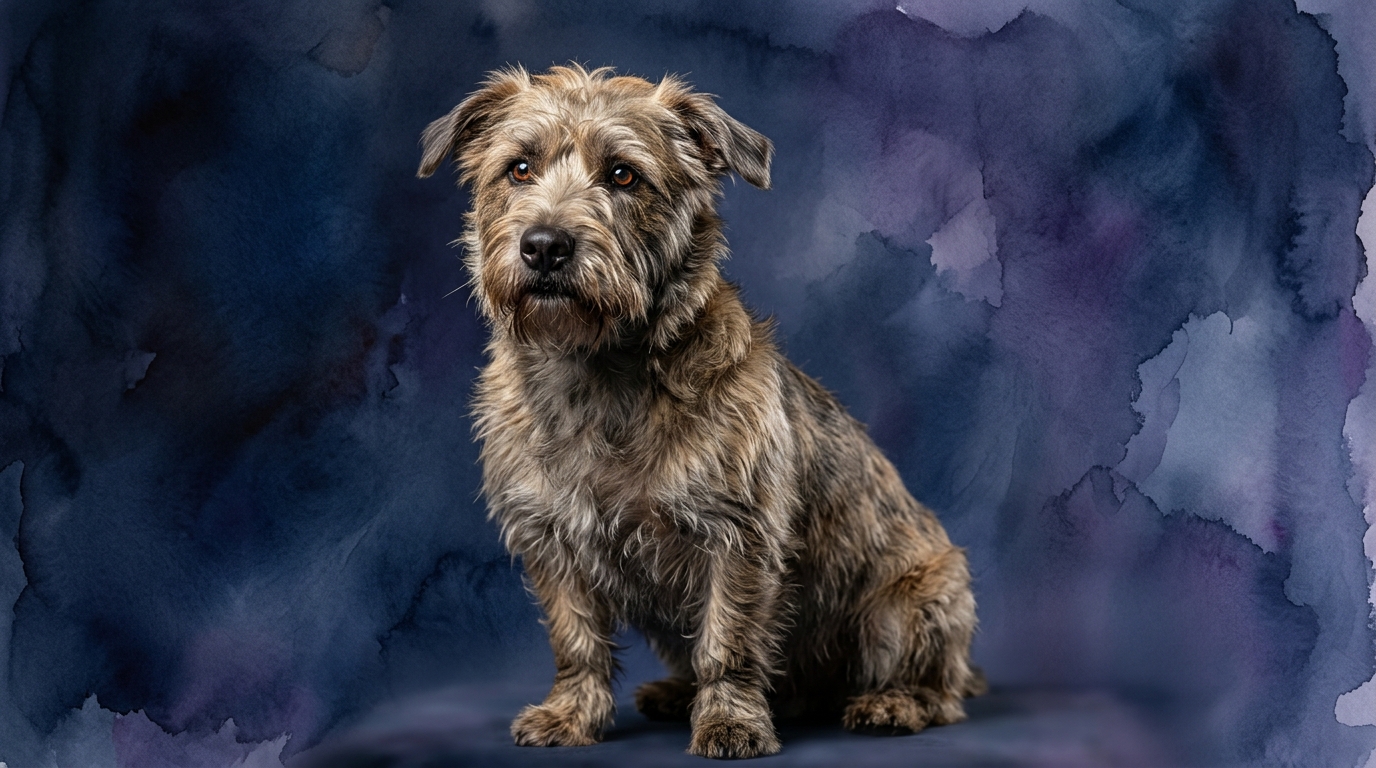
Side-by-Side IQ Profile: Dachshund vs. Glen of Imaal Terrier
The Cosmic Pet Pet IQ Lab employs a five-dimensional framework to assess canine intelligence, offering a nuanced understanding beyond simple obedience. For the Dachshund, a breed recognized by Coren at rank #49, their cognitive profile paints a picture of cunning and tenacity. Their Problem Solving is rated 4/5, indicating a strong capacity to devise solutions to obstacles, often driven by their intense curiosity or desire. Training Speed, however, registers at 2/5, suggesting a more independent learning curve where compliance isn't always immediate. Social Intelligence stands at 3/5, signifying a moderate ability to interpret human cues and bond within their family unit, though they can be reserved with strangers. Their Instinctive Drive is a remarkable 5/5, a testament to their deep-seated hunting and tracking heritage. Memory is assessed at 3/5, an average retention of experiences and learned behaviors.
In contrast, the Glen of Imaal Terrier, a breed currently unranked by Coren, presents a more balanced, albeit distinct, cognitive signature. Their Problem Solving is 3/5, indicating a practical intelligence capable of navigating everyday challenges without the same level of strategic cunning seen in the Dachshund. Training Speed is 3/5, suggesting a more cooperative and consistent learner than the Dachshund, able to grasp commands at a moderate pace. Social Intelligence also scores 3/5, implying a similar capacity for familial connection and understanding social dynamics, though perhaps with a typical terrier's discerning nature. Instinctive Drive is 3/5, reflecting a working terrier's inherent drive for digging and pursuit, but without the singular intensity of the Dachshund. Memory, like the Dachshund, is rated 3/5, indicating a solid ability to recall information.
Where the Dachshund Excels Cognitively
The Dachshund truly shines in two specific cognitive areas: Problem Solving and Instinctive Drive. Their 4/5 Problem Solving score means they possess a remarkable ingenuity when faced with a challenge, particularly one that aligns with their inherent desires. This isn't just about following commands; it's about independently figuring out how to bypass a baby gate to reach a forbidden snack or how to unearth a hidden toy. Their persistence, fueled by their legendary 5/5 Instinctive Drive, transforms these problem-solving attempts into relentless pursuits. This drive manifests as an unparalleled focus on scent trails, an unwavering determination to dig, or a single-mindedness in tracking, making them adept at tasks requiring sustained, self-directed effort towards a goal. Owners often witness this as a cleverness in manipulating their environment or a strategic approach to getting attention or a treat, demonstrating a cognitive flexibility geared towards achieving their own objectives.
Where the Glen of Imaal Terrier Holds a Cognitive Edge
While the Dachshund excels in specific forms of strategic problem-solving and unyielding drive, the Glen of Imaal Terrier holds a cognitive advantage in areas that often benefit modern pet ownership. Their Training Speed, at 3/5, notably surpasses the Dachshund's 2/5. This indicates a greater willingness and capacity to absorb and respond to human-initiated commands and routines with relative consistency. They are likely to pick up new tricks, house rules, and obedience cues more readily, making the initial stages of training potentially smoother and less prone to the stubborn standoffs sometimes associated with hounds. Furthermore, their more moderate Instinctive Drive (3/5) can be seen as a cognitive advantage in a domestic setting. While still possessing a terrier's typical zest for life and digging, this isn't as singularly intense or overwhelming as the Dachshund's hunt drive, which can sometimes override other cognitive functions. This balanced drive allows for a more adaptable cognitive focus, permitting them to engage with various stimuli without being constantly pulled by one overriding instinct.
Which Breed is Easier to Train, and Why
Based on The Cosmic Pet Pet IQ Lab's metrics, the Glen of Imaal Terrier is generally easier to train compared to the Dachshund. The key differentiator lies in their respective Training Speed scores: the Glen scores 3/5, while the Dachshund scores 2/5. This disparity indicates that Glens are more receptive to instruction and tend to form associations between commands and actions more quickly. Their willingness to engage in cooperative learning is often higher, making them more amenable students in structured training sessions. Dachshunds, by contrast, possess a strong independent streak, a hallmark of their hound heritage, which translates to a slower and often more challenging training process. Their high Instinctive Drive (5/5) means they are frequently more interested in following a scent or pursuing an imagined quarry than in performing a sit-stay. Training a Dachshund often requires immense patience, creativity, and a deep understanding of their motivations, as their problem-solving skills are more often applied to circumventing rules than to strictly adhering to them. A Glen's more balanced drive and moderate training speed suggest a dog that, while still a terrier with its own opinions, is more inclined to work alongside its human.
Matching Breeds to Active vs. Relaxed Owners
The suitability of each breed for active versus relaxed owners hinges significantly on how their cognitive profiles translate into daily behavior and exercise needs. For owners who are moderately active but appreciate a dog with a robust, independent spirit and a keen mind for exploration, the Dachshund can be a compelling choice. They require consistent mental stimulation to channel their 4/5 Problem Solving and 5/5 Instinctive Drive, which means engaging them in scent work, puzzle toys, or structured "hunting" games in the yard. While they enjoy walks, their stamina isn't endless, making them suitable for owners who enjoy regular, moderate activity but also value downtime. However, their strong drives mean "relaxed" doesn't equate to "sedentary" – they need outlets for their minds and bodies.
The Glen of Imaal Terrier, with its balanced 3/5 Instinctive Drive and 3/5 Problem Solving, generally suits owners who are moderately active and seek a more cooperative companion for outdoor adventures. They are hardy working terriers who appreciate regular walks, hikes, or playtime, and their moderate training speed means they can be more readily involved in activities like agility or earthdog trials where instruction is key. They offer a good balance of activity and companionship, being content to relax indoors after a stimulating outing. Owners who appreciate a dog that is engaged and capable but perhaps less intensely focused on a singular, primal drive than a Dachshund might find the Glen a better fit, offering a more adaptable energy level for both active and relaxed moments.
The Verdict
You should choose the Dachshund if you are drawn to a dog with exceptional independent problem-solving abilities and an unwavering, deep-seated drive, and you are prepared for a training journey that prioritizes patience and creativity over quick compliance. They thrive with owners who appreciate their clever, tenacious spirit and can provide ample mental stimulation for their innate instincts.
You should choose the Glen of Imaal Terrier if you seek a robust, intelligent terrier with a more balanced temperament and a higher propensity for cooperative training. They are well-suited for owners who enjoy moderate activity and desire a companion that is both capable in the field and adaptable in the home, offering a more straightforward training experience.
🧠 Find Your Pet's IQ Score
Our Pet IQ Lab assessment covers 25+ tests across 5 cognitive dimensions — personalized to your breed.
Take the Full IQ Test →Frequently Asked Questions
Do Dachshunds forget commands easily?
With a Memory score of 3/5, Dachshunds have an average capacity for recall. While they can learn and retain commands, their independent nature and strong instinctive drives might lead them to "selectively remember" if something more interesting captures their attention, rather than truly forgetting. Consistent reinforcement is key.
Are Glen of Imaal Terriers good for first-time dog owners?
Glen of Imaal Terriers, with their 3/5 Training Speed and more balanced Instinctive Drive, can be a good fit for first-time owners who are committed to consistent training and socialization. While they still possess a terrier's independent spirit, they are generally more amenable to learning than some other breeds, making the ownership journey potentially less challenging.
How does the "Instinctive Drive" score impact daily life for these breeds?
The Dachshund's 5/5 Instinctive Drive means a relentless focus on scent, digging, and pursuit, requiring careful management like secure yards and leash training to prevent them from following their nose into trouble. The Glen's 3/5 Instinctive Drive, while present, is more moderate, meaning they still enjoy digging and chasing but are generally less singularly driven by these urges, making them somewhat easier to redirect in daily life.