
Side-by-Side IQ Profile: Unpacking Cognitive Dimensions
**Dachshund:** Originating as tenacious badger hunters, the Dachshund’s intelligence profile reflects their specialized historical role. Their **Problem Solving (4/5)** score indicates a high capacity for autonomous decision-making, crucial for navigating complex underground tunnels and outwitting prey independently. They demonstrate remarkable persistence in figuring out how to access desired objects or overcome physical barriers, often employing a trial-and-error approach driven by their strong will. Their **Training Speed (2/5)** is slower due to this independent nature; while they process commands, their strong self-determination means they frequently weigh their own desires against compliance, requiring consistent, patient, and highly motivating methods. **Social Intelligence (3/5)** for a Dachshund is often directed towards their primary human companions, displaying deep bonds but sometimes exhibiting reserved or selective behavior with strangers. They understand social cues within their established pack but aren't inherently driven to please a broad social circle. Their **Instinctive Drive (5/5)** is exceptionally high, manifesting as an unwavering determination to follow scents, dig, chase, and explore, making them highly attuned to environmental stimuli related to their original hunting purpose. **Memory (3/5)** is functional for routines, commands, and locations of interest, particularly those associated with resources or hunting opportunities, allowing them to recall past successes in problem-solving scenarios.
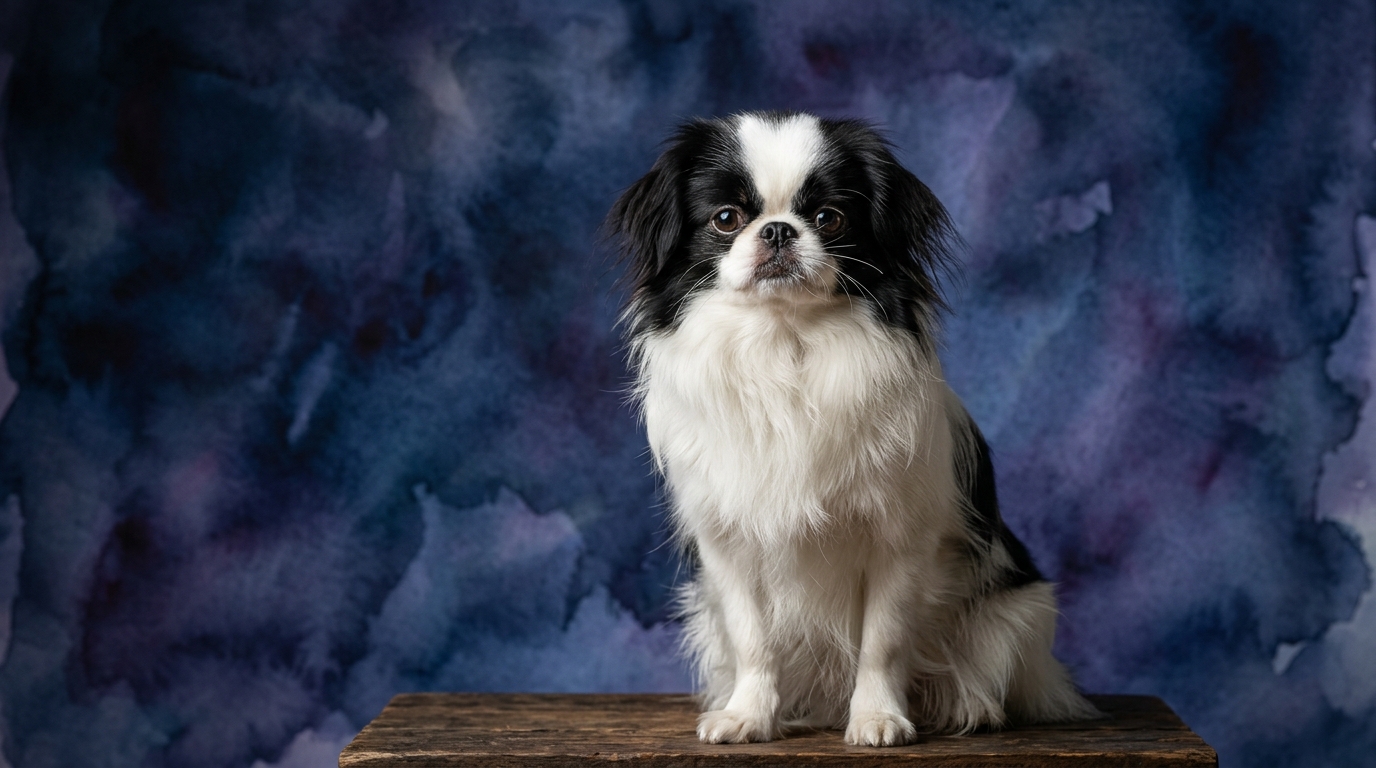
**Japanese Chin:** Bred primarily as companions for nobility, the Japanese Chin's intelligence profile emphasizes adaptability and social harmony. Their **Problem Solving (3/5)** capacity is moderate, typically focused on navigating their domestic environment and achieving comfort or attention. They are adept at learning to manipulate simple latches or communicate needs effectively, often using charm and subtle cues rather than brute force. With a **Training Speed (3/5)**, the Japanese Chin is generally eager to please and responsive to positive reinforcement, learning new commands at a steady pace, especially when training is engaging and rewards are consistent. Their cooperative spirit makes them more amenable to instruction. **Social Intelligence (3/5)** is a prominent trait, as they are adept at reading human emotions and adapting their behavior accordingly, thriving on companionship and skilled at soliciting attention and affection. They make excellent companions who understand the nuances of their human family's moods. Their **Instinctive Drive (3/5)** is moderate, primarily geared towards companionship and comfort rather than strong prey pursuit or territorial guarding. They might exhibit playful chasing behaviors but lack the intense, focused drive seen in hunting breeds, preferring social interaction and leisure. **Memory (3/5)** is good for routines, people, and pleasant experiences, recalling where favorite toys are kept or which family members are most likely to offer treats, contributing to their seamless integration into a household.
Where the Dachshund Excels Cognitively
The Dachshund's cognitive strengths distinctly emerge in areas demanding self-reliance and tenacious pursuit. Their Problem Solving score of 4/5, coupled with an unparalleled Instinctive Drive of 5/5, means they excel at tasks requiring independent thought and sustained effort to achieve a goal. Imagine a Dachshund meticulously working to unearth a hidden toy or figuring out how to bypass a gate to explore a new scent; this isn't about following a command, but about an innate drive to solve a self-imposed 'problem' with remarkable persistence. Their memory, while rated 3/5, is particularly sharp for spatial awareness and the location of resources or interesting smells, allowing them to navigate complex environments effectively and recall where a particular burrow or squirrel den might be found. This breed’s cognitive framework is optimized for independent decision-making in environments where human guidance is minimal, reflecting their heritage as solo hunters who had to rely on their own wits and determination to succeed.
Where the Japanese Chin Excels Cognitively
The Japanese Chin demonstrates a different, yet equally valuable, set of cognitive advantages, particularly in areas of social adaptability and nuanced communication. While their Problem Solving is rated 3/5, it's often applied to social challenges—how to elicit comfort or attention, or how to subtly signal their needs to their human companions. Their social intelligence, also 3/5, is characterized by a remarkable sensitivity to human emotions and household dynamics, allowing them to integrate smoothly into family life. They are adept at reading body language and vocal tones, adjusting their own demeanor to maintain harmony or secure affection. This ability to interpret and respond to complex social cues, rather than solely focusing on independent tasks, makes them highly responsive and emotionally attuned companions. Their moderate Training Speed (3/5) also positions them to absorb and respond to new commands with less resistance than their more independent counterparts, making them highly adaptable to varied household routines and social expectations.
Training Dynamics: Which Breed is More Amenable to Instruction?
When considering ease of training, the Japanese Chin generally presents a more straightforward experience for the average owner. Their Training Speed of 3/5, combined with a social intelligence that values harmony and connection, means they are typically more receptive to instruction. They are motivated by praise and the desire to please their human companions, making positive reinforcement highly effective. For instance, a Japanese Chin is more likely to quickly associate a 'sit' command with a treat and a kind word, and then repeat the action to maintain that positive interaction. Their cooperative spirit often translates into a smoother learning curve for basic obedience and house manners.
In contrast, the Dachshund's Training Speed of 2/5 reflects their strong independent streak and deep-seated instincts. Their historical role demanded self-reliance, not strict obedience to human directives in the field. This translates into a more challenging training journey, where their own desires—like following a captivating scent or digging—can often override a learned command. While intelligent, their problem-solving skills are often applied to circumventing rules they deem inconvenient, rather than adhering strictly to them. Training a Dachshund requires immense patience, creativity to make training more engaging than their instincts, and a firm, consistent approach to establish boundaries. Owners often find themselves negotiating with a Dachshund, whereas a Japanese Chin is typically more inclined to cooperate due to their inherent desire for social harmony.
Lifestyle Match: Active vs. Relaxed Owners
The choice between a Dachshund and a Japanese Chin largely depends on an owner's lifestyle and their preferred level of engagement. An active owner who enjoys outdoor adventures, has a keen interest in canine sports like scent work or earthdog trials, or appreciates a dog with a strong, independent personality would find the **Dachshund** a compelling match. Their high Instinctive Drive (5/5) means they thrive on opportunities to explore, sniff, and 'work' their brains and bodies, even if it's just a long walk in a new environment. They require mental stimulation to prevent boredom and destructive behaviors, benefiting from owners who can channel their natural tenacity into constructive activities. While not marathon runners, their stamina for focused tasks and exploration is significant, making them suitable for those who enjoy a dog with purpose.
Conversely, the **Japanese Chin** is an ideal companion for relaxed owners or those living in smaller spaces who prioritize companionship and indoor activities. Their moderate Instinctive Drive (3/5) and preference for comfort make them content with shorter, leisurely walks and ample cuddle time. They are generally adaptable to apartment living and thrive on being close to their human family, often preferring to observe the world from a comfortable lap or cushion. Owners who appreciate a sensitive, charming, and relatively low-maintenance companion in terms of strenuous physical demands will find the Japanese Chin’s demeanor perfectly aligned with their lifestyle. Their social intelligence makes them excellent companions for those who value quiet, engaging interaction over high-energy outdoor pursuits.
The Verdict
Opt for a Dachshund if you appreciate a resilient, independent problem-solver with a strong drive, and are prepared for consistent, patient training to channel their tenacious spirit. They thrive with owners who can engage their investigative instincts and enjoy a dog with a distinct personality.
Select a Japanese Chin if you seek an adaptable, socially perceptive companion who thrives on close human interaction and offers a more cooperative, charming demeanor. They are well-suited for relaxed households looking for an affectionate, engaging pet with moderate activity needs.
🧠 Find Your Pet's IQ Score
Our Pet IQ Lab assessment covers 25+ tests across 5 cognitive dimensions — personalized to your breed.
Take the Full IQ Test →Frequently Asked Questions
Are Dachshunds stubborn or just independent?
Dachshunds are often perceived as stubborn, but it's more accurately described as strong independence, a trait stemming from their history as solitary hunters. They were bred to make their own decisions underground, which translates into a strong will and a tendency to prioritize their instincts over immediate human commands. This requires understanding and consistent, positive reinforcement training.
How does the Japanese Chin's lack of a Coren rank affect understanding its intelligence?
The absence of a Coren rank for the Japanese Chin doesn't mean they lack intelligence; rather, Coren's rankings primarily assess 'working and obedience intelligence,' focusing on trainability for commands. The Japanese Chin excels in social intelligence and adaptability, which are equally valuable forms of cognition but aren't the primary metrics for Coren's specific ranking system.
Which breed is generally better with children, considering their IQ profiles?
Considering their IQ profiles, the Japanese Chin's social intelligence and adaptable, cooperative nature often make them a gentler, more patient choice for households with children, especially if the children are taught respectful interaction. Dachshunds, with their independent streak and potential for guarding resources or reacting to rough play, require more careful supervision and socialization around children due to their tenacious nature.