
Side-by-Side IQ Profile: Dachshund vs. Toller
The Cosmic Pet Pet IQ Lab employs a five-dimensional framework to assess canine intelligence, moving beyond simple obedience to encompass a broader spectrum of cognitive abilities. For the Dachshund, a breed Coren-ranked at #49, its profile highlights specific strengths and areas requiring a tailored approach. Its Problem Solving is rated 4/5, indicating a dog capable of devising clever solutions to challenges, often to achieve its own goals. Training Speed is 2/5, suggesting a more independent learner who requires patience and consistent motivation. Social Intelligence stands at 3/5, meaning they can form strong bonds but might be reserved or selective in new social contexts. Instinctive Drive is a remarkable 5/5, reflecting their powerful prey drive, scenting ability, and historical role in badger hunting. Finally, Memory is 3/5, allowing them to retain experiences and learned behaviors effectively.
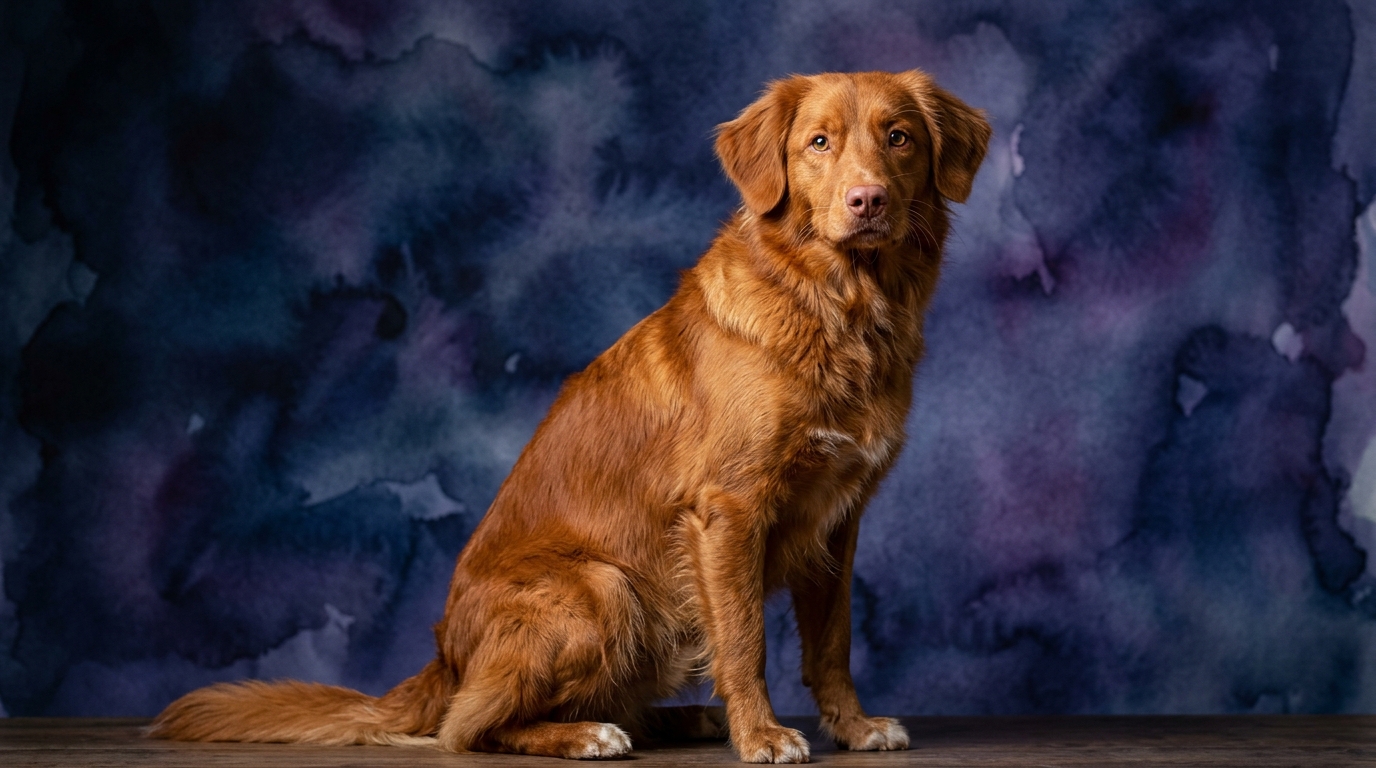
In contrast, the Nova Scotia Duck Tolling Retriever, while not Coren-ranked, presents a more balanced cognitive profile across our metrics. Its Problem Solving is rated 3/5, demonstrating a capacity for navigating tasks and learning new skills, though perhaps with less independent ingenuity than the Dachshund. Training Speed is 3/5, indicating a generally biddable and responsive learner who enjoys working alongside their human companions. Social Intelligence also scores 3/5, reflecting a typically friendly and adaptable nature, often eager to engage with family and familiar individuals. Instinctive Drive is 3/5, highlighting their strong natural retrieving instincts and the characteristic 'tolling' behavior used to lure waterfowl, but without the intense, singular focus of a hound. Memory is 3/5, consistent with the Dachshund, allowing for good retention of commands and experiences. These distinct profiles paint a clear picture of their inherent mental predispositions.
Where the Dachshund Cognitively Excels
The Dachshund's cognitive strengths are deeply rooted in its original purpose: tenacious hunting. Its Problem Solving score of 4/5 significantly outpaces the Toller's 3/5, illustrating a breed with a highly developed capacity for independent thought and strategic action. This isn't about solving human-assigned puzzles as much as it is about figuring out how to get what they want. A Dachshund is more likely to independently devise a method to reach a forbidden treat on a counter, navigate a complex environment to follow an intriguing scent, or creatively bypass an obstacle to pursue a perceived 'prey.' Their resourcefulness often manifests as a charming stubbornness, a testament to their innate ability to think for themselves rather than awaiting instruction.
Furthermore, the Dachshund's Instinctive Drive, rated a perfect 5/5 compared to the Toller's 3/5, is a defining cognitive trait. This isn't merely a physical urge; it's a profound mental preoccupation with scent, tracking, and the pursuit of small game. This intense drive translates into an unwavering focus when a scent trail is picked up, often overriding all other stimuli. Owners frequently observe their Dachshunds meticulously 'reading' the ground, their entire being concentrated on an invisible narrative of smells. This deep-seated instinct shapes much of their world perception and behavior, making them exceptional at tasks requiring sustained, independent focus on a sensory input.
Where the Nova Scotia Duck Tolling Retriever Cognitively Shines
While the Dachshund's independent problem-solving and intense drive are formidable, the Nova Scotia Duck Tolling Retriever truly shines in its Training Speed, scoring 3/5 compared to the Dachshund's 2/5. This moderate score indicates a dog that is generally more amenable to human instruction and eager to participate in cooperative learning. Tollers were bred to work closely with hunters, requiring them to be attentive, responsive, and willing to follow complex commands in dynamic environments. Their cognitive makeup leans towards forming associations quickly between actions and rewards, and they typically possess a strong desire to please, making the training process more fluid and less prone to the independent agendas that often characterize hounds. This isn't to say they are automatons, but their mental framework is geared towards partnership.
The Toller's more balanced cognitive profile, with 3/5 across Problem Solving, Training Speed, Social Intelligence, Instinctive Drive, and Memory, also offers a distinct advantage in terms of adaptability. While the Dachshund excels in specific, deeply ingrained areas, the Toller's consistent scores suggest a broader, more versatile cognitive toolkit. They are capable problem solvers without being overly headstrong, possess a solid instinctive drive without being overwhelmed by it, and are socially intelligent without being overly aloof or clingy. This cognitive equilibrium allows them to engage effectively in a wider range of activities, from competitive dog sports to family companionship, often demonstrating a more flexible and less single-minded approach to their environment and interactions.
Training Dynamics: Which Breed is Easier?
When it comes to ease of training, the Nova Scotia Duck Tolling Retriever generally presents a more straightforward experience than the Dachshund, a difference clearly reflected in their respective Training Speed scores of 3/5 versus 2/5. The Toller’s moderate training speed stems from its heritage as a working retriever; these dogs were selectively bred to cooperate with humans in a hunting context, meaning they are typically attentive, responsive, and motivated by praise and rewards. They tend to enjoy the process of learning and performing tasks for their owners, making them enthusiastic participants in obedience, agility, or other structured activities. Their moderate instinctive drive (3/5) allows them to focus on instruction without being constantly sidetracked by overpowering urges to scent or dig.
Conversely, the Dachshund's 2/5 Training Speed score is a direct consequence of its specialized breeding. Their exceptional problem-solving (4/5) and intense instinctive drive (5/5) mean they are often busy solving problems that are important to *them*, such as tracking a scent or investigating a burrow, rather than focusing on human commands. This independent nature, while a cognitive strength in their original role, translates into a need for immense patience, creativity, and consistency in training. Owners must often make training more engaging and rewarding than the allure of an enticing smell or the satisfaction of digging. Their determination, while admirable, can be perceived as stubbornness in a training context, requiring an owner who understands how to channel their innate drives rather than suppress them.
Lifestyle Match: Active vs. Relaxed Owners
Choosing between a Dachshund and a Nova Scotia Duck Tolling Retriever also means aligning with their inherent energy levels and mental stimulation requirements, directly influenced by their cognitive profiles. For owners seeking a companion that can integrate into a more relaxed lifestyle, provided their specific cognitive needs are met, the Dachshund might be a surprising fit. While they possess a high instinctive drive (5/5) and excellent problem-solving skills (4/5), their physical endurance is not that of a large working dog. They thrive on mental engagement through scent work, puzzle toys, and short bursts of activity, rather than prolonged, strenuous exercise. A relaxed owner who enjoys engaging their dog's mind with indoor games, short walks, and opportunities for 'sniffaris' can provide a fulfilling life for a Dachshund, understanding that their independent spirit requires consistent mental outlets.
The Nova Scotia Duck Tolling Retriever, with its balanced cognitive profile and heritage as a sporting dog, is unequivocally suited for active owners. Their moderate instinctive drive (3/5) for retrieving, combined with their moderate problem-solving (3/5) and training speed (3/5), means they thrive on structured physical exercise and mental tasks. Tollers require daily opportunities to run, swim, fetch, and engage in activities like agility, flyball, or advanced obedience. An active owner who can commit to providing consistent outlets for both their physical energy and their desire to learn and work cooperatively will find a Toller to be an enthusiastic and devoted partner. Neglecting their need for engagement can lead to boredom and the development of undesirable behaviors, as their cognitive makeup demands purposeful interaction and activity.
The Verdict
Choose the Dachshund if you appreciate a dog with remarkable independent problem-solving skills and an intense, scent-driven focus, and are prepared for a consistent, patient training approach that respects their strong will.
Opt for the Nova Scotia Duck Tolling Retriever if you lead an active lifestyle and desire a cooperative, versatile companion who thrives on structured physical and mental engagement, making training a more collaborative and responsive experience.
🧠 Find Your Pet's IQ Score
Our Pet IQ Lab assessment covers 25+ tests across 5 cognitive dimensions — personalized to your breed.
Take the Full IQ Test →Frequently Asked Questions
Are Dachshunds difficult to train due to their intelligence?
Dachshunds are not 'difficult' because of a lack of intelligence, but rather because their cognitive strengths lie in independent problem-solving and a powerful instinctive drive. This means they often have their own agendas, requiring highly consistent, patient, and creative training methods to channel their natural determination.
Does 'Not Coren-ranked' mean the Nova Scotia Duck Tolling Retriever is less intelligent?
No, 'Not Coren-ranked' simply means the breed was not included in Coren's specific study focusing on obedience and working intelligence, which only covers one aspect of canine cognition. The Toller's balanced scores in our IQ Lab demonstrate a capable and adaptable intellect, excelling in cooperative learning and versatility.
Which breed is better for first-time dog owners?
For first-time dog owners, the Nova Scotia Duck Tolling Retriever might be a more manageable choice due to its generally higher training speed and eagerness to cooperate, assuming the owner can meet its significant exercise and mental stimulation needs. Dachshunds can be rewarding for first-timers, but their independent nature and strong drives require more research and commitment to consistent training strategies.